


Details
Description
This impressive early 19th-century architectural engraving originates from the rare French publication Paris et ses Monuments, mesurés, dessinés et gravés, …
Read more
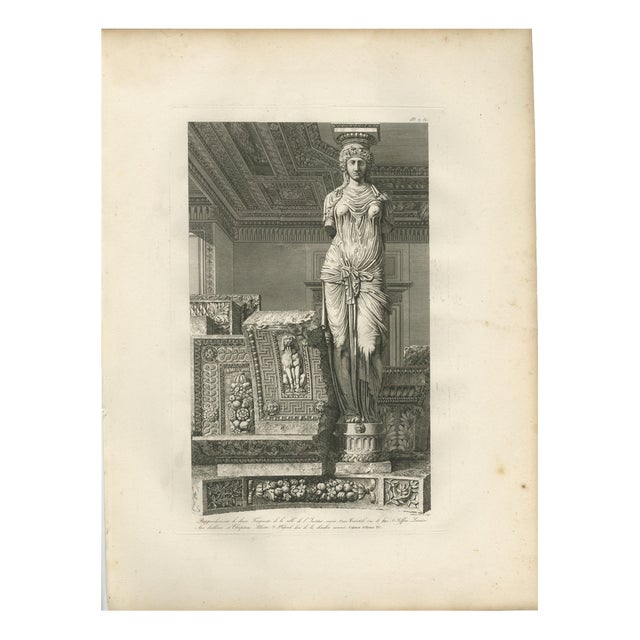
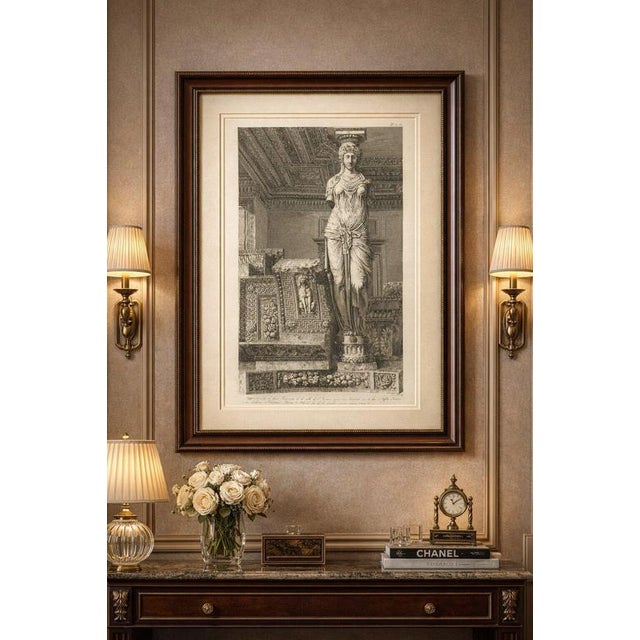
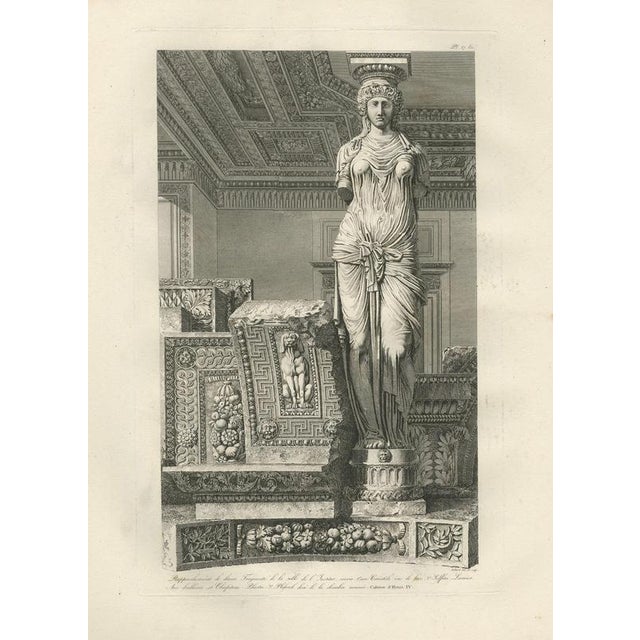
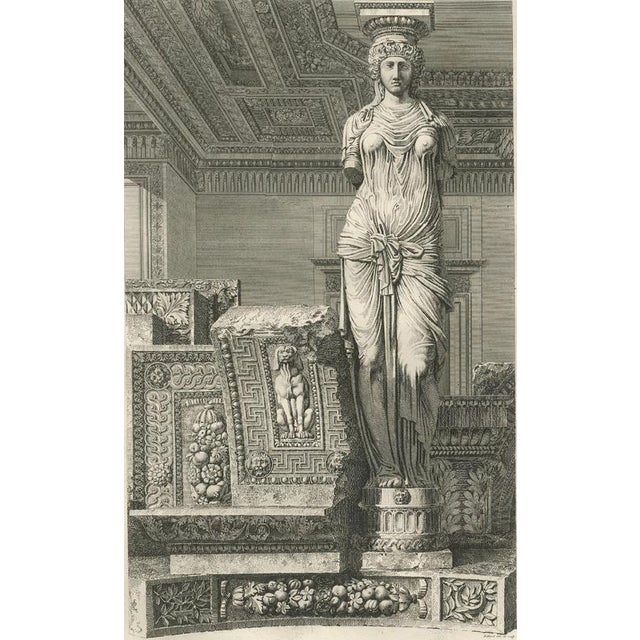
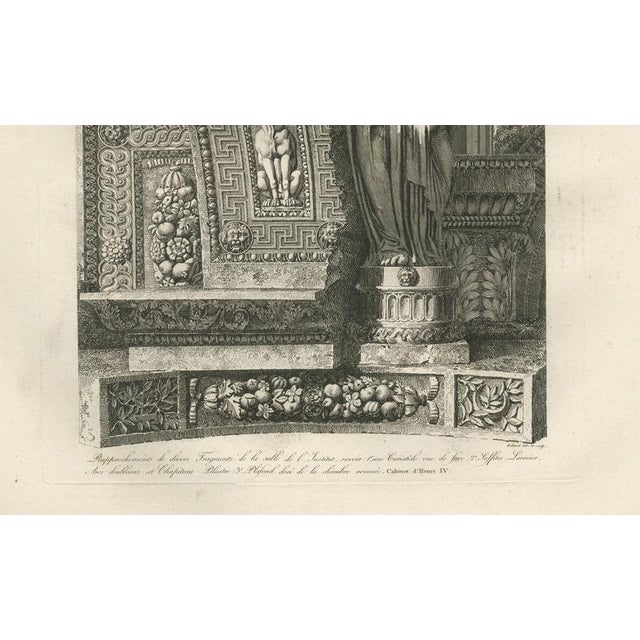
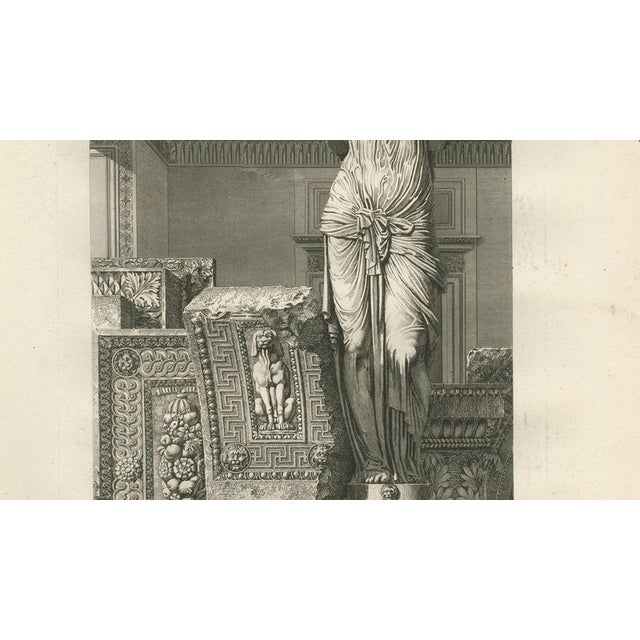
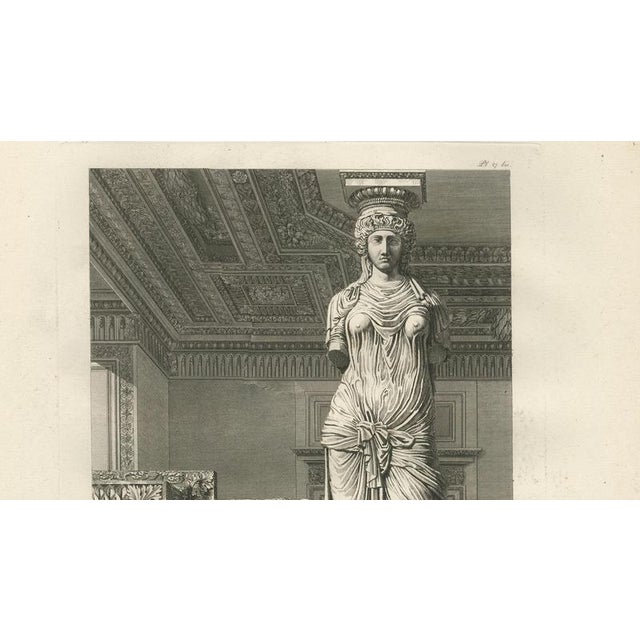
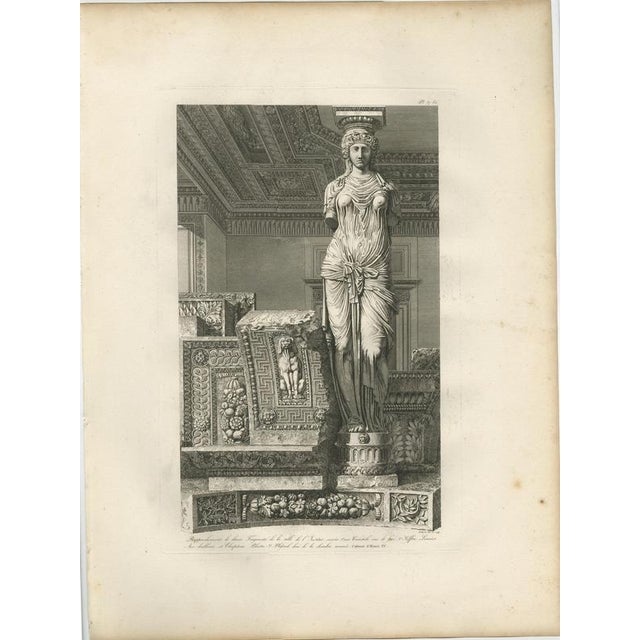
This impressive early 19th-century architectural engraving originates from the rare French publication Paris et ses Monuments, mesurés, dessinés et gravés, created by the architect and engraver Louis-Pierre Baltard and published in Paris in 1803. Baltard’s monumental work was dedicated to Napoleon Bonaparte and aimed to systematically document the architectural treasures of Paris through precise measurements and carefully executed engravings. The publication is regarded as one of the most important early visual surveys of Parisian monuments during the Napoleonic era. The present plate depicts a monumental caryatid sculpture placed within an elaborate Renaissance architectural interior associated with the Louvre Palace. Caryatids—sculpted female figures used as architectural supports—derive from ancient Greek architecture and were widely revived during the Renaissance. French Renaissance architects and sculptors embraced these classical motifs to evoke the authority and elegance of antiquity, particularly in royal architectural projects such as the Louvre. The figure stands gracefully upon a decorated pedestal, her body wrapped in flowing classical drapery that clings to the form beneath. The folds of the garment are rendered with exceptional delicacy, demonstrating the sculptural style associated with the French Renaissance and the influence of the School of Fontainebleau. The figure’s calm expression and symmetrical stance reinforce the classical ideals of harmony and balance that characterized Renaissance architectural decoration. Behind the statue Baltard carefully renders fragments of richly ornamented architectural elements, including carved friezes, decorative panels, and sections of an elaborate coffered ceiling. These architectural fragments display dense Renaissance ornamentation: fruit garlands, geometric borders, classical motifs, and sculptural reliefs. One decorative panel features a small sculptural figure framed within a classical border, while surrounding carvings display vegetal ornament and antique-inspired patterns typical of the decorative programs commissioned by the French monarchy during the 16th century. The composition reflects Baltard’s method of presenting architectural studies through carefully arranged fragments that highlight the richness of Renaissance ornamentation. Rather than documenting a single viewpoint, the engraver often grouped significant sculptural and architectural details together to illustrate their artistic and structural relationships. This approach allowed artists, architects, and scholars of the early 19th century to study the details of French Renaissance architecture with remarkable clarity. Executed with masterful copperplate engraving, the plate displays extraordinary technical precision. Baltard used fine burin work to reproduce the textures of carved stone, the subtle depth of architectural moldings, and the soft fall of drapery across the sculpture. The dense hatchings and controlled shading create a convincing sense of depth and mass, producing a striking trompe-l'œil effect that makes the architectural fragments appear almost sculptural on the page. Architectural engravings of this quality were intended as both documentation and inspiration. During the early 19th century they served as important visual references for architects and artists studying the achievements of Renaissance design. Today they remain highly sought after by collectors of architectural prints, historians of French art, and interior designers seeking authentic classical imagery. This is an original print from the year of publication, not a later reproduction. The print is offered unframed, allowing the buyer freedom to select framing appropriate to their interior or collection. Any framed examples shown in photographs are for visual inspiration only.
Condition: Good antique condition with general age-related toning and occasional light foxing. Wide margins preserved. Strong impression with visible plate mark. Minor handling wear consistent with age.
Technique: copperplate engraving Maker: Louis-Pierre Baltard, Paris, 1803
See less
- Dimensions
- 18.11ʺW × 24.41ʺH
- Art Subjects
- Still Life
- Period
- Early 19th Century
- Country of Origin
- France
- Item Type
- Vintage, Antique or Pre-owned
- Materials
- Paper
- Condition
- Good Condition, Unknown, Some Imperfections
- Color
- Gold
- Condition Notes
- Very Good — This vintage item has no defects, but it may show slight traces of use\. Good antique condition … moreVery Good — This vintage item has no defects, but it may show slight traces of use\. Good antique condition with general age-related toning and occasional light foxing. Wide margins preserved. Strong impression with visible plate mark. Minor handling wear consistent with age. less
Returns & Cancellations
Return Policy - All sales are final 48 hours after delivery, unless otherwise specified in the description of the product.
Cancellation Policy - Prior to shipping or local pickup, buyers may cancel an order for up to 48 hours, unless otherwise specified.
Related Collections
- Tatiana Alida Original Prints
- Frank Stella Original Prints
- Greg Copeland Original Prints
- William Meyerowitz Original Prints
- Robert Kipniss Original Prints
- Gustave Baumann Original Prints
- Byzantine Original Prints
- Leonardo Nierman Original Prints
- Shaun Ellison Original Prints
- Clay Walker Original Prints
- Damien Hirst Original Prints
- George Barbier Original Prints
- Balmain Original Prints
- Abraham Rattner Original Prints
- Louis XIII Original Prints
- Botanical Prints
- Japanese Woodblock Prints
- Bird Prints
- Woodblock Prints
- Framed Prints
- Thomas McKnight Original Prints
- Black and White Prints
- Ross Bleckner Original Prints
- Screen Prints
- Paul Wunderlich Original Prints