




Details
Description
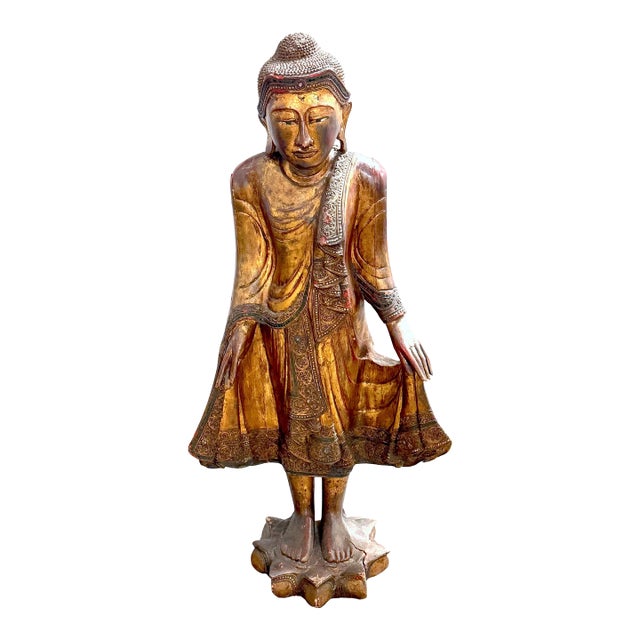
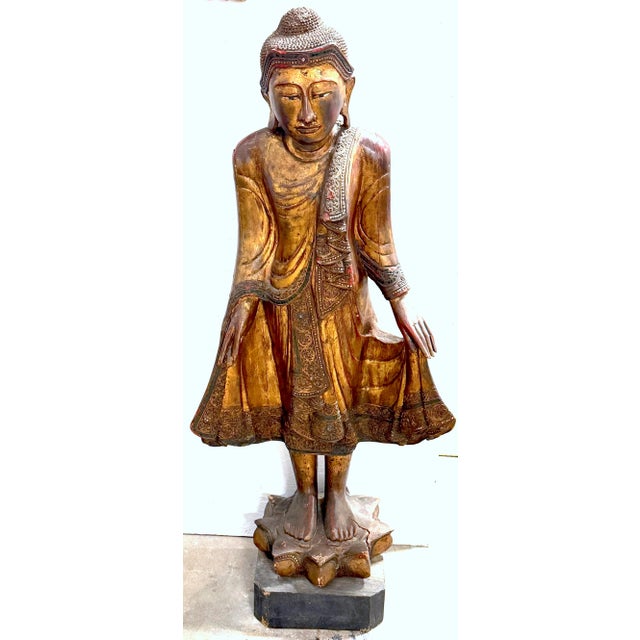
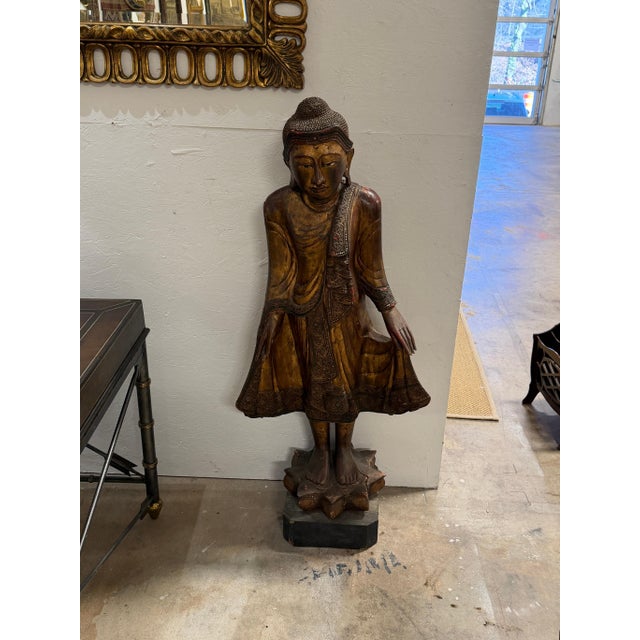
Monumental Giltwood Standing Buddha with Lotus Base, Burma (Myanmar), Late 19th–Early 20th Century
Dimensions: 53" H × 23" W × …
Read more
Monumental Giltwood Standing Buddha with Lotus Base, Burma (Myanmar), Late 19th–Early 20th Century
Dimensions: 53" H × 23" W × 12" D (base diameter)
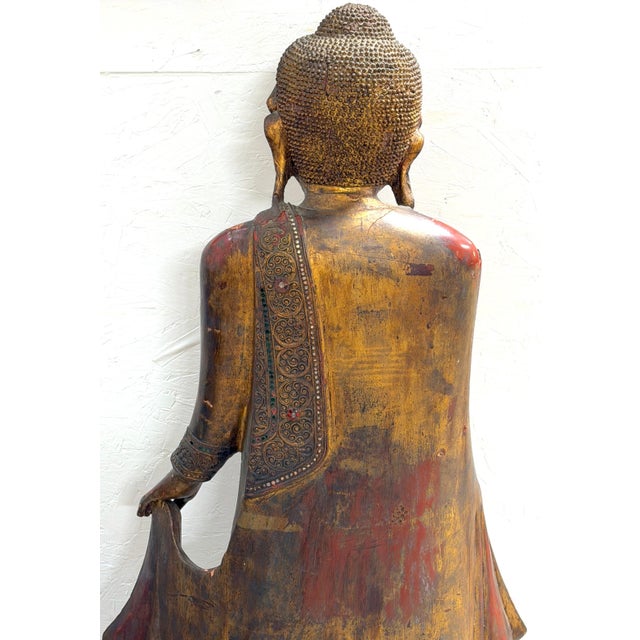
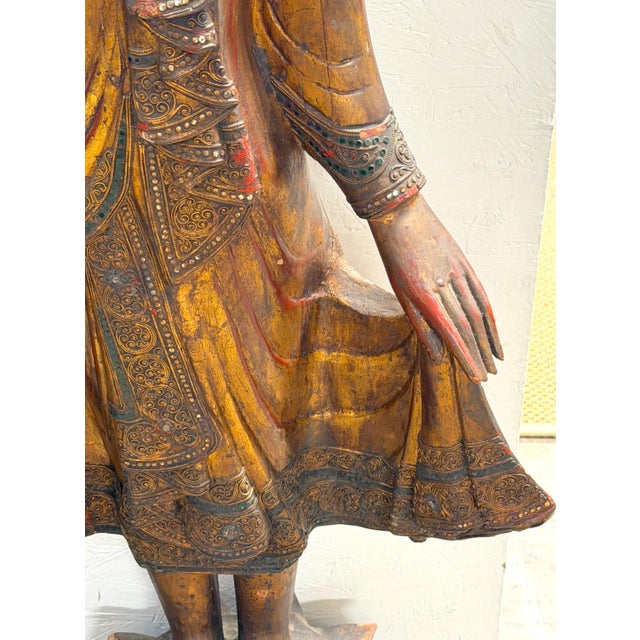
This impressive and finely carved monumental standing Buddha originates from Burma (Myanmar) and dates to the late 19th to early 20th century, a period of renewed temple patronage and sophisticated devotional sculpture production in Upper Burma. Executed in carved hardwood with remnants of original gilding, red lacquer, and polychrome pigments, the figure exemplifies the serene elegance and ornamental richness characteristic of Burmese Buddhist sculpture of the Konbaung and early colonial eras.
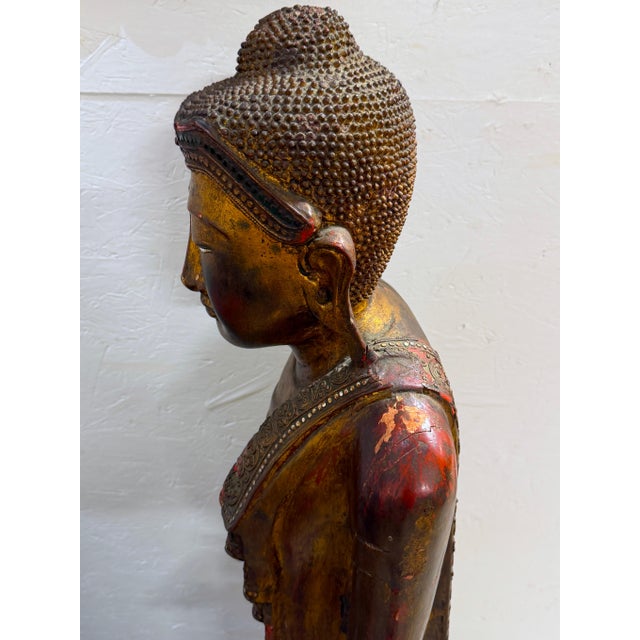
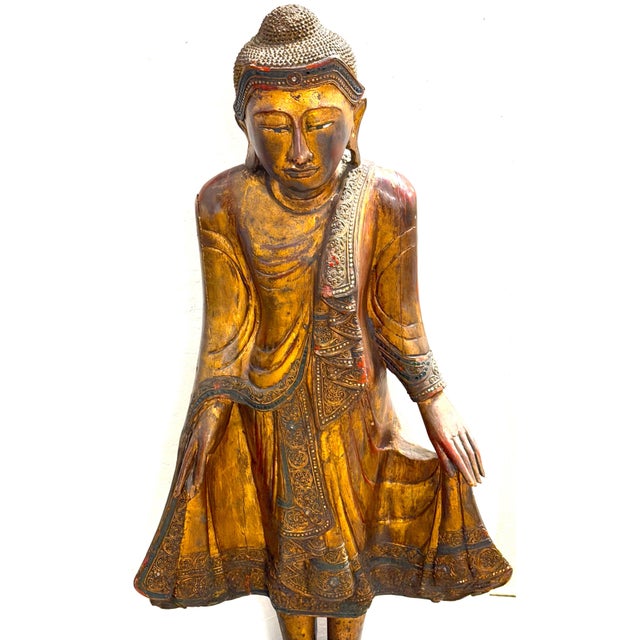
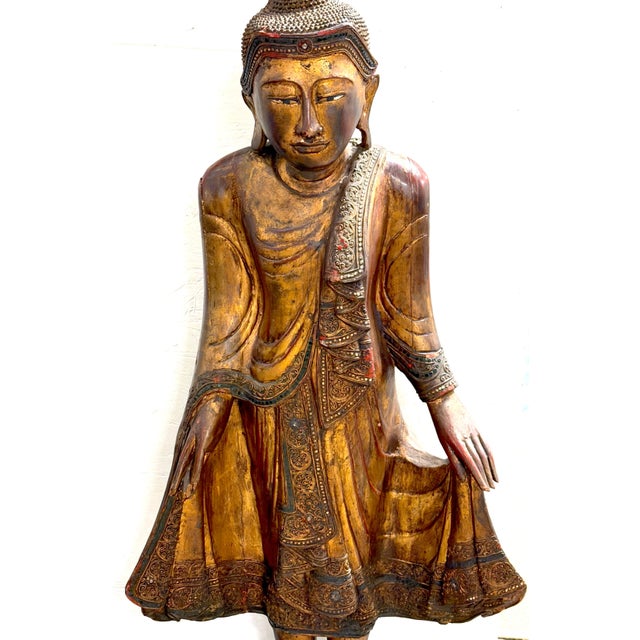
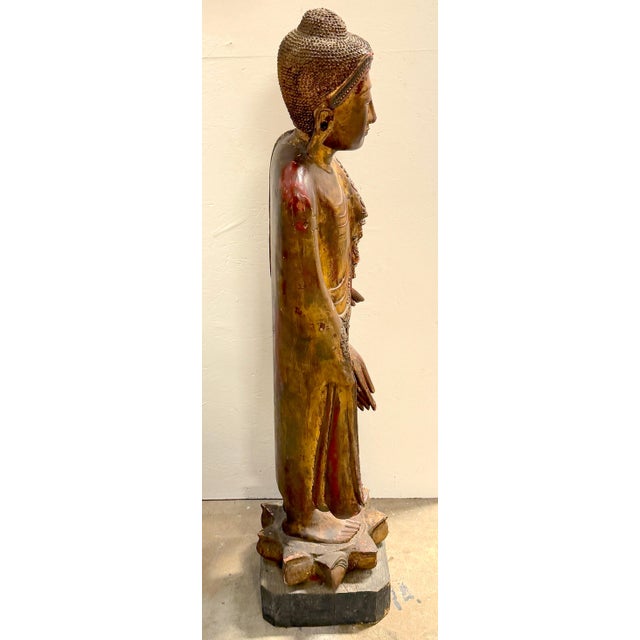
The Buddha is depicted standing in a gentle tribhanga-like contrapposto, with the weight subtly shifted and the torso inclined forward in a gesture of compassionate presence. The lowered gaze and softly modeled facial features convey meditative introspection and spiritual benevolence. The elongated earlobes, delicately arched brows, and refined nose and lips adhere closely to canonical Southeast Asian iconographic conventions.
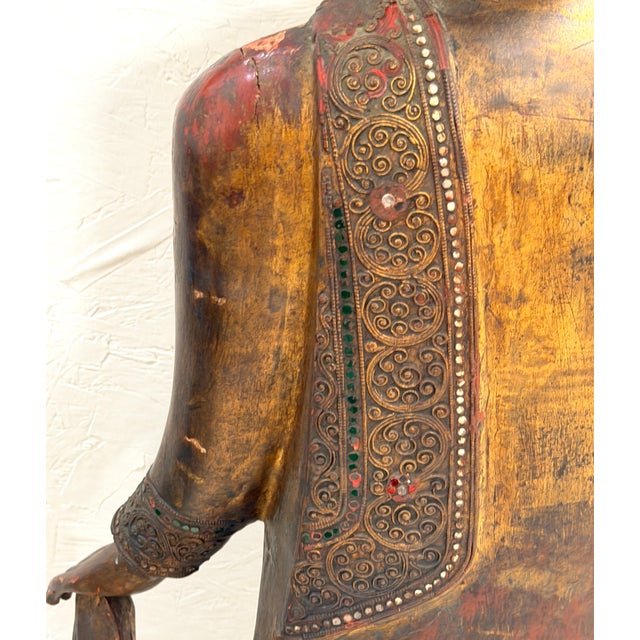
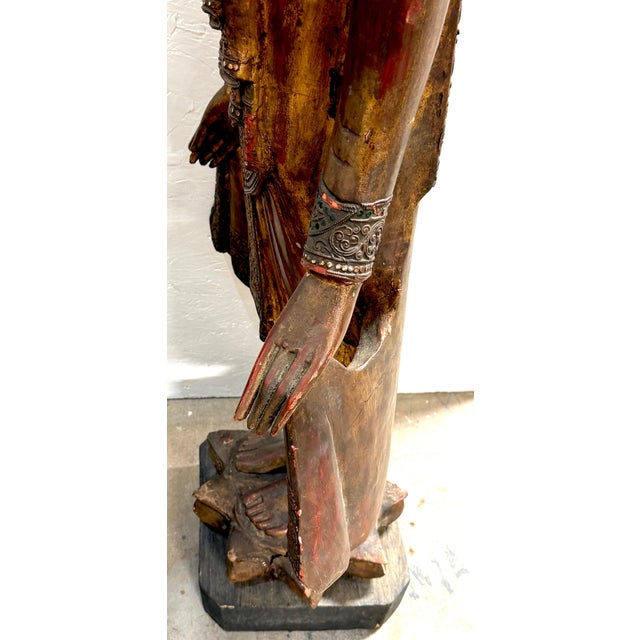
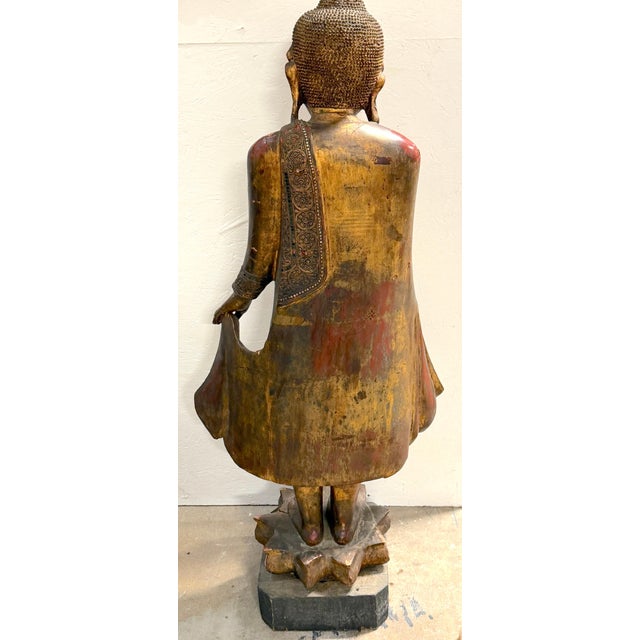
The hands are positioned in a graceful, offering-like gesture, with one hand lightly grasping the drapery of the robe—an expressive pose associated in Burmese tradition with acts of humility, generosity, and attentive compassion. The figure is clothed in a finely carved monastic robe (sanghati) adorned with an exceptionally detailed applied and incised border of scrolling vegetal motifs, rosettes, and bead-like ornaments. These decorative bands retain traces of green, red, and black pigment, along with punched and incised detailing that reflects Burmese lacquer and metalwork aesthetics translated into wood.
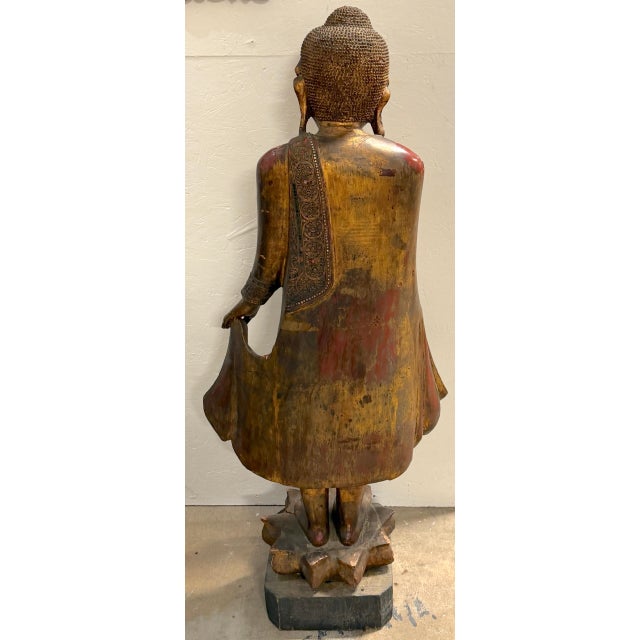
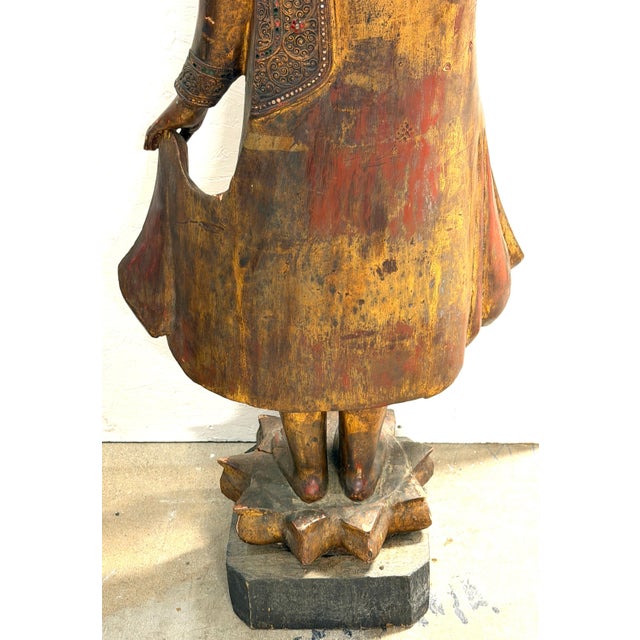
The surface retains extensive vestiges of original water gilding over red bole, now richly patinated through age and devotional handling. Areas of abrasion, pigment loss, and softened carving edges attest to long ritual use and lend the sculpture a powerful sense of historical presence.
The tightly curled hair (ushnisha) is carved in dense beaded rows, rising to a domed cranial protuberance symbolizing enlightenment and spiritual wisdom. The urna is subtly indicated at the brow beneath a finely modeled ornamental headband.
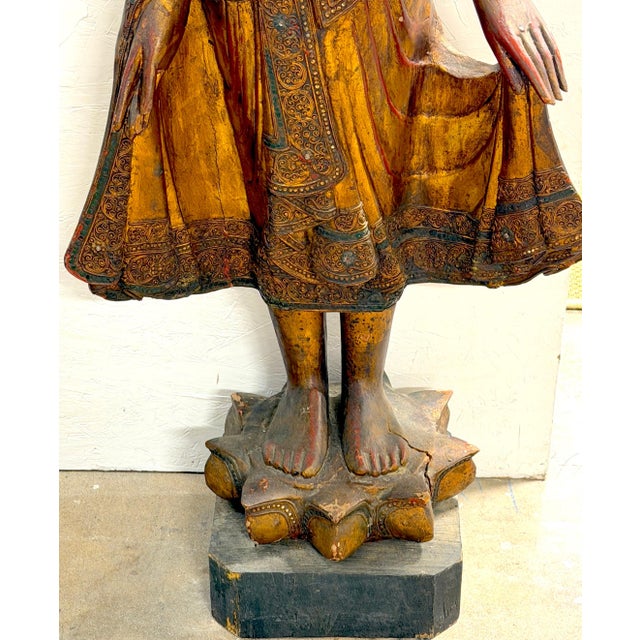
The figure stands atop a sculpted lotus-form base, symbolizing spiritual purity and transcendence, which itself rests on a later black-painted plinth for stability and display. The lotus petals are deeply carved and retain traces of original gilding and polychromy.
Materials & Technique
• Carved hardwood
• Gilding over red bole
• Polychrome pigments
• Incised, punched, and applied decorative ornament
• Traditional Burmese lacquer-style surface treatment
Attribution & Cultural Context
This sculpture is confidently attributable to Burma (Myanmar) based on:
• The facial type and downcast eyes
• The robe treatment and incised decorative borders
• The dense beaded hair texture
• The lotus pedestal form
• The gilded lacquer surface tradition
Burmese Buddhist sculpture of this scale was typically produced for temple interiors, monastery halls, and shrine pavilions, where such standing Buddhas served as devotional focal points associated with generosity, moral teaching, and protective blessing.
Condition
Good antique condition. Structurally sound. Extensive age-appropriate surface wear, pigment loss, craquelure, and abrasion consistent with devotional use. Scattered cracks and old stable splits to the wood, particularly at the shoulders and base. Later, a black-painted plinth. Overall, the surface presents a deeply desirable, authentic patina.
Summary
This is a rare and commanding monumental Burmese standing Buddha, remarkable for its scale, expressive posture, and richly ornamented robe. The sculpture embodies the refined spiritual aesthetics of late 19th-century Burmese Buddhist art and remains a powerful architectural and devotional presence suitable for a grand interior, gallery installation, or contemplative space.
See less
- Dimensions
- 23ʺW × 12ʺD × 53ʺH
- Styles
- Asian
- Period
- Late 19th Century
- Country of Origin
- Myanmar
- Item Type
- Vintage, Antique or Pre-owned
- Materials
- Giltwood
- Glass
- Condition
- Good Condition, Original Condition Unaltered, Some Imperfections
- Color
- Brown
- Condition Notes
- Good Wear consistent with age and use. Minor losses. Minor structural damages. Minor fading. Good Wear consistent with age and use. Minor losses. Minor structural damages. Minor fading. less
Questions about the item?
Returns & Cancellations
Return Policy - All sales are final 48 hours after delivery, unless otherwise specified in the description of the product.
Cancellation Policy - Prior to shipping or local pickup, buyers may cancel an order for up to 48 hours, unless otherwise specified.
Related Collections
- Straw Sculpture
- Constantin Brancusi Sculpture
- Louis XIV Sculpture
- Fernando Botero Sculpture
- Roman Bronze Works Sculpture
- Recycled/Repurposed Sculpture
- Worlds Away Sculpture
- Flavio Poli Sculpture
- Far Pavilions Sculpture
- Bentwood Sculpture
- Georgian Sculpture
- Bakelite Sculpture
- Medium-Density Fibreboard Sculpture
- Gold-Plate Sculpture
- Antique Iron Finish Sculpture
- Photography Sculpture
- Magenta Sculpture
- Maison Jansen Sculpture
- Sculpture in Columbus
- Polished Brass Finish Sculpture
- Sculpture in Panama City, FL
- Geode Sculpture
- René Lalique Sculpture
- Albert Ernest Carrier-Belleuse Sculpture
- Barovier and Toso Sculpture