

Details
Description
…After the Manner of Houdon · Life-Scale · Single Diplomatic Provenance · Easthampton, NY
La Petite Inconnue — (French) The …
Read more
…After the Manner of Houdon · Life-Scale · Single Diplomatic Provenance · Easthampton, NY
La Petite Inconnue — (French) The Little Unknown Girl
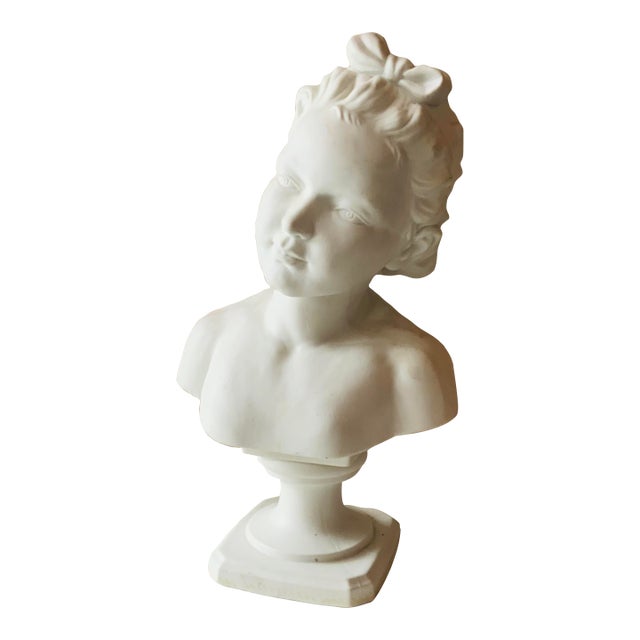
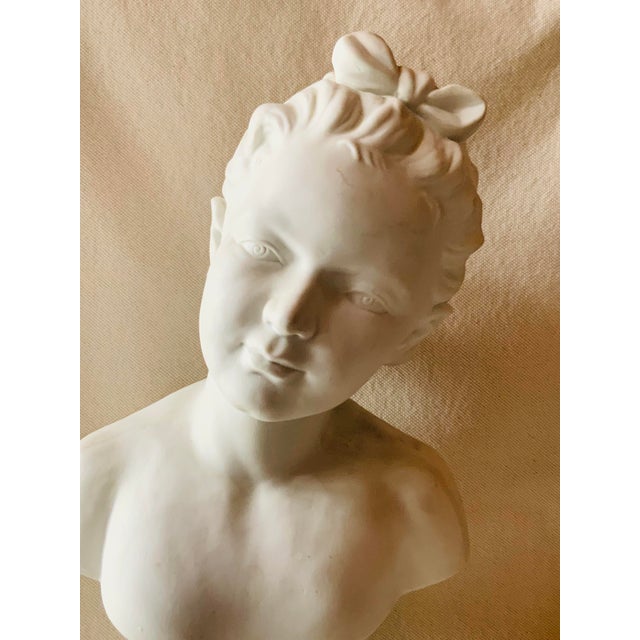
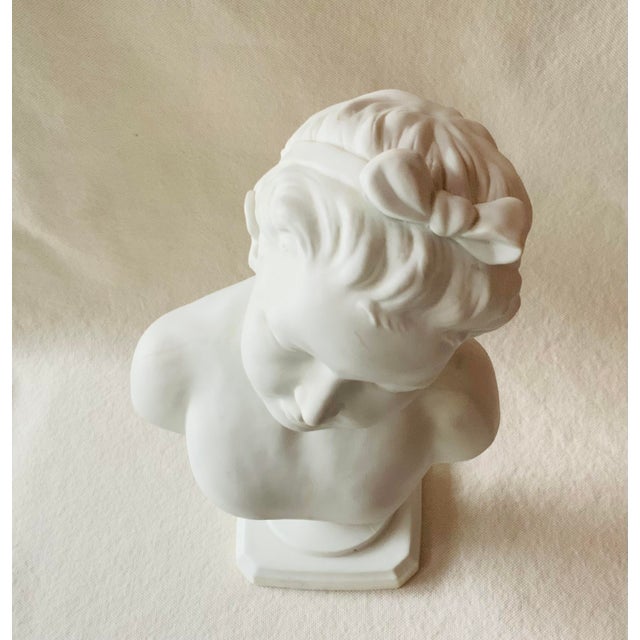
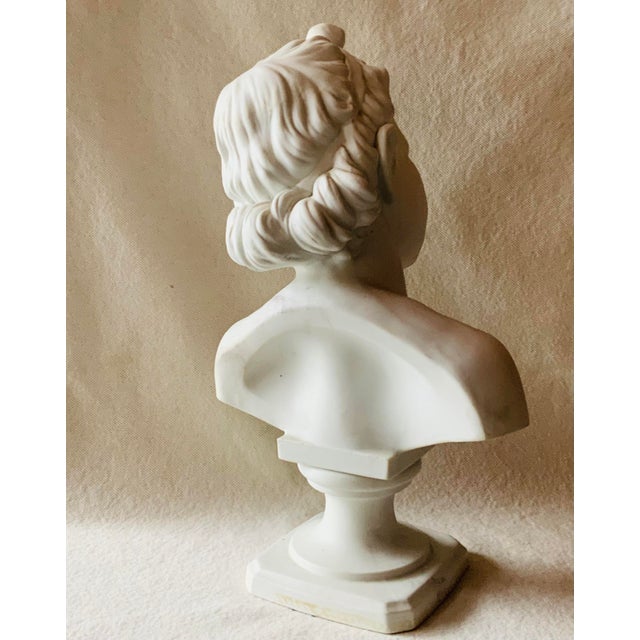
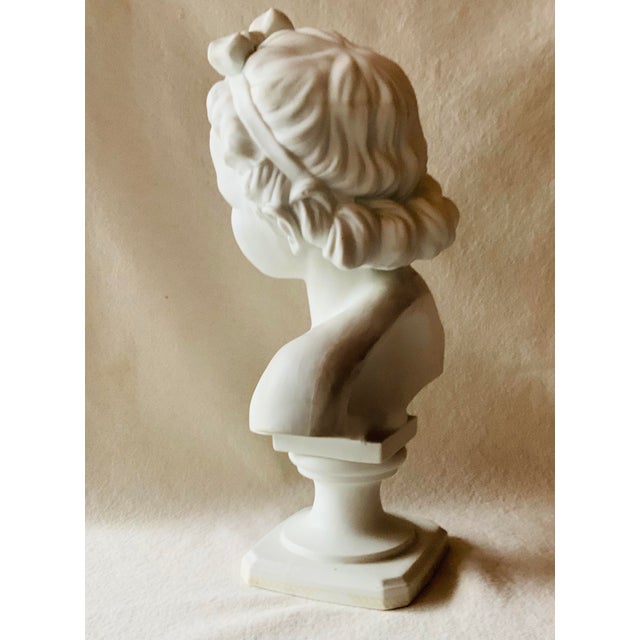
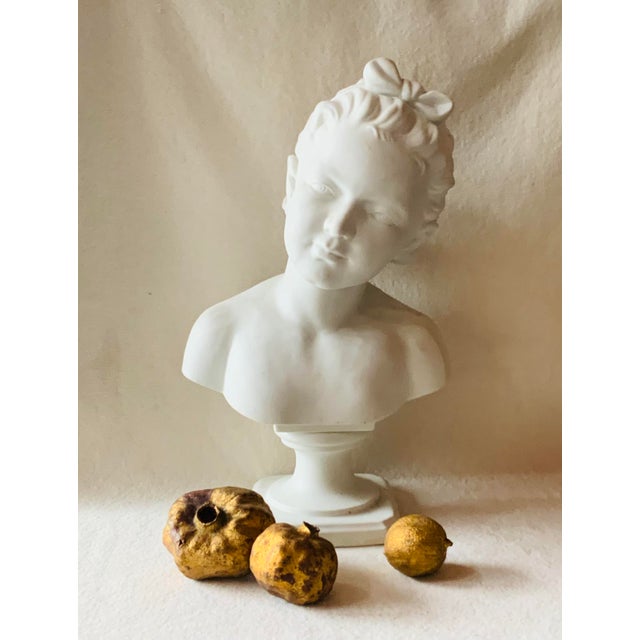
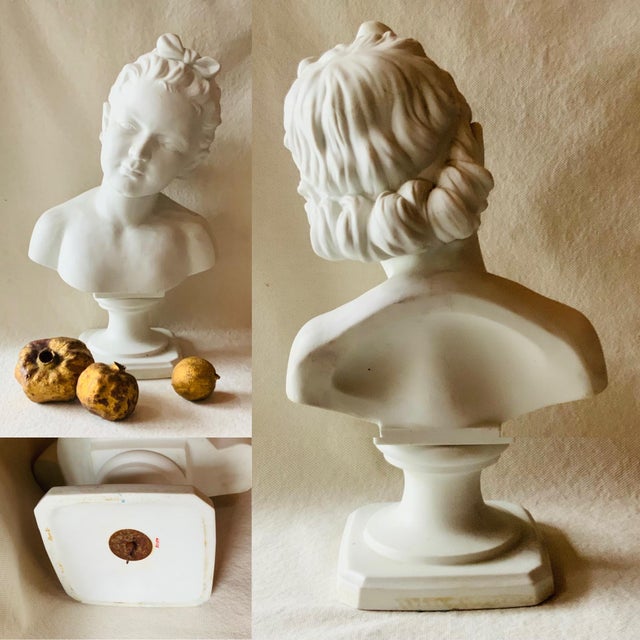
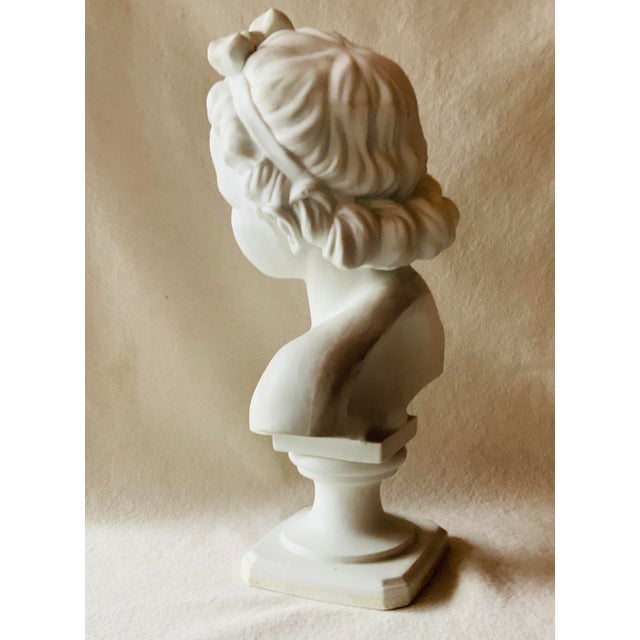
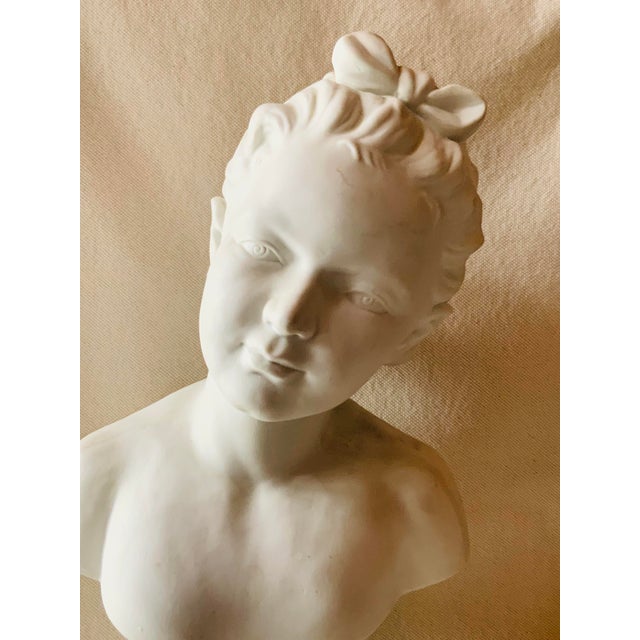
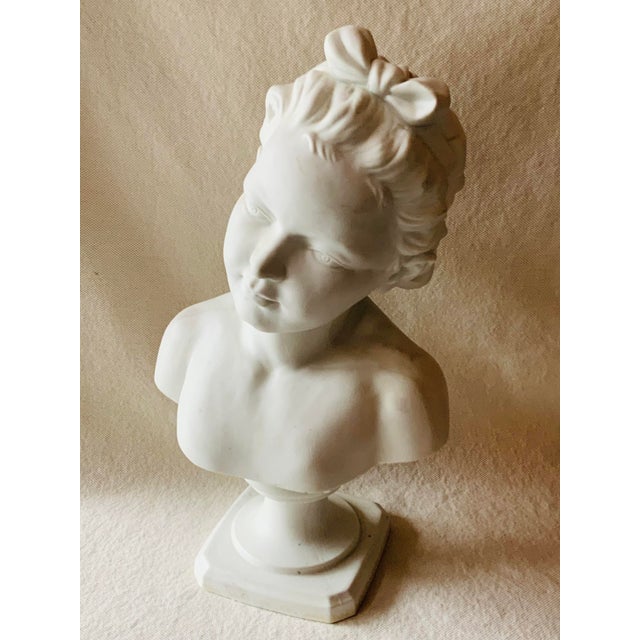
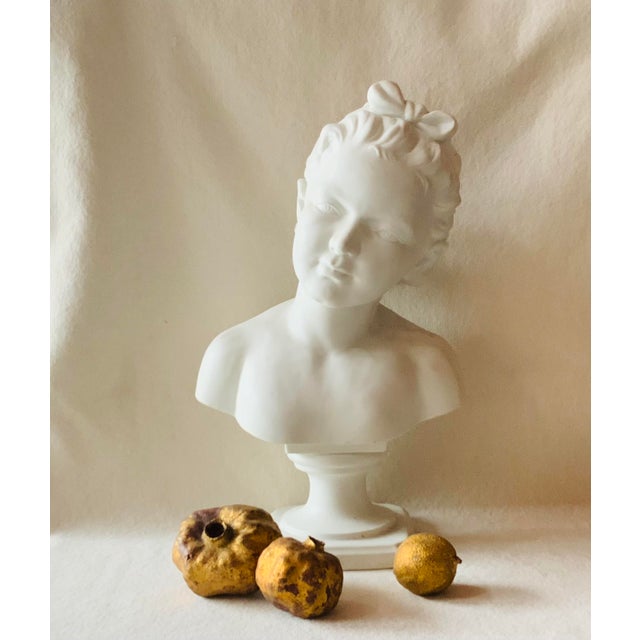
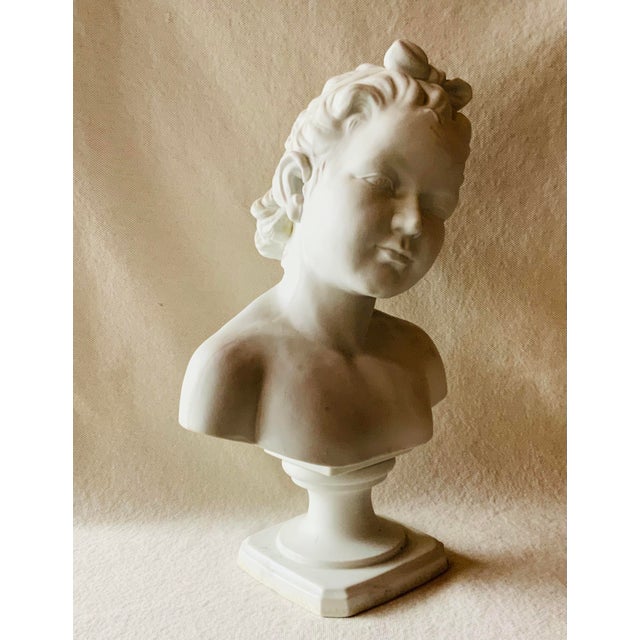
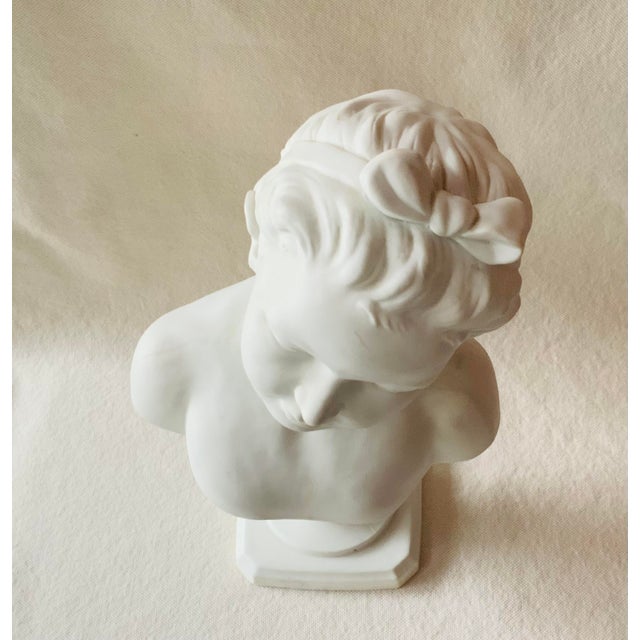
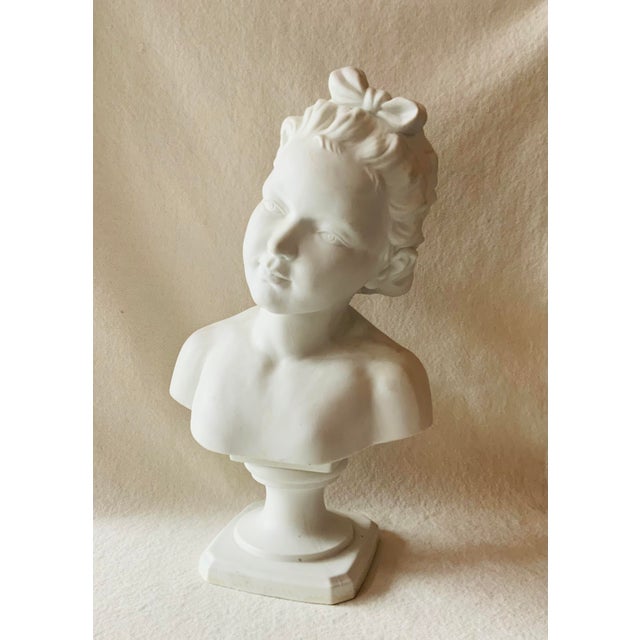
She is looking slightly downward, the way children look when they know something and have decided not to say it yet. The smile is almost there. The hair is caught mid-movement, pulled up with a ribbon that a French hand modeled in bisque porcelain sometime in the 1870s or 1880s, and it has not moved since.
This is the piece.
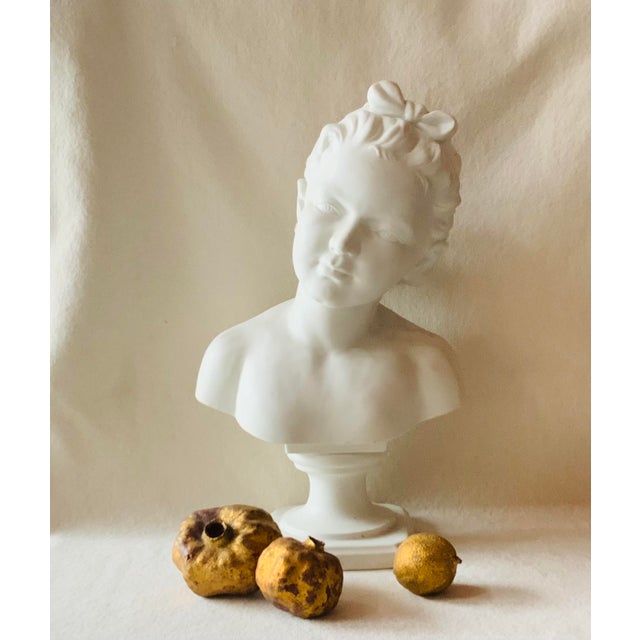
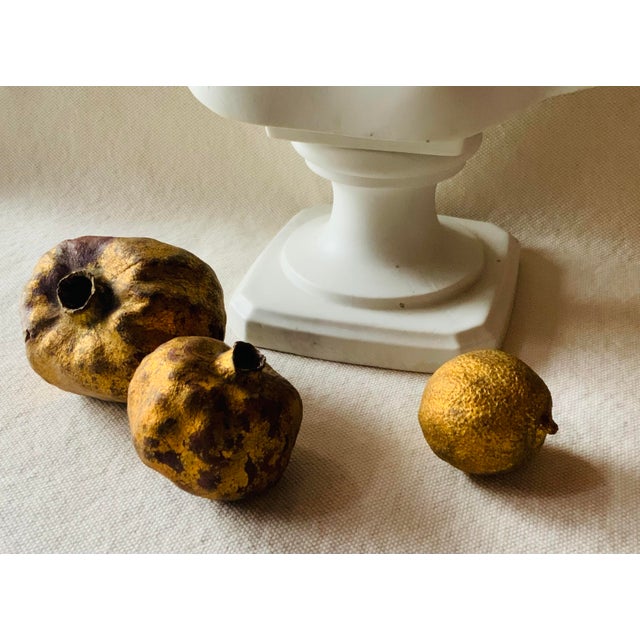
At 21 inches total height — 16 inches of bust on a 5-inch integral classical pedestal — she is life-scale. The scale of an actual child. Which means she does not sit in a room as a decorative object. She occupies it as a presence. Visitors stop. They look. They ask who she is. There is no answer, which is precisely the point — and precisely why we are calling her La Petite Inconnue. The little unknown girl. Still smiling, slightly, at something none of us were there to see.
The Material: Why Bisque Changes Everything
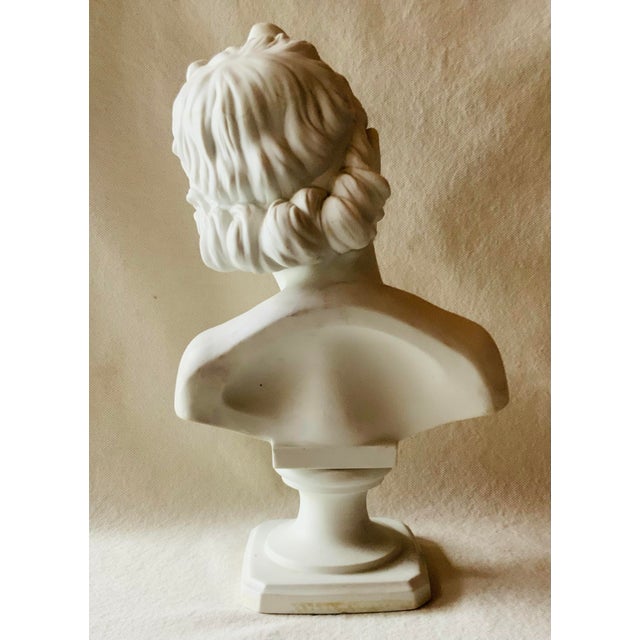
The surface is not glazed porcelain. It is bisque — the unglazed, matte finish that French ateliers of the 19th century reserved specifically for portrait sculpture, because bisque does what glaze cannot: it reads simultaneously as flesh and as marble. It absorbs light rather than reflecting it, which is why the modeling feels warm in a way that cold marble never quite achieves and why the subtle gradations of the sculptor's hand remain fully legible across the entire surface. Run a light source across her. Watch what happens to the cheekbones, the collarbone, the loose curls at the temple. This is not accident. This is a craftsman who understood that the material was an argument, and made his argument accordingly.
Sèvres pioneered the use of bisque for portrait busts in the 18th century. By the 19th century, the finest French ateliers had perfected it. A bisque bust of this quality and scale was not a commercial production. It was a commission, or it was the atelier's finest work — the kind kept back from export, made for the French domestic market, for collectors who needed no mark to tell them what they were looking at.
The Tradition: Houdon's Children
Jean-Antoine Houdon was the greatest portrait sculptor of 18th century France and arguably of the Western world. His child portraits — Louise Brongniart, Alexandre Brongniart, the busts of his own daughters — set the standard against which all subsequent French child portraiture was measured. The downward gaze. The arrested movement. The expression caught in the precise moment between innocence and understanding. The hair never quite settled. These were not idealized children. They were specific children, rendered with such fidelity that two centuries later you feel you know them.
The bust before you works entirely within that tradition. The tilt of the head, the direction of the gaze, the treatment of the hair and the ribbon, the particular quality of the smile that is not quite a smile — these are Houdonian moves, executed by a 19th century hand that had absorbed the lessons fully. Whether this piece is after a specific Houdon model, after a sculptor working in conscious homage, or the work of an accomplished atelier producing in the master's tradition, the lineage is unmistakable and the quality commensurate with it.
Provenance
Made in France, late 19th century, 1870s–1890s, for the French domestic market.
Acquired by a retired American diplomat during distinguished years of service in France — part of a collection assembled with the eye of someone who had spent decades in the salons, auction rooms, and marchés of the French provinces, learning in situ what excellence looked like.
Held in a private Easthampton, New York estate. The Hamptons. One collection. One owner between France and you.
That is a short chain for a piece of this age, quality, and presence.
Condition
Original. Unaltered. No repairs, no restoration, no intervention. The surface is clean and consistent, with the even, warm tone of bisque that has been properly cared for across generations. Condition rating: Good to Excellent.
Specifications
Total Height21" — life-scale for a childBust16" on 5" integral pedestal baseDimensions12" D × 6" W × 16" H (bust)PeriodLate 19th Century, 1870s–1890sOriginFranceMaterialFine French bisque porcelainStyleNeoclassical · After the manner of Houdon · French portrait traditionColorWarm luminous whiteMarkingsUnmarked — French domestic market productionConditionGood to Excellent — original, unalteredProvenanceDiplomatic estate collection, Easthampton NY
GentlemanlyPursuits | chairish.com/shop/gentlemanlypursuits
See less
Questions about the item?
Returns & Cancellations
Return Policy - All sales are final 48 hours after delivery, unless otherwise specified in the description of the product.
Cancellation Policy - Prior to shipping or local pickup, buyers may cancel an order for up to 48 hours, unless otherwise specified.
Related Collections
- Mario Lopez Torres Sculpture
- Lime Sculpture
- Polycarbonate Sculpture
- Klaus Ihlenfeld Sculpture
- Chaim Gross Sculpture
- Photorealism Sculpture
- Post Impressionist Sculpture
- Peter Shire Sculpture
- Georgian Sculpture
- Eugenio Pattarino Sculpture
- Copeland Sculpture
- Mathurin Moreau Sculpture
- Hagenauer Werkstätte Sculpture
- Maison Jansen Sculpture
- Renato Anatra Sculpture
- Austin Productions Sculpture
- Mid-Century Modern Sculpture
- Brutalist Sculpture
- Folk Art Sculpture
- Nude Sculptures
- Large Sculptures
- Alabaster Sculpture
- Jade Sculpture
- Isamu Noguchi Sculpture
- Bronze Animal Sculptures