

Details
Description
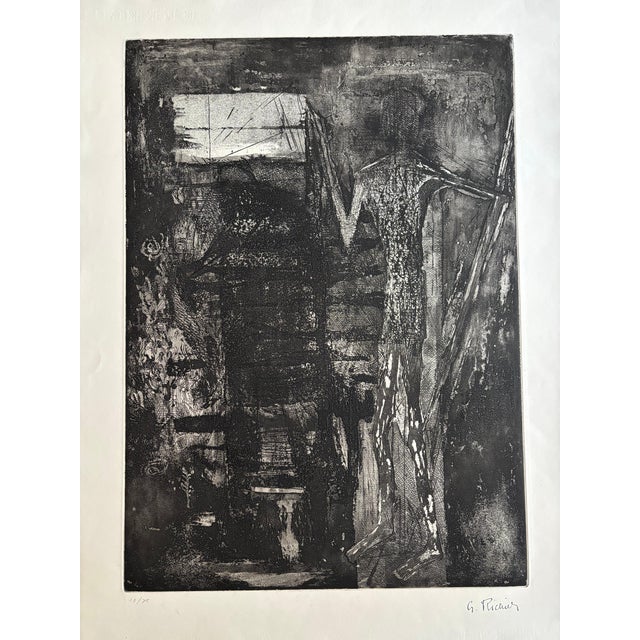
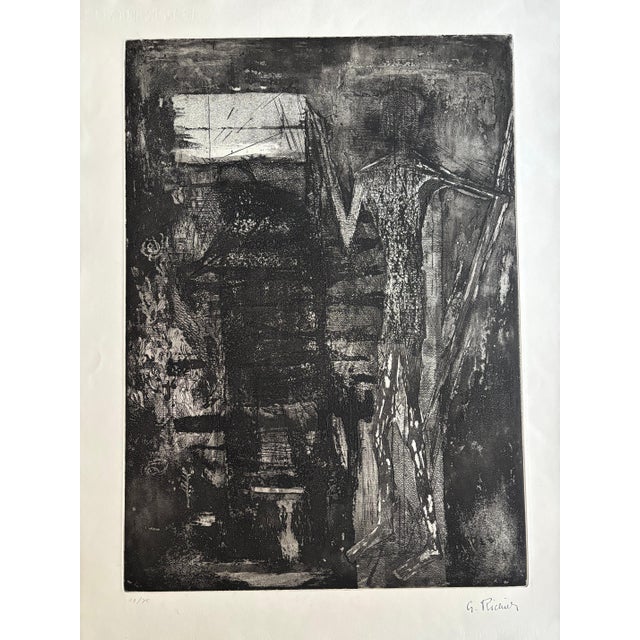
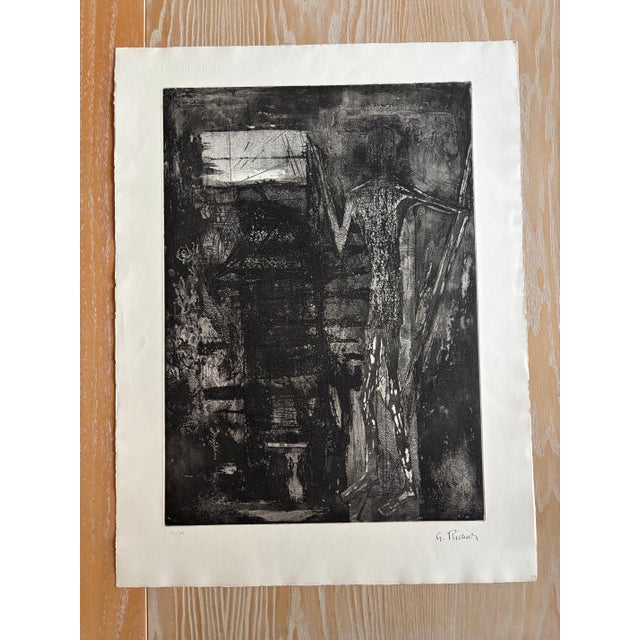
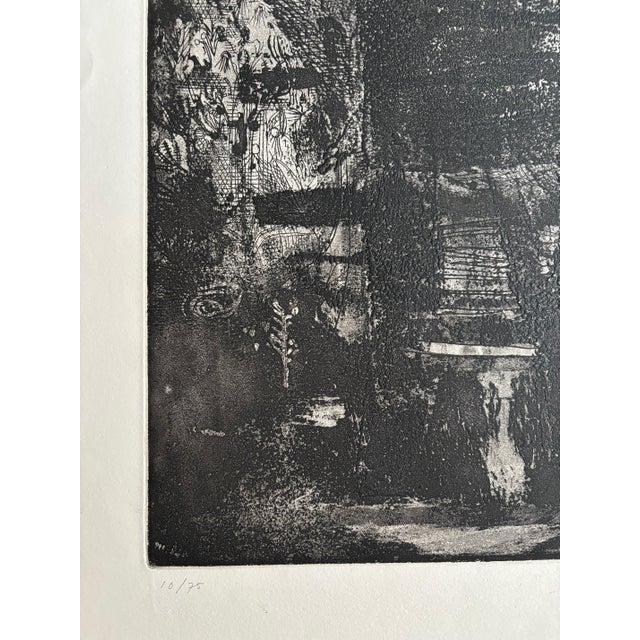
Rare signed and numbered print by the famous artist Germaine Richier, inscreasingly esteemed with the movement of rediscovering art by …
Read more
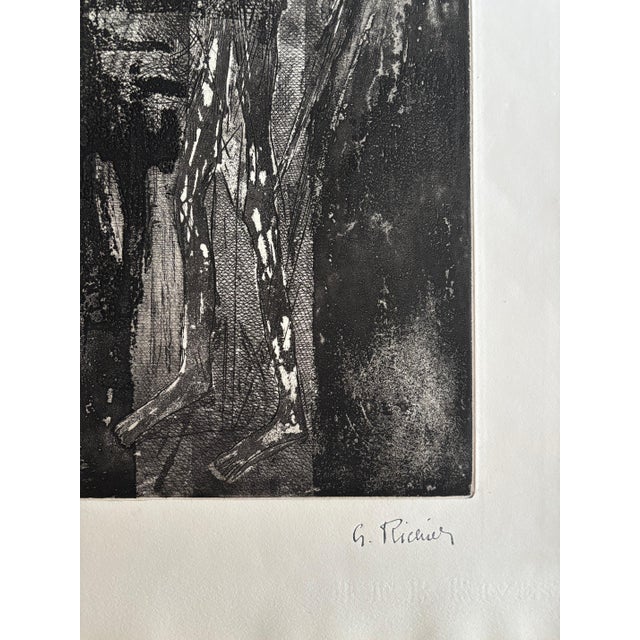
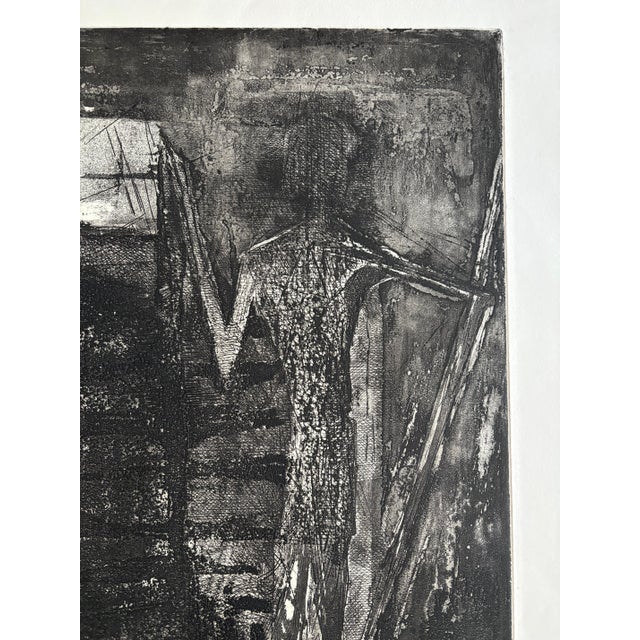
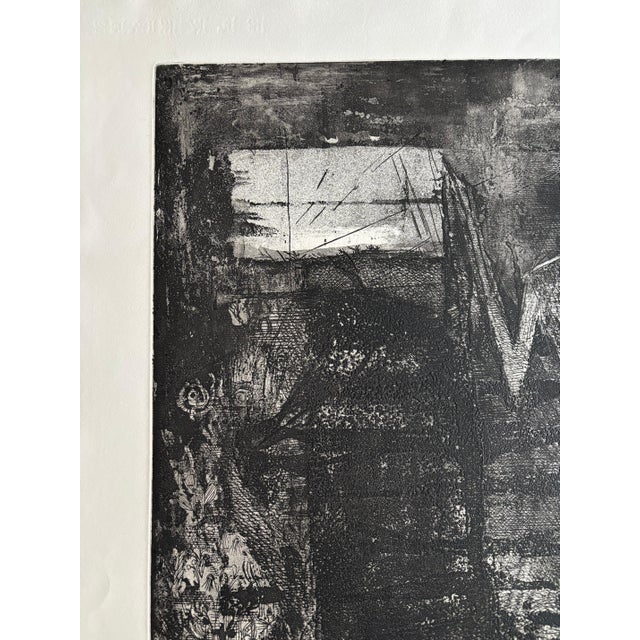
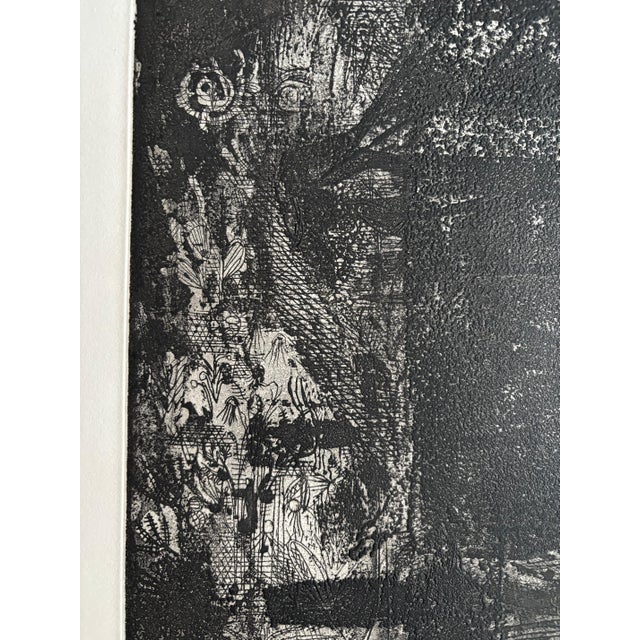
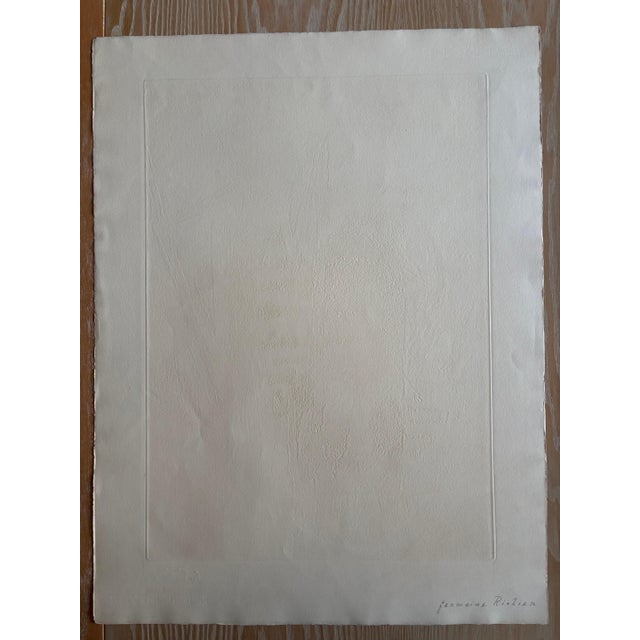
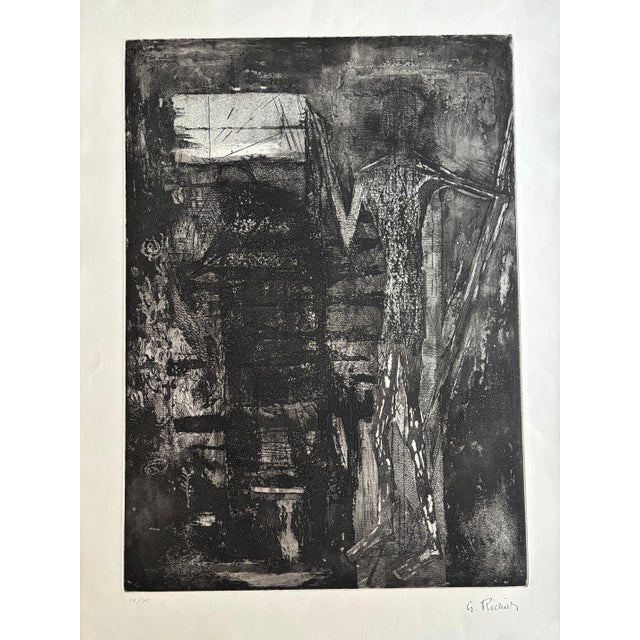
Rare signed and numbered print by the famous artist Germaine Richier, inscreasingly esteemed with the movement of rediscovering art by women, and generally described as the creative alter ego of Alberto Giacometti. Created in the 1950's, this etching measured 66 x 50 centimeters and depicts a famous subject of the artist : Don Quichotte. Don Quixote, which also exists as a sculpture masterpiece, marks the beginning of a new style in Germaine Richier’s work: a long, slim style. In contrast with the age old figures of massive, dense proportions such as L’Ogre for example, a series of slim figures, both slender and teetering on the edge of breakage follow Don Quixote. Its inaugural character hat pushes beyond the normal limits of man, define Don Quixote as a superior work. Shortly before Richier worked on a figure of Christ from the Church of Assy, a commissioned work where corporeality is pushed to an extreme, as if dissolved into concept. Don Quixote is of the same stark, idealist vein: Cervantes’ errant horse rider pulls away from the romantic picaresque. with Richier, he acquires a certain authentic noblesse. While the raised left arm indicates an attraction towards the sky, the virile diagonal of the lance stuck in the base indicates determination. Richier’s Don Quixote is not a cheap hero. Like Sisyphus, he is to be seen as a conqueror, walking through forests with his long, gnarled legs modelled from tree branches. Akin to the half human, half vegetal left arm, these legs allow for a glimpse of Richier’s almost pantheistic imagination: an imaginary world that is less fantastic than dramatic where the elements seem to join together for the sake of beauty. Don Quixote acquires an extraordinary universal dimension and stands equal to Giacometti’s L’Homme qui marche. Germaine Richier is one of the main important modern sculptors of the XXth century, with Alberto Giacometti, Henry Moore, Barbara Hepworth, Alexander Calder, Pablo Picasso, Constantin Brancusi, Henri Matisse and Jean Dubuffet. Germaine Richier occupies a central position in the history of modern sculpture, as a link between Rodin and the first César. Having trained in the tradition of Auguste Rodin and Antoine Bourdelle, over a period of little more than 25 years, between the 1930s and her premature passing in 1959, Germaine Richier asserted herself as profoundly original and radical in scarcely more than 25 years. Some major themes (the human, the animal, myths) nurtured her practice as a sculptor. Like Alberto Giacometti, Richier effected a revitalisation of the figure, forging new images of men and women in the post-war period. traduit ça en anglais Voici une version anglaise fluide, corrigée et professionnelle de votre texte (niveau galerie / catalogue), avec orthographe, style et terminologie artistique ajustés : Germaine Richier — Don Quichotte : Rare signed and numbered print by the renowned sculptor Germaine Richier, whose work has been increasingly re-evaluated through the rediscovery of women artists and who is often described as the creative alter ego of Alberto Giacometti. Created in the 1950s, this etching (66 × 50 cm) depicts one of the artist’s most significant subjects: Don Quichotte. This figure, which also exists as a sculptural masterpiece, marks the emergence of a new stylistic phase in Richier’s work — a long, slender aesthetic. In contrast to her earlier dense, massive figures such as L’Ogre, Don Quichotte inaugurates a series of attenuated, fragile silhouettes that seem poised on the verge of rupture. Its inaugural character pushes beyond the ordinary limits of the human figure, establishing Don Quichotte as a major work. Shortly before, Richier had worked on the figure of Christ for the Church of Assy, a commission in which corporeality is stretched to an extreme, almost dissolving into concept. Don Quichotte belongs to the same austere and idealist vein: Cervantes’ wandering knight moves away from romantic picaresque tradition and, in Richier’s vision, acquires an authentic nobility. The raised left arm suggests an attraction toward the sky, while the virile diagonal of the lance anchored in the base conveys determination. Richier’s Don Quichotte is no facile hero; like Sisyphus, he appears as a conqueror, striding through forests on long, gnarled legs modeled after tree branches. Together with the half-human, half-vegetal left arm, these legs reveal glimpses of Richier’s almost pantheistic imagination — a world less fantastical than dramatic, where natural elements merge in the service of beauty. Don Quichotte thus acquires a universal dimension, standing alongside Giacometti’s L’Homme qui marche. Germaine Richier is one of the major sculptors of the twentieth century, alongside Alberto Giacometti, Henry Moore, Barbara Hepworth, Alexander Calder, Pablo Picasso, Constantin Brancusi, Henri Matisse, and Jean Dubuffet. She occupies a central place in the history of modern sculpture, forming a link between Rodin and the generation leading to César. Trained in the tradition of Auguste Rodin and Antoine Bourdelle, Richier developed, over a career of just over twenty-five years between the 1930s and her premature death in 1959, a profoundly original and radical sculptural language. Major themes — the human figure, the animal world, and myth — nourished her practice. Like Giacometti, she contributed decisively to the post-war renewal of the human figure, forging new images of men and women in modern sculpture. This piece is attributed to the mentioned designer/maker. It has no attribution mark and no
official proof of authenticity,
however it is well documented in design history. I take full responsibility for any authenticity
issues arising from misattribution
See less
Returns & Cancellations
Return Policy - All sales are final 48 hours after delivery, unless otherwise specified in the description of the product.
Cancellation Policy - Prior to shipping or local pickup, buyers may cancel an order for up to 48 hours, unless otherwise specified.
Related Collections
- Soicher Marin Original Prints
- Rattan Original Prints
- Medium-Density Fibreboard Original Prints
- Ralph Lauren Original Prints
- Johannes Kip Original Prints
- Silver Finish Original Prints
- Sam Francis Original Prints
- Dye Transfer Original Prints
- Original Prints in Panama City, FL
- Original Prints in Salt Lake City
- Donald Sultan Original Prints
- Original Prints in Lexington, KY
- Damien Hirst Original Prints
- Botanical Prints
- Framed Prints
- Bird Prints
- Woodblock Prints
- Screen Prints
- Japanese Woodblock Prints
- Thomas McKnight Original Prints
- George Barbier Original Prints
- Frank Stella Original Prints
- Gustave Baumann Original Prints
- Teak Original Prints
- Clay Original Prints