




Details
Description
There are decorative objects… and then there are objects that look as though they once presided over banquets where goblets …
Read more
There are decorative objects… and then there are objects that look as though they once presided over banquets where goblets clinked, poets declaimed, and someone in velvet insisted on another course of roasted pheasant.
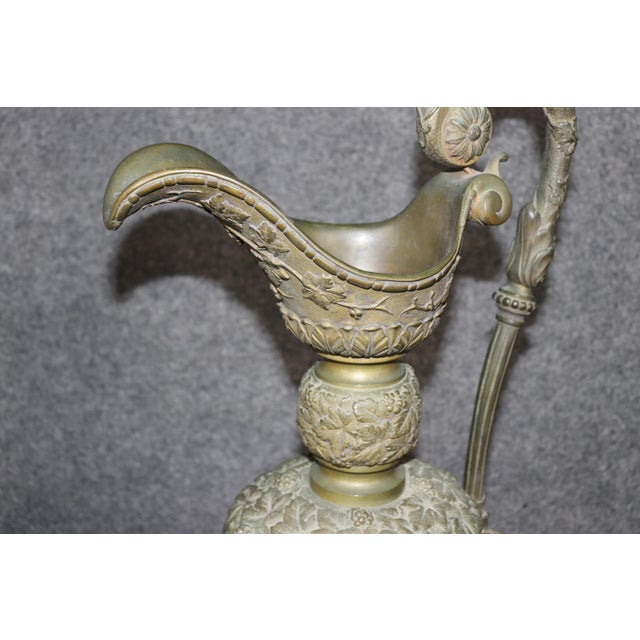
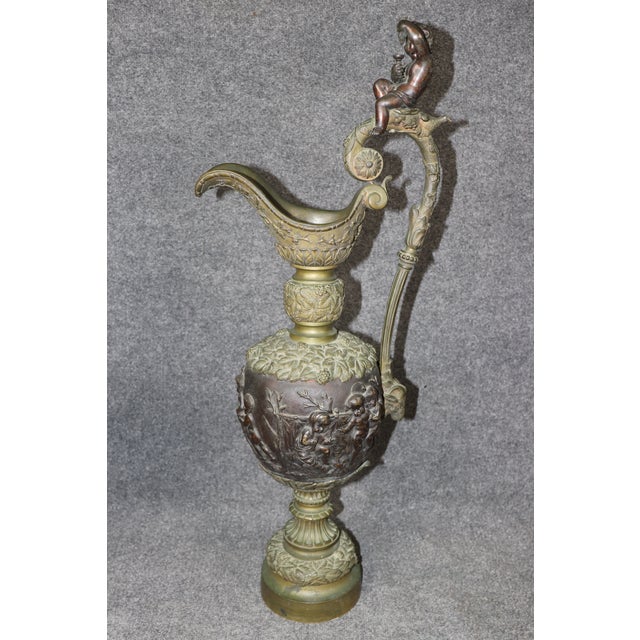
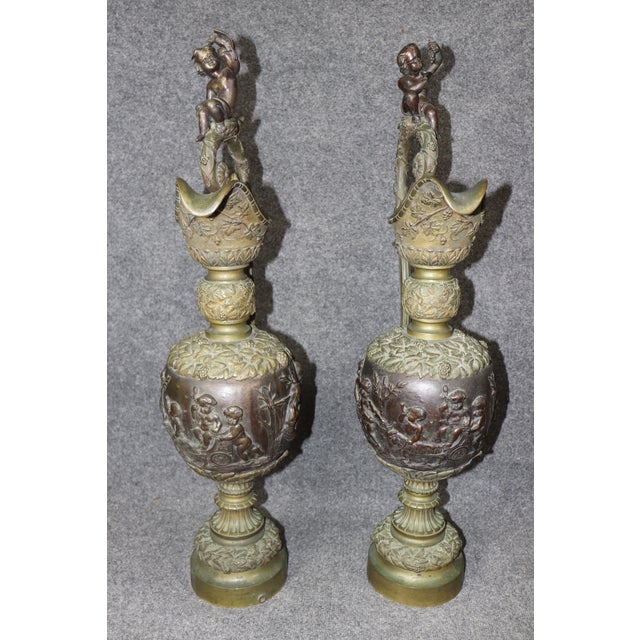
This superb pair of 19th century French Renaissance Revival cast bronze ewers carries precisely that air of theatrical abundance. Grand in scale and rich in detail, they are not merely vessels — they are sculptural narratives in metal.
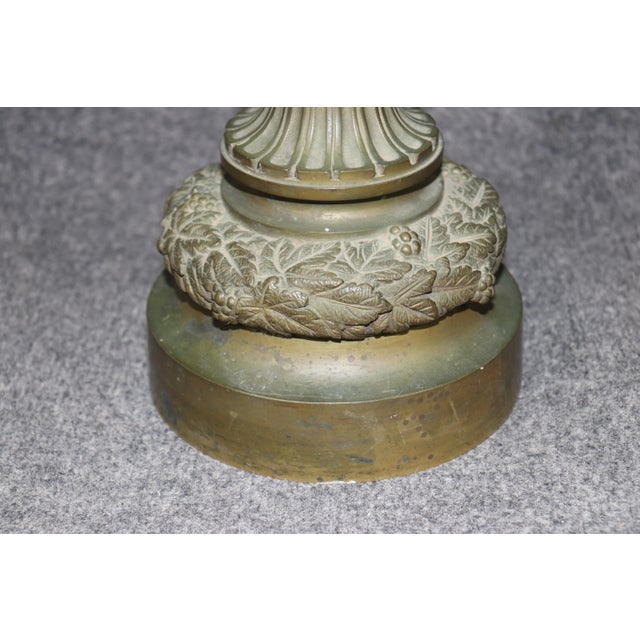
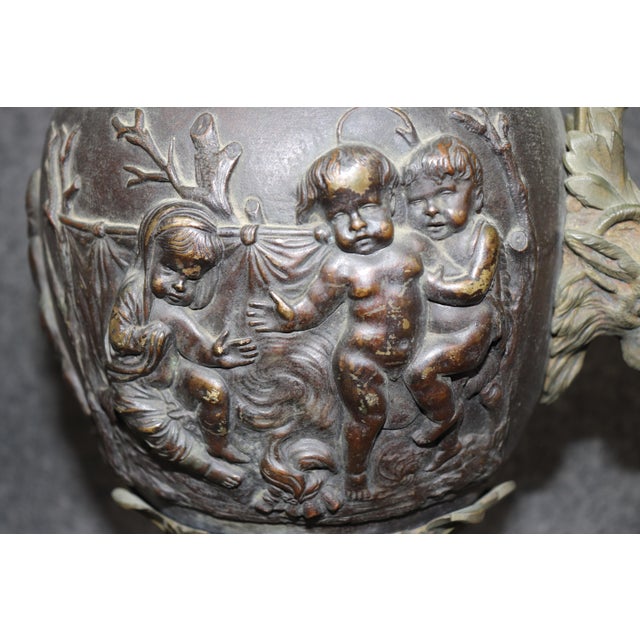
Let’s begin with the form. Each ewer rises from a circular pedestal base into a boldly modeled baluster stem, crowned by a globular body adorned with high-relief figural scenes. The patinated bronze panels depict playful cherubs and classical figures engaged in pastoral revelry — scenes that feel lifted straight from a 16th-century tapestry. The contrast between the darker, richly toned body and the lighter gilt bronze mounts creates depth and visual drama worthy of a château mantel. Look at the Bacchonalian puttis!
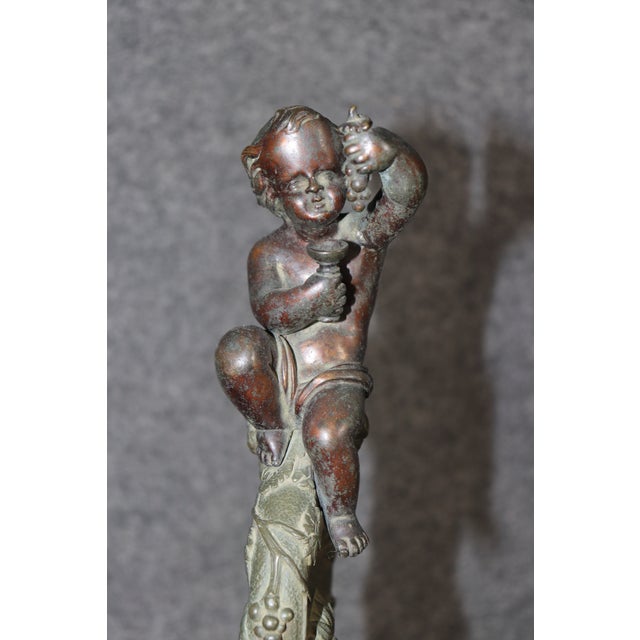
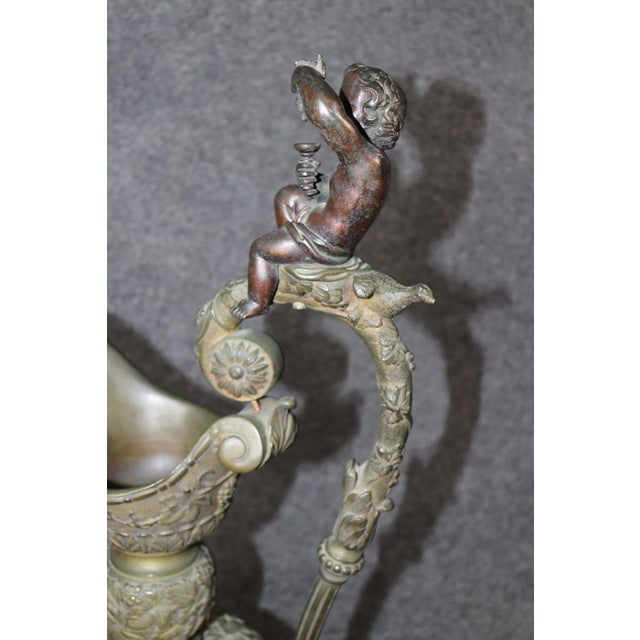
Above, the sweeping, elongated spouts curve outward with unmistakable Renaissance bravado — elegant, exaggerated, unapologetically refined. The handles are equally expressive, arching high and terminating in scrollwork embellished with seated cherubic figures perched confidently at the crest. These putti do not merely decorate; they perform. One raises a small vessel as if toasting history itself.
Now, what exactly were ewers used for?
Historically, a ewer was a pitcher-like vessel designed for pouring water, wine, or scented liquids. In medieval and Renaissance Europe, ewers were essential components of ceremonial handwashing rituals before meals. A servant would pour water from the ewer into a basin so guests could cleanse their hands — an act that was both practical and symbolic. Over time, especially by the 16th and 17th centuries, ewers evolved from functional tableware into elaborate status symbols crafted in silver, bronze, or precious metals. They became centerpieces — objects meant to impress, not merely to pour.
By the 19th century, during the Renaissance Revival period in France, artisans looked back to these opulent historical forms with admiration. Bronze foundries recreated the grandeur of earlier centuries, blending sculptural artistry with decorative utility. These ewers are quintessential examples of that revivalist spirit — scholarly, dramatic, and unabashedly ornate.
Placed as a pair, they command symmetry and presence. On a console, a dining sideboard, or flanking a fireplace, they create an immediate focal point. They speak of cultivated taste, of appreciation for European decorative arts, of rooms where conversation lingers.
This is not simply a pair of French bronze vessels.
Measures 34.5 tall x 14.25 wide x 9 deep.
It is Renaissance Revival storytelling — cast in bronze, gilded with memory, and ready once more to preside over elegance.
See less
- Dimensions
- 14.5ʺW × 9ʺD × 34.5ʺH
- Styles
- Renaissance Revival
- Period
- Late 19th Century
- Country of Origin
- France
- Item Type
- Vintage, Antique or Pre-owned
- Materials
- Bronze
- Condition
- Good Condition, Some Imperfections
- Color
- Bronze
- Condition Notes
- Good condition with original patina. Good condition with original patina. less
Questions about the item?
Returns & Cancellations
Return Policy - All sales are final 48 hours after delivery, unless otherwise specified in the description of the product.
Cancellation Policy - Prior to shipping or local pickup, buyers may cancel an order for up to 48 hours, unless otherwise specified.