

Details
Description
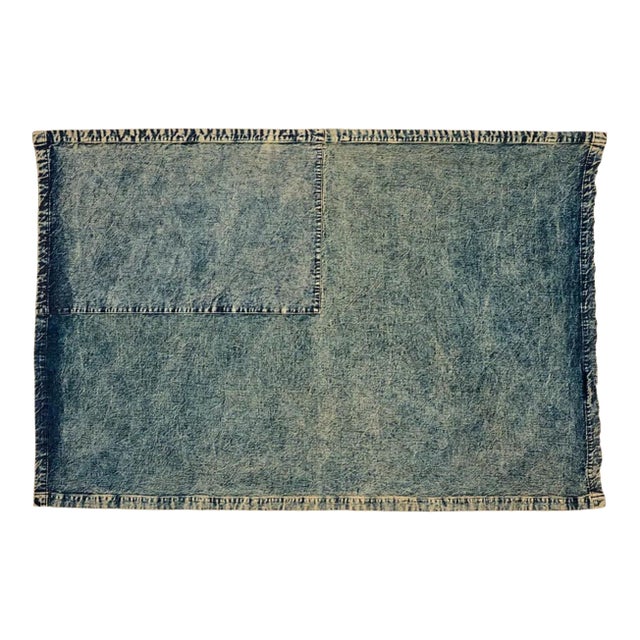
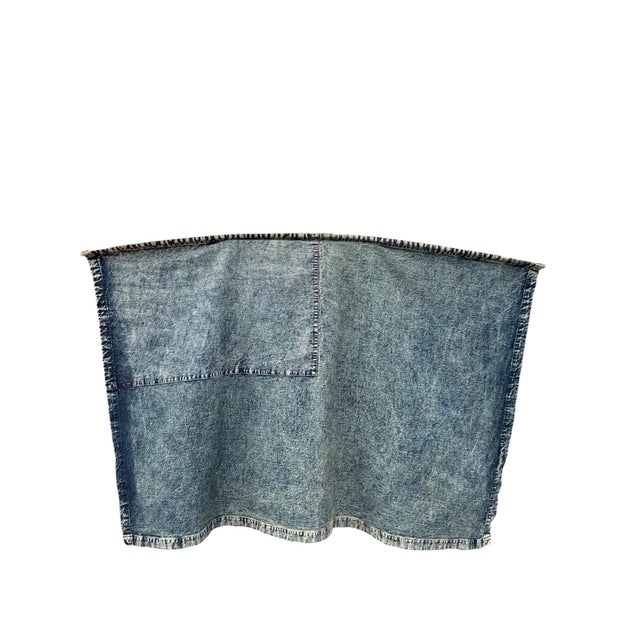
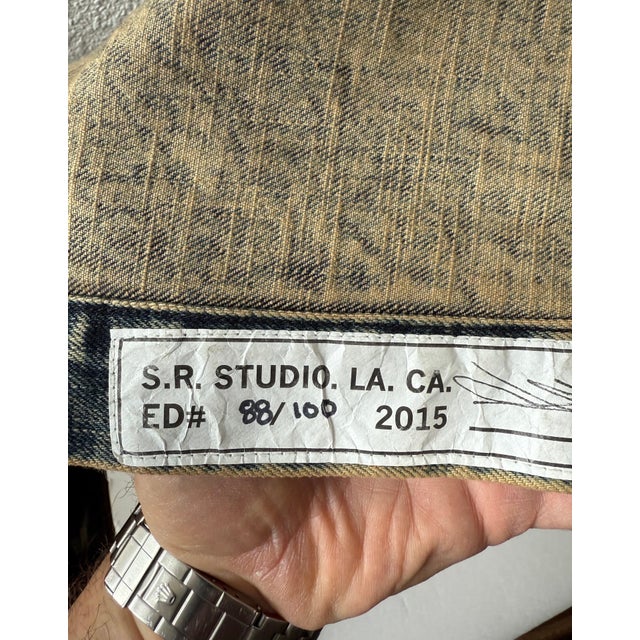
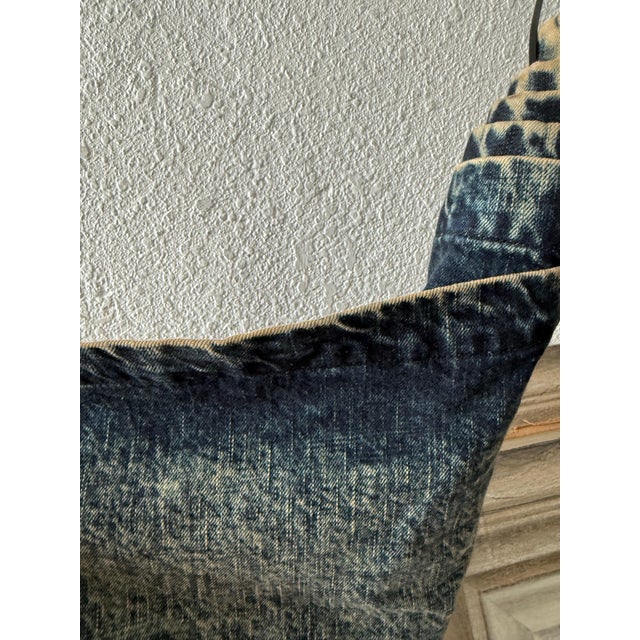
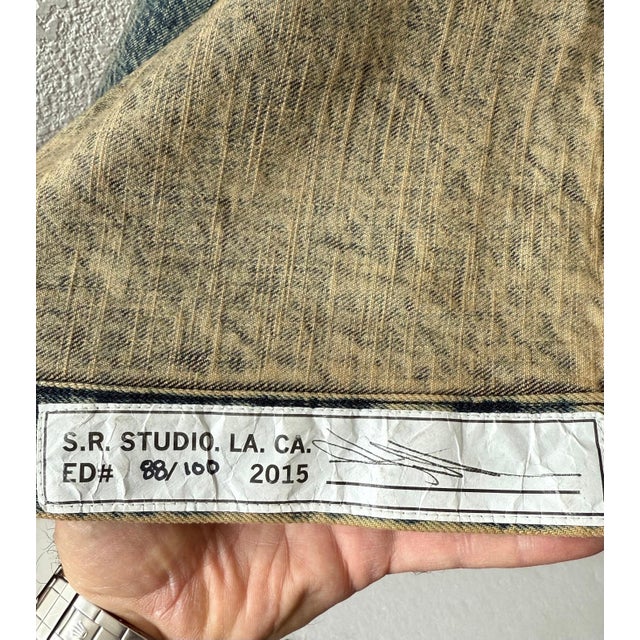
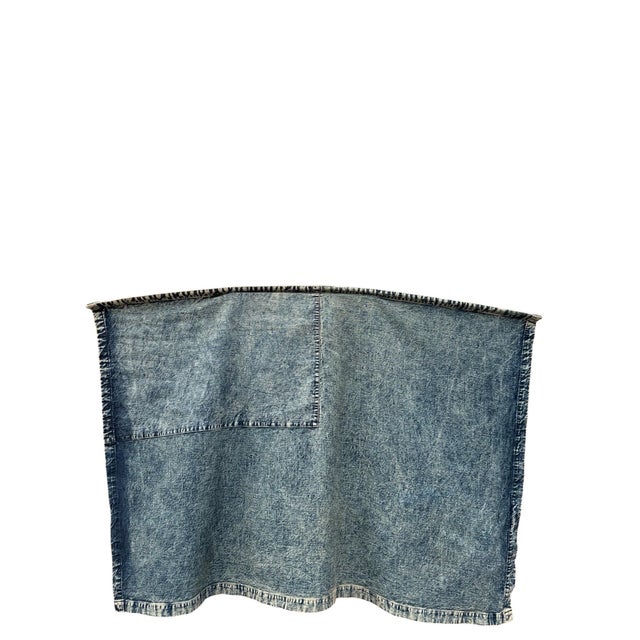
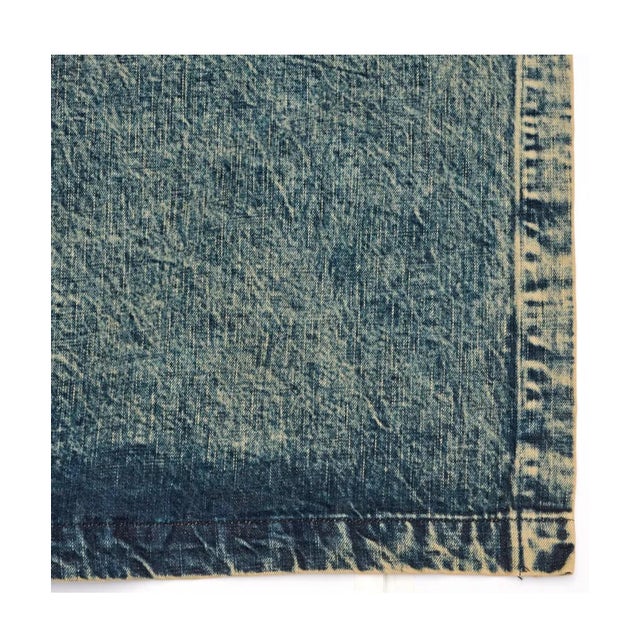
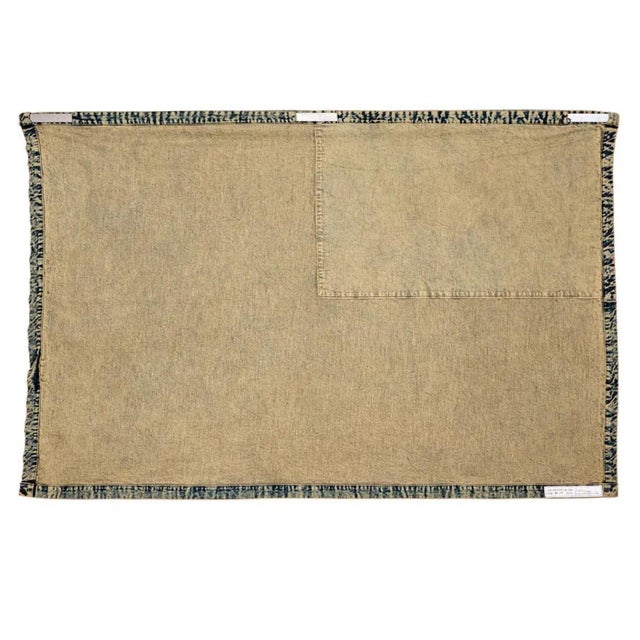
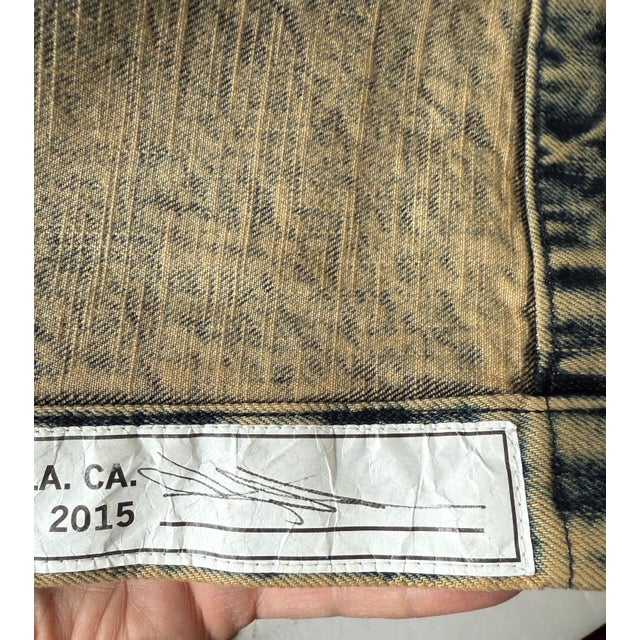
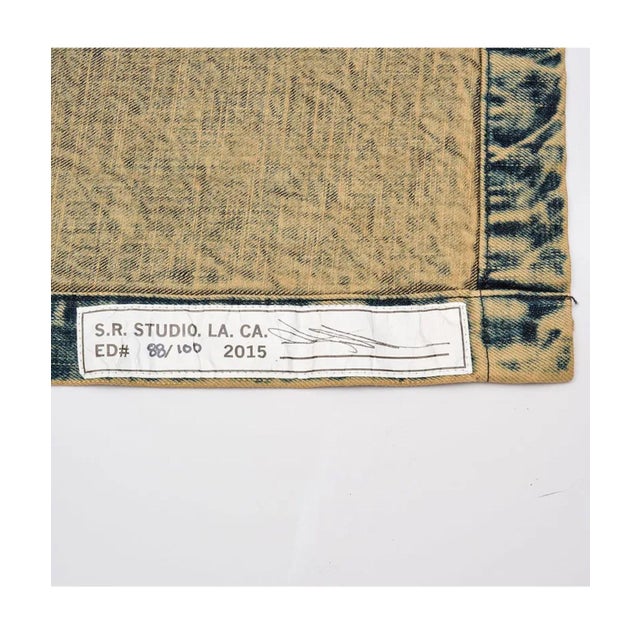
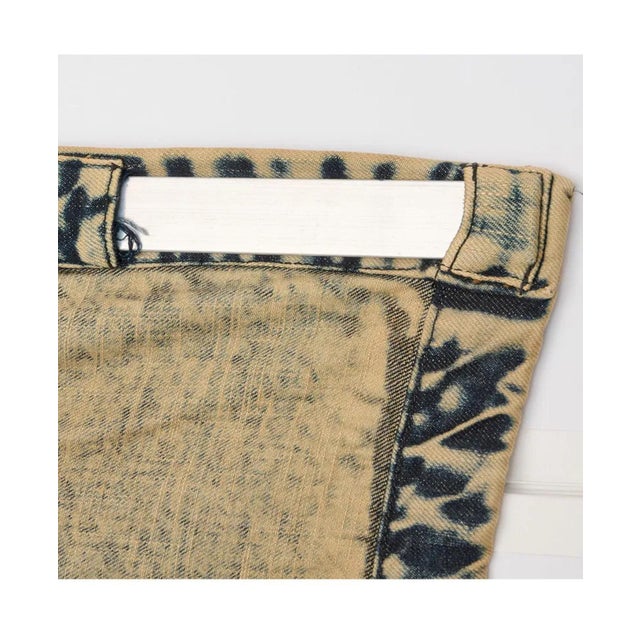
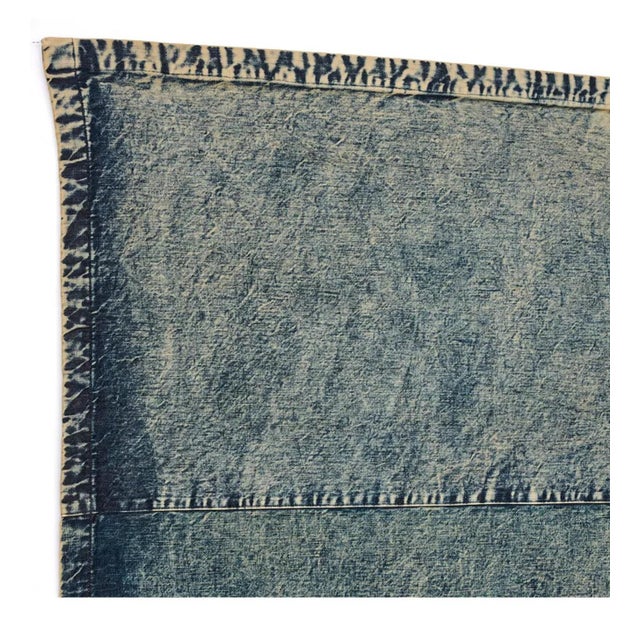
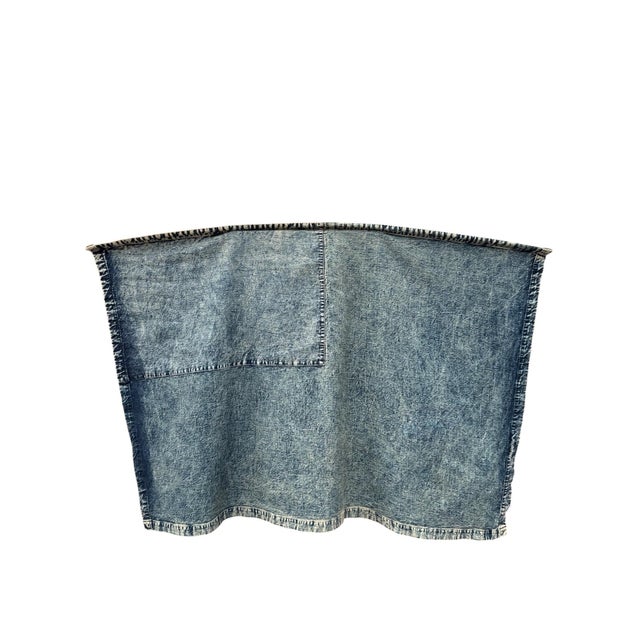
Sterling Ruby (American, b. 1972) 2015 CHINATI FLAG (DNM) Tag printed with SR STUDIO LA CA printed with handwritten edition … Read more Sterling Ruby (American, b. 1972) 2015 CHINATI FLAG (DNM) Tag printed with SR STUDIO LA CA printed with handwritten edition number Ed # 88/100 Hand signed "Sterling Ruby" in black pen Dimensions: 45"h x 70"w Treated denim, intentionally distressed. Sterling Ruby (born January 21, 1972) is an American artist who works in a large variety of media including ceramics, painting, drawing, collage, sculpture, video, and textiles. Often, his work is presented in large and densely packed installations. The artist has cited a diverse range of sources and influences including aberrant psychologies (particularly schizophrenia and paranoia), urban gangs and graffiti, hip-hop culture, craft, punk, masculinity, violence, pop art, public art, prisons, globalization, American domination and decline, waste and consumption. In opposition to the minimalist artistic tradition and influenced by the ubiquity of urban graffiti, the artist's works often appear scratched, defaced, camouflaged, dirty, or splattered. Proclaimed as one of the most interesting artists to emerge this century by New York Times art critic Roberta Smith, Ruby's work examines the psychological space where individual expression confronts social constraint. Sterling Ruby currently lives and works in Los Angeles. His studio is located in Vernon, south of downtown Los Angeles. Sterling Ruby was born on an American military base in Bitburg, Germany to a Dutch mother and an American father. Ruby attended The Pennsylvania School of Art and Design, (now the Pennsylvania College of Art and Design, PCA&D). In 2002, he received a BFA from the School of the Art Institute of Chicago. While attending the Art Institute he worked for the Video Data Bank, then under the direction of Kate Horsfield. In 2003, he moved to Los Angeles to attend the MFA program at Art Center College of Design in Pasadena, California. While at Art Center he studied with artists Diana Thater and Richard Hawkins, and theorists Sylvère Lotringer and Laurence Rickels. While attending graduate school at Art Center he was the teaching assistant for artist Mike Kelley. Collage plays a significant role in the artist's prolific and interdisciplinary practice. His bleached denim and canvas collages are titled BC which refers simply to Bleach Collage, but also references the art historical dating reference BC (Before Christ) or BCE (Before the Common Era). For this series of works, the artist repurposes rags, fabric scraps, clothing, and denim that have personal as well as studio history. These patchwork collages are playful, almost pop-like, resembling the craft of quilt making. These works reference the utilitarian beauty of Gee's Bend quilts as well as Japanese Boro textiles. The ECLPSE collages are made from cardboard salvaged from the floor coverings in the artist's studio. The shapes are reminiscent of suns, moons and overlapping landscapes, are painted in bright, primary colors. Ruby's large bronze sculptures are generally poured in smaller sections, which he then joins together in an almost quilt-like fashion. Traditionally, bronze casting foundries grind the joining welds out of the final sculpture to hide this step in the fabrication process. For his large bronze sculptures, Ruby forgoes grinding the welds, which retain a rainbow patina. He has also made large iron stoves as sculptural works. The artist's soft sculptures, made from fabric stuffed with fiberfill, take many forms. The artist has presented large vampire mouths and double vampire mouths with fabric blood drops that hang from their fabric teeth. Other forms include "husbands" modeled on a particular pillow shape that is sold commercially, and laying figures which resemble oversized human forms. A prominent component of his oeuvre, Sterling Ruby's ceramic work is informed by the California craft movement and German "hot lava" vessels from the 1970s as well as by the amateurish biomorphic shapes made in an art therapy class. His ceramic works feature thick, vivid glazes and charred and gouged surfaces on rudimentary forms resembling baskets, vessels, or body parts. Of all the disparate forms in Ruby's practice, his paintings are the most formally abstract. They are all titled with the initials SP and then a number. His large color-field canvases, made entirely with spray paint, use a color palette ranging from deep blacks to acid greens and pinks, and appear hallucinogenic and gauzy. The paintings are influenced by the sociological implications of urban demarcation, vandalism and the power struggles associated with gang tagging. The artist has suggested that layers of gang tagging in Los Angeles, evidence of clashes over territory, eventually turn abstract, ceasing to have a clear order, and in the end losing their original meanings and authority. Ruby has long explored the architecture of prisons, and in 2019 he exhibited STATE, a single-channel video projection of aerial views of the 35 adult state prisons of the California Department of Corrections and Rehabilitation (CDCR). At his Los Angeles studio, Sterling Ruby bleaches large rolls of canvas and denim to use for his fabric collages and sculptures. Taking inspiration from the quilters of Gee's Bend in Alabama, as well as Boro textiles from Japan, he makes quilts from scraps of the bleached denim and other materials left over from the production of other artworks. In the series FLAGS, the artist creates quilt-like work on a monumental scale. These large scale wall-hangings often resemble the American flag. In 2011, the artist presented a set of large free standing sculptures in a public square in Lisbon, Portugal. One of the pieces presented was a large painted metal structure made up of individually stacked monoliths. This piece was later exhibited in a sculpture garden in the Netherlands. As part of this exhibition the artist encouraged visitors to deface the sculpture with their own graffiti. Ruby designed the cover for "Diet Coke" and "Neck & Wrist", Pusha T's lead singles for his album. He also designed the cover for Pusha's album, "It's Almost Dry". In 2008, Sterling Ruby designed the interior for clothing designer Raf Simons' Tokyo store, using images of bleached fabric to create a splattered wallpaper that covered its walls and ceilings. In 2009, Simons used denim bleached by the artist to create a collection of denim wear jeans and jackets. In 2012, Simons created satin fabrics with images of four of Sterling Ruby's recent paintings. Raf Simons created three dresses and a coat from these fabrics. They were presented as part of Raf Simons' debut haute couture collection for Dior. In 2013, these dresses were exhibited as part of the Esprit Dior exhibition at the Museum of Contemporary Art in Shanghai. In 2017, after Simons moved over to Calvin Klein, Ruby was enlisted to redesign the interior of their New York showroom, as well as the brand's Paris headquarters. Ruby also designed two runways for Calvin Klein, Calvin Klein RTW Fall 2017 in February 2017, and RTW Spring 2018 runway in September 2017. Ruby also reimagined the interior of Calvin Klein’s Madison Avenue flagship store, painting the walls safety yellow, constructing matching yellow floor-to-ceiling scaffolding and filling the space with geometric plinths and large-scale soft sculpture candles. Ruby had exhibited at institutions including the Ullens Center for Contemporary Art, Beijing; Museum of Modern Art, New York; Museum of Contemporary Art, Chicago; Institute of Contemporary Art, Philadelphia; Walker Art Center, Minneapolis; Garage Centre for Contemporary Culture, Moscow; Saatchi Gallery, London; MACRO, Rome; Baibakov Projects, Moscow. His work was included in the 2014 Whitney Biennial, the 2014 Taipei Biennial, and the 2014 Gwangju Biennial, and Made in L.A. 2016: a, the, though, only at The Hammer Museum. He was in the show American Exuberance at the Rubell Museum Miami artists included Felix Gonzalez-Torres, Keith Haring, Rashid Johnson, Jeff Koons, Mike Kelley, Nate Lowman, Paul McCarthy, John Miller, Ruby Neri, Cady Noland, Richard Prince, Torres, Charles Ray and Sterling Ruby. In addition to his solo exhibition at the Museum of Contemporary Art, Los Angeles ("SUPERMAX 2008"), Ruby has been the subject of solo exhibitions at the Drawing Center, New York; La Galleria d'Arte Moderna e Contemporanea, Bergamo, Italy, and the Winterpalais in Vienna. The traveling exhibition SOFT WORK was exhibited at FRAC Champagne-Ardenne, Riems, France and the Centre d'Art Contemporain, Geneva, Switzerland; and Bonniers Konsthall, Stockholm, Sweden and Museo d'Arte Contemporanea, Rome, Italy. In 2019, Ruby's solo exhibition Sterling Ruby: Sculpture at the Nasher Sculpture Center was the first museum exhibition to survey the great variety of sculptural work of one the most significant contemporary artists working today. The exhibition featured nearly 30 large-scale sculptures spanning his career. See less
Questions about the item?
Returns & Cancellations
Return Policy - All sales are final 48 hours after delivery, unless otherwise specified in the description of the product.
Cancellation Policy - Prior to shipping or local pickup, buyers may cancel an order for up to 48 hours, unless otherwise specified.
Related Collections
- Hair on Hide Textile Art
- Chanel Textile Art
- Antique Gold Finish Textile Art
- Old New House Textile Art
- Cork Textile Art
- Louis XIII Textile Art
- Cashmere Textile Art
- Workaday Handmade Textile Art
- Edwardian Textile Art
- Textile Art in Santa Fe
- Mid-Century Modern Textile Art
- Framed Scarves
- Tapestry
- Chinese Textile Art
- Japanese Textile Art
- Scandinavian Textile Art
- Aubusson Tapestry
- Brutalist Textile Art
- Märta Måås-Fjetterström Textile Art
- Space Age Textile Art
- Surrealism Textile Art
- Asian Style Textile Art