



Details
Description
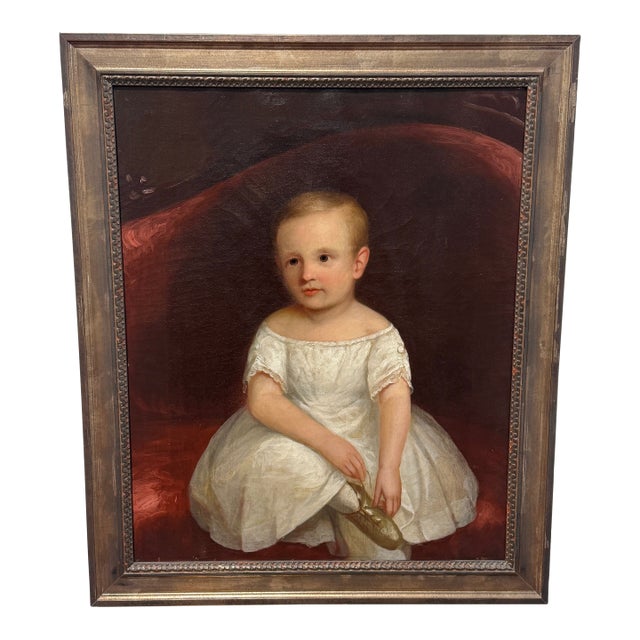
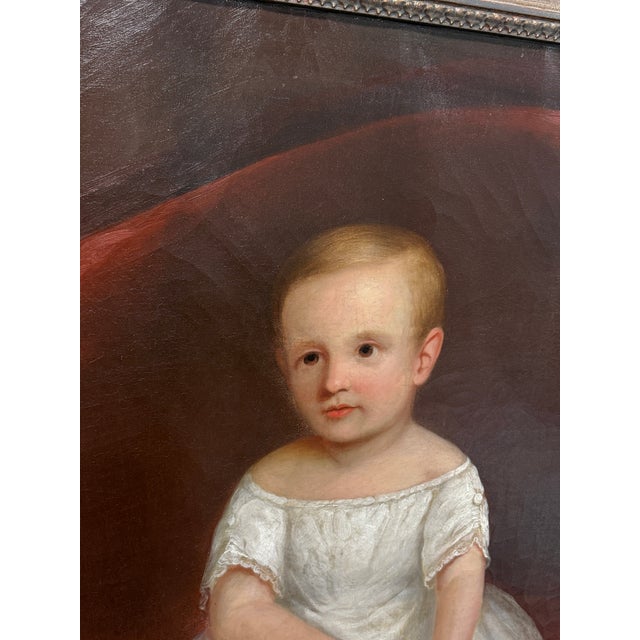
American Folk Art Portrait of a Young Child Holding a Slipper, c. 1830–1850
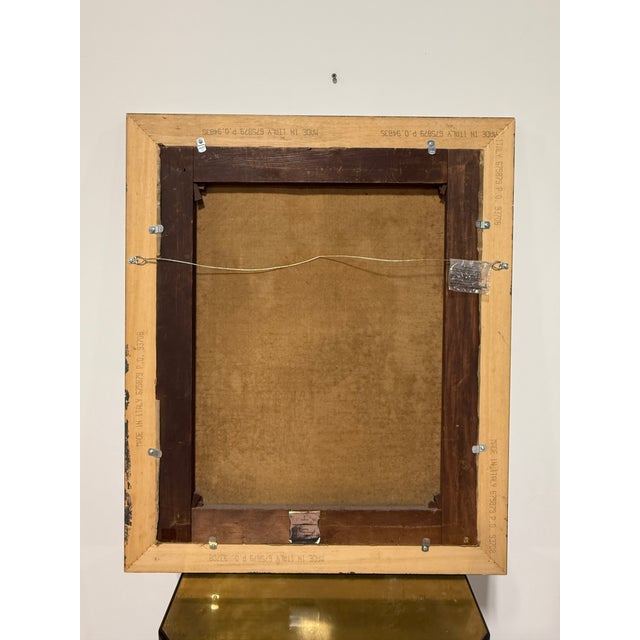
Oil on Canvas - In later Italian …
Read more
American Folk Art Portrait of a Young Child Holding a Slipper, c. 1830–1850
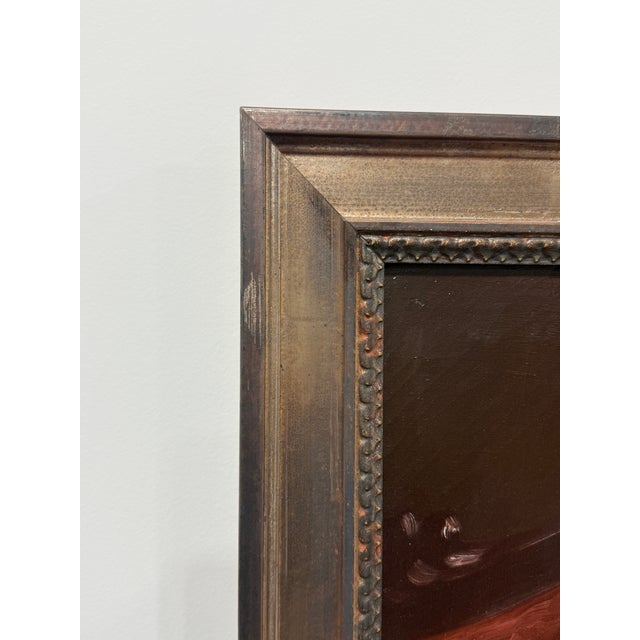
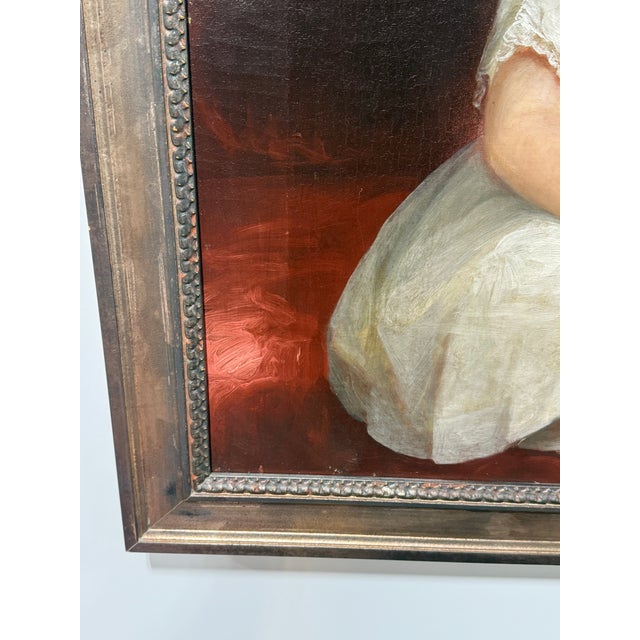
Oil on Canvas - In later Italian Frame.
Measures: 31 5/8 × 26 5/8 in.
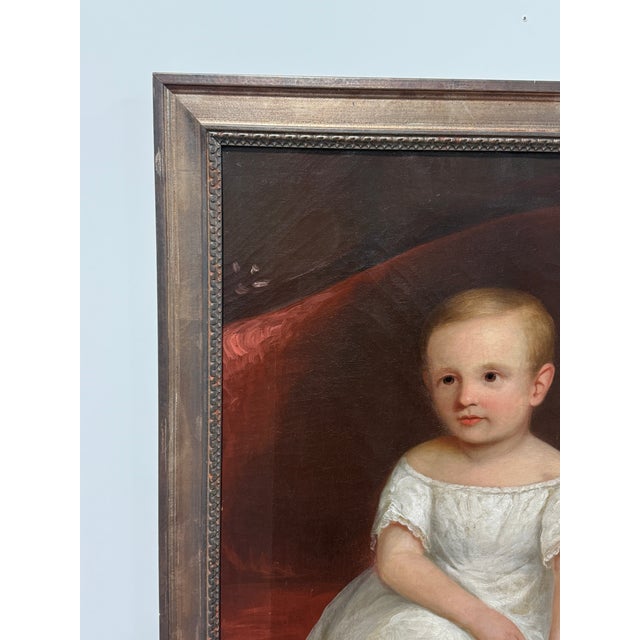
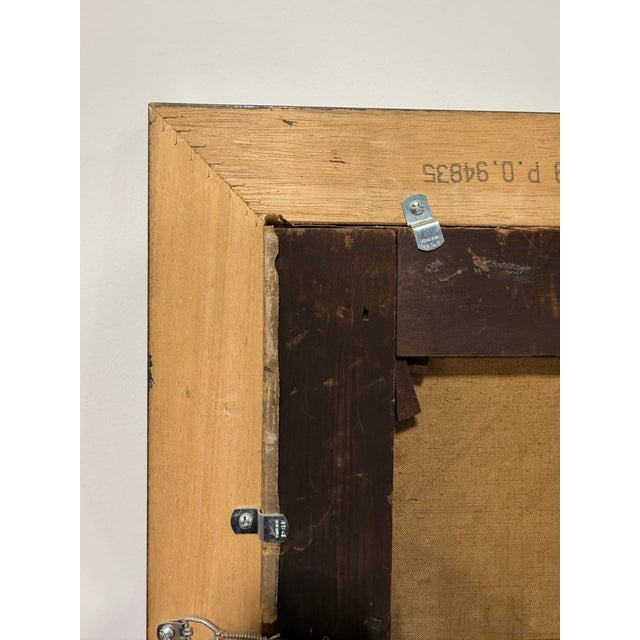
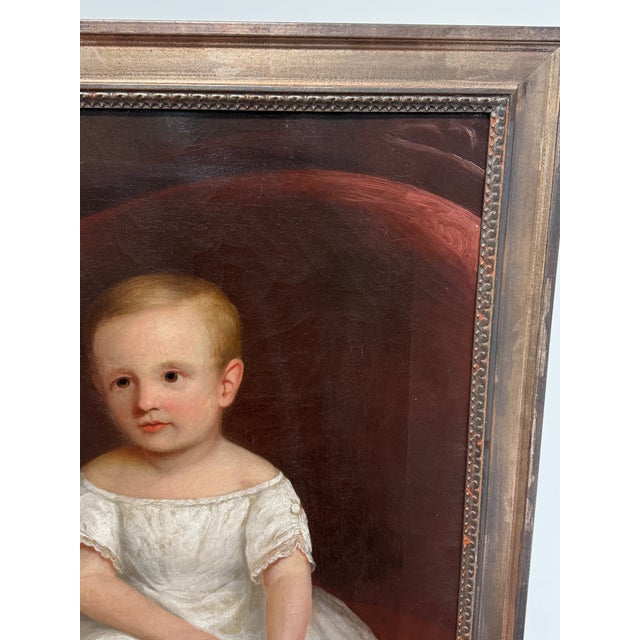
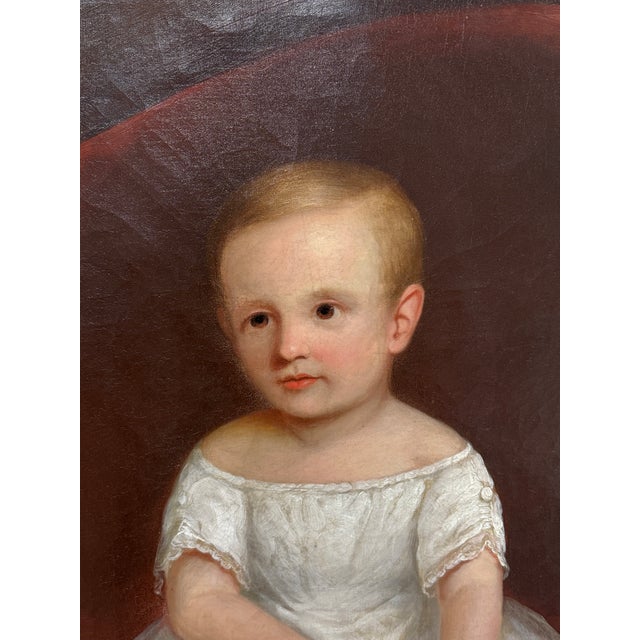
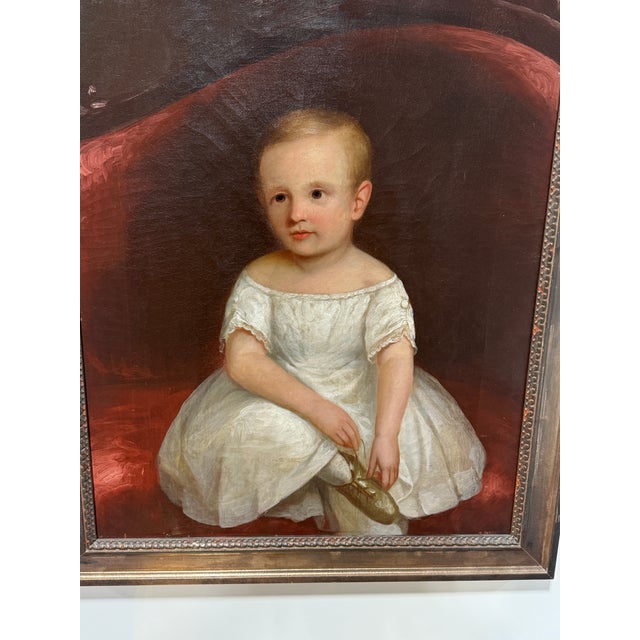
A cherubic young child sits serenely against a plush red upholstered chair with an arched crest, dressed in a white infant’s frock typical of the early 19th century. The child’s fine blonde hair and rosy complexion are rendered with a delicate, sensitive touch. In one hand the toddler gently grasps a tiny slipper, the mate to the single shoe worn on the remaining foot. This simple yet curious prop – a slipper removed and held up – gives the portrait a disarming informality within an otherwise stately composition. The overall brushwork and canvas preparation suggest an early-to-mid 19th-century origin; there is a restrained palette and soft modeling of the face, but relatively flat treatment of form in the manner of many provincial or folk portraitists of that era. The absence of any artist’s signature or inscription (and only later Italian framer’s marks on the stretcher) leaves the creator anonymous, but the painting itself speaks volumes about period style and the iconography of childhood.
The pose and the “slipper motif” in this painting closely parallel documented child portraiture of the 1800s. One shoe off was “one of the most intriguing motifs” in nineteenth-century portraits of children. In American folk art especially, painters often depicted toddlers who have kicked off a shoe – a whimsical detail that contemporaries read as a symbol of youthful innocence or the transition from babyhood to active childhood. For many years, scholars thought a child shown with a single shoe removed signified that the child had died before the portrait was made (a subtle memento mori). Indeed, some memorial portraits include this device among other unmistakable death symbols. For example, a mid-19th-century American canvas Child Holding a Doll and Shoe (attributed to George G. Hartwell, c. 1845) portrays an infant girl posthumously, replete with a cut rose, a departing ship on the horizon, and the child’s tiny shoe held in her hand as a farewell to earthly life. Yet not all instances carry such morbid weight. Curators now note that “one shoe off” can just as likely betoken a lively toddler at play, capturing the “playful innocence of childhood” rather than death. The origin of this trope may trace back to a religious icon (the Infant Jesus of Prague is often shown with a dangling sandal, interpreted as a sign of his dual nature), but in 19th-century secular portraits the meaning ranged from Christological symbolism to a simple charming realism. In the present work, the child’s alert, slightly solemn gaze and upright seated posture lend a formality, but the dangling slipper injects a note of endearing informality – as if the toddler grew restless during the sitting. This combination of dignity and whimsy is a hallmark of circa 1830–1850 child portraiture on both sides of the Atlantic.
The child’s costume and setting also provide clues to regional style. The white dress with short puffed sleeves and lace trim was a unisex fashion for very young children in the early 19th century, seen in countless family portraits of the period. (In fact, boys of toddler age were commonly attired in frocks until they were “breeched” at around four or five years old.) The simplicity of the frock and the absence of jewelry or identifying attributes make it difficult to pin down social status – this could be the beloved child of an American rural family or of an English country parsonage. The background here is an interior luxury: a deep red upholstered armchair or settee, its rounded top forming a theatrical arch behind the child. Such prop furniture appears in many formal portraits to lend a sense of warmth and prosperity. For instance, William Matthew Prior’s Little Miss Fairfield (1850) features a burgundy curtain draped behind a child, and other folk portraits often include red textiles or furniture to enrich the otherwise plain backdrop. The use of a red backdrop in our painting suggests the artist was aware of portrait conventions employed by more academic painters (who frequently used rich drapery and furnishings as backdrops). At the same time, the execution of the chair here – somewhat flat in perspective and pattern – aligns with a self-taught “naïve” hand more than a fully trained academician. This mixture of influences (formal composition, but simplified drawing) again points to an itinerant or folk painter working in the early 19th century.
See less
- Dimensions
- 26.62ʺW × 5ʺD × 31.62ʺH
- Styles
- Folk Art
- Art Subjects
- Figure
- Frame Type
- Framed
- Period
- 19th Century
- Country of Origin
- United States
- Item Type
- Vintage, Antique or Pre-owned
- Materials
- Canvas
- Oil Paint
- Condition
- Good Condition, Original Condition Unaltered, Some Imperfections
- Color
- Red
- Condition Notes
- Minor wear commensurate with age and use. Some areas of minor touch ups - Later Frame. Minor wear commensurate with age and use. Some areas of minor touch ups - Later Frame. less
Questions about the item?
Returns & Cancellations
Return Policy - All sales are final 48 hours after delivery, unless otherwise specified in the description of the product.
Cancellation Policy - Prior to shipping or local pickup, buyers may cancel an order for up to 48 hours, unless otherwise specified.
Related Collections
- Photorealism Canvas Paintings
- Ed Ruscha Paintings
- Richard Serra Paintings
- Photorealism Paintings in New York
- Herman Miller Paintings
- Louise Nevelson Paintings
- Karen Offutt Paintings
- Jo Baskerville Paintings
- Nicola Simbari Paintings
- BDDW Paintings
- James McCray Paintings
- Leroy Neiman Paintings
- Jaanika Peerna Paintings
- Vienna Secession Paintings
- Black Photorealism Paintings
- Johannes Andersen Paintings
- Pedro Friedeberg Paintings
- Peter Behrens Paintings
- Piet Hein Eek Paintings
- Raphael Paintings
- Jeff Slemmons Paintings
- Photorealism Paintings in Los Angeles
- Milton Avery Paintings
- Karl-Erik Ekselius Paintings
- Joseph Stella Paintings