


Details
Description
Item :
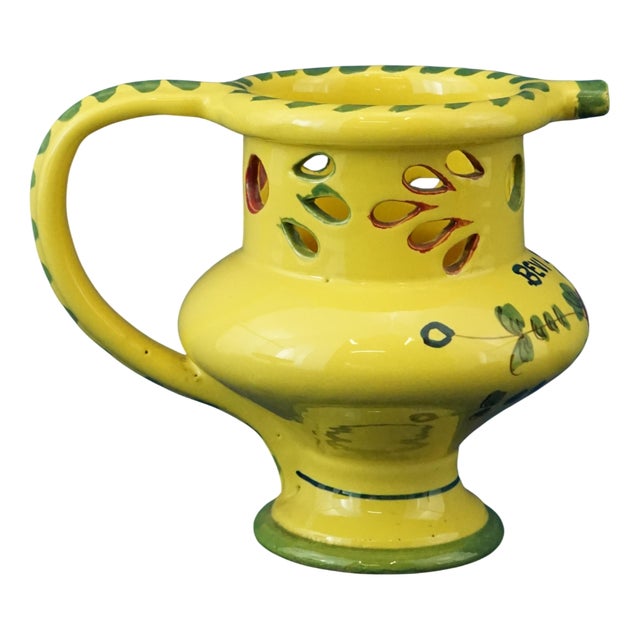
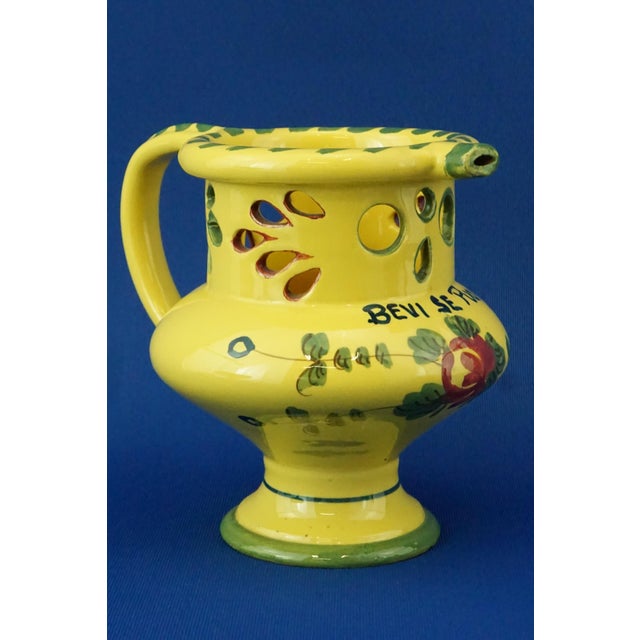
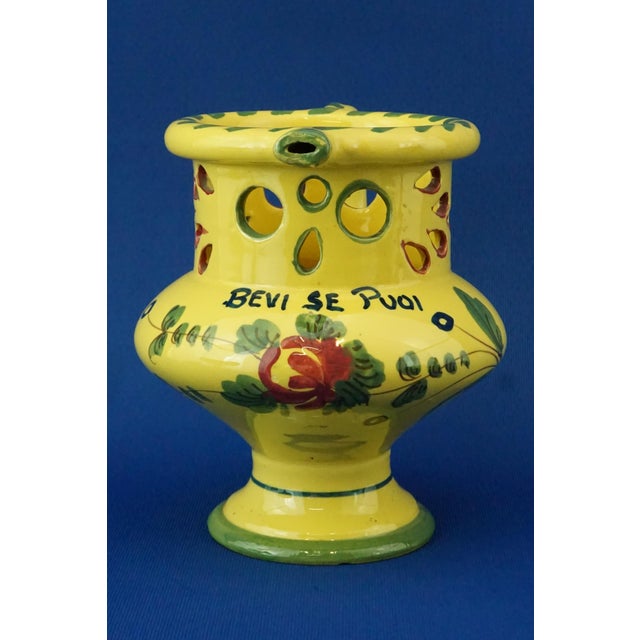
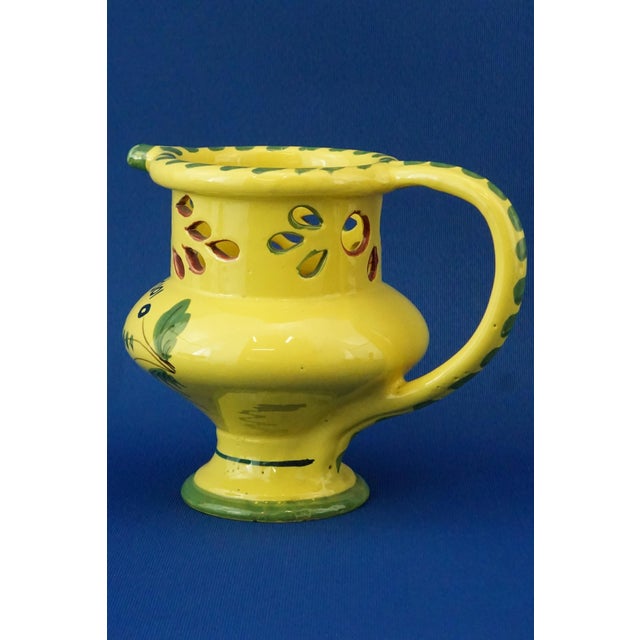
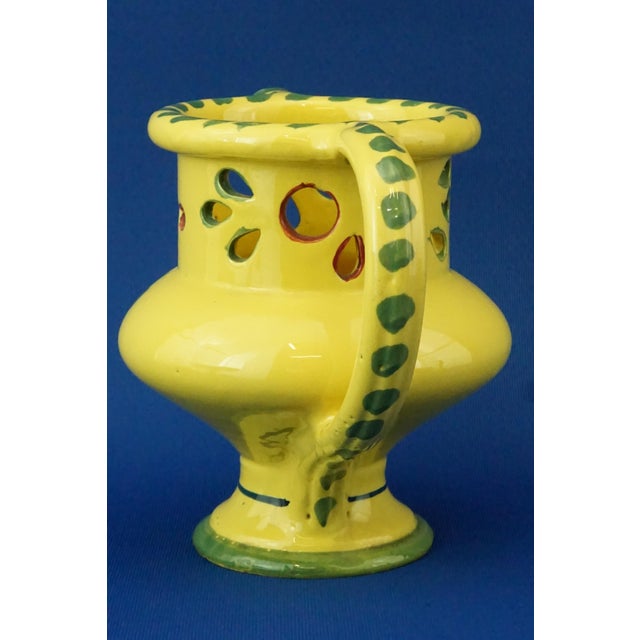
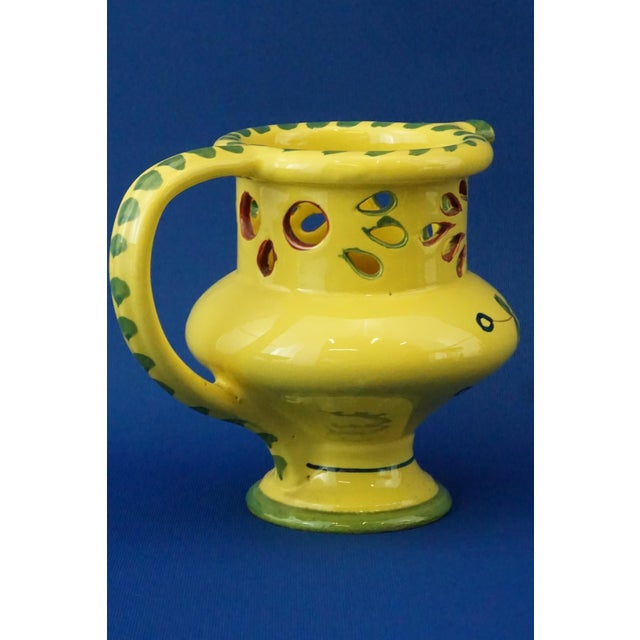
Majolica ceramic jug, entirely hand-shaped on a lathe, then glazed and decorated entirely by hand with a floral …
Read more
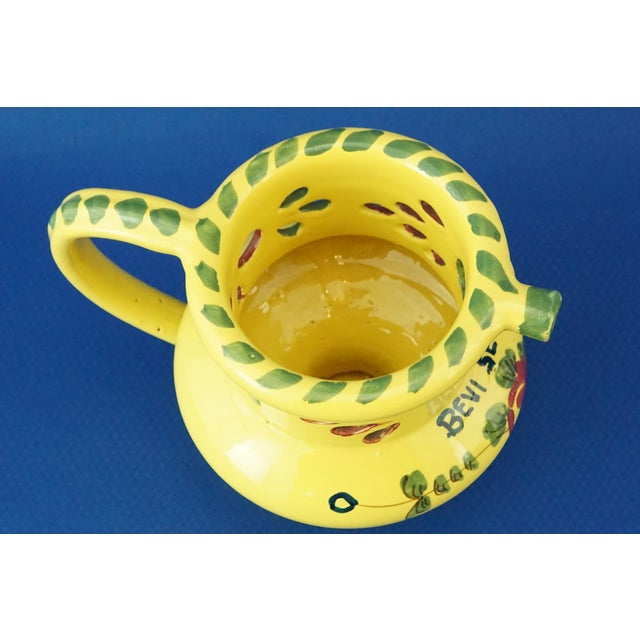
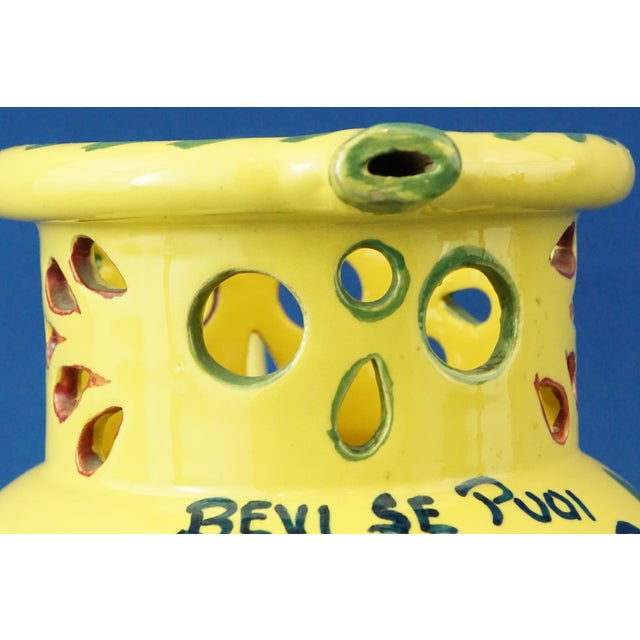
Item :
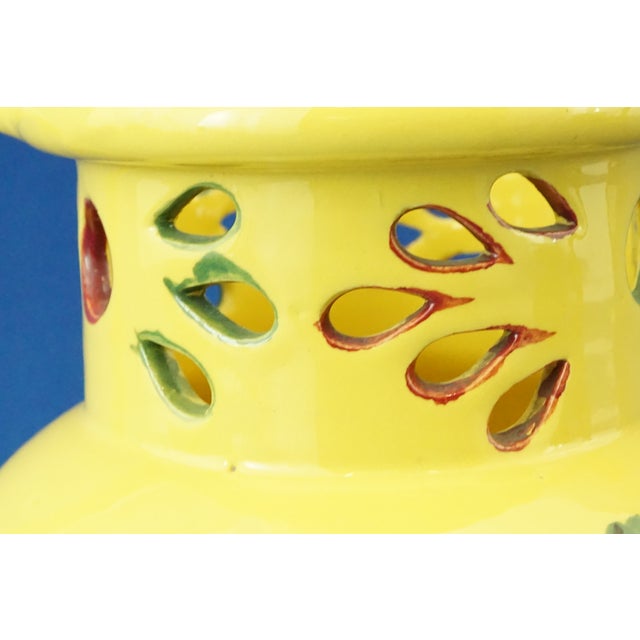
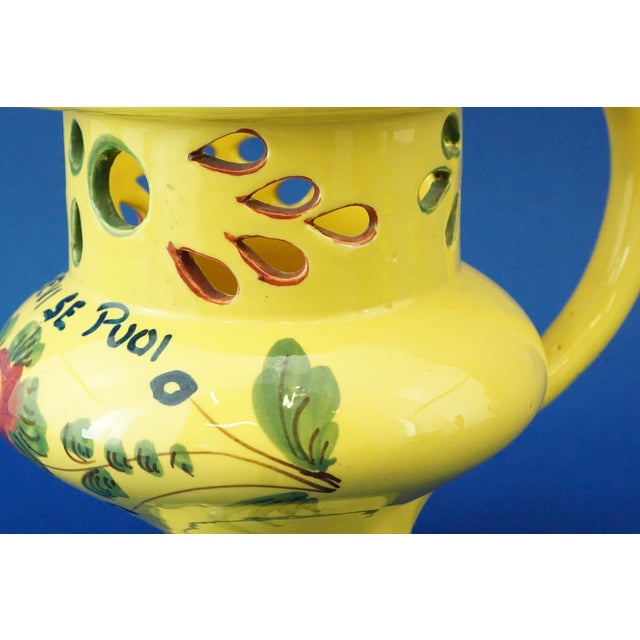
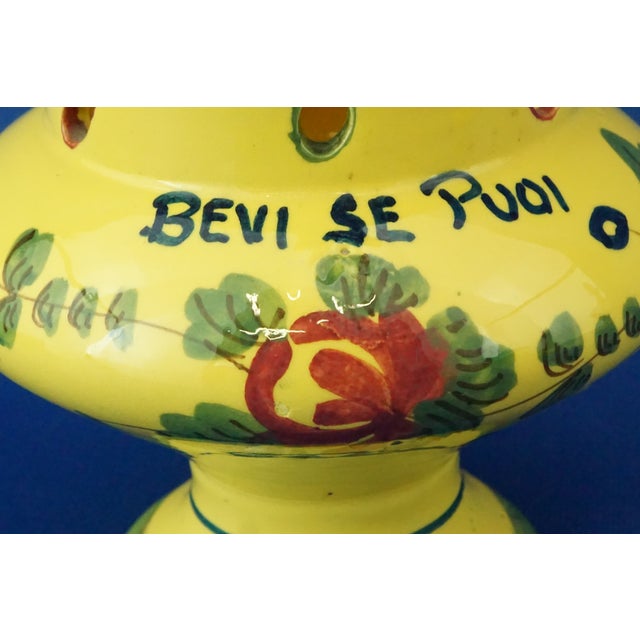
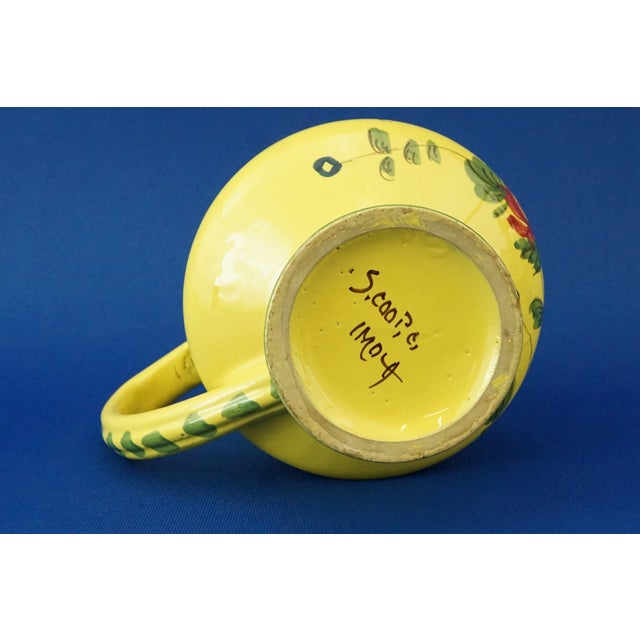
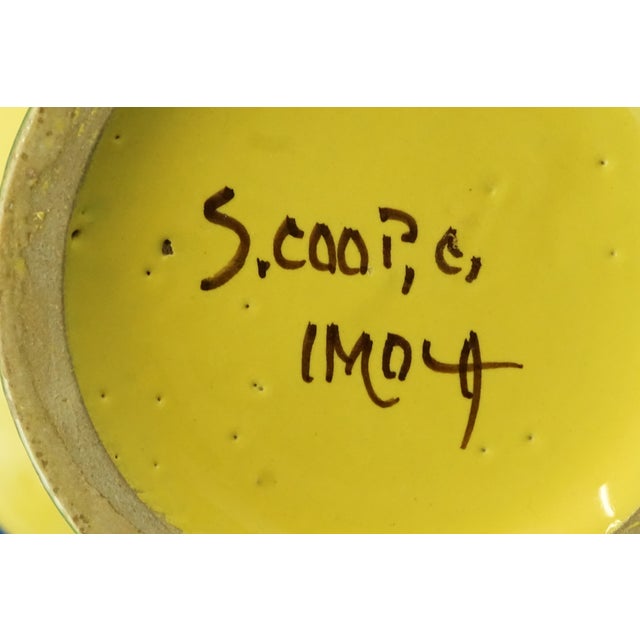
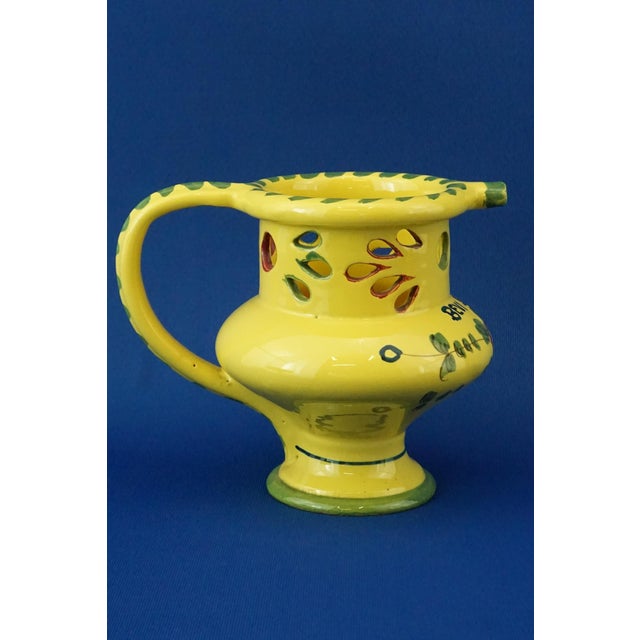
Majolica ceramic jug, entirely hand-shaped on a lathe, then glazed and decorated entirely by hand with a floral motif and the inscription "Bevi se puoi," signed and made under the base by the Cooperativa Ceramiche Artistiche di Imola. The jug dates to the first half of the 20th century, between 1920 and 1950.
Useful information for appraising this item:
The "Cooperativa Ceramiche Artistiche di Imola" factory is one of the most important manufacturers in central Italy in the 20th century, collaborating with numerous important artists. An online search reveals that this manufacturer boasts numerous auction results, with ceramics reaching very high prices, ranging from a minimum of €500-600 for the simplest pieces to over €7,000-8,000 for the largest and most unique pieces. Obviously, the price also varies depending on the artist's skill.
Final considerations on the object:
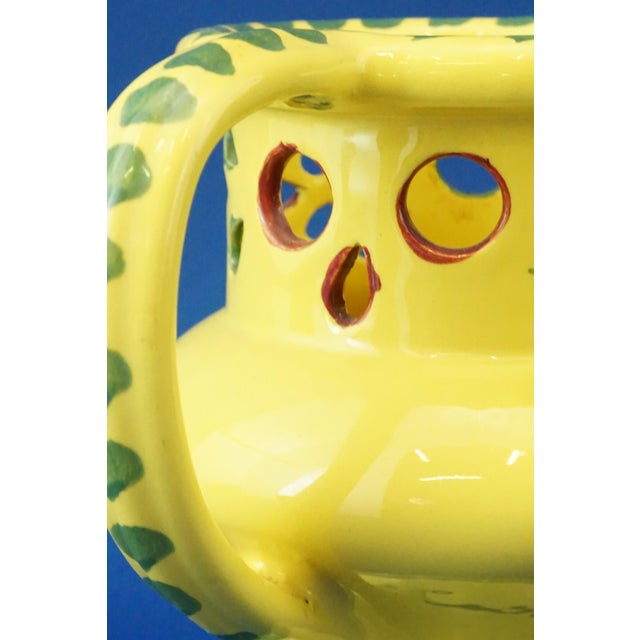
Note the beauty and richness of the glaze, in a beautiful, intense yellow color, typical of this manufacturer, with a creaminess and quality that few majolica ceramics possess. Of course, you have to hold the jug in your hands to appreciate this. These jugs were made in the 16th century and are extremely difficult and laborious to make because each one conceals a secret that must be discovered by the diner, becoming a game that entertains and amuses guests. All the small openings on the top (all handcrafted, by the way) prevent anyone from pouring the liquid from the jug without spilling it. However, the large handle, which reaches the bottom of the jug, is hollow, like a sort of ceramic tube, as is the upper rim. Therefore, by filling the jug about halfway and knowing how to tilt it correctly, the liquid can be forced through the handle to the top spout, from where it can flow out.
Information on the artist and/or manufacturer:
The factory, operating in the province of Bologna, was founded in 1874 by brothers Angelo and Giuseppe Bucci. At the end of the 19th century, the tableware and majolica factory, with the signing of a Brotherhood Pact, was sold to the workers who had formed a cooperative. At the beginning of the 20th century, the factory, in addition to traditional majolica inspired by Italian tradition, began producing ceramic cladding for the building industry. At the turn of the century, production benefited from the work of masters Umberto Marfisi, Walter Martelli, and Domenico Minganti. In 1922, the cooperative acquired the premises of a glassworks and converted them into ceramics workshops, creating an artistic section that, especially during the 1930s, thanks to the work of talented painters such as Marino Bandoni and Mino Monducci, could be considered avant-garde. In 1946, the cooperative's artistic director, Domenico Minganti, received the praise of Giò Ponti, which in subsequent years resulted in the production, based on the great architect's designs, of the "blue carnation" decoration, a modernist reinterpretation of the traditional 18th-century blue monochromatic decorations, and the creation of a series of four sculptural bottles decorated in gold, white, red, and blue.
In 1947, the cooperative won First Prize at the Faenza International Ceramics Competition. In 1950, the company won second prize at the E.N.A.P.I. competition for "Coffee Service for Two" at the 9th National Ceramics Competition in Faenza. In the early 1950s, the cooperative's headquarters were located at Viale Vittorio Veneto 3, Imola. Over the years, numerous Italian artists, including Ugo La Pietra, Arrigo Visani, Dante Mariani, Piero Dorazio, Agenore Fabbri, Guido Baldini, Emilio Tadini, Sante Ghinassi, Luciana Lecciardi, Arnaldo Pomodoro, Remo Brindisi, Enrico Baj, and Tullio Pericoli, as well as international artists such as Joe Tilson, Hsiao Chin, and Igor Mitoraj, collaborated with the factory, which produced their works, one-of-a-kind pieces or limited editions, under the "Imolarte d'Autore" brand. In 1976, the "Cooperativa Ceramica Imola" acquired "Ceramica Santerno." Starting in the mid-1970s, Romano Dalfiume was appointed artistic director of the cooperative.
In the 1980s, the "Cooperativa Ceramica Imola" produced a limited edition of works, the prototypes of which were created in the workshop of Gianpaolo Bertozzi and Stefano Dal Monte Casoni. from 1980 to 1985, the factory appointed ceramist Emidio Galassi as director of the International Ceramics Research Center.
In 1986, various collaborators included Antonella Cimatti from Faenza, who worked at the factory as a designer, and painter and decorator Pier Luigi Fabbri. The "Società Cooperativa Ceramica Imola" is still active today, producing floor and wall tiles. In 1987, the cooperative organized an exhibition of Italian ceramists in New York. In the late 1980s, the company hired ceramist and sculptor Andrea Mauro from Faenza, who served as director of the artistic department from 1992 to 2000. In the mid-1990s, the company welcomed Mario Fallini to its workshops, where he created several New Testament-inspired tiles commissioned by the Curia of Alexandria. In 1999, Cooperativa Ceramica Imola participated in the "Spirit of Millennium" award promoted by the National Italian American Foundation, winning first prize with the "La Stella del Millennio" plate created by Andrea Mauro. This piece has an attribution mark,
I am sure that it is completely authentic and take full responsibility for any authenticity
issues arising from misattribution
See less
- Dimensions
- 7.09ʺW × 5.12ʺD × 5.91ʺH
- Styles
- Mid-Century Modern
- Period
- 1920s
- Country of Origin
- Italy
- Item Type
- Vintage, Antique or Pre-owned
- Materials
- Ceramic
- Condition
- Good Condition, Original Condition Unaltered, Some Imperfections
- Color
- Yellow
Returns & Cancellations
Return Policy - All sales are final 48 hours after delivery, unless otherwise specified in the description of the product.
Cancellation Policy - Prior to shipping or local pickup, buyers may cancel an order for up to 48 hours, unless otherwise specified.
Related Collections
- Gold-Plate Bottles and Jars and Jugs
- Medieval Bottles and Jars and Jugs
- Borosilicate Glass Bottles and Jars and Jugs
- Bottles and Jars and Jugs in Lexington, KY
- Khaki Bottles and Jars and Jugs
- Port 68 Bottles and Jars and Jugs
- Acrylic Bottles and Jars and Jugs
- Ralph Lauren Bottles and Jars and Jugs
- Roger Capron Bottles and Jars and Jugs
- Crocks
- Wicker Bottles and Jars and Jugs
- Apothecary Jars
- Cookie Jars
- Japanese Bottles and Jars and Jugs
- 1800s Perfume Bottles
- Antique Water Jugs
- Candy Jars
- 1950s Perfume Bottles
- Murano Glass Bottles and Jars and Jugs
- Apothecary Bottles
- Deruta Bottles and Jars and Jugs
- Portieux Vallerysthal Bottles and Jars and Jugs
- Carl Auböck Bottles and Jars and Jugs
- Lead Bottles and Jars and Jugs
- Renaissance Bottles and Jars and Jugs