


Details
Description
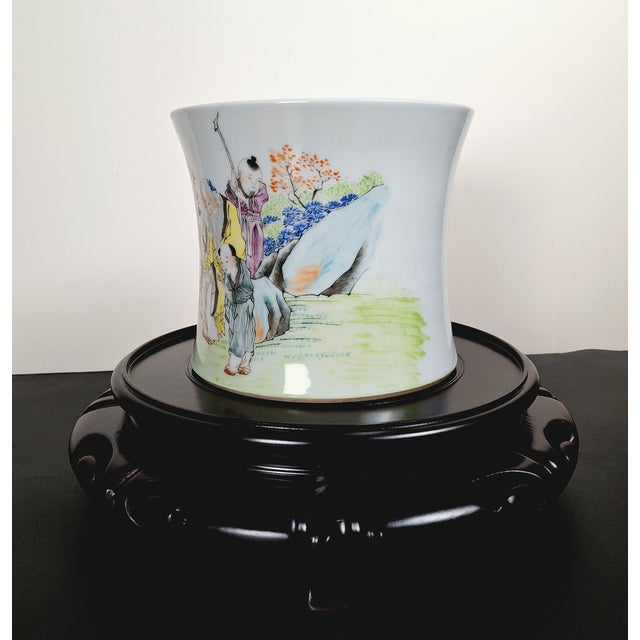
Chinese qianjiang cai Star God bitong, a large, finely formed, qianjiang cai ware brush pot with gently sloping sides, with …
Read more
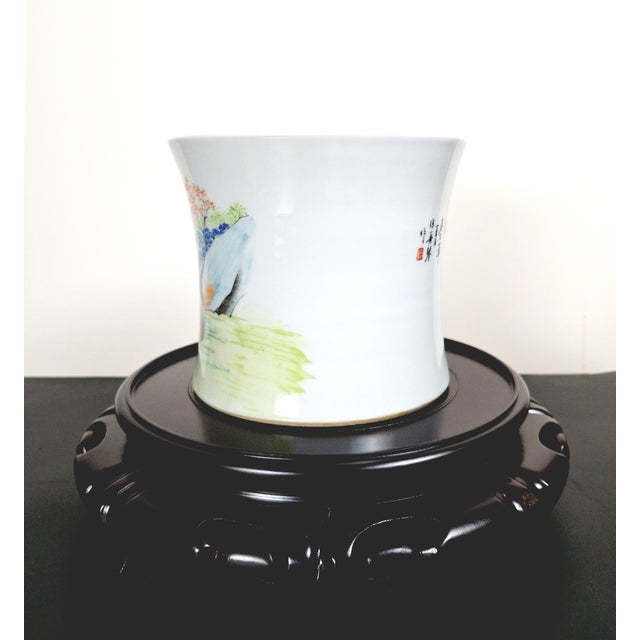
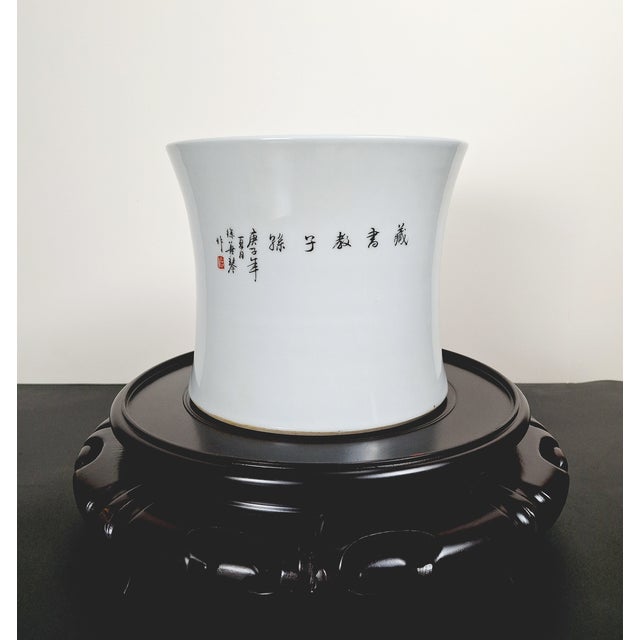
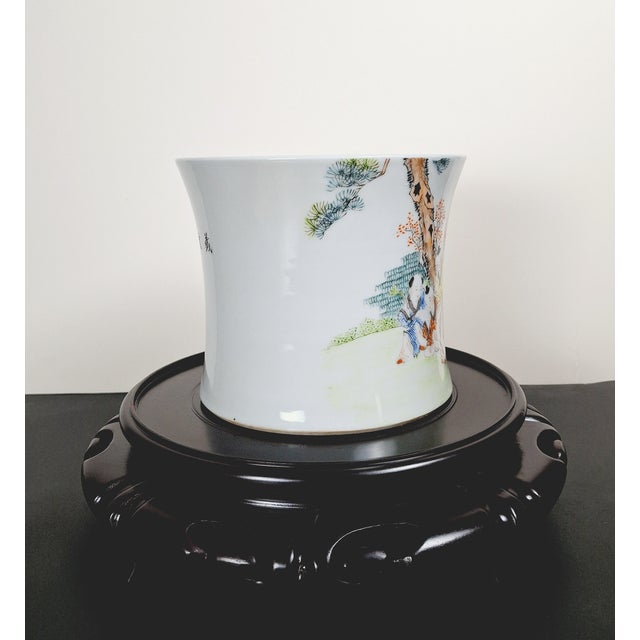
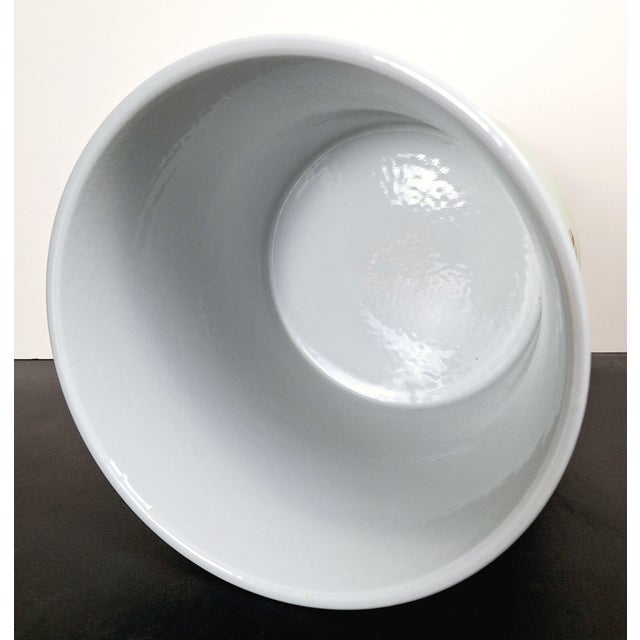
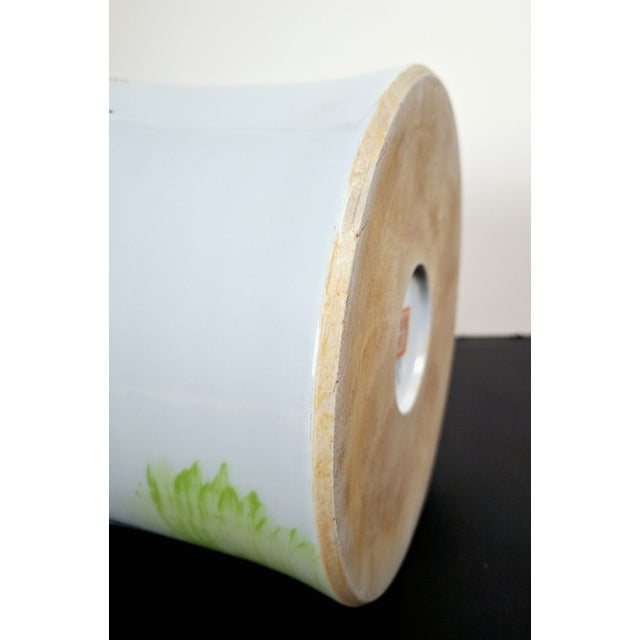
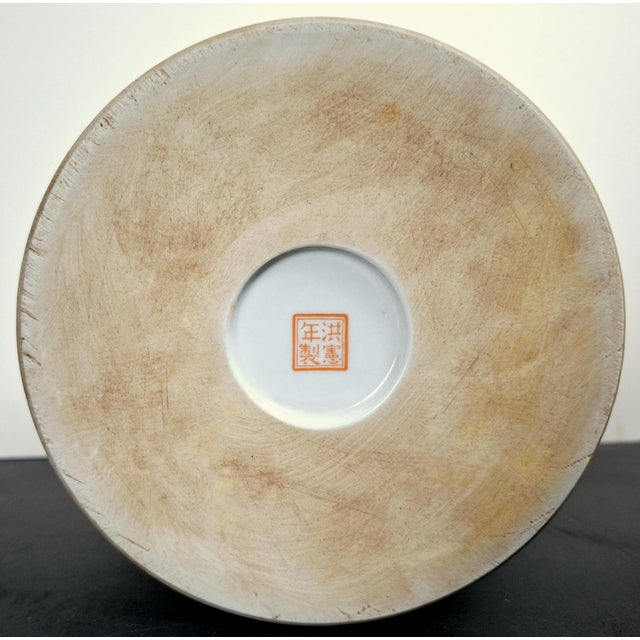
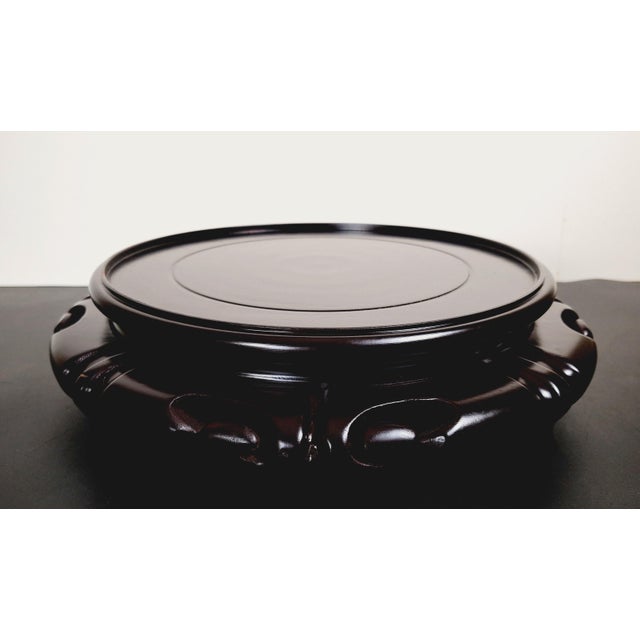
Chinese qianjiang cai Star God bitong, a large, finely formed, qianjiang cai ware brush pot with gently sloping sides, with saturated, pastel glazes on the sides and a white glazed interior and circular inset within the smooth, unglazed base. The brush pot is decorated with a finely painted, polychrome scene of Fuxing, one of the Sanxing (The Three Star Gods), sitting on a rock beneath an old pine, surrounded by children, amid small, branching, plum trees and bushes. A title and artist's signature (Xu Shanqin), in black, caoshu script (see below), with one, red, seal mark is glazed just below the lip, opposite. A red, four character, Hongxian, reign mark within double squares is glazed to the inset circle of the base. The finely carved, traditional, Chinese, hongmu stand is included. Circa early Republic of China era or later.
Bitong: 7" high x 8.25" diameter
stand: 3.5" high x 13.75" diameter
Fuxing: The star of Fu (福), Fuxing 福星, refers to the planet Jupiter. In traditional Chinese astrology, the planet Jupiter was believed to be auspicious. Fuxing is considered the personification of good fortune, sometimes conflated with Caishen, the "Wealth God".
Inscription first part: 孙子教书藏. Sun Zi Jiao Zhu Cang. Sun Zi Teaching Collection.
Inscription second part: 庚子, 年夏日, 徐善琴作. Geng Zi Nian, Xia Ri, Xu Shan Qin Zuo. Year of Geng Zi, Summer, Art of Xu Shanqin
Year of Geng Zi: 1900, 1960, 2020 etc.
Qianjiang: Qianjiang means literally "light umber" and is a Yuan Dynasty literati painting on paper style where the landscapes are outlined with ink and complemented by strokes of pale umber to designate the lit areas of the landscape. Qianjiang enamels were applied directly on the white glazed porcelain surface, giving the decoration the appearance of watercolor painting on silk or paper.
Qianjiang painting on porcelain flourished in the latter half of the 19th century up to the early Republic Period around 1910. The term Qianjiang cai (enamels) or Qianjiang porcelain was only coined in the 1950s.
See less
- Dimensions
- 13.75ʺW × 13.75ʺD × 10.12ʺH
- Styles
- Chinese
- Traditional
- Period
- 1920s
- Country of Origin
- China
- Item Type
- Vintage, Antique or Pre-owned
- Materials
- Porcelain
- Wood
- Condition
- Good Condition, Original Condition Unaltered, Some Imperfections
- Color
- White
- Condition Notes
- A few unobtrusive dents and scratches are seen on the stand, excellent vintage condition. A few unobtrusive dents and scratches are seen on the stand, excellent vintage condition. less
Questions about the item?
Returns & Cancellations
Return Policy - All sales are final 48 hours after delivery, unless otherwise specified in the description of the product.
Cancellation Policy - Prior to shipping or local pickup, buyers may cancel an order for up to 48 hours, unless otherwise specified.