

Details
Description
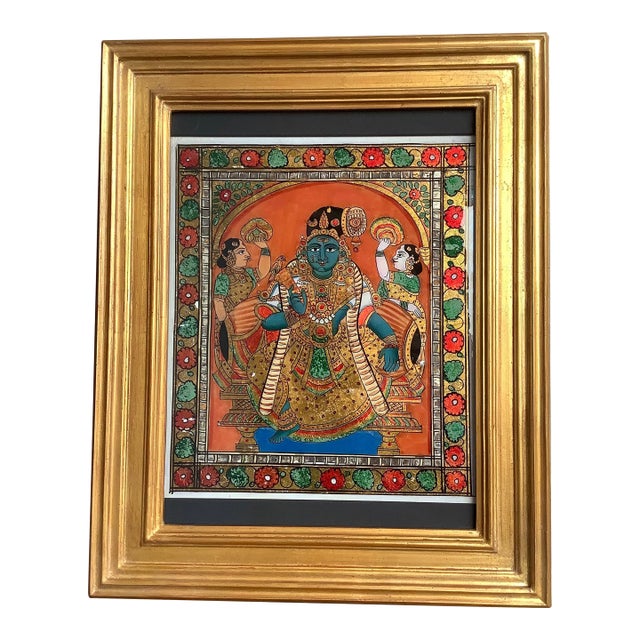
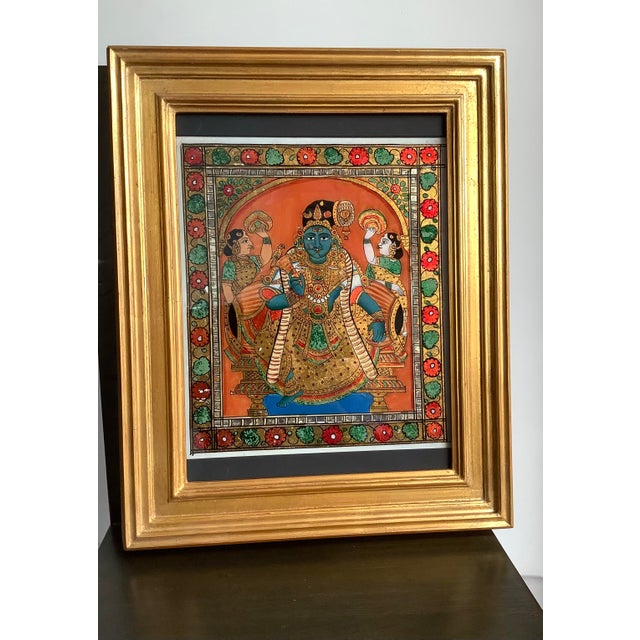
Tanjore Reverse Glass* Painting Aandal**: Antique
Late 19th Century. From Thanjavur (Tanjore), South India
Approximately: framed - 20.5 x 16.5 …
Read more
Tanjore Reverse Glass* Painting Aandal**: Antique
Late 19th Century. From Thanjavur (Tanjore), South India
Approximately: framed - 20.5 x 16.5 inch. Sight - 13.5 x 11.25 inch
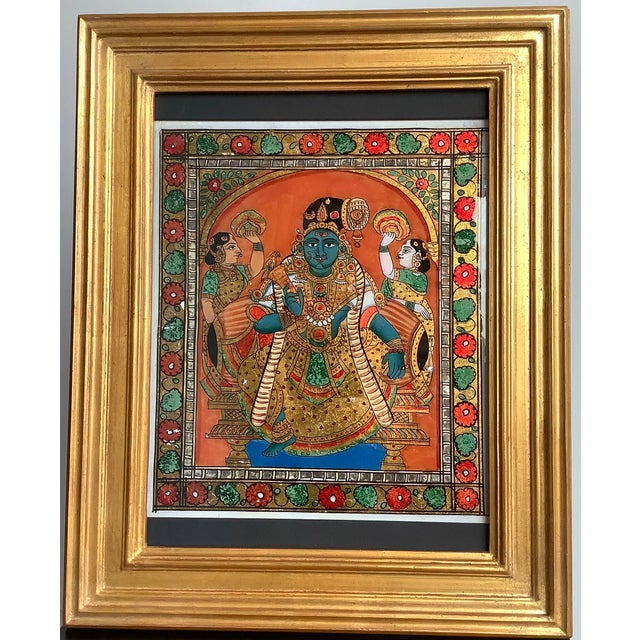
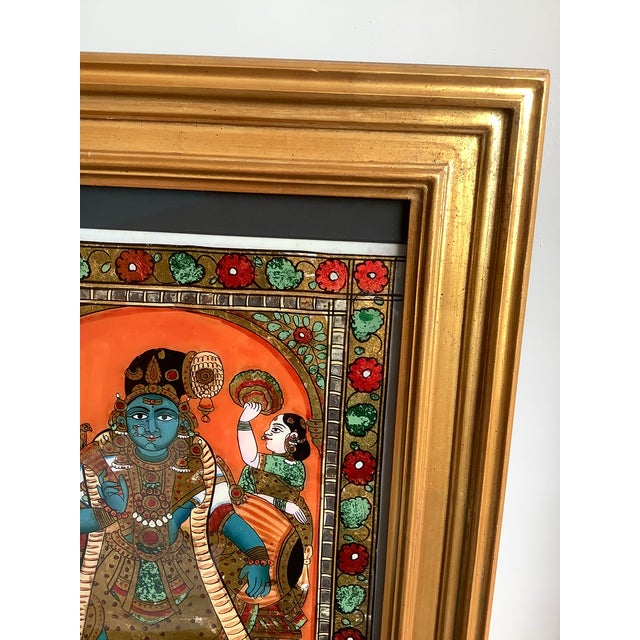
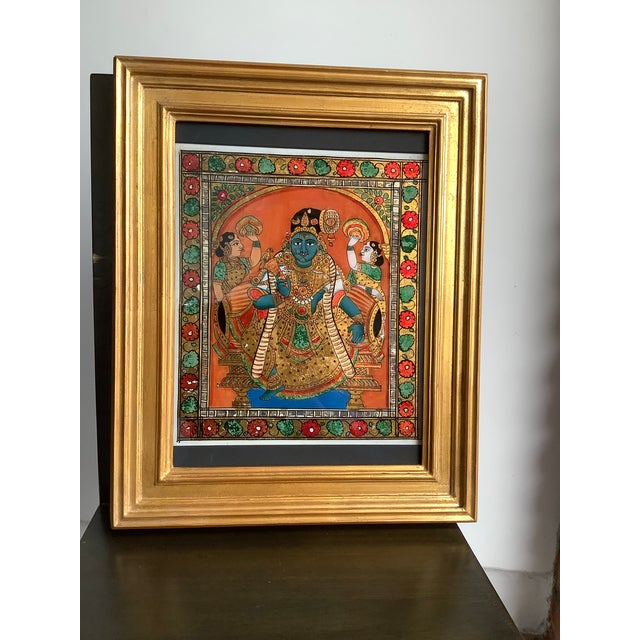
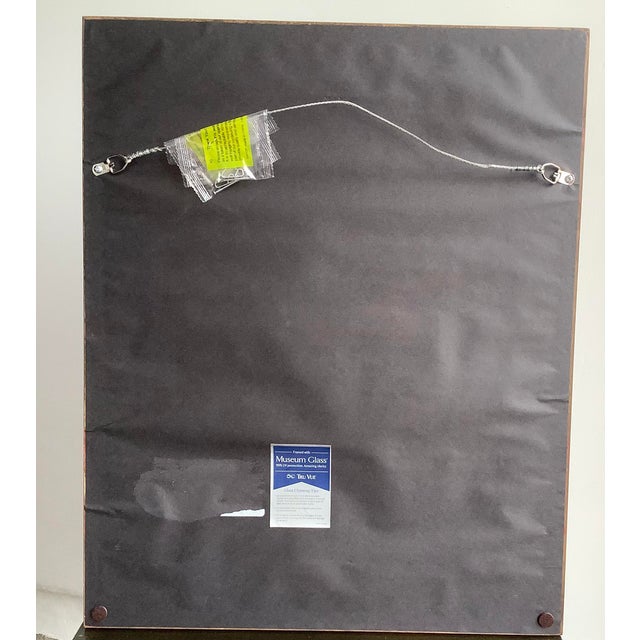
Framed in a wide, gilt wood frame with museum quality non reflective glass. ready to hang.
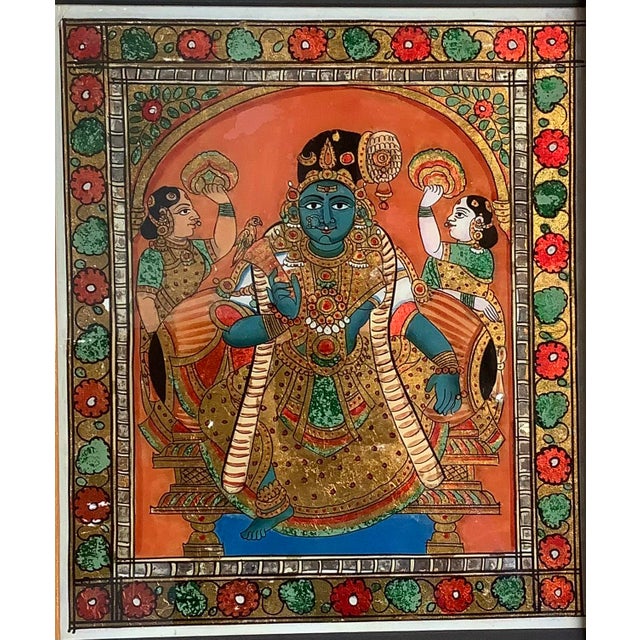
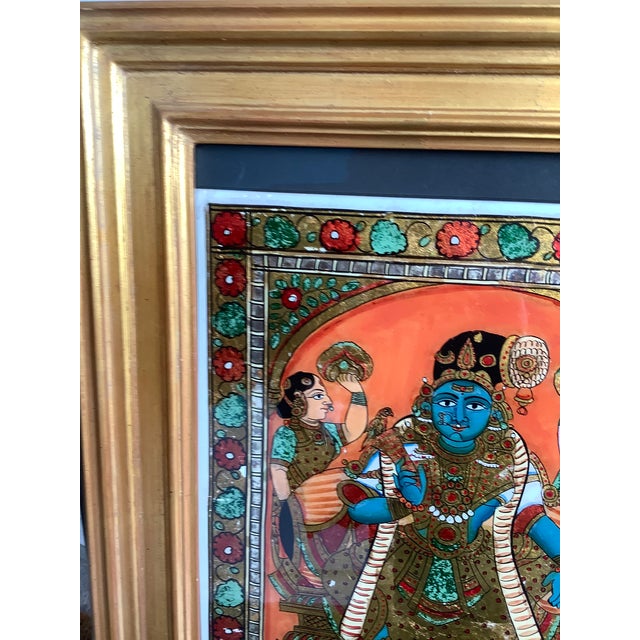
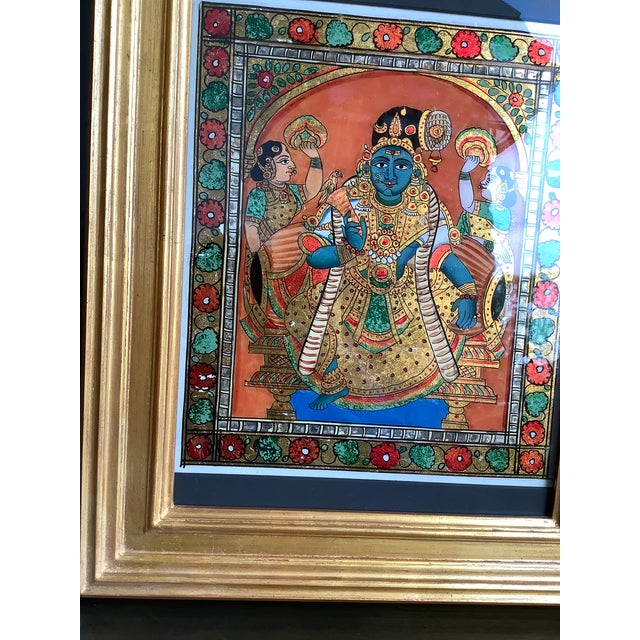
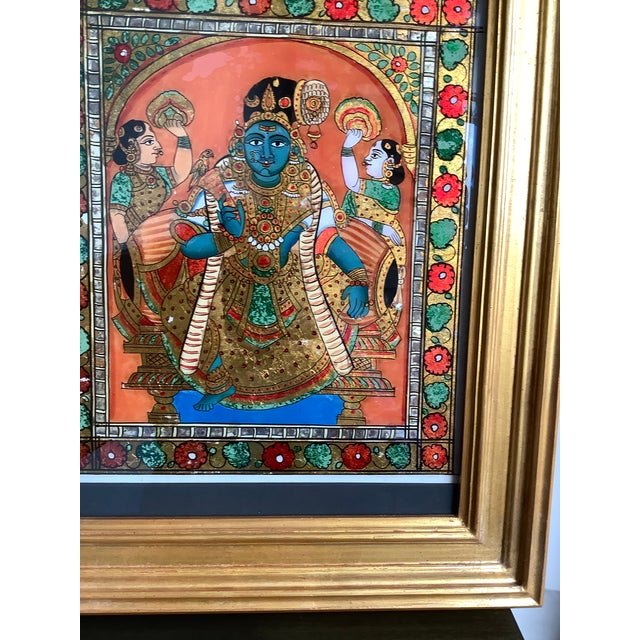
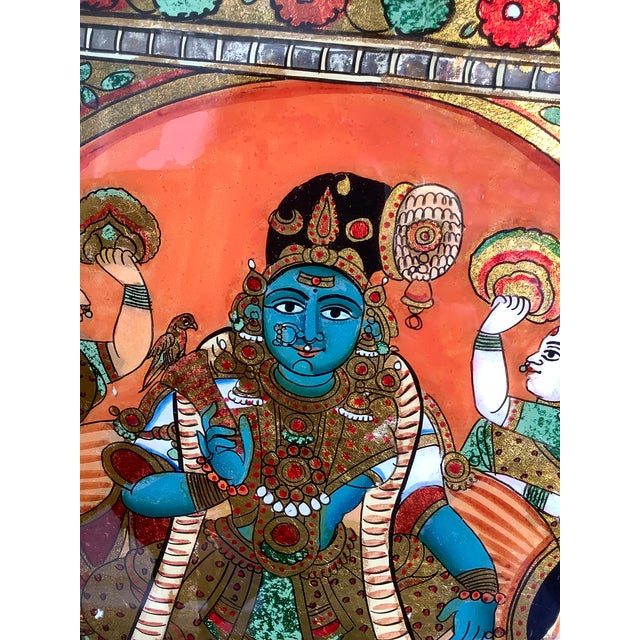
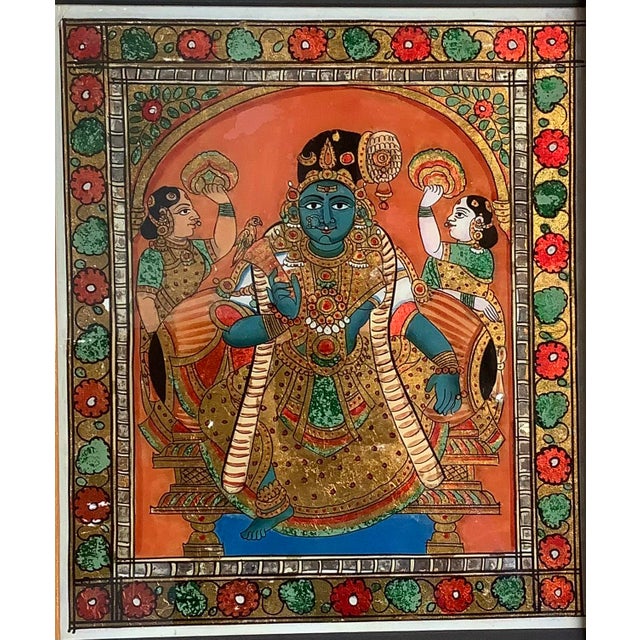
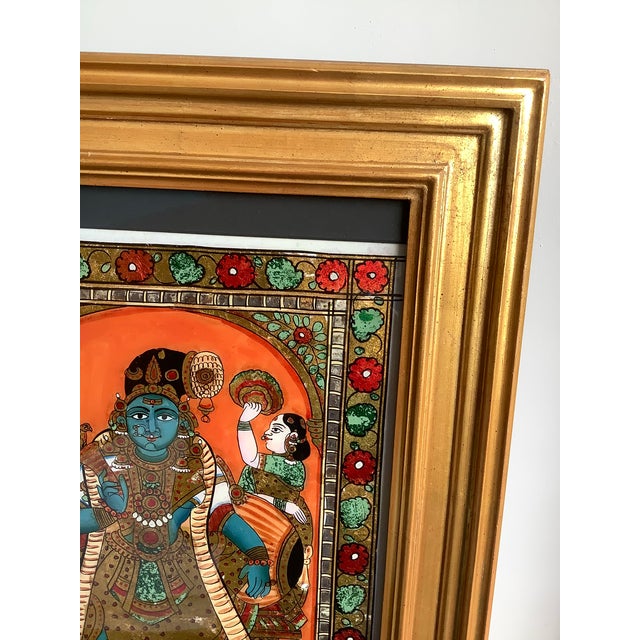
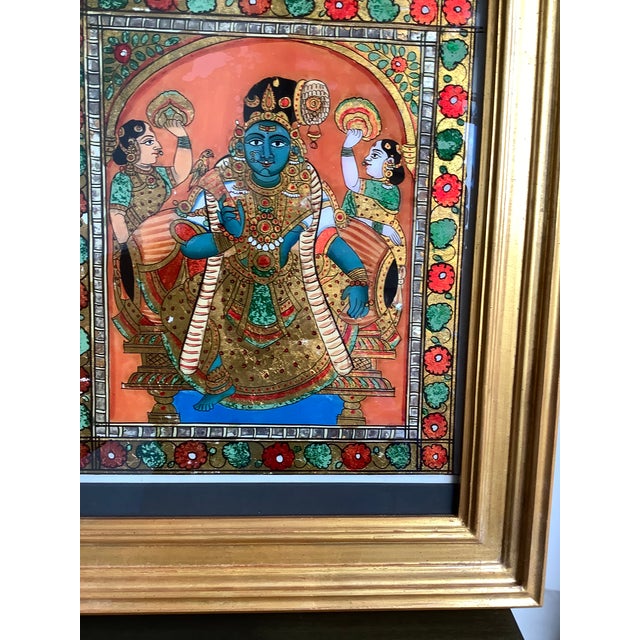
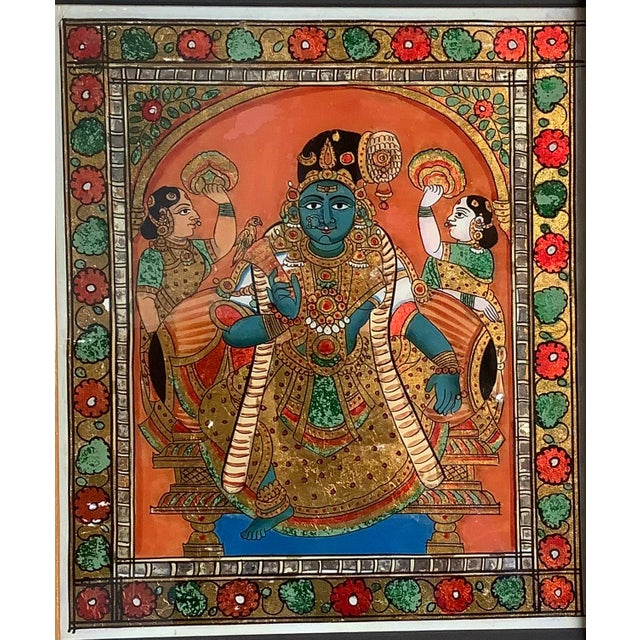
This reverse glass painting from southern India shows Andal, the Alvar saint on a cushioned gilt chair. In the background, are two attendants with fans in hand. Saturated with rich colors, pigments and 24k gold foil this rare classic Tanjore painting consists of a main figure of seated Aandal.
The main figure of Aandal has a well rounded body, signature hair, almond shaped eyes elaborate jewellery and traditionally draped silk clothes.
Andal is richly dressed and bejewelled, a parrot perched on her right shoulder, A floral garland rests on her shoulders. Alvars were Tamil poet-saints who espoused bhakti (devotion) to Vishnu. The twelve saints, of which Andal is the only female, are venerated in Vaishnavism.
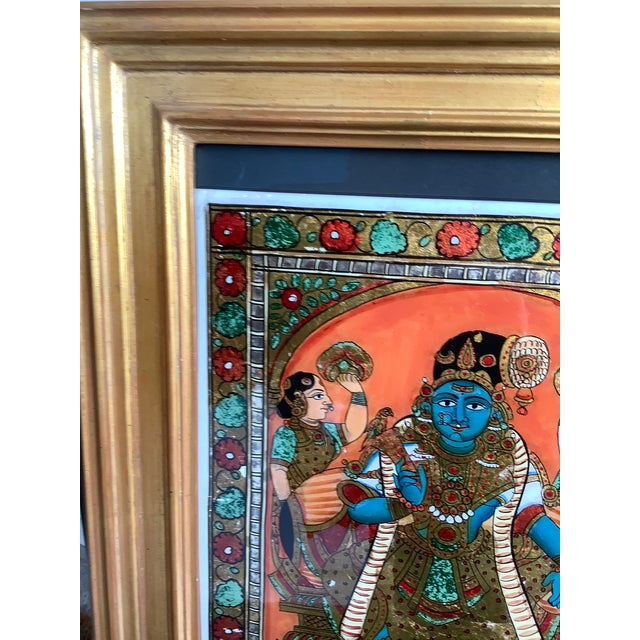
The details on the clothes, jewelry, facial expressions, background and surrounding border are exquisite for a painting of this size.
A breathtakingly beautiful painting, the impact in a darkened room is that of a glowing presence.
Traditional Tanjore paintings are possessed as heirlooms.
* Reverse glass painting is a fascinating, yet comparatively unknown genre of Indian art. The origin of the reverse glass painting technique can be traced back to Italy, from where it spread across Europe in the 16th century. It was introduced into China by Jesuit missionaries in the 17th and early 18th century. By the second half of the 18th century, the technique was brought to India by way of the China Trade, and there flourished a brisk market for Chinese reverse glass paintings on the west coast of India. With the expansion of the British empire, the paintings found takers amongst wealthy Indian aristocrats who sought to mimic the colonial officers. And it was not long before Indian artists learnt the technique and began producing reverse glass paintings reflecting Indian tradition.
In the late 18th and early 19th century, in southern India, art was rather decadent, with a high demand for religious paintings embellished with gems, pearls and cut glass. Reverse glass paintings came as a cheap alternative, soon growing in popularity not just amongst aristocrats, but reaching a far wider audience. In the small state of Thanjavur, this distinctive school of glass painting thrived for more than a hundred years. The technique spread across western and southern India and even to former provincial Mughal capitals of Oudh and Murshidabad, as well as Rajasthan and central India, to some extent.
The term reverse glass painting describes both, how the painting is executed, and how, once completed, it is viewed. A laborious technique, it required an artist to have a good memory of the whole composition because its components were sequentially covered while he completed the work. Artists first began with placing a clear sheet of glass on their master drawing, then drew the finer lines and details. Any foil, paper or sequins, if used, were added at this stage. Then, the larger areas of opaque colour (usually tempera) were applied, and ‘shading’ was used to achieve gradation of colour. The painting was finally mounted with the unpainted side foremost.
Scenes and characters from Indian mythology are recurrent in Indian reverse glass paintings, while secular themes such as portraits of kings, nobles, courtesans and musicians are also commonly depicted. The paintings are characterized by their bold style, rich colours and subjects portrayed in opulence. Imported from Europe via China, a distinctive feature of the reverse glass technique in India was its eclectic style - a fascinating mixture of Indian and Western elements. This style reflected the aesthetics and aspirations of the time. The popularity of theatre, for instance, can be seen in the elaborate curtains that frame most paintings. Elements drawn from colonial architecture, interior decoration, and fashion also permeated the repertoire of the artists, evident in the way they portrayed deities and mythological incidents.
While reverse glass paintings flourished in India until the mid-19th century, eventually, lithographs, which were cheaper to produce and less fragile, replaced them forever.
** Aandal (or Andal, Goda Devi) is a revered 8th-century Tamil poet-saint, considered a manifestation of the goddess Lakshmi, famous for her intense devotion (bhakti) to Lord Vishnu, particularly as Krishna, composing beautiful poems like the Nachiyar Thirumozhi, and symbolizing pure, divine love in Sri Vaishnavism. She was found as a baby by her foster father, Periyalvar, and is unique as one of the few female Alvars, known for wanting to marry Vishnu (Rangamannar) and eventually merging with the deity.
Born as Kodhai in Srivilliputhur, Tamil Nadu, found under a tulsi plant by her father, the Alvar saint Periyalvar. Her name means "one who rules" or "she who rules," and she is also called Goda Devi, meaning "gift of the Earth". She is the epitome of bhakti, expressing her passionate love for Vishnu through her poetry, treating herself as a bride longing for her divine groom.
Andal’s famous compositions, Thiruppavai (a classic for the holy month of Margazhi) and Nachiyar Thirumozhi, are central to South Indian Vaishnava tradition. She is seen as an avatar of Bhumi Devi (Earth Goddess) or Lakshmi, representing ultimate surrender and selfless love for God.
Aandal is widely worshipped, especially in Tamil Nadu, with elaborate festivals during Margazhi, and her idols are found in temples alongside Vishnu, symbolizing their divine union.
Aandal embodies spiritual longing, divine love, and the path of total surrender to the divine within Hinduism, making her a beloved figure in devotional literature and practice.
See less
- Dimensions
- 16.5ʺW × 2ʺD × 20.5ʺH
- Frame Type
- Framed
- Period
- Late 19th Century
- Country of Origin
- India
- Item Type
- Vintage, Antique or Pre-owned
- Materials
- Glass
- Gold Leaf
- Wood
- Condition
- Good Condition, Original Condition Unaltered, Some Imperfections
- Color
- Gold
- Condition Notes
- Excellent condition Faint scratches Loss of gilt and paint to small areas Refer photos for details Excellent condition Faint scratches Loss of gilt and paint to small areas Refer photos for details less
Questions about the item?
Returns & Cancellations
Return Policy - All sales are final 48 hours after delivery, unless otherwise specified in the description of the product.
Cancellation Policy - Prior to shipping or local pickup, buyers may cancel an order for up to 48 hours, unless otherwise specified.
Related Collections
- Photorealism Canvas Paintings
- Ed Ruscha Paintings
- Photorealism Paintings in New York
- Richard Serra Paintings
- Herman Miller Paintings
- BDDW Paintings
- Louise Nevelson Paintings
- Karen Offutt Paintings
- Jo Baskerville Paintings
- Karl-Erik Ekselius Paintings
- Carl-Axel Acking Paintings
- Joseph Stella Paintings
- James McCray Paintings
- Milton Avery Paintings
- Photorealism Paintings in Los Angeles
- Leroy Neiman Paintings
- Jaanika Peerna Paintings
- Vienna Secession Paintings
- Nicola Simbari Paintings
- Soicher Marin Paintings
- Cassina Paintings
- Black Photorealism Paintings
- Lawson-Fenning Paintings
- Jean-Paul Barray Paintings
- Hans Andersen Paintings