





Details
Description
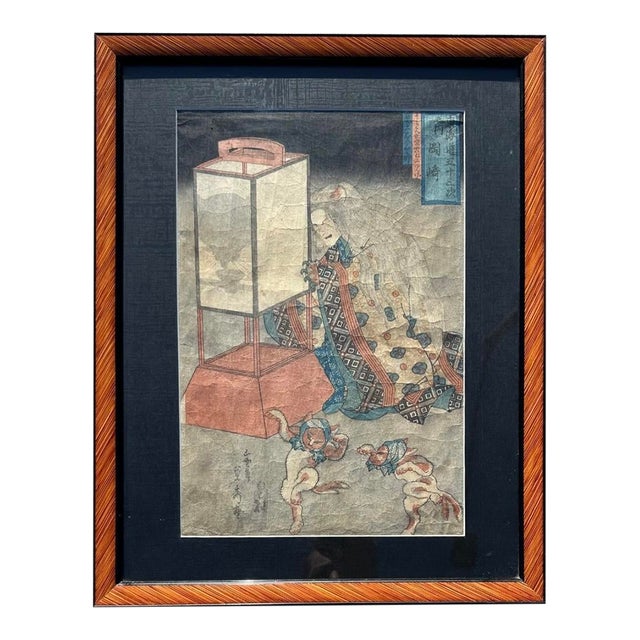
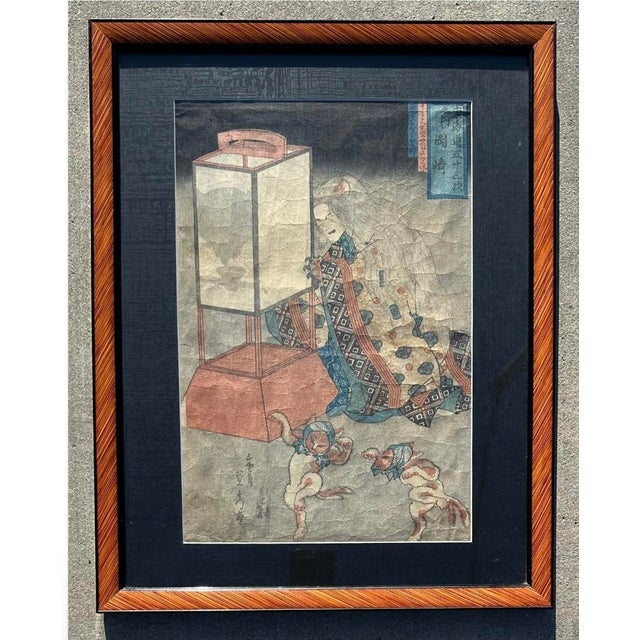
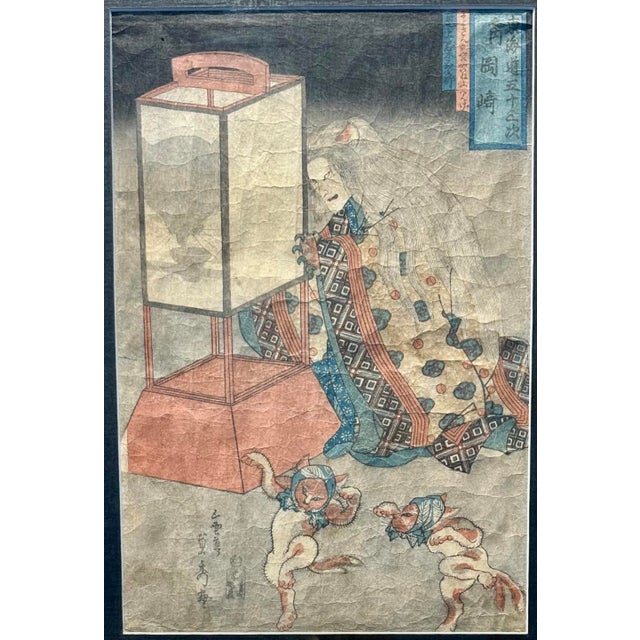
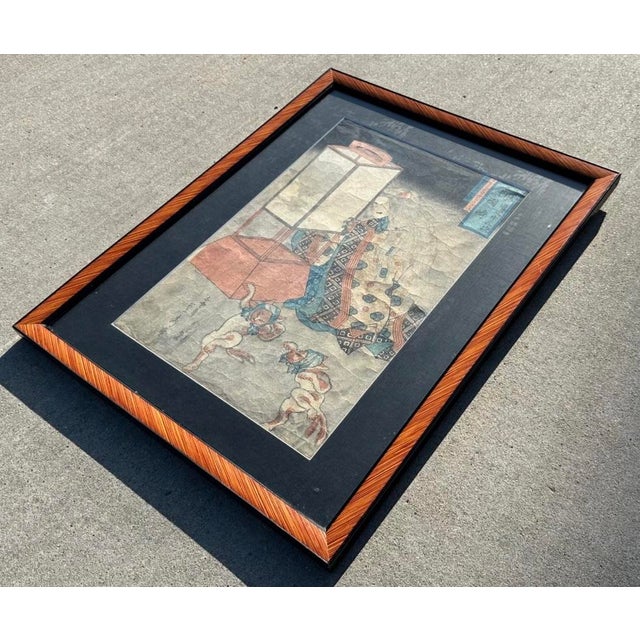
Original Antique Japanese Woodblock Print 1835 Utagawa Sadahide Okazaki
Title: Okazaki, from the Fifty-three Stations of the Tôkaidô Road (Tôkaidô …
Read more
Original Antique Japanese Woodblock Print 1835 Utagawa Sadahide Okazaki
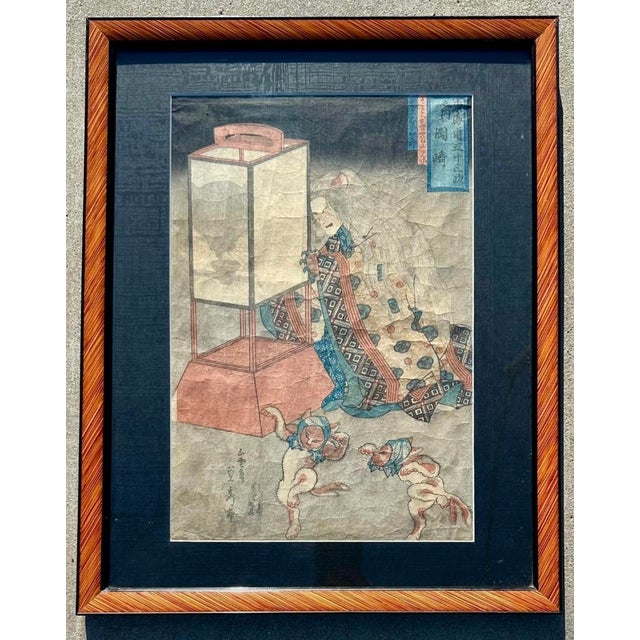
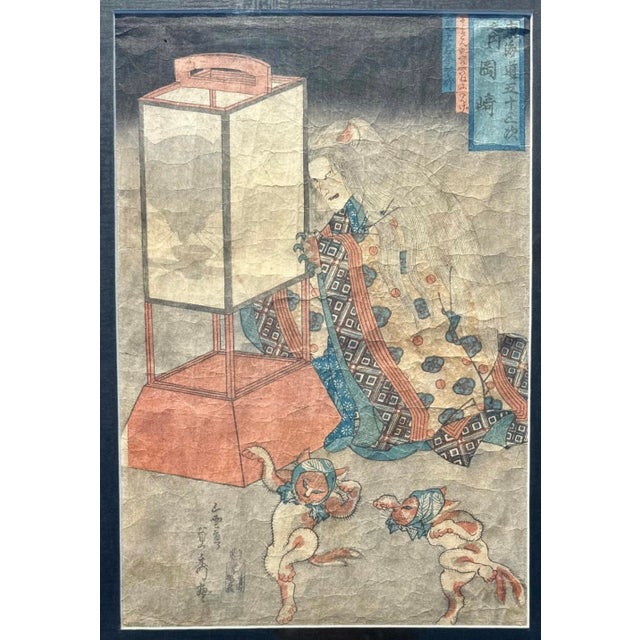
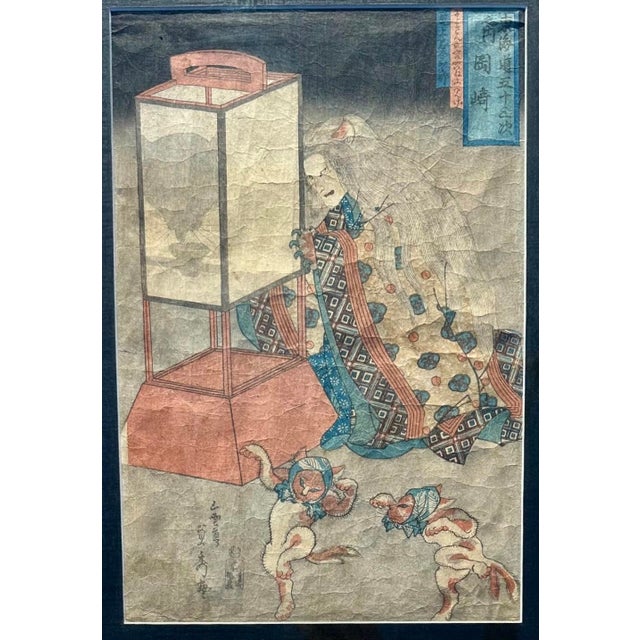
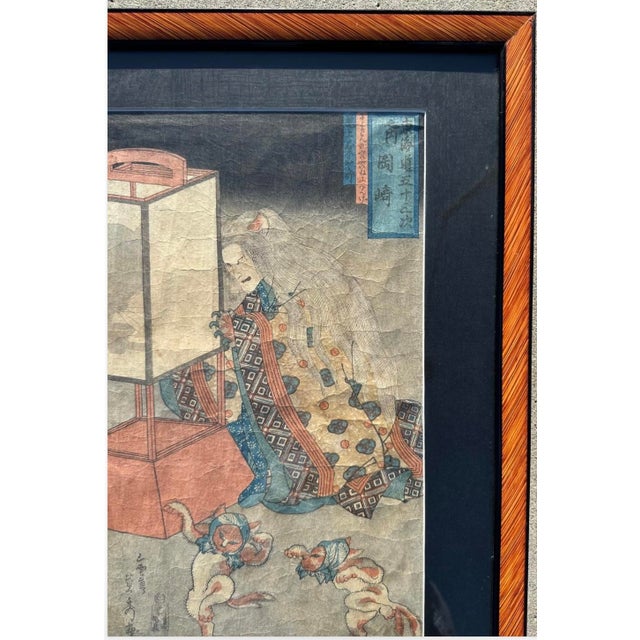
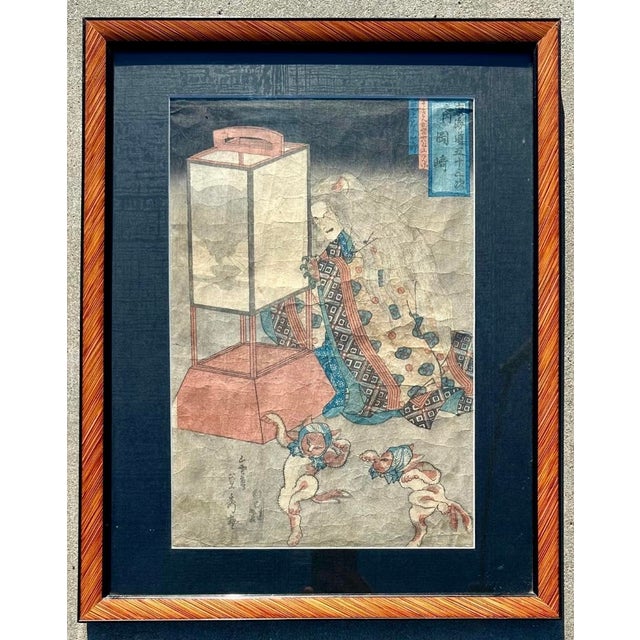
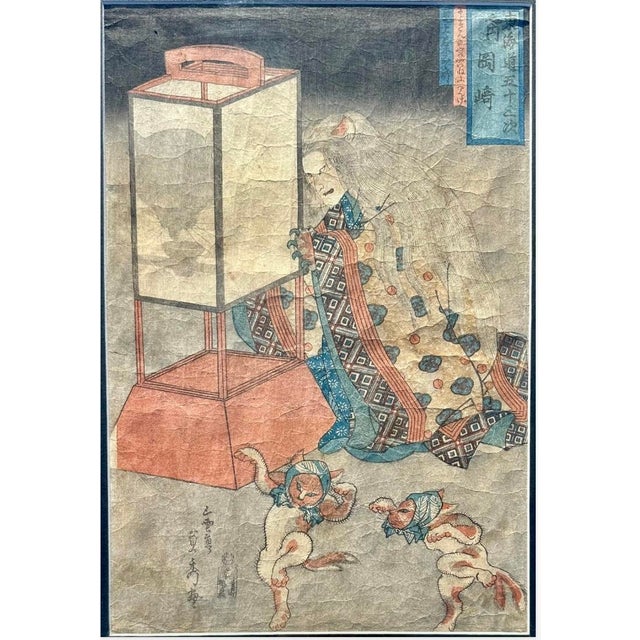
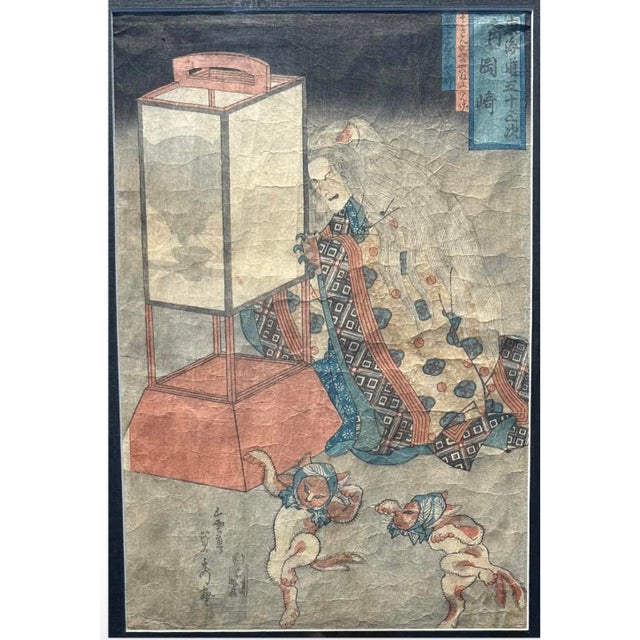
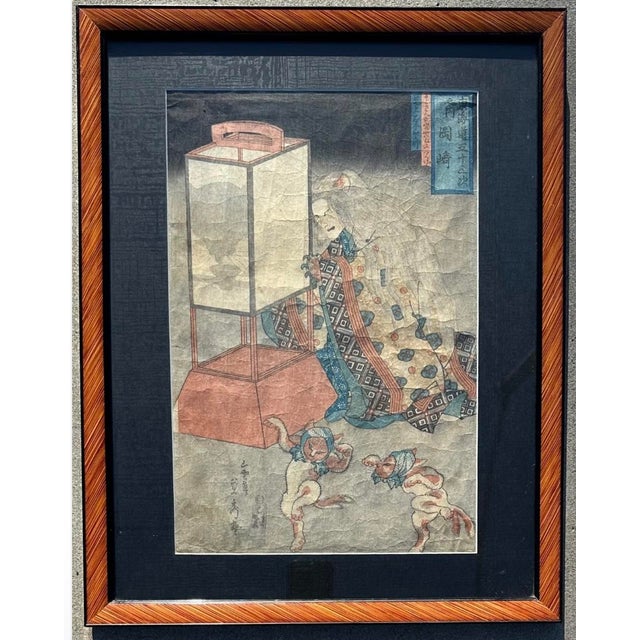
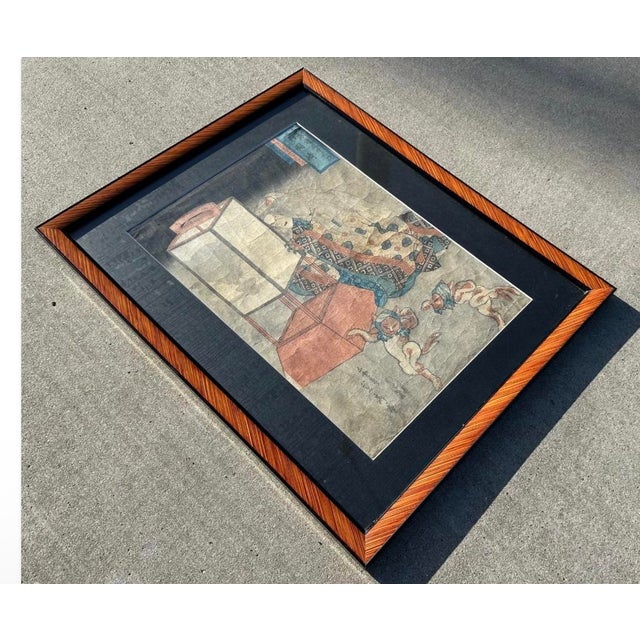
Title: Okazaki, from the Fifty-three Stations of the Tôkaidô Road (Tôkaidô gojûsan tsugi no uchi, Okazaki): Actor Onoe Kikugorô III as the Cat Monster (Kin no miya kaineko henge)
Artist: Utagawa Sadahide (Japanese, 1807–1873)
Date: 1835 (Tenpô 6, 2nd month)
Publisher: Tsuruya Kiemon (Senkakudō)
Medium: Woodblock print (nishiki-e); ink and color on paper
Dimensions (print): 36 × 25.1 cm (14 3/16 × 9 7/8 in.)
Format: Vertical ōban
Framed Dimensions: 19 ¼ in. (H) × 15 ¼ in. (W) × ¾ in. (D), wood and black lacquer frame with black matting
Description:
This vivid and theatrically charged woodblock print, titled Okazaki, is part of Utagawa Sadahide’s contribution to the iconic series The Fifty-three Stations of the Tôkaidô Road (Tôkaidô gojûsan tsugi no uchi), a visual journey along the historical route connecting Edo (modern Tokyo) to Kyoto. This specific work dramatizes the station of Okazaki through the lens of Edo-period kabuki theater.
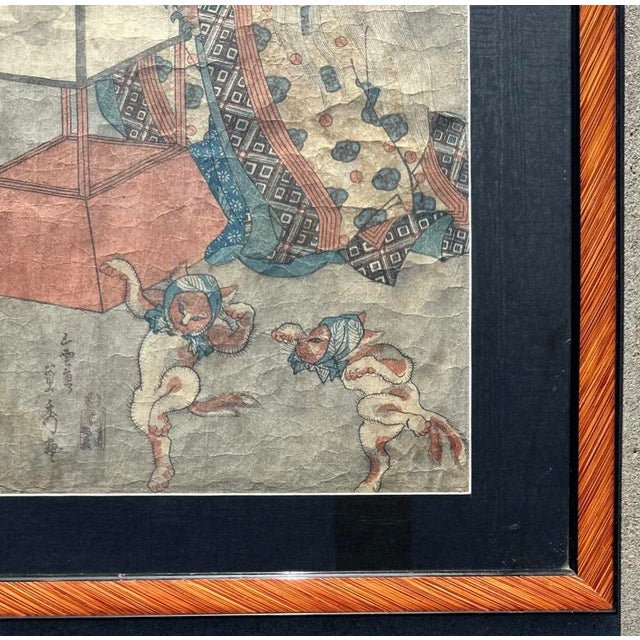
The print features the acclaimed actor Onoe Kikugorô III in the supernatural role of the Cat Monster (Kin no miya kaineko henge), a popular character type in kabuki lore, associated with transformation and ghostly vengeance. He is rendered in elaborate, colorful robes that highlight the luxurious textile patterns typical of high-style kabuki costuming. Seated in a dominant, expressive posture, the figure commands the composition, which is further enlivened by several dynamically posed secondary characters—likely attendants or other actors—suggesting a moment of dramatic tension on stage.
The background includes stage elements such as a folding screen and a red platform, reinforcing the scene’s theatrical context. The print bears the signature Gountei Sadahide ga and the censor’s seal “kiwame”, affirming its authenticity and official approval during the Edo period.
Historical Context & Artistic Significance:
Sadahide, a notable yet sometimes underrecognized member of the Utagawa school, was known for his narrative-rich compositions and ability to merge historical settings with contemporary culture, such as kabuki theater. While not as widely celebrated as Hokusai or Hiroshige, Sadahide’s works are valued for their vibrant detail and storytelling.
Kabuki-themed prints within the Tôkaidô series hold special appeal, as they represent a fusion of two major cultural phenomena of the Edo period: travel and theater. This particular print relates to the play Ume no Haru Gojûsan Tsugi, performed at the Ichimura Theater in 1835.
Collectible Rare:
Woodblock prints from the Fifty-three Stations of the Tôkaidô are among the most collected and studied of all ukiyo-e themes. This print, combining travel iconography with kabuki culture and featuring a famed actor in a supernatural role, adds a unique layer of interest. The preserved condition, full-frame presentation, and historical significance enhance its desirability among collectors of Edo-period prints, kabuki memorabilia, and Japanese art more broadly.
SADAHIDE (1807 - 1873 )
Sadahide Utagawa was a woodblock print artist active during the 19th century. Sadahide went by several names during his career, but was born Kenjiro Hashimoto in 1807. Working in both Edo and Yokohama, he was one of Kunisada’s most accomplished pupils. His compositional style was greatly influenced by Western art, offering extensive studies of perspective, sometimes depicting his subjects from a bird’s eye view. Sadahide was one of eleven Japanese printmakers who exhibited their work at the Paris International Exposition of 1866, from which he received the Légion d’Honneur.
In 1854, the Convention of Kanagawa established formal U.S. trade with Japan. Four years later, the Harris Treaty of 1858 opened two more trade ports to the United States. The Ansei Treaties (1858) followed, extending trade to the Netherlands, Russia, France and England. The foreigners of these five nations poured into the port of Yokohama, just south of modern Tokyo. During this time, Sadahide Utagawa produced a number of acclaimed studies of Westerners known as Yokohama-e. He stayed true to the ukiyo-e spirit by continuing to capture the everyday, a world that now featured baroque architecture, hooped skirts, and violins. Sold by booksellers and vendors, these prints illustrated the curious machines and imported fashions entering Japan, as well as imagined renderings of the foreigners’ homelands.
See less
- Dimensions
- 15.25ʺW × 0.75ʺD × 19.25ʺH
- Styles
- Japanese
- Frame Type
- Framed
- Period
- Early 19th Century
- Country of Origin
- China
- Item Type
- Vintage, Antique or Pre-owned
- Materials
- Lacquer
- Paper
- Woodcut
- Condition
- Good Condition, Original Condition Unaltered, Some Imperfections
- Color
- Tan
- Condition Notes
- In good condition considering its age. Minor imperfections, framed with a small crinkle in front top right corner of woodblock. In good condition considering its age. Minor imperfections, framed with a small crinkle in front top right corner of woodblock. less
Questions about the item?
Returns & Cancellations
Return Policy - All sales are final 48 hours after delivery, unless otherwise specified in the description of the product.
Cancellation Policy - Prior to shipping or local pickup, buyers may cancel an order for up to 48 hours, unless otherwise specified.
Related Collections
- Rattan Original Prints
- Soicher Marin Original Prints
- Medium-Density Fibreboard Original Prints
- Johannes Kip Original Prints
- Silver Finish Original Prints
- Sam Francis Original Prints
- Dye Transfer Original Prints
- Original Prints in Lexington, KY
- John Kiraly Original Prints
- Damien Hirst Original Prints
- Donald Sultan Original Prints
- Original Prints in Panama City, FL
- Original Prints in Salt Lake City
- Ralph Lauren Original Prints
- Botanical Prints
- Framed Prints
- Bird Prints
- Woodblock Prints
- Screen Prints
- Japanese Woodblock Prints
- Thomas McKnight Original Prints
- George Barbier Original Prints
- Frank Stella Original Prints
- Gustave Baumann Original Prints
- Teak Original Prints