







Details
Description
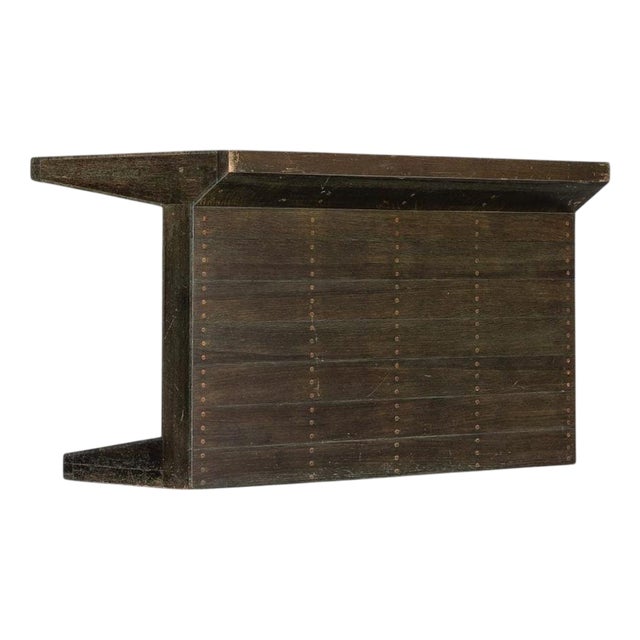
Designed and executed by Jan de Jong for the Raadhuis Budel in the Netherlands in 1967, this closed writing table …
Read more
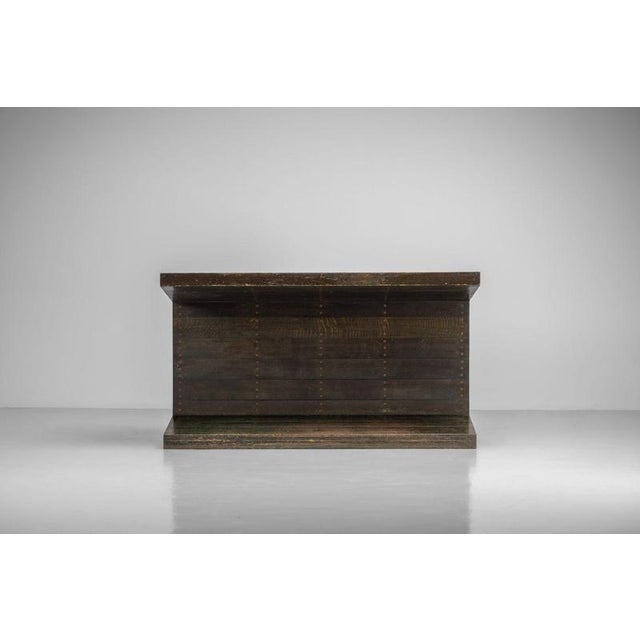
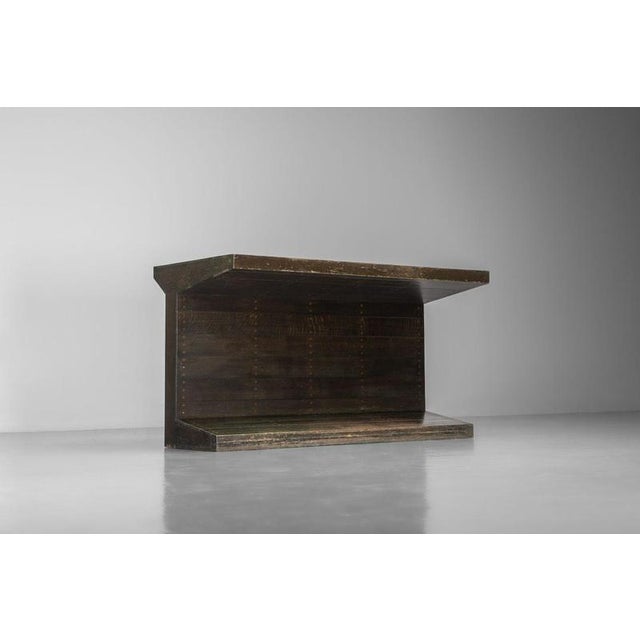
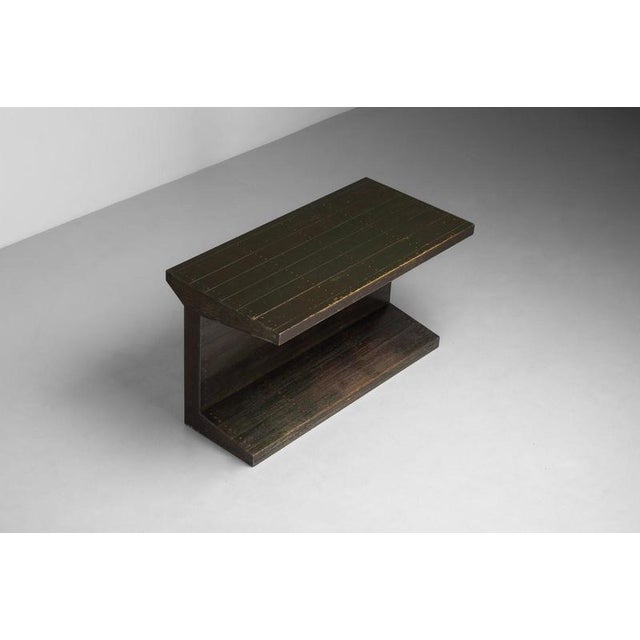
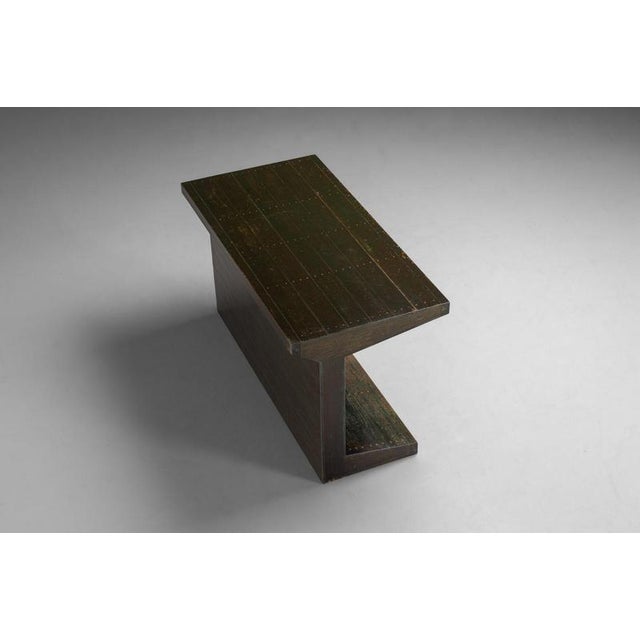
Designed and executed by Jan de Jong for the Raadhuis Budel in the Netherlands in 1967, this closed writing table is a remarkable example of the precise proportions and material clarity that define the Bossche School.
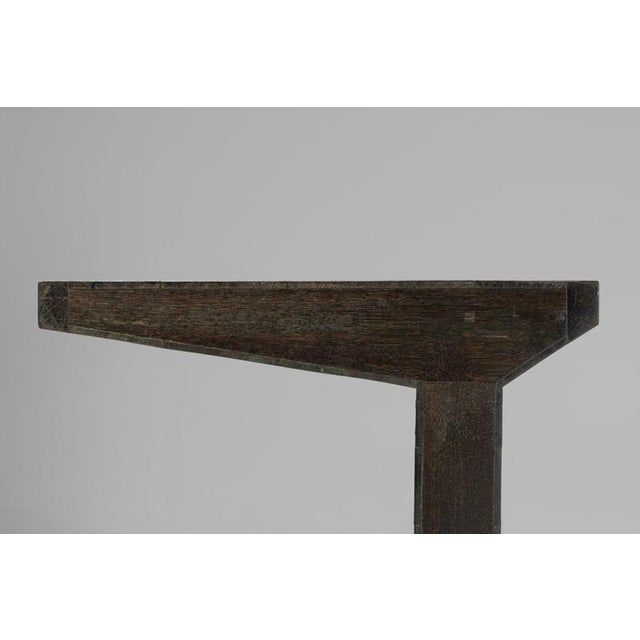
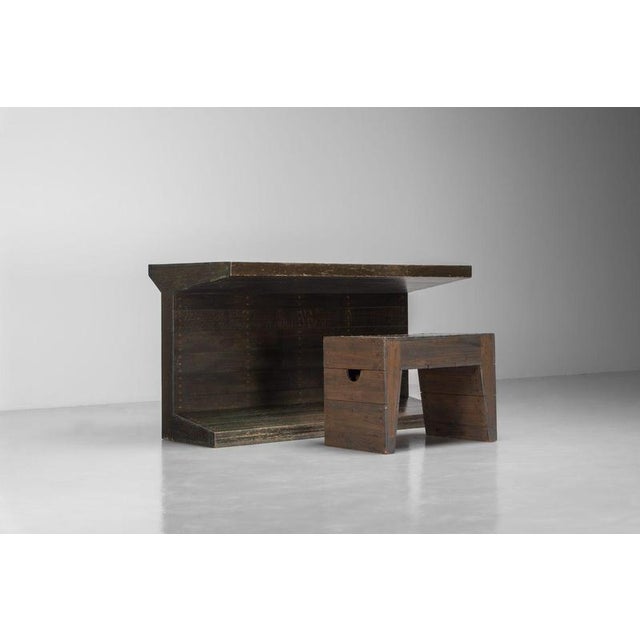
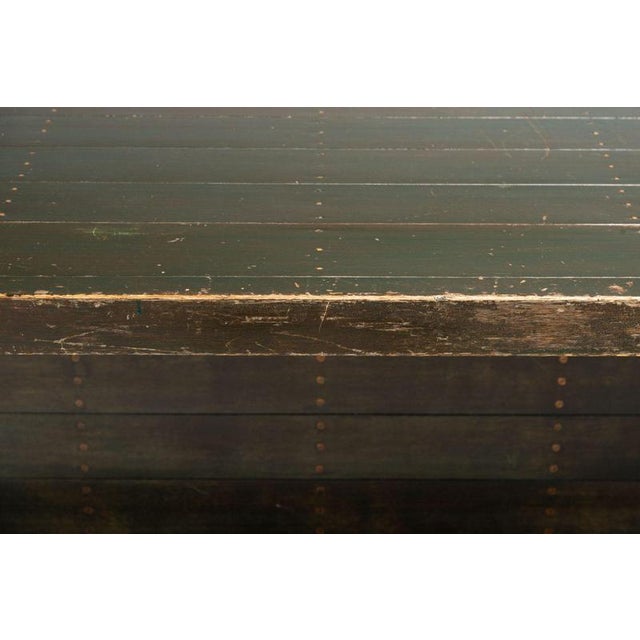
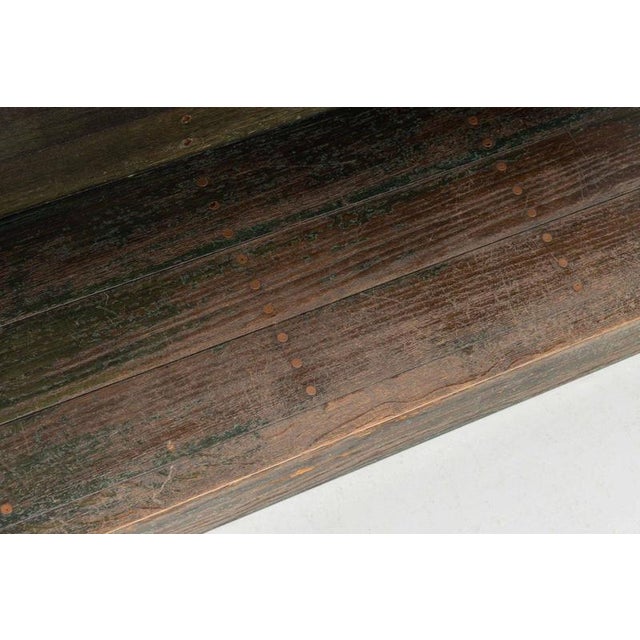
The table originates from one of Jan de Jong’s most refined and complete architectural projects, a building that he not only designed but also furnished with custom-made interiors of the highest quality. The table is made of ash wood and finished in a dark brown-green lacquer that shifts subtly with the light. Several years ago, some elements of the interior that were heavily used, including this piece, underwent a partial restoration and received a new surface finish. Over time, this refinish has gently worn away, merging with the original layers and creating an extraordinary patina that adds depth and authenticity. The result is a surface rich in texture, with soft variations in tone and sheen that speak to both careful preservation and the passing of time. Rows of copper nails are aligned with exacting precision, emphasizing the underlying structure and rhythm of the piece. Its closed form gives the table a sculptural, architectural weight, while the folded top detail adds a refined sense of proportion. The entire design is based on the Plastic Number, the proportional system developed by Dom Hans van der Laan, ensuring a direct and harmonious relationship between the furniture and the architecture of the Budel town hall. Raadhuis Budel remains one of De Jong’s most exceptional projects, executed with great rigor and quality. During the 1997 renovation, most of the original furniture was discarded, but a small number of pieces, including this table, were rescued by local residents. Jan de Jong stands as one of the most prolific and important executors of the Bossche School, with a vast oeuvre spanning complete buildings, interior spaces, renovations and consultancy work. In close collaboration with Dom Hans van der Laan and Wim van Hoof, whose color schemes added subtle depth to their projects, he gave enduring form to an architectural vision that remains influential to this day.
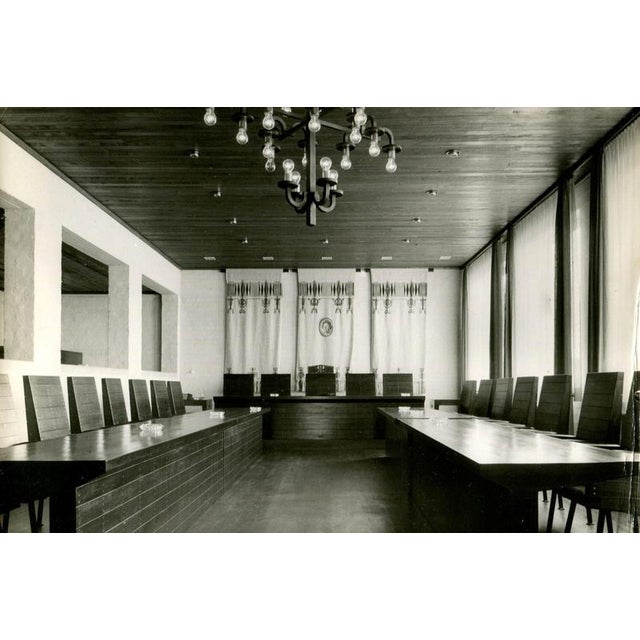
Provenance; Raadhuis Budel, council chamber, Netherlands 1967. Original photo of the writing table visible on the 7th image. This piece is attributed to the mentioned designer/maker. It has no attribution mark and no
official proof of authenticity,
however it is well documented in design history. I take full responsibility for any authenticity
issues arising from misattribution
See less
- Dimensions
- 56.3ʺW × 28.35ʺD × 32.28ʺH
- Period
- 1960s
- Country of Origin
- Netherlands
- Item Type
- Vintage, Antique or Pre-owned
- Materials
- Copper
- Condition
- Good Condition, Unknown, Some Imperfections
- Color
- Brown
Returns & Cancellations
Return Policy - All sales are final 48 hours after delivery, unless otherwise specified in the description of the product.
Cancellation Policy - Prior to shipping or local pickup, buyers may cancel an order for up to 48 hours, unless otherwise specified.
Related Collections
- The American School Writing Desks
- Bronze Finish Writing Desks
- KEM Weber Writing Desks
- Mahogany Writing Desks
- French Writing Desks
- Lexington Furniture Writing Desks
- English Traditional Writing Desks
- Green Writing Desks
- Louis XVI Writing Desks
- Ladies Writing Desks
- Walnut Writing Desks
- Italian Writing Desks
- Black Writing Desks
- Stanley Furniture Writing Desks
- Louis XV Writing Desks
- Pine Writing Desks
- Antique Writing Desks
- Arts and Crafts Writing Desks
- Maitland - Smith Writing Desks
- Baroque Writing Desks
- Bamboo Writing Desks
- Regency Writing Desks
- Mid-Century Modern Writing Desks
- Mother-of-Pearl Writing Desks
- Charles Limbert Writing Desks