

Details
Description
Edwardian William and Mary* Display Cabinet
This is a one-piece Edwardian (circa 1900s) oak or mahogany wood display cabinet on …
Read more
Edwardian William and Mary* Display Cabinet
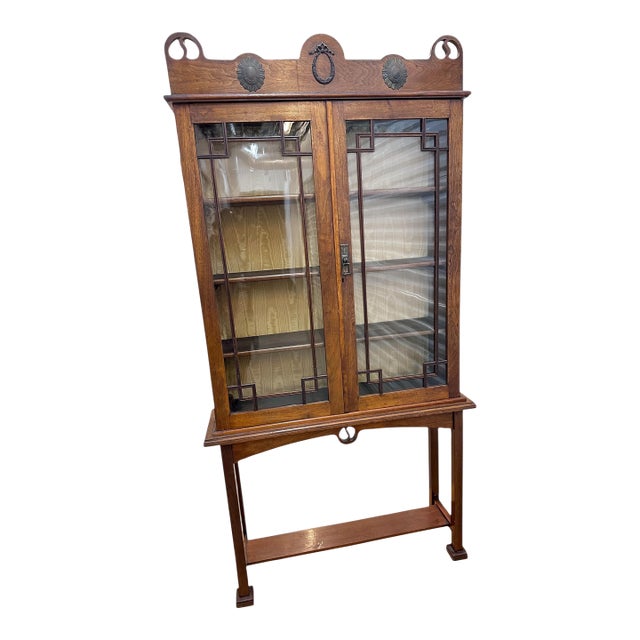
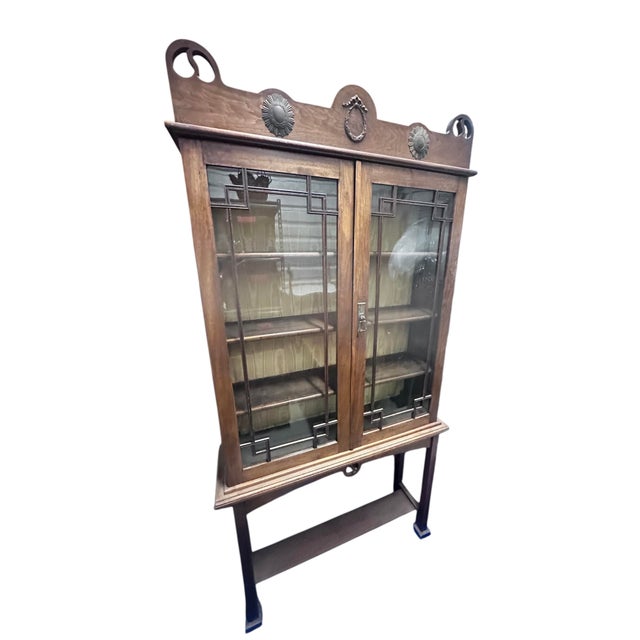
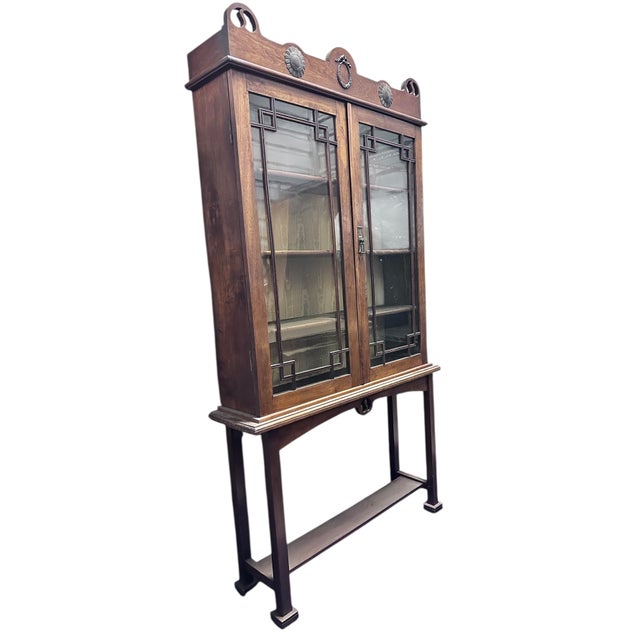
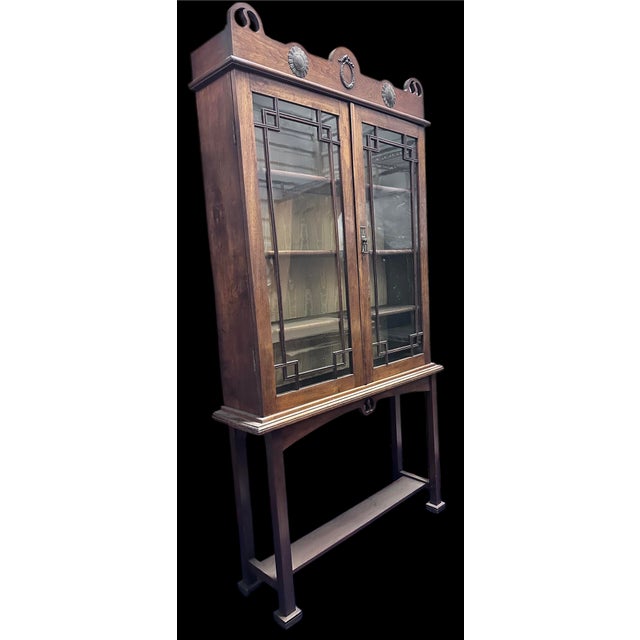
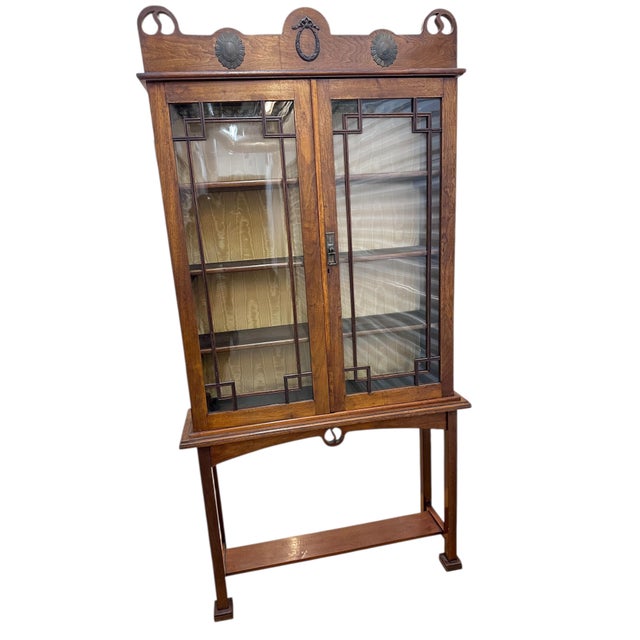
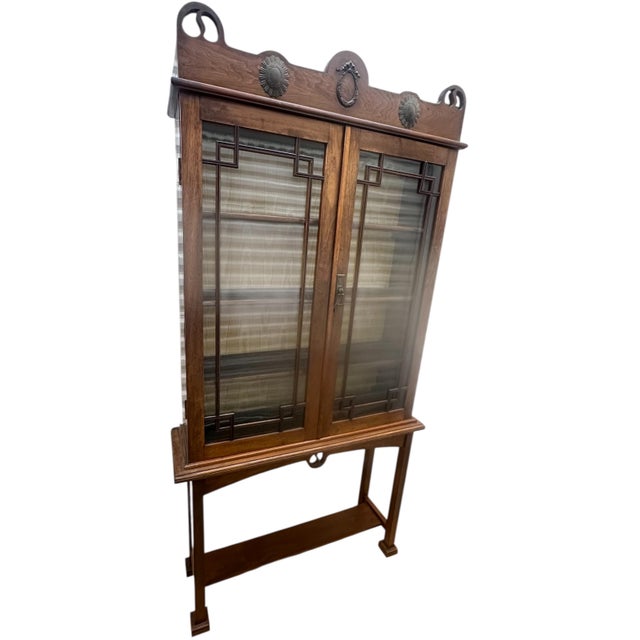
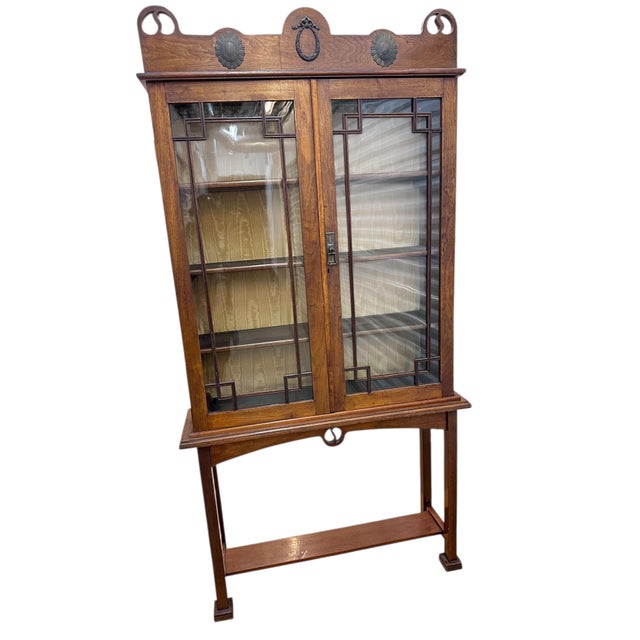
This is a one-piece Edwardian (circa 1900s) oak or mahogany wood display cabinet on a stand in an English arts & crafts style (1890s - 1914).
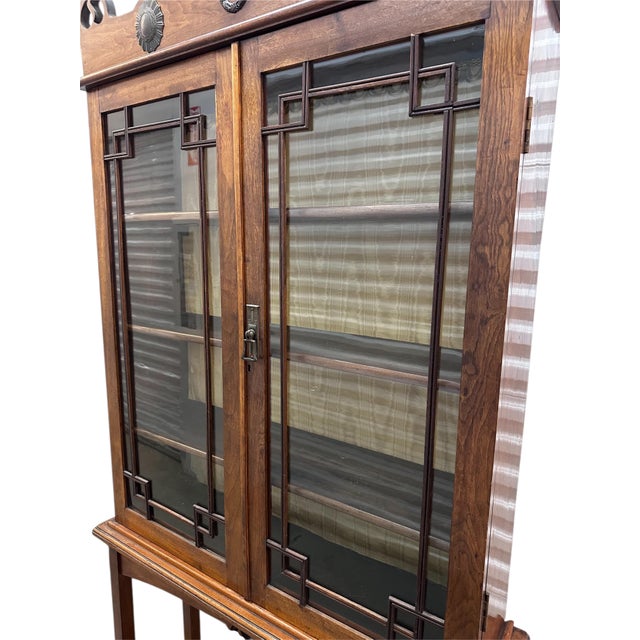
- a distinctive design with intricate geometric mullions on the glass doors
- has influences of the Scottish designer of the times, Charles Rennie Mackintosh
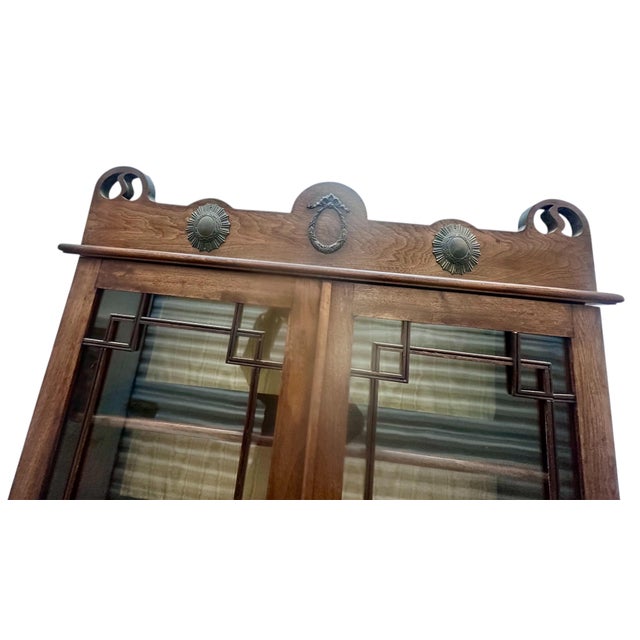
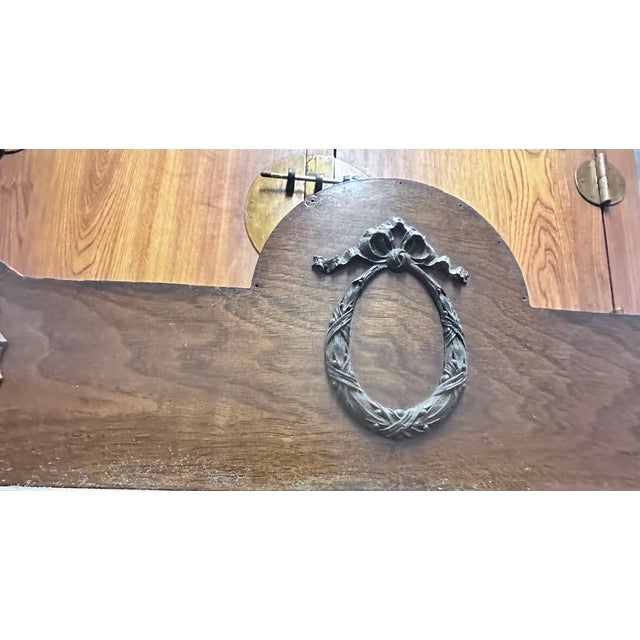
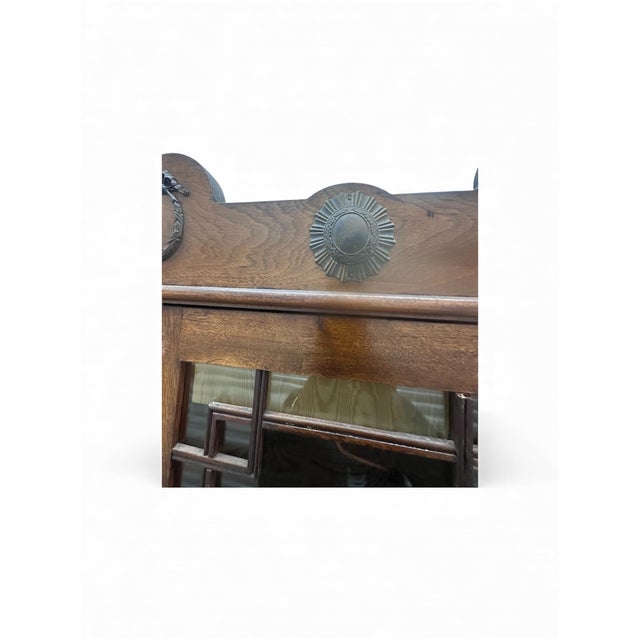
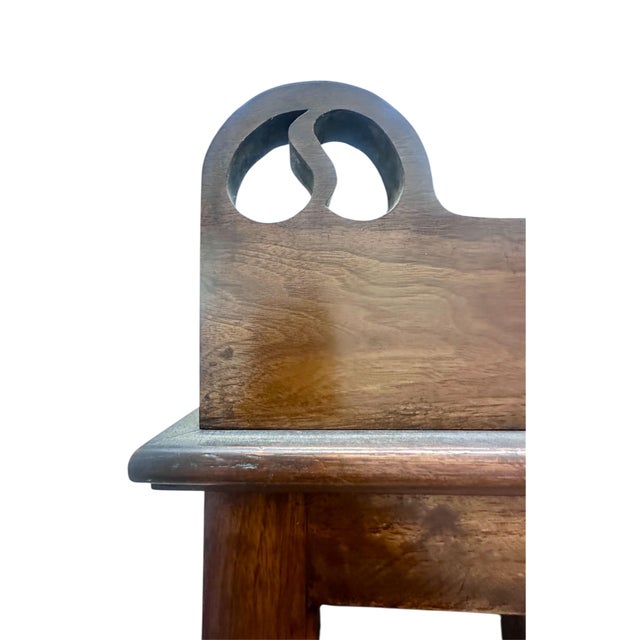
- Hand carved cutouts decorative pediment at top
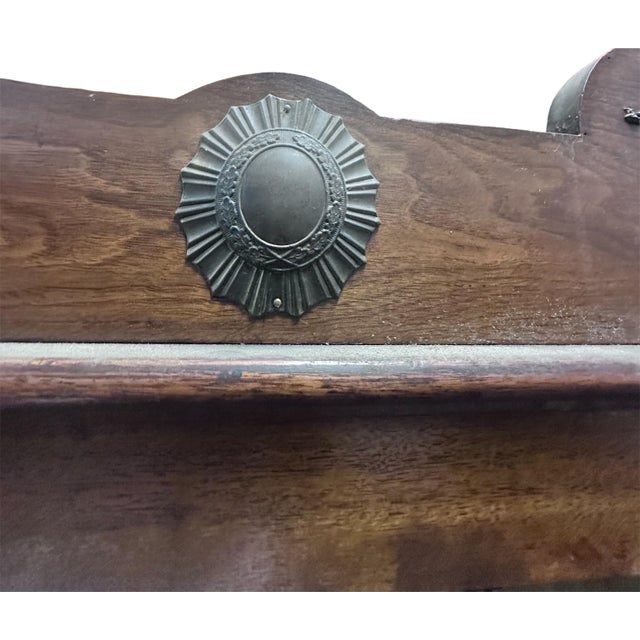
- The pediment is decorated with 3 metal medallions
- two military-style sunburst metal medallions on the two ends
- at center of pediment is an oval wreath motif surrounding a central blank medallion, resembling some historical military decorations, that are often collected as militaria or used for historical reenactment. The blank center suggests it might be a generic design or intended for customization with a specific insignia or emblem. The laurel wreath design is often associated with victory and honor
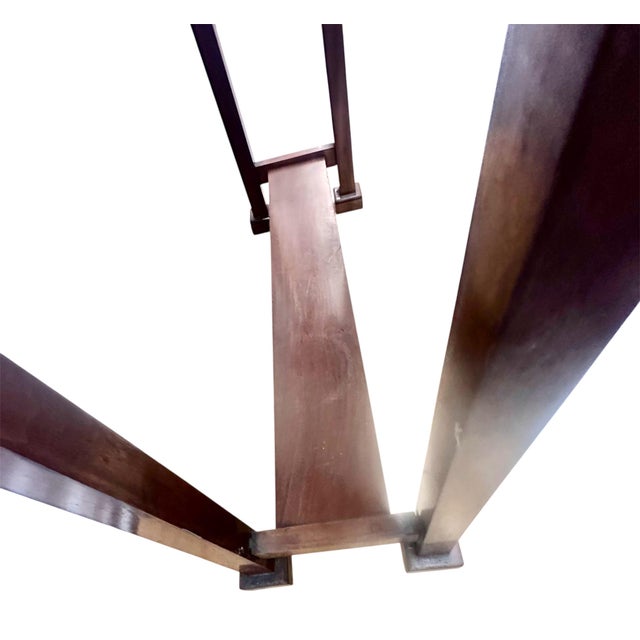
- The lower stand has slender, square, tapering legs connected by a simple under-tier stretcher shelf
- glass double doors with intricate geometric mullions pattern created by dividers
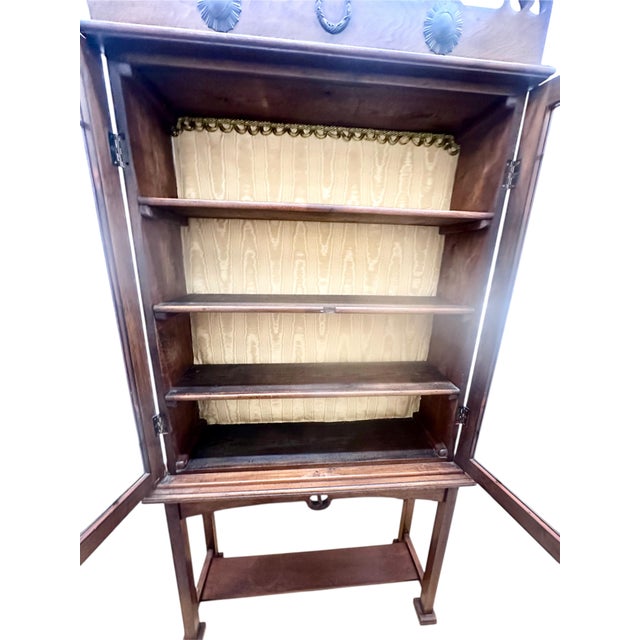
- Inside are three fixed wooden shelves
- Beige Silk fabric at inside back wall (that was replaced by previous owner)
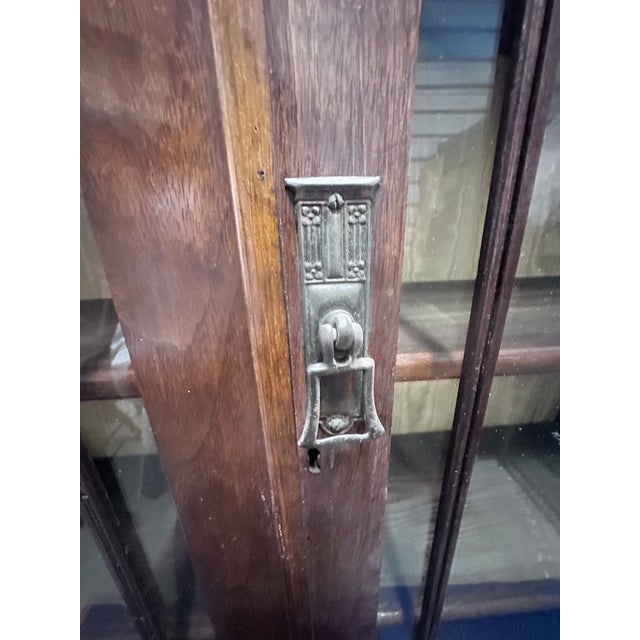
- metal Locking door (no key) handle
Evolution of Display Cabinets
Display cabinets evolved from 18th-century bookcases. Displaying fine china and collectibles became fashionable in the 19th century, leading to the development of the display cabinet as a distinct piece of furniture. The preceding Victorian era featured opulent cabinets with intricate carvings, curved glass, and heavy use of woods like mahogany and rosewood. The Edwardian era marked a shift away from the heavily ornamented Victorian style towards lighter designs and colors. Common woods used included mahogany and oak, which became more common in homes. The design often incorporated simpler lines and could be influenced by movements like the Aesthetic Movement, which emphasized art for art's sake and incorporated Japanese motifs. The geometric glass paneling, simple pediment, glass doors and shelving details as in this cabinet are characteristic of this period that served to showcase prized possessions.
* Inspired by designs done during the period of English Monarchs William and Mary, 1689-1702. William was of Dutch origin and brought with him Dutch craftsman and the idea that ordinary people could enjoy comfort. The designs featured lines that were simpler and more delicate than designs before that time, with an emphasis on vertical lines. Highboys and chests on legs were invented at this time as was the first china cabinet originally designed for Queen Mary to house her collection of Delftware.
transitional. Grandma chic. Traditional. Edwardian. English. European. Arts and Crafts. Coastal
See less
- Dimensions
- 38.5ʺW × 11ʺD × 73ʺH
- Period
- 1900 - 1909
- Country of Origin
- United Kingdom
- Item Type
- Vintage, Antique or Pre-owned
- Materials
- Glass
- Metal
- Wood
- Condition
- Good Condition, Original Condition Unaltered, Some Imperfections
- Color
- Brown
- Condition Notes
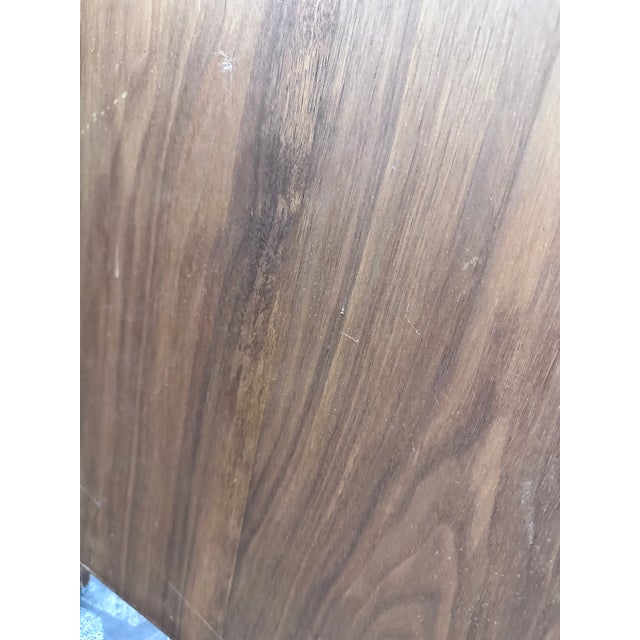
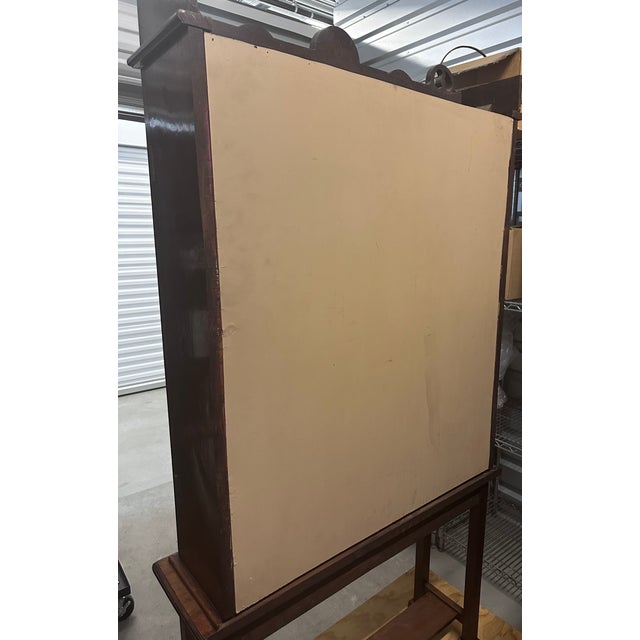
- Excellent condition Faint scratches Loss of finish to small areas Key not included Tarnish to hardware Refer photos for details Excellent condition Faint scratches Loss of finish to small areas Key not included Tarnish to hardware Refer photos for details less
Questions about the item?
Returns & Cancellations
Return Policy - All sales are final 48 hours after delivery, unless otherwise specified in the description of the product.
Cancellation Policy - Prior to shipping or local pickup, buyers may cancel an order for up to 48 hours, unless otherwise specified.
Related Collections
- Space Age China and Display Cabinets
- Grosfeld House China and Display Cabinets
- Bronze Finish China and Display Cabinets
- Cast Iron China and Display Cabinets
- Medium-Density Fibreboard China and Display Cabinets
- Antique Hutch Cabinets
- Ethan Allen China and Display Cabinets
- Thomasville China and Display Cabinets
- Display Cabinets with Glass Doors
- Drexel Heritage China and Display Cabinets
- Corner Display Cabinets
- Victorian China and Display Cabinets
- Glass Curio Display Cabinets
- Henredon China and Display Cabinets
- Drexel China and Display Cabinets
- Century Furniture China and Display Cabinets
- Broyhill China and Display Cabinets
- Mid-Century Modern China and Display Cabinets
- Baker Furniture Company China and Display Cabinets
- Art Deco China and Display Cabinets
- Chippendale China and Display Cabinets
- Curio Display Cabinets
- Henkel Harris China and Display Cabinets
- Traditional China and Display Cabinets
- Cherry Wood China and Display Cabinets