







Details
Description
Erasmus quellinus ii (antwerp 1607 - 1672)
vanitas (as allegory of the vanity of life or youth)
oil on canvas …
Read more
Erasmus quellinus ii (antwerp 1607 - 1672)
vanitas (as allegory of the vanity of life or youth)
oil on canvas (121 x 84 cm - framed 135 x 98 cm)
the work is accompanied by a critical study by professor emilio negro, some excerpts of which are presented below.
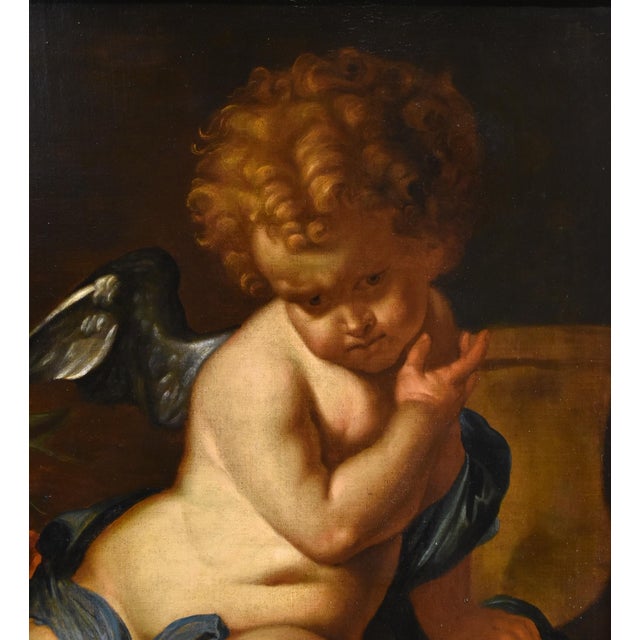
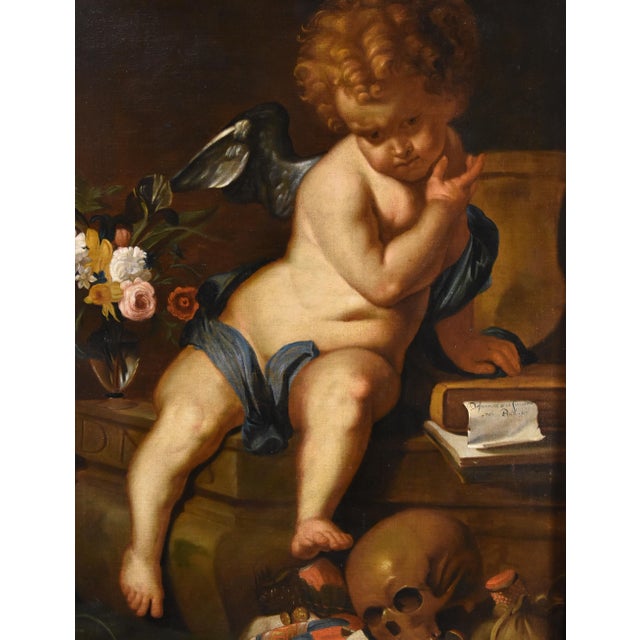
the theme of the painting we propose is a singular and rare "vanitas," a subject with strong moral significance. In painting, it refers to a composition with symbolic elements alluding to the theme of the transience of life, thus encouraging the viewer to meditate on the transience of human destiny and the fragility of worldly pleasures.
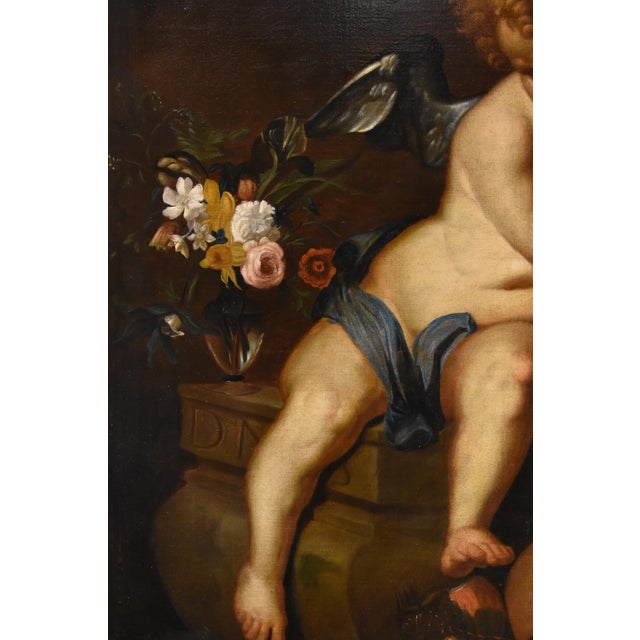
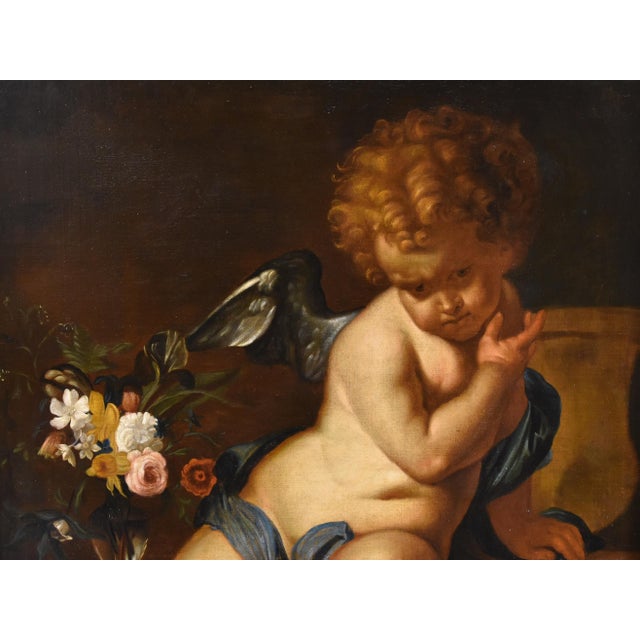
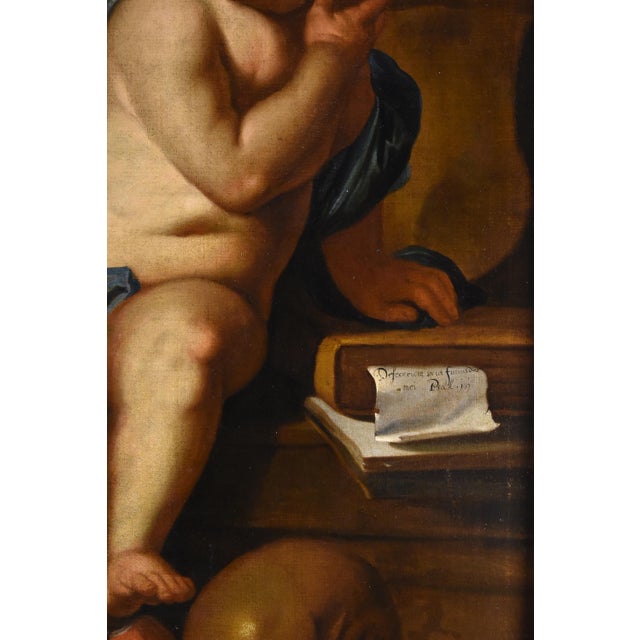
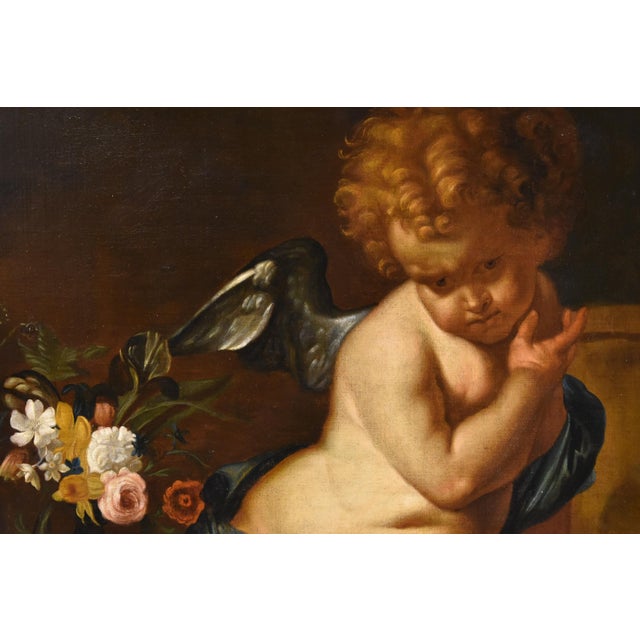
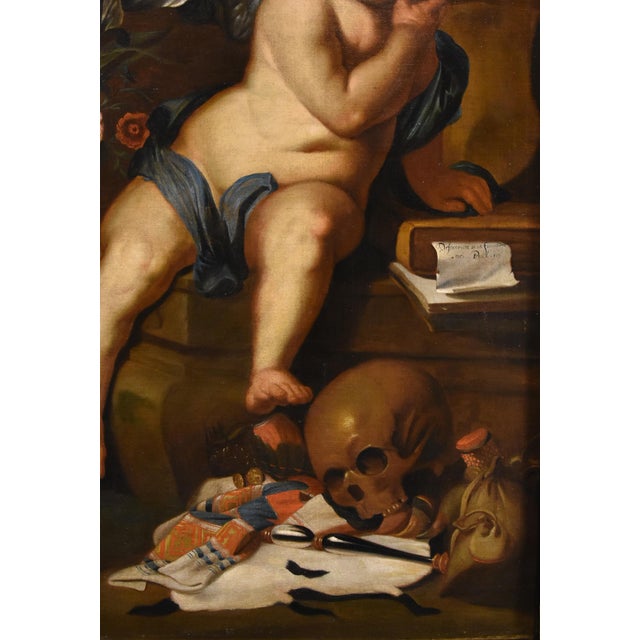
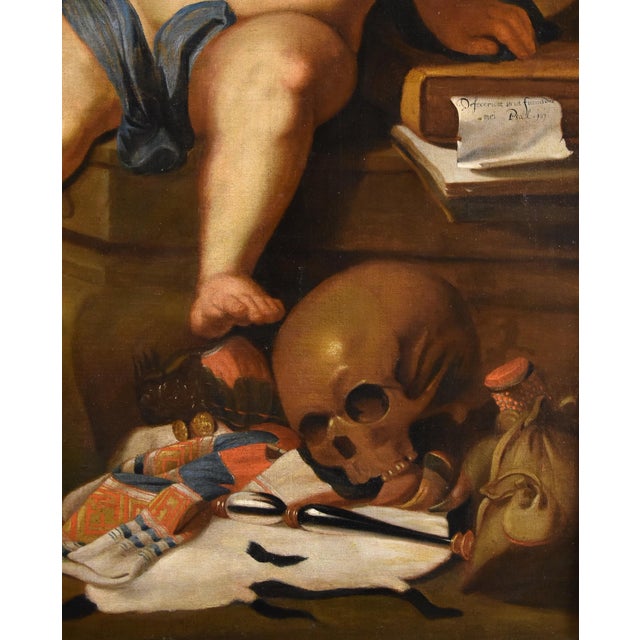
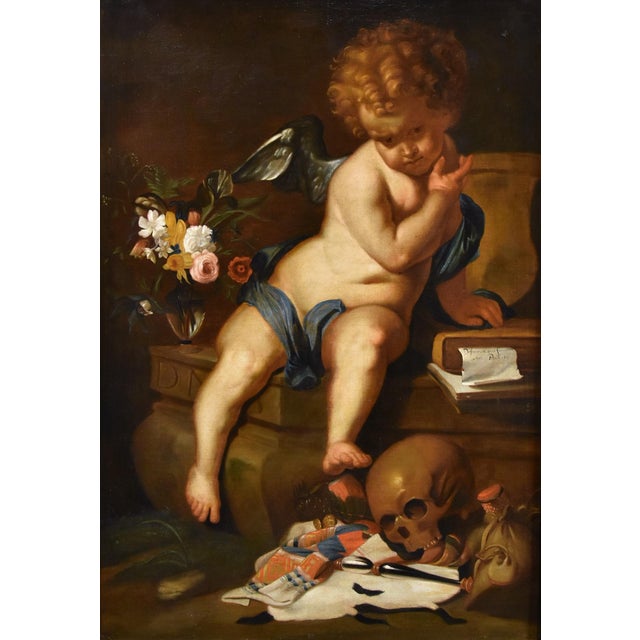
these subjects, which enjoyed particular success in the flemish milieu, are works of great fascination, interesting to study and often difficult to decipher; the protagonist of our canvas is a capricious cupid seated on a sarcophagus, a sort of pictorial anthropomorphic carpe diem (seize the day), inviting us to meditate on the fleeting nature of life and enjoy the moments of happiness it affords us. This is done without regard for the changing fortunes of fate, symbolized by the cupid's foot trampling on the gold coins, the precious cloth, the scepter, the ermine stole, the skull, the hunting horn, and the books.
beside him is a still life of colorful flowers, gathered in a crystal vase, whose presence takes on a clear allegorical meaning, as they constitute a metaphor for the transience of youthful beauty, which, like fresh flowers, is destined to wither.
particularly noteworthy is the bare stone tomb on which the cupid sits, bearing the initials "d. M. S.," engraved in beautiful roman capital letters, which translate to the latin phrase "diis manibus sacrum," meaning "to the sacred gods of the hands," corresponding to the invocation carved on tombstones from the late pagan and early early christian periods, addressed to the spirits of deified ancestors.
another very interesting detail is the blank sheet of paper protruding from the pages of the bulky closed psalter (the biblical text containing the collection of psalms) on which the phrase "(quia] defecerunt sicut fumus dies/ mei psal j.97" (translated as "[because] my days have vanished like smoke" (psalter, psalm 1.97) is written in beautiful 17th-century cursive latin. This phrase is equivalent to another exhortation to reflect on the brevity of life.
regarding the pictorial origin of the composition in question, it should first be noted that it is an interesting replica, with some modifications, of a work by erasmus quellinus the younger (the figure of the putto) and daniel seghers (the still life).
a version of the same composition, entitled "allegory of the passage of youth," is also known, and was sold at sotheby's in amsterdam as cornelis schut and daniël seghers (12/12/1991, old master paintings and drawings, lot 218, price €16,630, later sold in london as thomas willeboirts bosschaert (sotheby's 16/12/1999, lot 59, hammer price: €126,592 / £80,000).
regarding the painting in question, we can attribute its creation to a skilled flemish artist of the grand siècle, attentive to the rendering of detail and faithful to the teachings learned from studying the compositions of the best 17th-century masters. Indeed, our canvas clearly displays post-caravaggesque and post-rubensian accents, typical of the students of wallerant vaillant; distinctive stylistic features are evident in the effective contrasts of light and the fluid, balanced pictorial impasto.
these reasons allow us to connect this vanitas to the modus operandi of the aforementioned erasmus quellinus the younger (antwerp, 1607-1678), one of rubens's closest collaborators in the 1630s, here assisted by a valuable collaborator trained within his active workshop.
descended from a renowned family of artists (his father was the painter erasmus quellinus the elder), erasmus quellinus ii worked primarily in flanders, where his activity is evidenced by numerous compositions similar to ours, attributed to him and held in the most important public and private collections. He also headed a successful atelier where numerous students trained, including his children and grandchildren. It is true that the canvas in question, likely intended to adorn the walls of the noble residence of a collector, scholar, or humanist, displays a meticulous painting style, especially in the insistent attention to detail and warm hues, which are hallmarks of erasmus's finest works. This piece is attributed to the mentioned designer/maker. It has no attribution mark and no
official proof of authenticity,
however it is well documented in design history. I take full responsibility for any authenticity
issues arising from misattribution
See less
- Dimensions
- 38.58ʺW × 4.72ʺD × 53.15ʺH
- Styles
- Baroque
- Art Subjects
- Figure
- Period
- 17th Century
- Country of Origin
- Italy
- Item Type
- Vintage, Antique or Pre-owned
- Condition
- Good Condition, Unknown, Some Imperfections
- Color
- Condition Notes
- Patina Consistent with Age and Use,Reupholstered,Partially Restored Patina Consistent with Age and Use,Reupholstered,Partially Restored less
Returns & Cancellations
Return Policy - All sales are final 48 hours after delivery, unless otherwise specified in the description of the product.
Cancellation Policy - Prior to shipping or local pickup, buyers may cancel an order for up to 48 hours, unless otherwise specified.
Related Collections
- Photorealism Canvas Paintings
- Ed Ruscha Paintings
- Ralph Lauren Paintings
- Photorealism Paintings in New York
- Louise Nevelson Paintings
- Silk Velvet Paintings
- Richard Serra Paintings
- Herman Miller Paintings
- BDDW Paintings
- Jo Baskerville Paintings
- Jean-Paul Barray Paintings
- Johannes Andersen Paintings
- Peter Behrens Paintings
- Karl-Erik Ekselius Paintings
- Carl-Axel Acking Paintings
- Joseph Stella Paintings
- Raphael Paintings
- Black Photorealism Paintings
- Pedro Friedeberg Paintings
- Piet Hein Eek Paintings
- James McCray Paintings
- Lawson-Fenning Paintings
- Milton Avery Paintings
- Hans Andersen Paintings
- Cassina Paintings