

Details
Description
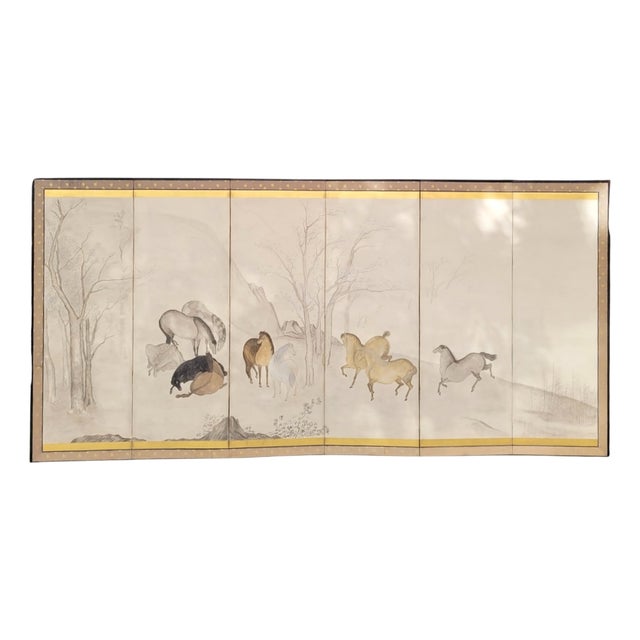
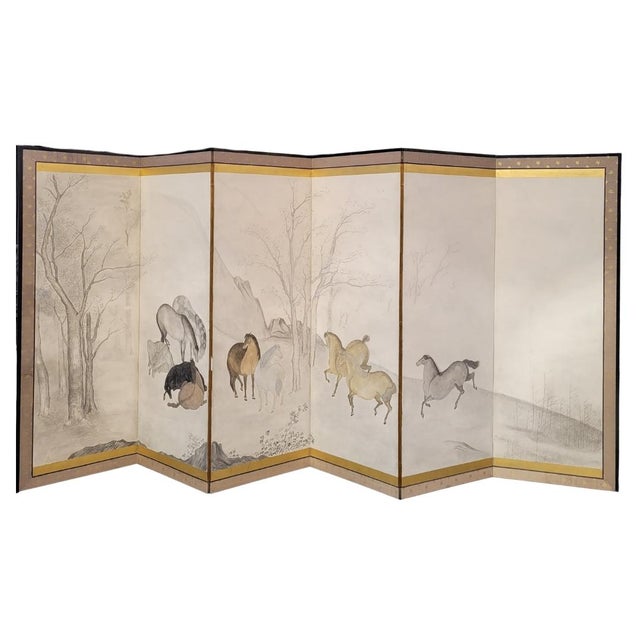
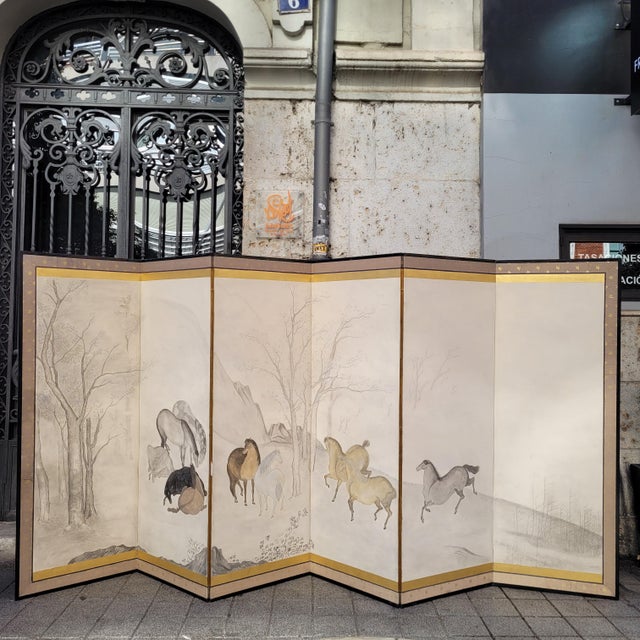
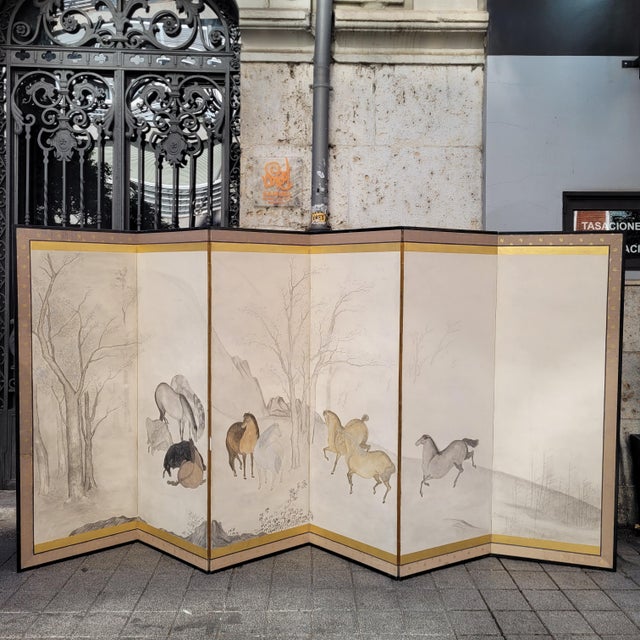
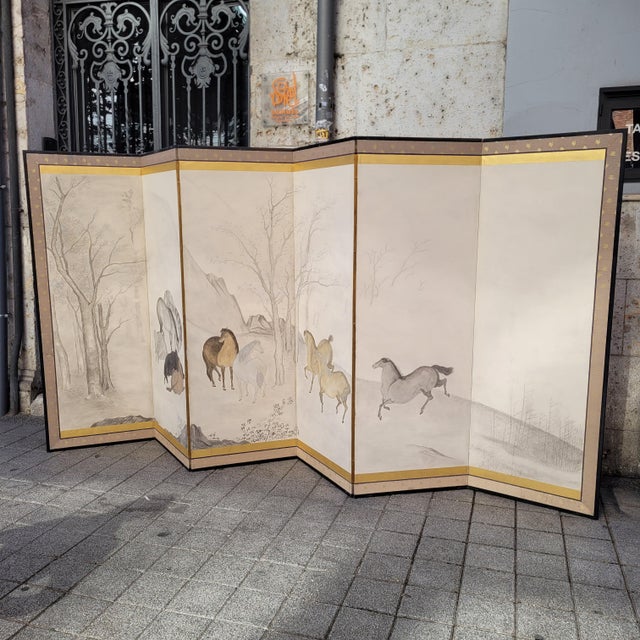
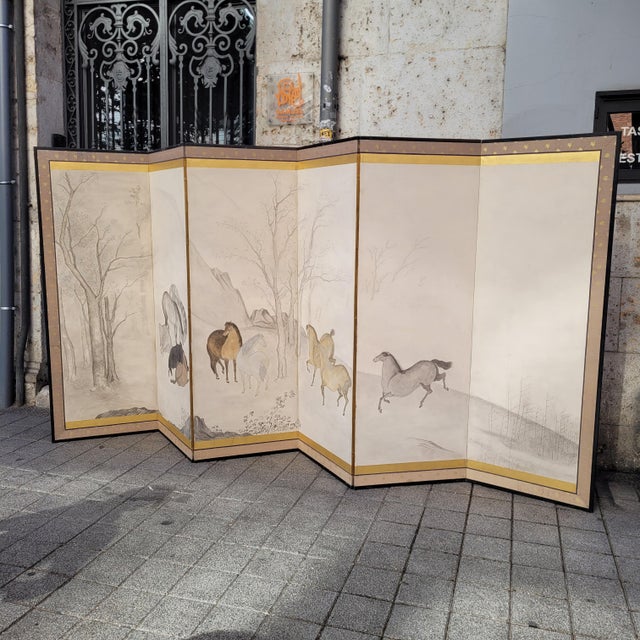
Byōbu Folding Screen “Wild Horses”, Kano School, Edo Period, 19th Century – Japan
Technique: Watercolor and ink on mulberry paper
…
Read more
Byōbu Folding Screen “Wild Horses”, Kano School, Edo Period, 19th Century – Japan
Technique: Watercolor and ink on mulberry paper
Title of the work: “Wild Horses”
Period: Circa 1850, late Edo period (1615-1868)
Style/School: Kano School
Country of origin: Japan
Provenance: Important French private collection
Good condition considering its age and use
Overall dimensions: 176 x 365 x 10 cm
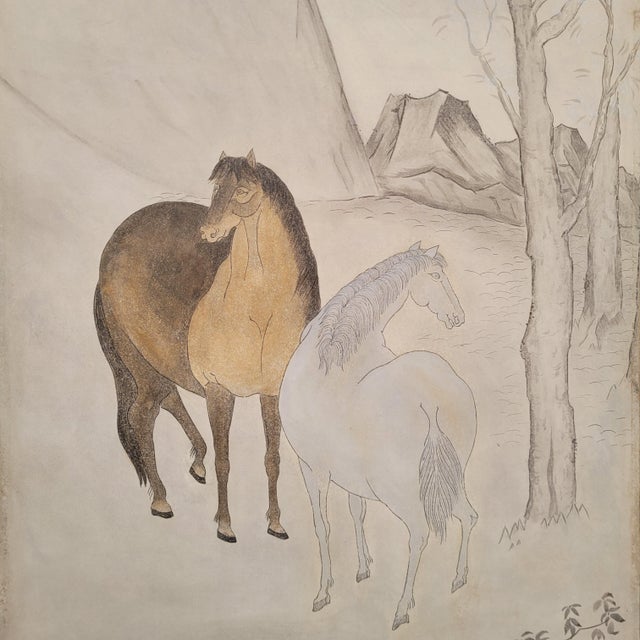
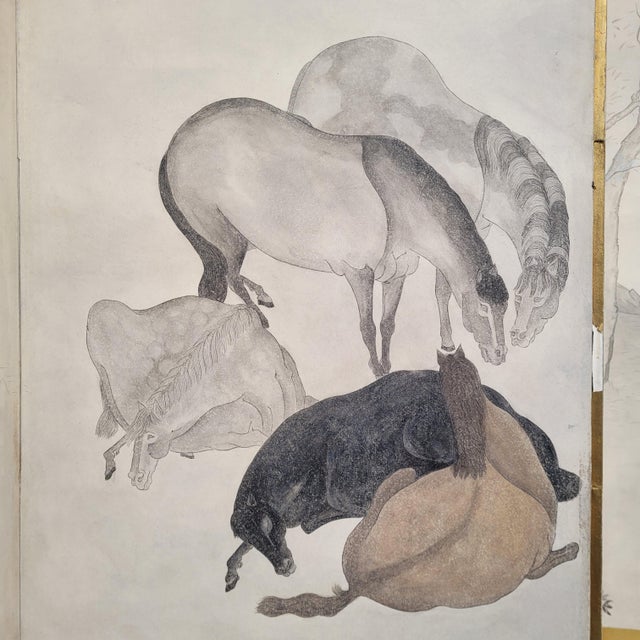
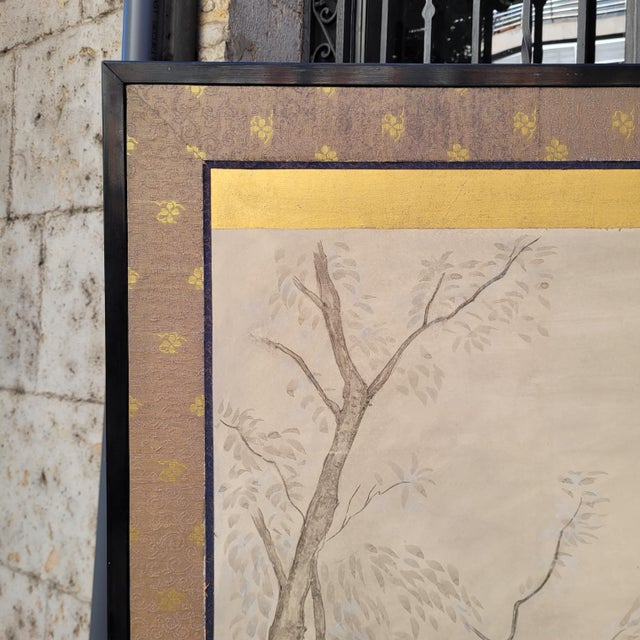
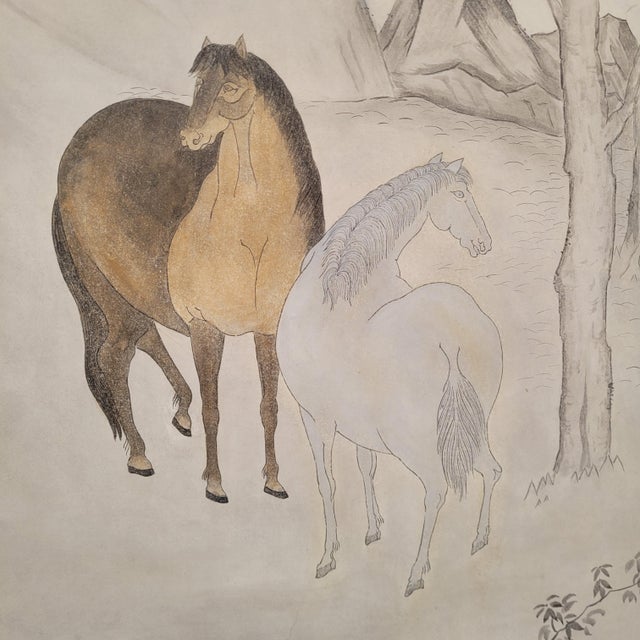
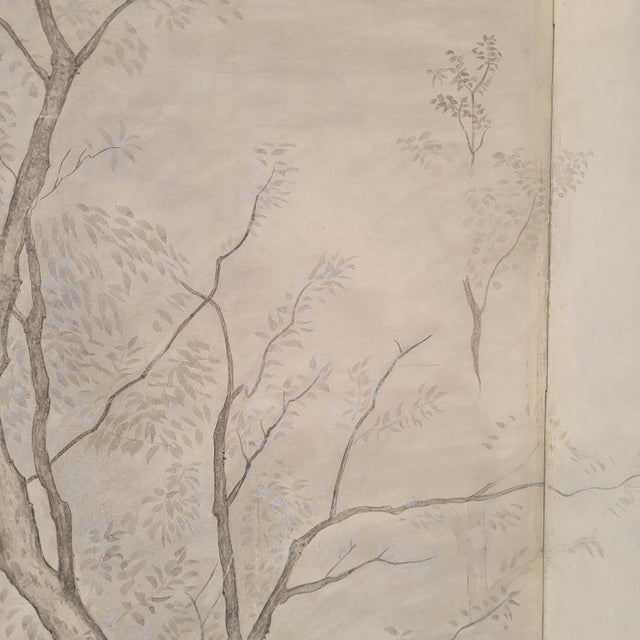
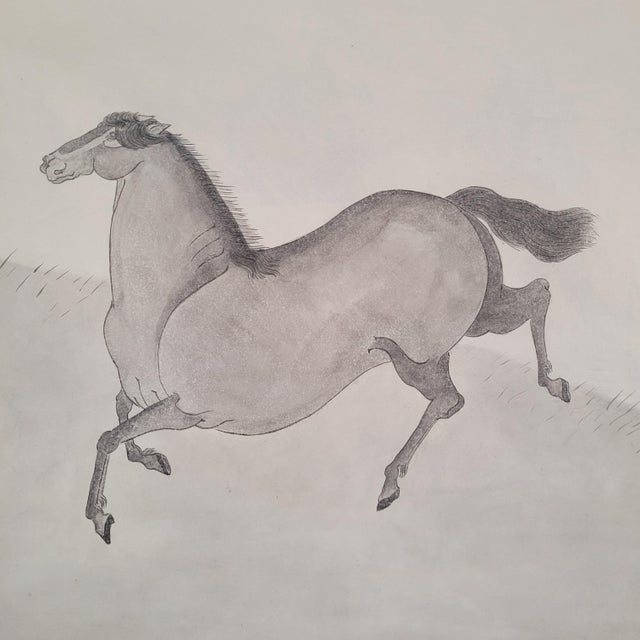
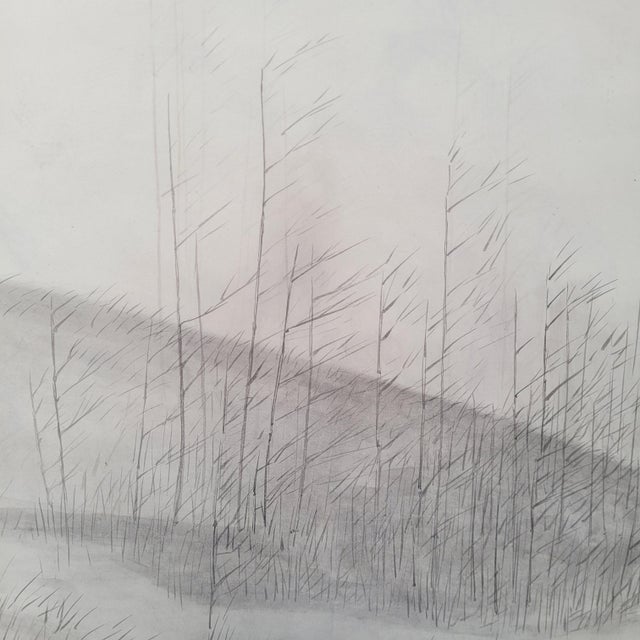
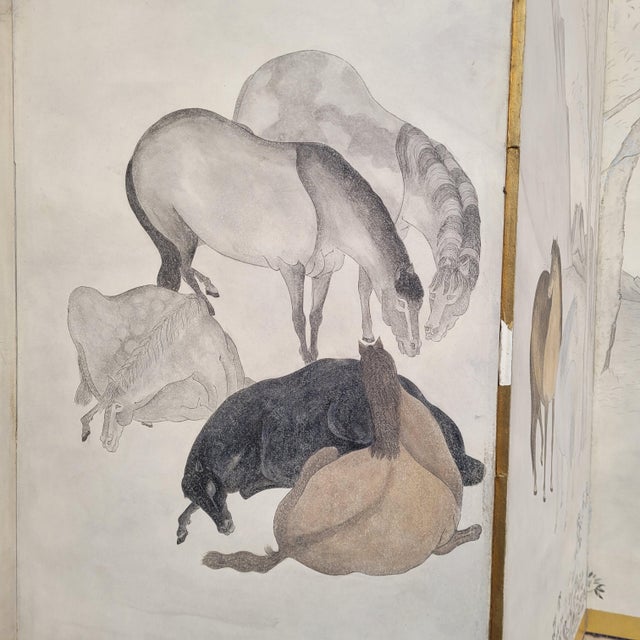
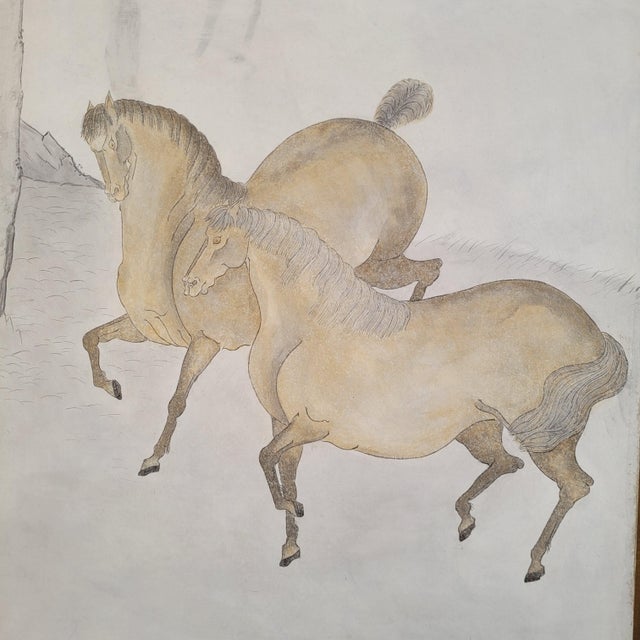
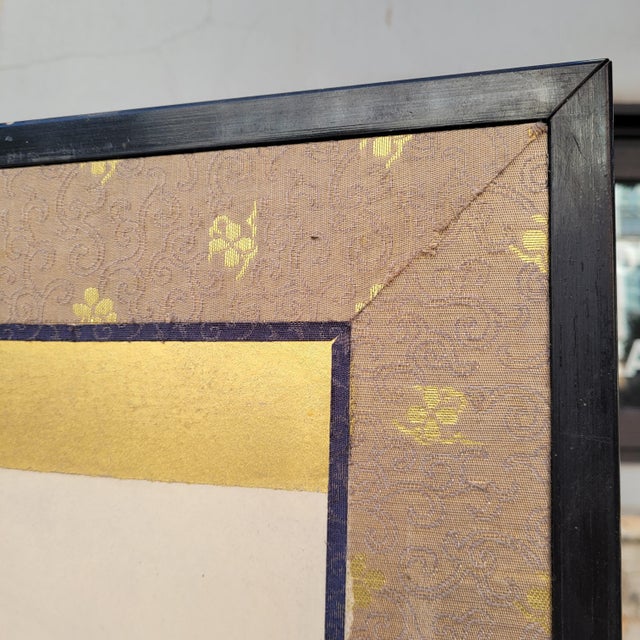
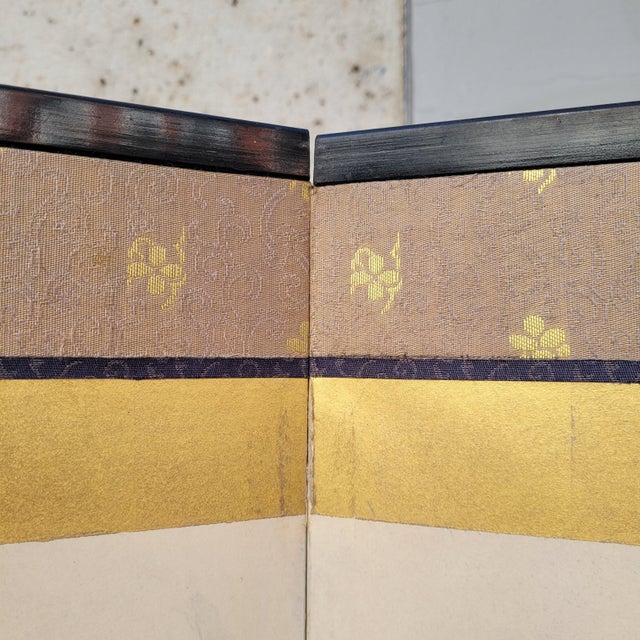
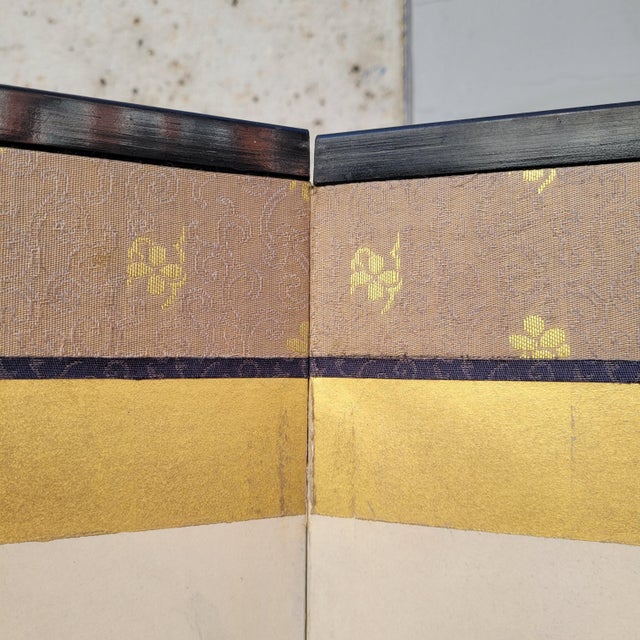
An elegant Japanese folding screen, or byōbu, with six panels depicting a delicate and elegant scene of wild horses in a natural setting. Masterfully painted with ink and watercolor on mulberry paper. A fine lacquered wooden frame with metal fittings protects and supports the artwork, complemented by a beige silk brocade frame adorned with small gold flowers and gold trim at the top and bottom, which lends presence and luminosity to the piece. Dated to the late Edo period (1603-1868), this beautiful byōbu (Japanese painting) features a serene scene in the style of the Kano School. The brushstrokes, soft colors, and tranquil atmosphere, combined with the influence of natural elements, are characteristic of traditional schools like Kano, known for its refined depiction of nature. Ten wild horses are depicted in a winter landscape, with leafless trees, small bushes, and large rocks. Some animals graze, others gallop, and still others gather to rest.
In Japanese culture, horses are a popular subject in art, especially in landscape painting and animal portraiture. Horses hold a profound symbolism that spans history and various artistic traditions. Their representation not only evokes beauty and elegance but is also linked to spiritual, cultural, and social meanings.
These animals are traditionally considered symbols of power, nobility, and status. In the samurai context, especially during the feudal period, horses were fundamental to warriors, representing not only mobility and agility on the battlefield but also the prestige of a samurai who owned a high-quality horse. They were often depicted in paintings and screens related to the nobility or the samurai elite, and the ability to ride a horse was a sign of skill and honor.
They are also associated with speed, energy, and agility. They are often depicted in dynamic movement, conveying the idea of swiftness and momentum.
In Japanese mythology, horses have a special connection to the divine. They are believed to be vehicles of the gods and spiritual messengers. Horses also carry a protective symbolism. They are believed to have the power to protect people from evil spirits. In Shintoism, they are sacred animals, used as mounts by kami (gods) and associated with good fortune and business.
In landscape painting, horses are often depicted as part of a natural environment, symbolizing the relationship between humans, animals, and nature. This connection reflects the Japanese aesthetic sensibility toward nature and the harmony among all life forms. In this context, they also symbolize freedom and natural beauty, highlighting the serene coexistence between nature and living beings.
This painting stands out as an excellent example of Kano school art (加納派, Kano-ha), due to the delicate depiction of the horses and the use of a subdued color scheme that creates a serene atmosphere. The Kano school was one of the most influential and longest-lasting artistic traditions in Japan, active primarily from the Muromachi period (1336–1573) to the early Edo period (1603–1868). Founded by Kano Masanobu (1434–1530), it remained one of Japan's major schools of painting until the 19th century. Its style and technique dominated much of the painting produced by the imperial court and the samurai class.
The painting of this school is heavily influenced by the tradition of Chinese painting, especially in its use of ink, known as suiboku-ga in Japanese. This technique uses only ink and water, with a very limited palette that emphasizes texture and shadows, creating a sober and majestic style. Its main subjects were landscapes, historical scenes, floral motifs, and animals.
During the Edo period, members of the Kano school were highly valued by the Tokugawa shoguns and the imperial court. Artists of the school received commissions to create large-scale works, including folding screens, door panels, and paintings on the walls of palaces and temples. This solidified their status as official court painters. Although the school is associated with monochromatic ink painting, the use of gold was also common, especially in folding screens, lampshades, and other decorative works where gold backgrounds and colored details are used.
In terms of composition, they emphasized balance and symmetry. However, over time, some members of the school began to experiment with a freer approach, while still respecting the rules of traditional Japanese aesthetics.
See less
- Dimensions
- 143.7ʺW × 3.94ʺD × 69.29ʺH
- Period
- 19th Century
- Country of Origin
- Japan
- Item Type
- Vintage, Antique or Pre-owned
- Materials
- Paper
- Silk
- Condition
- Good Condition, Unknown, Some Imperfections
- Color
- Beige
- Condition Notes
- Very Good — This vintage item has no defects, but it may show slight traces of use. Very Good — This vintage item has no defects, but it may show slight traces of use. less
Returns & Cancellations
Return Policy - All sales are final 48 hours after delivery, unless otherwise specified in the description of the product.
Cancellation Policy - Prior to shipping or local pickup, buyers may cancel an order for up to 48 hours, unless otherwise specified.
Related Collections
- Eames Screens and Room Dividers
- British Colonial Screens and Room Dividers
- Paper Mache Screens and Room Dividers
- Antique Gold Finish Screens and Room Dividers
- Screens and Room Dividers in Las Vegas
- Vivai del Sud Screens and Room Dividers
- Celadon Screens and Room Dividers
- Herman Miller Screens and Room Dividers
- Peach Screens and Room Dividers
- Rose Screens and Room Dividers
- Portraiture Screens and Room Dividers
- Chinoiserie Screens and Room Dividers
- Chinese Screens and Room Dividers
- Japanese Screens and Room Dividers
- Silk Screens and Room Dividers
- French Screens and Room Dividers
- Coromandel Screens
- Asian Screens and Room Dividers
- Glass Screens and Room Dividers
- Anglo-Indian Screens and Room Dividers
- Mid-Century Modern Screens and Room Dividers
- Asian Antique Screens and Room Dividers
- Moroccan Screens and Room Dividers
- Teak Screens and Room Dividers
- Leather Screens and Room Dividers