

Cheshire Antiques Consultant LTD
Chester, Cheshire West and Chester
Since 2021100+ sales
3x Super Seller

Details
Description
Fine English Carved Oak & Fruitwood Wall Plaque – Colonel Sir Edward Massey, Governor of Gloucester 1642 – English Civil …
Read more
Fine English Carved Oak & Fruitwood Wall Plaque – Colonel Sir Edward Massey, Governor of Gloucester 1642 – English Civil War Portrait from Earlier 18th-Century Oak, in the Manner of Victorian Gothic Work Associated with Sir George Gilbert Scott
Overview
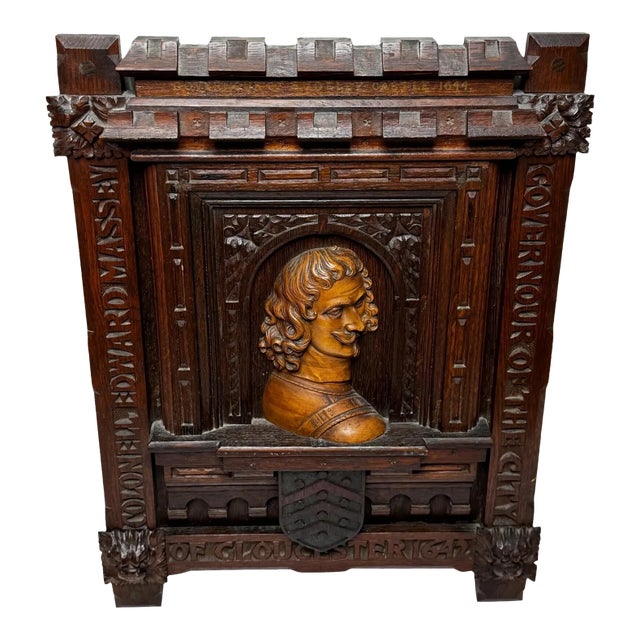
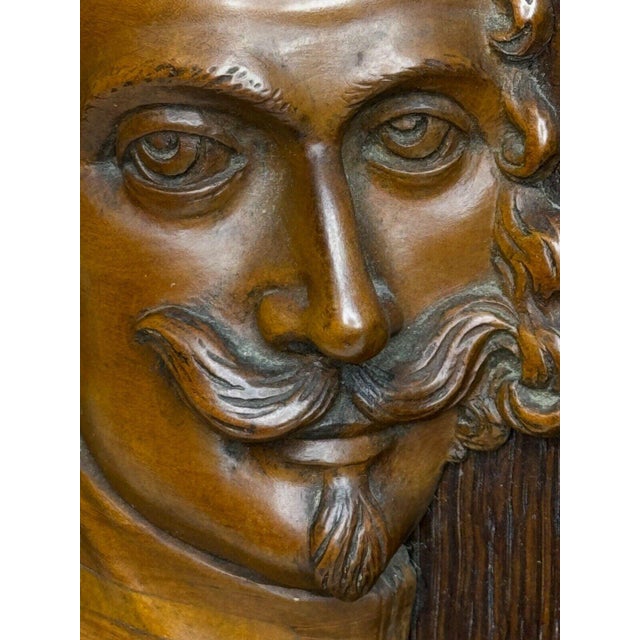
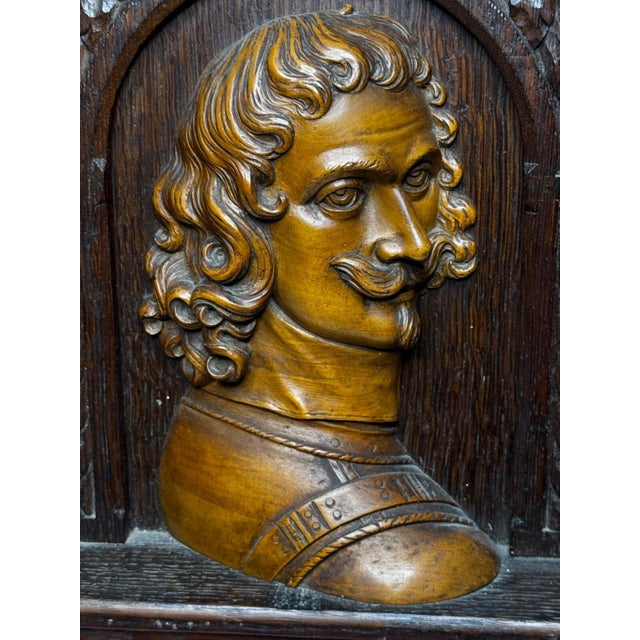
A striking and atmospheric carved oak and fruitwood wall portrait plaque, honouring Colonel Sir Edward Massey, the celebrated Governor of Gloucester (1642) and later Governor of Sudeley Castle (1644) during the English Civil War.
The plaque has been fashioned from earlier oak boards (very likely 18th century or earlier), later carved and assembled in the 19th century in a romantic historic / Gothic Revival style. The result is a powerful decorative object that combines genuinely old timber with a dramatic historic subject and strong sculptural presence.
Subject & Design
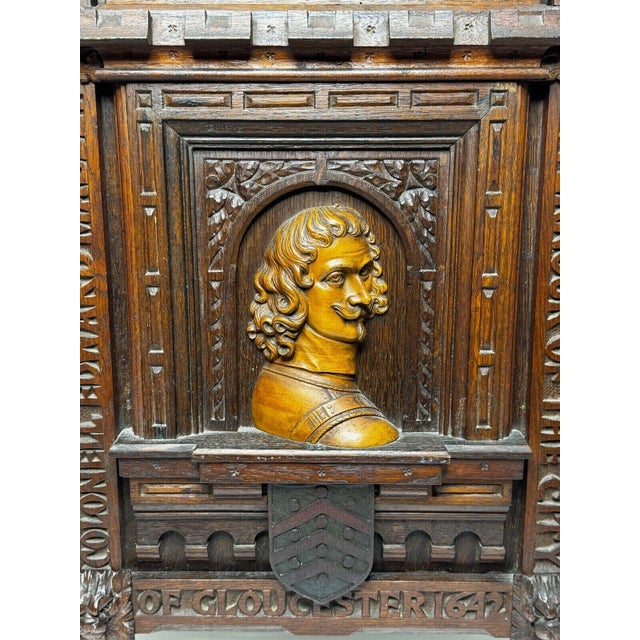
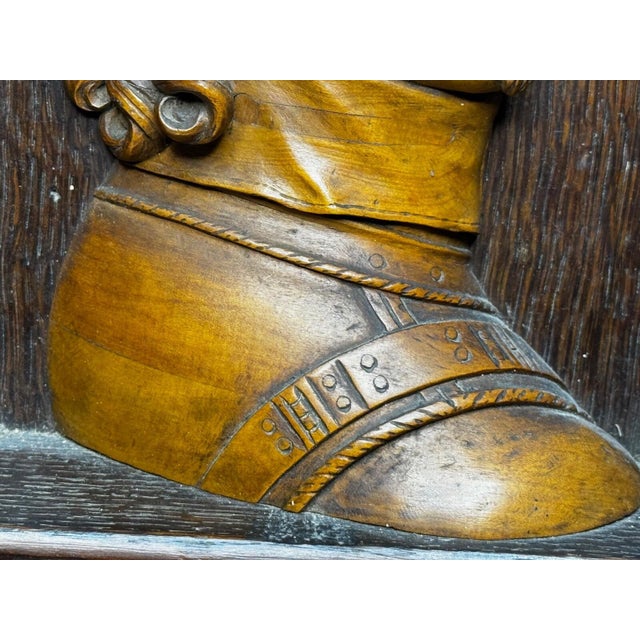
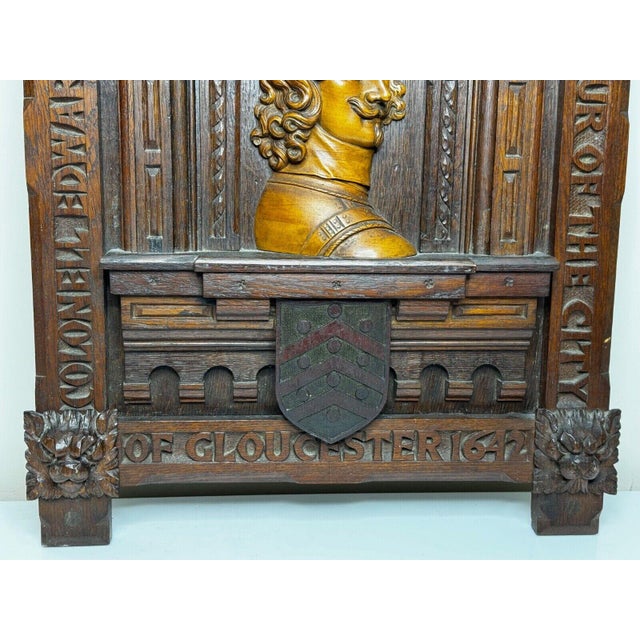
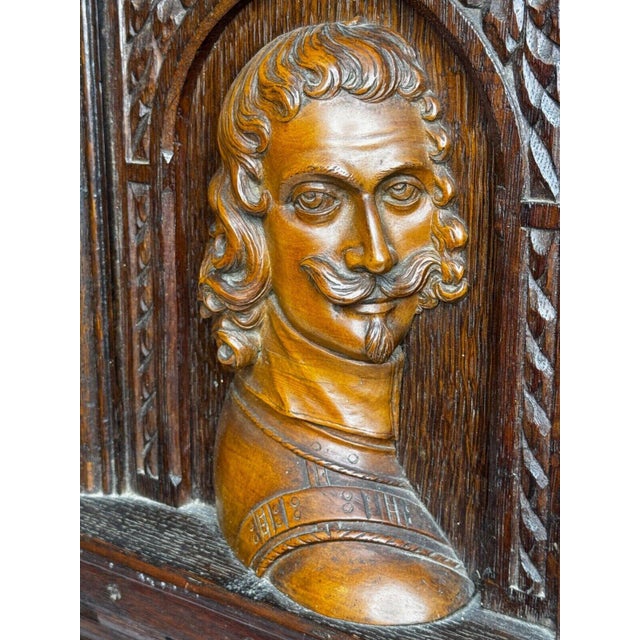
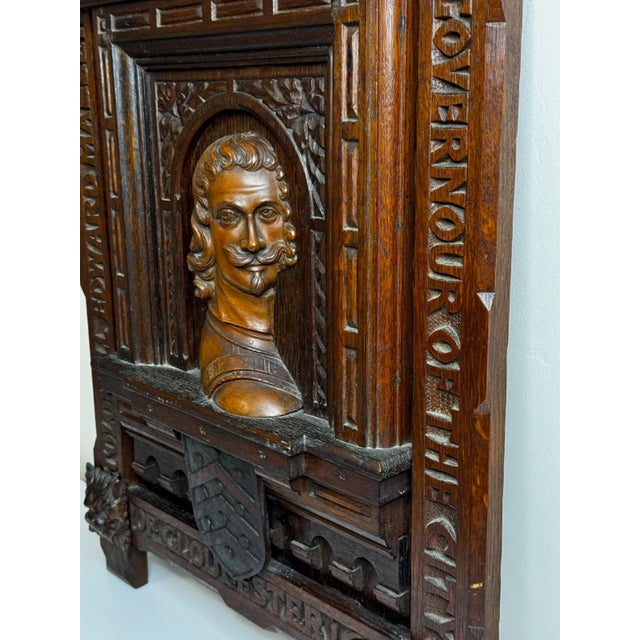
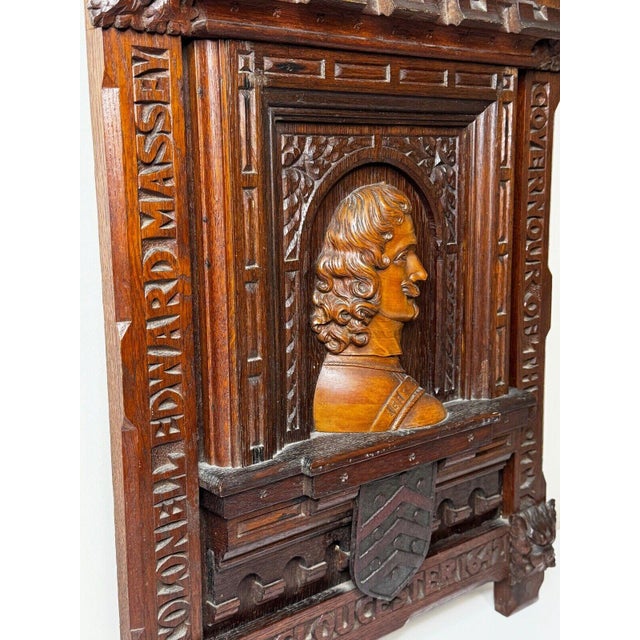
At the centre sits a high-relief portrait of Colonel Sir Edward Massey, shown in profile and looking slightly upwards. He wears full, curling hair and a curled moustache, with strong, masculine features and a clearly defined breastplate of armour. The head and bust are carved from fruitwood, giving a warm honey tone which stands out beautifully against the darker tiger oak frame.
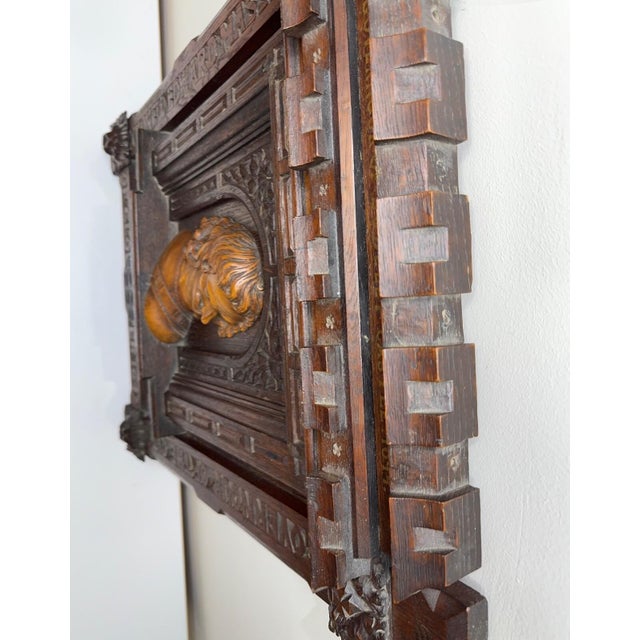
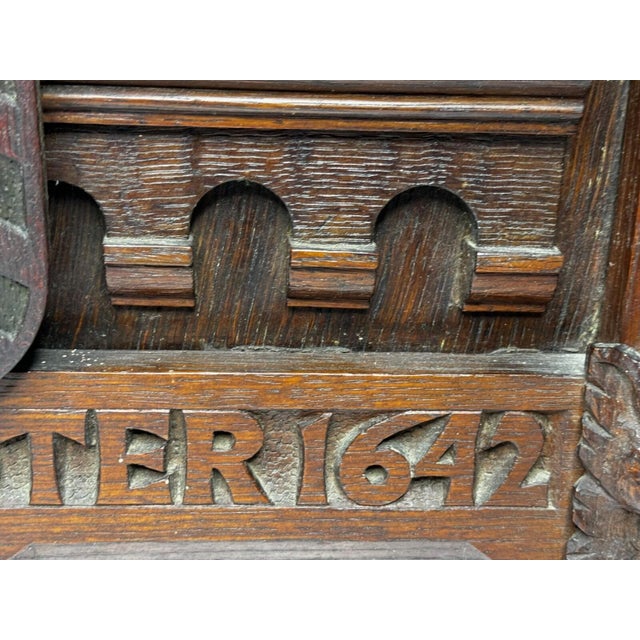
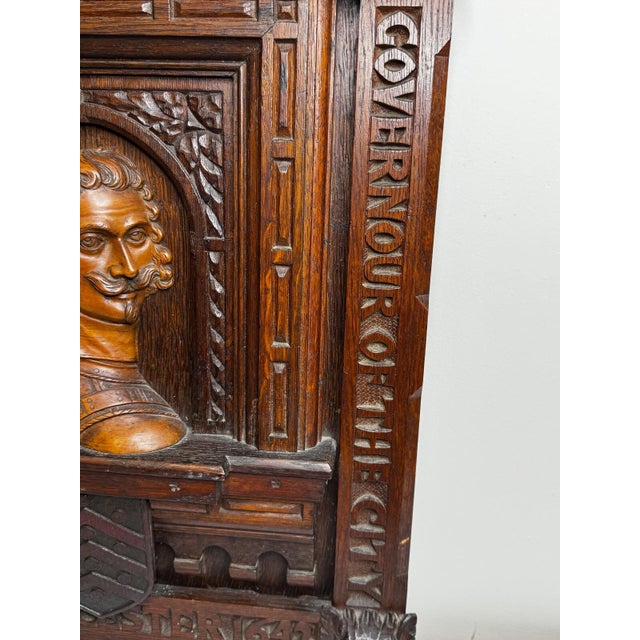
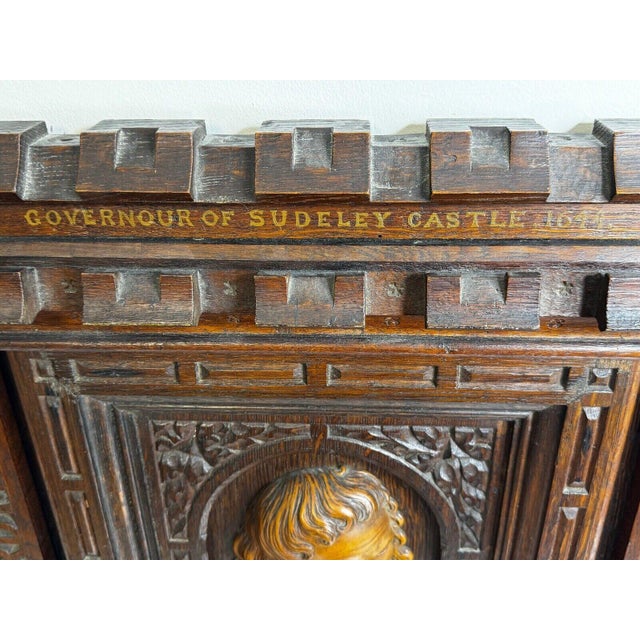
Surrounding the portrait is a richly worked architectural oak framework suggesting battlements and castle walls: an arched niche with carved foliage, flanking uprights with geometric decoration, a crenellated top edge, and a lower frieze of arcaded openings echoing a fortified gateway.
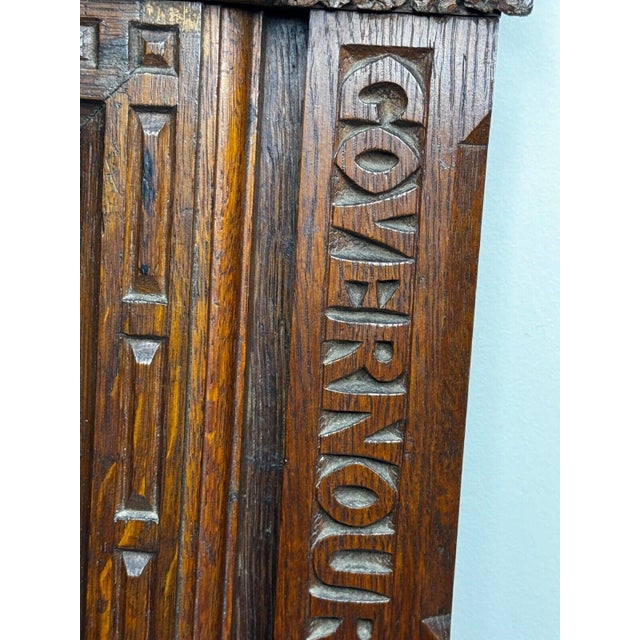
Around the outer frame runs a deeply cut inscription:
“COLONEL EDWARD MASSEY – GOVERNOUR OF THE CITY OF GLOUCESTER 1642”
Across the top, in gilt lettering, is:
“GOVERNOR OF SUDELEY CASTLE 1644”
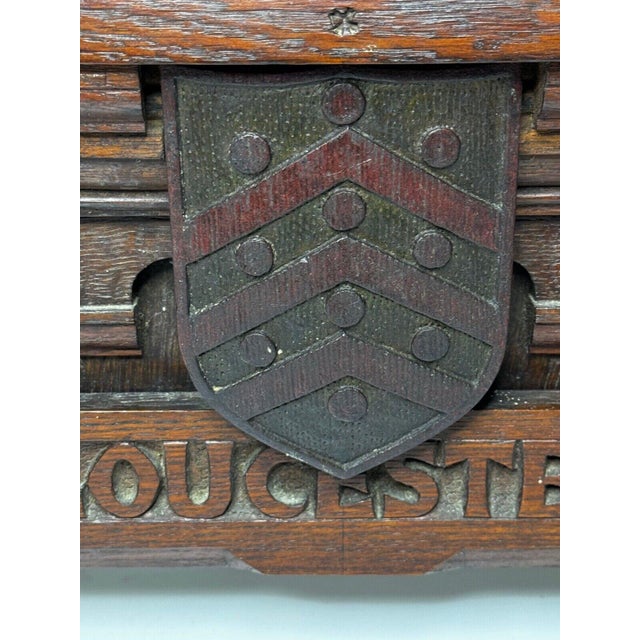
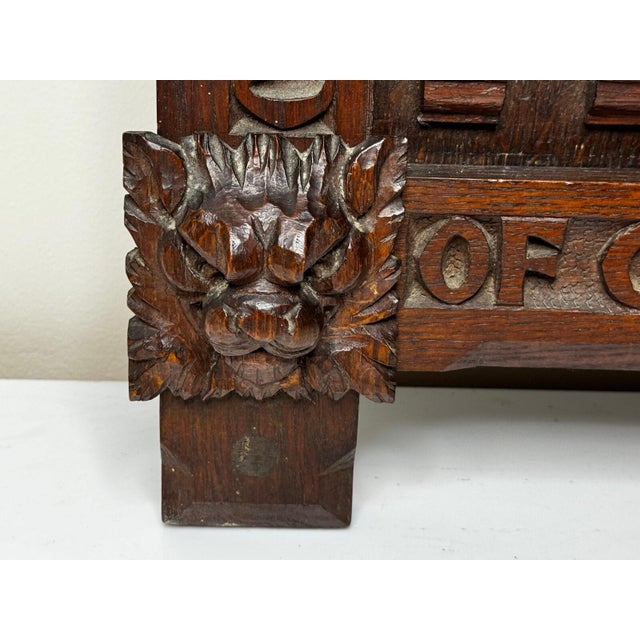
Beneath the bust hangs a heraldic shield with chevrons and roundels, recalling the historic arms associated with the city of Gloucester. At each lower corner sits a vigorous green-man / lion mask carving – wonderfully full of character and exactly the sort of detail prized by Gothic Revival carvers.
Historical Interest
Edward Massey (c.1619–1674) was a key figure in the English Civil War. As deputy governor and then Governor of Gloucester, he became famous for his energetic defence of the city in 1643. Later, as Governor of Sudeley Castle, he was involved in some of the most dramatic episodes of the conflict and its aftermath – wounded at Worcester, imprisoned in the Tower of London, escaping, and ultimately returning to the Royalist cause.
After the Restoration he was knighted and served as MP for Gloucester. This plaque commemorates his role as defender of Gloucester and commander at Sudeley, making it a compelling piece for anyone interested in Civil War history, early English politics or heraldry.
Maker & Collecting Context
As with most carved oak of this kind, the exact sculptor is unknown. Stylistically it sits very much in the tradition of Gothic Revival portrait reliefs for churches and civic buildings, associated with architects such as Sir George Gilbert Scott and their sculptors – romantic historic heads set into architectural niches, with heraldry and inscriptions, designed to suggest continuity with the “Age of Oak”.
This blend of genuinely old timber, Gothic details and a romanticised historic subject is precisely the sort of thing that has appealed to serious oak enthusiasts and scholars. In the late 19th and early 20th century, connoisseurs such as Percy Macquoid (author of A History of English Furniture) helped define the taste for early English oak and panelled interiors, illustrating carved oak pieces from great country-house collections. In the later 20th century, experts like Victor Chinnery (Oak Furniture: The British Tradition) championed this field and advised many leading collectors.
On a grander scale, major collectors such as William Randolph Hearst assembled large quantities of medieval and Gothic woodwork, architectural fragments and carved panels to create atmospheric historic interiors. While this plaque does not come from those collections, it is absolutely the kind of dramatic carved panel that would feel at home in that world of oak-lined halls, libraries and castle-style rooms.
Today, pieces like this remain highly desirable to collectors of early oak, Gothic Revival, heraldic carving and English Civil War memorabilia, as well as decorators and designers seeking authentic “country-house” character.
Why You’ll Love It
Real age and patina – earlier oak boards with visible old tool marks and a deep, honest colour, combined with later romantic carving.
A named Civil War hero – not just a generic head: you can actually tell visitors who he is and share his story.
Big decorative impact – nearly 70 cm high and around 6 kg in weight, it has the presence of a small overmantel or architectural fragment.
Rich details everywhere – the contrast of fruitwood bust against tiger oak, the heraldic shield, the green-man masks and the gilt lettering reward repeated viewing.
Perfect for a period interior – ideal over a fireplace, on a staircase wall, in a hallway, library, study or “gentleman’s room”; it instantly looks at home in a panelled or country-house setting.
Dimensions
Height: 68.3 cm
Width: 52 cm
Depth: 4.5 cm
Weight: just under 6 kg
Provenance & Notes
From an overseas private collection and a notable Channel Islands auction house, later in the collection of Cheshire Antiques Consultant LTD.
Offered as an antique decorative carved plaque of Colonel Sir Edward Massey. As with all historic pieces, buyers should rely on the photographs and their own judgement.
See less
- Dimensions
- 20.47ʺW × 1.77ʺD × 26.88ʺH
- Styles
- Gothic Revival
- Art Subjects
- Portrait
- Period
- Late 19th Century
- Country of Origin
- United Kingdom
- Item Type
- Vintage, Antique or Pre-owned
- Materials
- Fruitwood
- Oak
- Condition
- Original Design Modified, Needs Restoration
- Color
- Brown
- Condition Notes
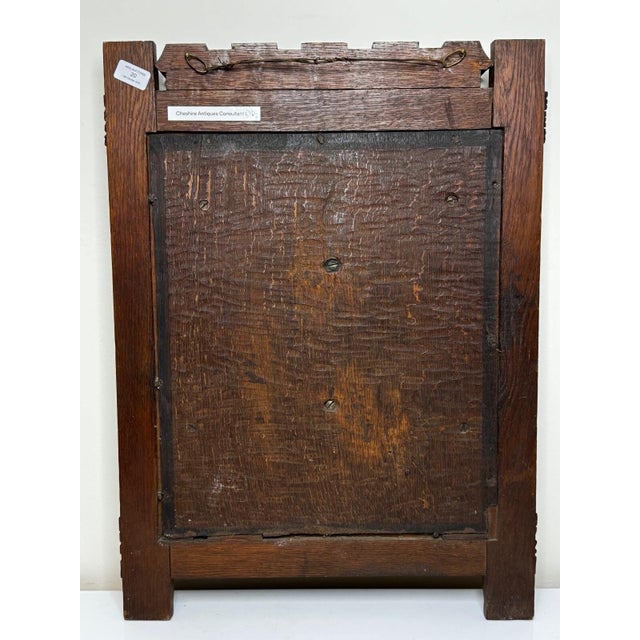
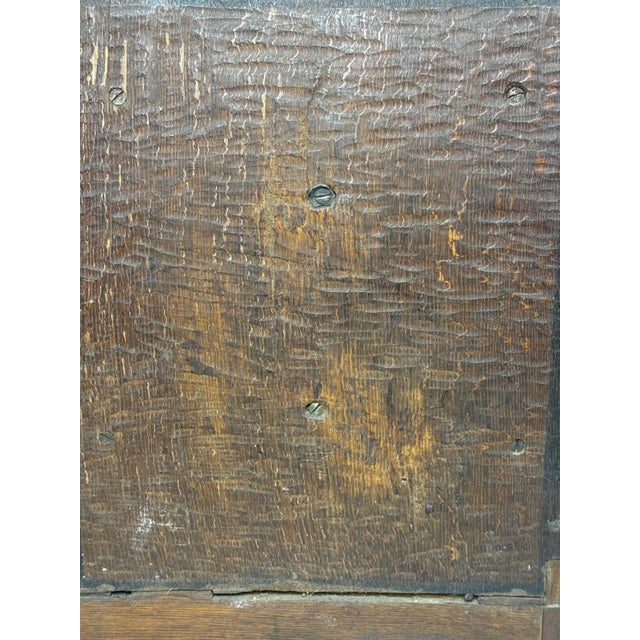
- Sir George Condition Report This is a decorative antique with genuine age and wear, offered in good, sound, used condition … moreSir George Condition Report This is a decorative antique with genuine age and wear, offered in good, sound, used condition with plenty of charm. The surface shows scuffs, grazes and scratches from many years of handling and display. There are small chips and minor losses to some of the high points of the carving and edges. As you would expect in old oak, there are age-related splits and slight separations in the timber, which appear stable and are part of its character rather than a structural concern. The colour is attractively uneven, with old stains, darkened areas and a rich patina that only develops over many decades. The reverse shows evidence of old repairs and later screws used to secure the panel. The hanging wire is present; for a heavy piece like this, the new owner may wish to check the wire and wall fixings and upgrade them to suit their own setting. Please study all photographs carefully, as they form an important part of the description. Scott less
Cheshire Antiques Consultant LTD
Chester, Cheshire West and Chester
Since 2021100+ sales
3x Super Seller
Questions about the item?
Returns & Cancellations
Return Policy - All sales are final 48 hours after delivery, unless otherwise specified in the description of the product.
Cancellation Policy - Prior to shipping or local pickup, buyers may cancel an order for up to 48 hours, unless otherwise specified.
Related Collections
- Straw Sculpture
- Constantin Brancusi Sculpture
- Louis XIV Sculpture
- Fernando Botero Sculpture
- Roman Bronze Works Sculpture
- Gourd Sculpture
- Recycled/Repurposed Sculpture
- Barovier and Toso Sculpture
- Far Pavilions Sculpture
- Maison Jansen Sculpture
- Flavio Poli Sculpture
- Georgian Sculpture
- Antique Iron Finish Sculpture
- Worlds Away Sculpture
- Photography Sculpture
- Jute Sculpture
- Blenko Sculpture
- Satinwood Sculpture
- Bakelite Sculpture
- Medium-Density Fibreboard Sculpture
- Geode Sculpture
- René Lalique Sculpture
- Gold-Plate Sculpture
- Polished Brass Finish Sculpture
- Emmanuel Villanis Sculpture