




Details
Description
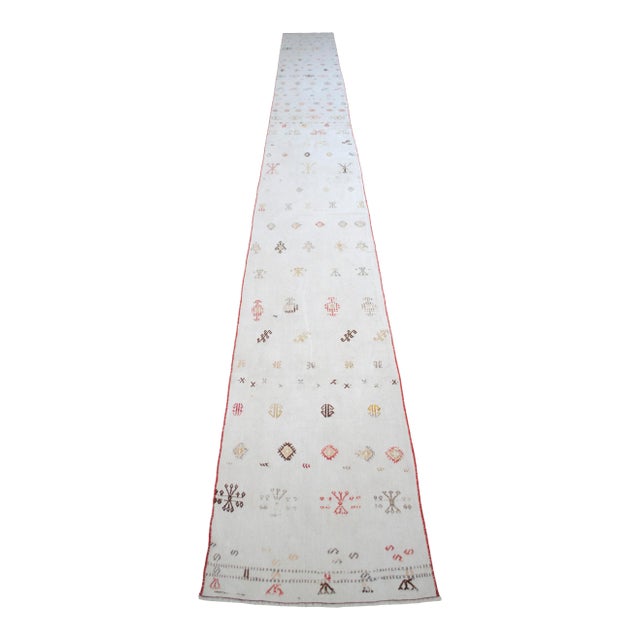
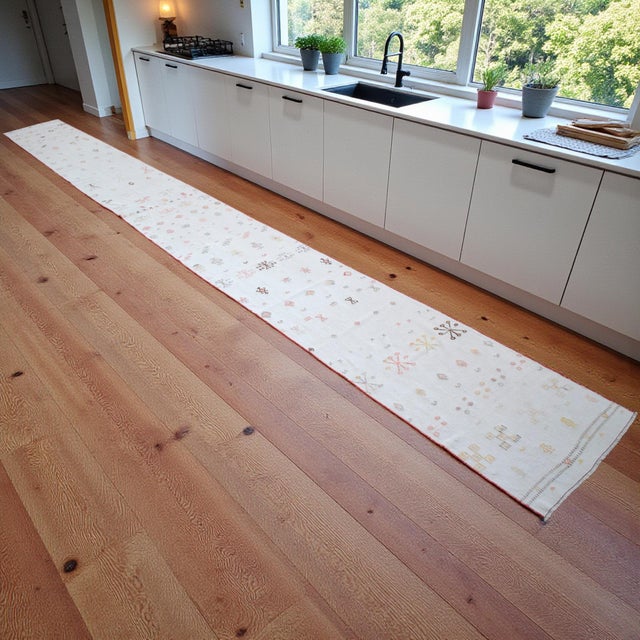
Handwoven in Central Anatolia, this elegant vintage runner brings decades of cultural craftsmanship into stair runner, long corridors, kitchens, and …
Read more
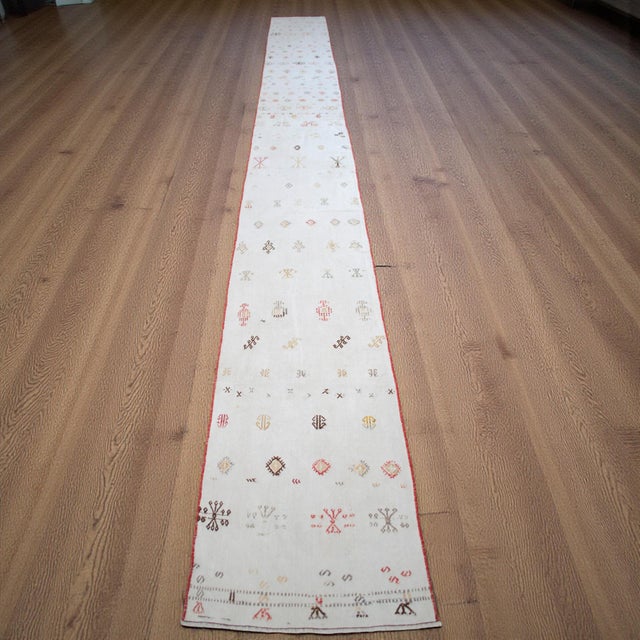
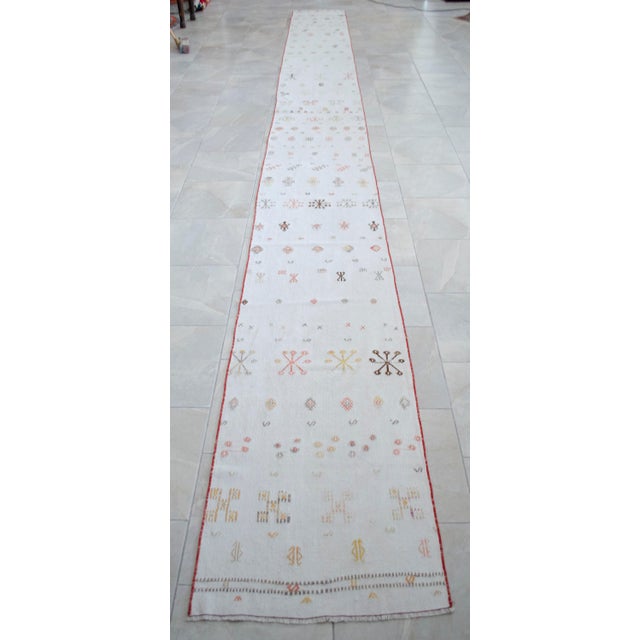
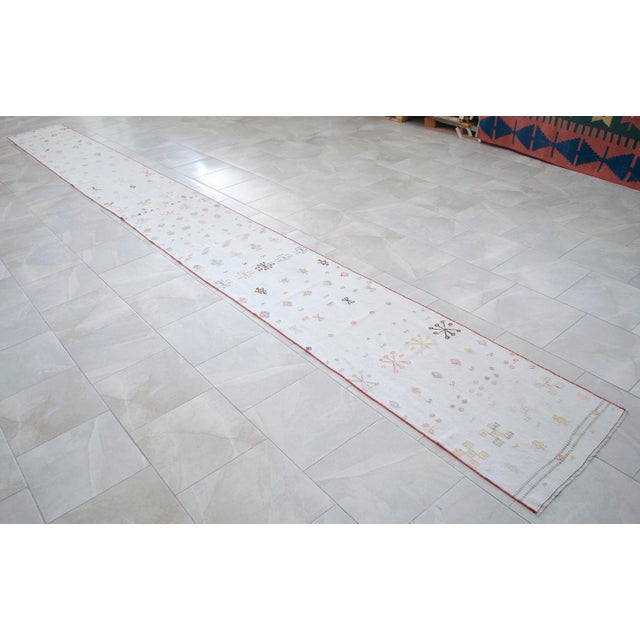
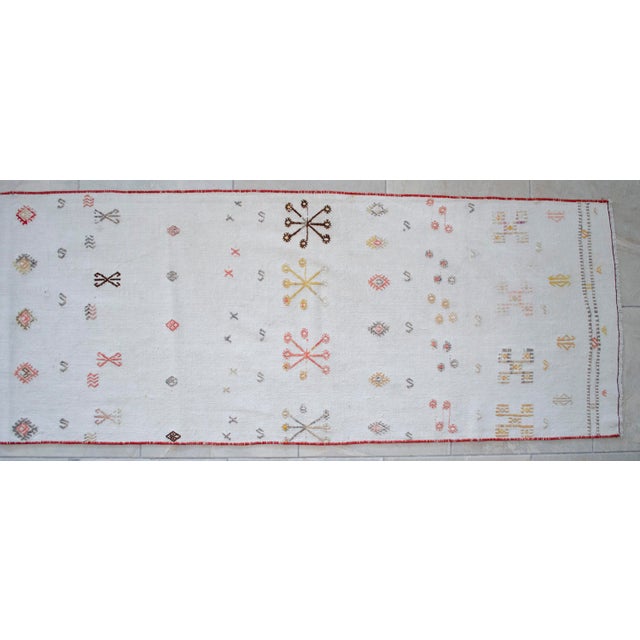
Handwoven in Central Anatolia, this elegant vintage runner brings decades of cultural craftsmanship into stair runner, long corridors, kitchens, and gallery-like transitional spaces. Its whisper-light weaving and traditional cicim accents create a refined, artisanal presence suited for both designers and collectors.
This extra-long piece carries the quiet rhythm of Anatolian village weaving—subtle, symbolic, and beautifully restrained—making it an ideal choice for adding texture and heritage to modern interiors without overwhelming the space.
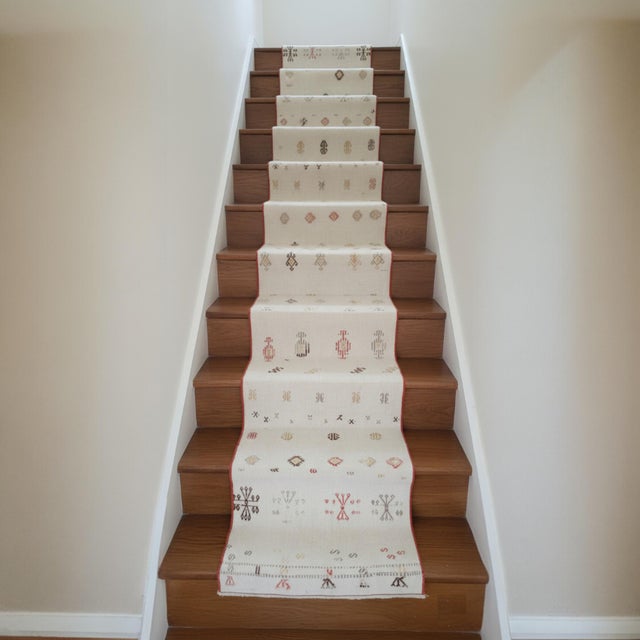
PLEASE NOTE: The 2. image on the product page is an AI-generated mockup showing how the rug may look on staircase steps. This mockup may differ from the rug’s actual pattern, texture, and appearance. All remaining photos are real images of the exact rug you will receive. For installing the rug on stairs, professional assistance is recommended.
Technical Details
Measurements: 2′2″ x 22′6″ (26 x 270 inches)
Origin: Central Anatolia, Turkey (village weaving)
Construction: Flat-woven kilim with cicim decorative accents
Materials: 95% cotton, 5% wool
Dyeing Process: Undyed cotton background; natural-dyed cicim yarn
Thickness: ~0.1 in (flat weave)
Weight: 9 lbs
Condition: Very good vintage; minor natural irregularities typical of handwoven textiles; small age-related marks may be present; professionally cleaned; odorless
Recommended Use: Hallways, kitchen galley spaces, entryways, bedside, stair runner applications
Care: Rug pad recommended; vacuum gently without beater bar; rotate seasonally
Motifs & Symbolism
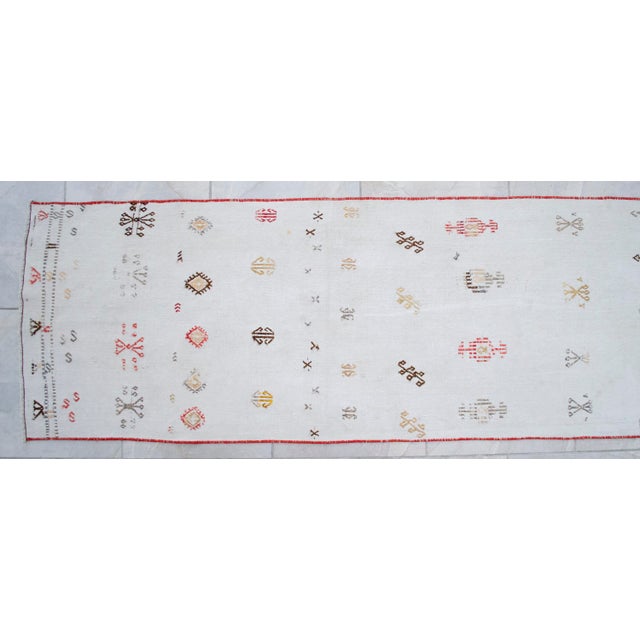
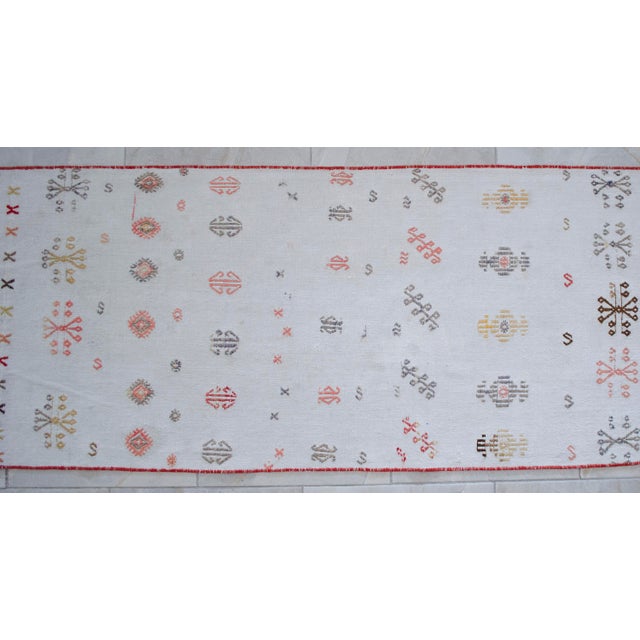
This runner features traditional cicim symbols, including small protective amulets, minimalist ram’s horn forms symbolizing strength, and abstract geometric seed motifs representing growth and continuity. Such symbols were historically woven into village textiles as guardians of home, lineage, and harmony—an enduring connection to Anatolia’s narrative tradition.
Color Palette & Design Insight
• antique cream — quiet foundation for layered interiors
• muted apricot — adds gentle warmth without visual weight
• soft tobacco — anchors the patterning with subtle contrast
• pale sand — supports a calm, neutral overall presence
• restrained terracotta — small accents for artisanal character
These understated tones integrate effortlessly into minimalist, Scandinavian, transitional, and farmhouse settings. The neutral field makes it exceptionally versatile, while the delicate cicim symbols introduce texture and cultural depth without crowding the space.
Color Disclaimer & Photography
All images shown are real photographs of the actual rug you will receive, captured by us indoors under natural daylight conditions on a clean, hygienic floor in our physical showroom using a professional camera. We’ve done our very best to present the most accurate visuals possible. (Some interior or exterior lifestyle images you may see are AI-generated for styling purposes.) Please note that colors may vary from screen to screen, and therefore the tones you see on your device might appear slightly different from the rug’s true colors.
Shipping Information
We ship all rugs via expedited, trackable carriers and take great care to package each item securely and carefully. Most shipments arrive in just a few days. However, customs clearance and courier delays are beyond our control, and we kindly ask for your patience should such situations occur.
Customs Notice
U.S. Buyers – Relax and shop with confidence: All customs duties and import taxes for U.S. shipments are fully covered by us.
What Is a Turkish Rug?
Origins
Turkish rugs trace their origins to the nomadic cultures of Central Asia, where woven textiles served not only as floor coverings but also as wall hangings, bedding, and tent partitions. Over centuries, these functional pieces evolved into a refined artistic tradition, reaching the courts of the Seljuks and Ottomans while remaining deeply rooted in village life. Each region developed its own visual vocabulary, reflecting geography, daily rituals, and communal memory.
Symbolism
Motifs in Turkish weaving act as a visual language. The Elibelinde (hands-on-hips) symbolizes motherhood and fertility; the Ram’s Horn represents strength and protection; and the Tree of Life expresses the path between earthly life and the eternal world. Even small geometric elements—diamonds, hooks, or stars—carry protective meanings. These symbols are not merely decorative; they are expressions of hopes, fears, blessings, and the continuity of life.
Weaving Technique
Turkish rugs fall broadly into two categories: flat-woven kilims and hand-knotted pile rugs. Kilims, like the one presented here, are created by interweaving warp and weft, producing lightweight, reversible textiles ideal for layering in hallways, kitchens, and living spaces. Pile rugs, by contrast, involve thousands of individually tied knots to create depth and texture. Both rely on traditional looms, manual tensioning, and generations-old techniques. Unless explicitly stated, one should not assume hand-spun wool or vegetable dyes; authenticity rests in evidence, not assumption.
Modern Relevance
In contemporary interiors, Turkish rugs provide a bridge between modern minimalism and historical texture. A kilim runner can bring warmth to a long corridor, define movement through an open-plan kitchen, or introduce a subtle narrative to a neutral space. Designers often layer these pieces to soften architectural lines and add a sense of lived-in elegance. Authentic handwoven rugs carry both visual resonance and heirloom value, making them meaningful investments for homes seeking character, culture, and timeless design.
Search Terms: turkish kilim runner, vintage runner rug, handwoven kilim, boho runner rug, hallway decor rug, long corridor rug, anatolian runner, flat weave runner, kitchen galley rug, entryway runner, designer runner rug, minimalist rug decor, neutral hallway rug, tribal symbols rug, village weaving rug, handmade kilim turkey, extra long runner, stair runner kilim, cotton wool kilim, midcentury runner rug, boho farmhouse runner, turkish textile art, woven corridor rug, artisan flat weave, timeless turkish rug
See less
- Dimensions
- 2′2″ × 22′6″ and 0.1″ thick
- Rug Construction
- Flatweave
- Pattern
- Geometric
- Period
- 1950s
- Country of Origin
- Turkey
- Item Type
- Vintage, Antique or Pre-owned
- Materials
- Cotton
- Wool
- Condition
- Good Condition, Original Design Modified, Some Imperfections
- Color
- Cream
- Condition Notes
- Very good vintage; minor natural irregularities typical of handwoven textiles; small age-related marks may be present; professionally cleaned; odorless Very good vintage; minor natural irregularities typical of handwoven textiles; small age-related marks may be present; professionally cleaned; odorless less
Questions about the item?
Returns & Cancellations
Return Policy - All sales are final 48 hours after delivery, unless otherwise specified in the description of the product.
Cancellation Policy - Prior to shipping or local pickup, buyers may cancel an order for up to 48 hours, unless otherwise specified.
Related Collections
- Seagrass Rugs
- Bamboo Fabric Rugs
- Cashmere Rugs
- Classical Greek Rugs
- Josef Albers Rugs
- Beaux-Arts Rugs
- Rugs in Chicago
- Moroccan Rugs
- Scandinavian Rugs
- Persian Rugs
- Rugs in New York
- Art Nouveau Rugs
- Spanish Rugs
- Rugs in Dallas
- Early American Rugs
- Rugs in Los Angeles
- Rugs in Washington DC
- Khotan Rugs
- Rugs in San Francisco
- Karastan Rugs
- Art Deco Rugs
- Chinese Rugs
- Rya Rugs
- Wool Rugs
- Rugs in Philadelphia