

Details
Description
Excellent condition
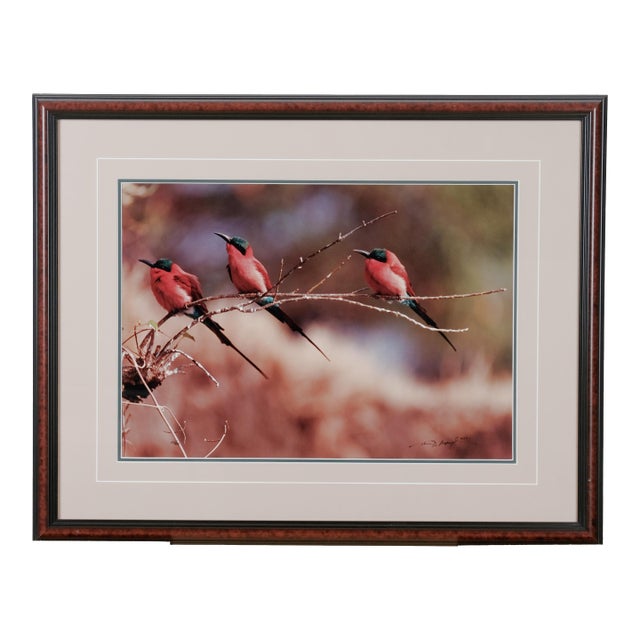
1991 Collector's Edition Photograph
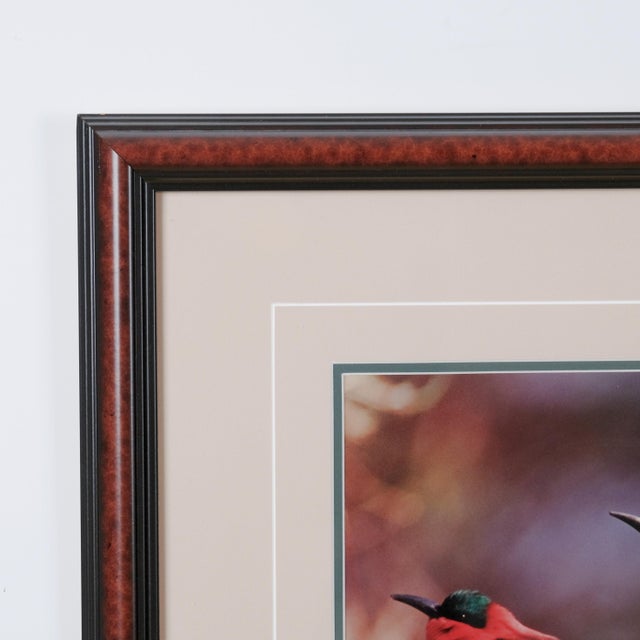
in Very Good Frame
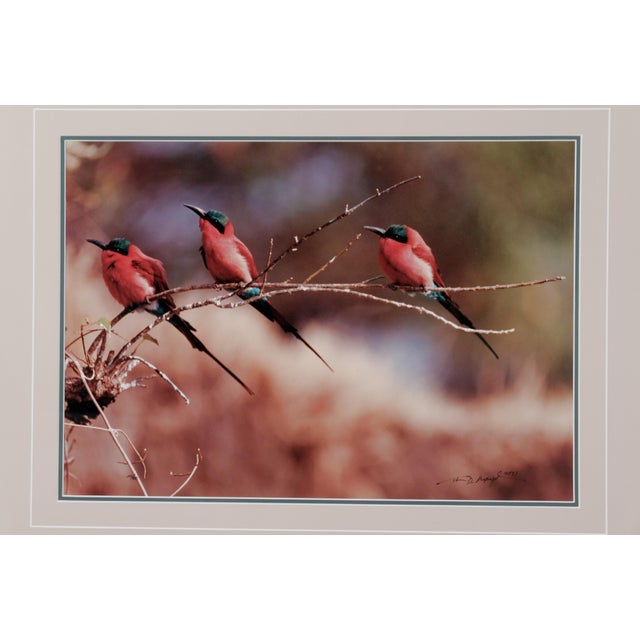
Thomas D. Mangelsen
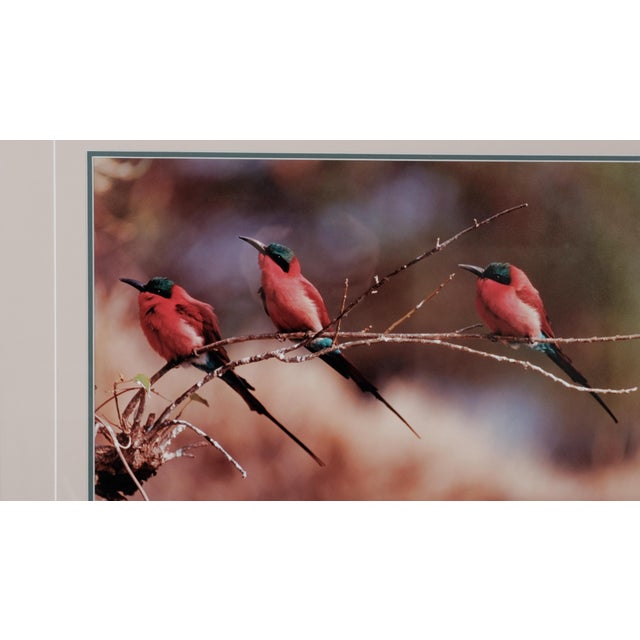
"The Perch - Carmine Bee-Eaters"
shot at …
Read more
Excellent condition
1991 Collector's Edition Photograph
in Very Good Frame
Thomas D. Mangelsen
"The Perch - Carmine Bee-Eaters"
shot at the Okavango River, Botswana
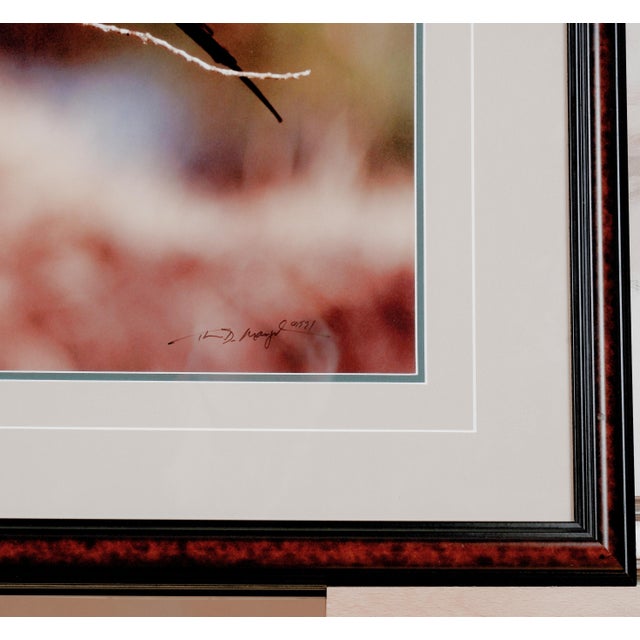
Hand Signed Limited Edition 515/950
Museum Mounted Framed Color Photograph
framed size approximately 28 1/2" Wide x 22" High
image size approximately 19 1/2" Wide x 13 1/2" High
Lovely and Beautiful
--------------------------------------
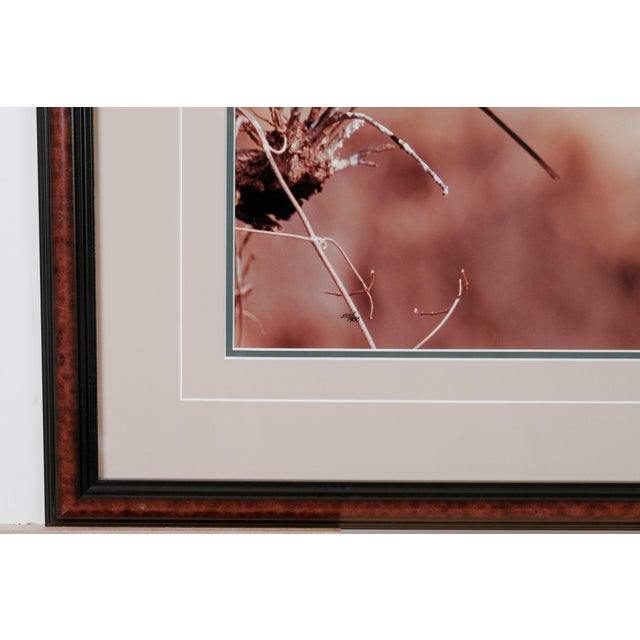
Please read ! This wonderful photo by revered nature photographer Thomas D. Mangelsen is of three birds in their natural habitat ~ the photograph itself is in excellent overall condition and the frame is in very good condition with some nicks and moderate signs of wear and handling ~ the are no other significant condition issues to note and it's been well cared for ~ it's ready to add charm to any room you choose to display it ~ please see photos for condition details ~ all shipments include tracking number ~ All items are from a smoke free environment. We ship orders every day, and same day when possible. Your complete satisfaction is our goal!
About the Photograph:
Named for their exquisite flame coloring, a pair of southern carmine bee-eaters share a perch from which they will alternate periods of resting and hunting for flying insects. The color called carmine refers to shades of the deepest, richest reds, from rubies to blood. Known for their acrobatic prowess, bee-eaters capture their prey mid-flight, their long beaks allowing them to make a meal of bees and even large wasps. By tapping the bodies of their prey against trees, logs and rocks, they succeed in knocking off the stingers, making for a safe, nontoxic lunch that is very high in protein.
About the Photographer:
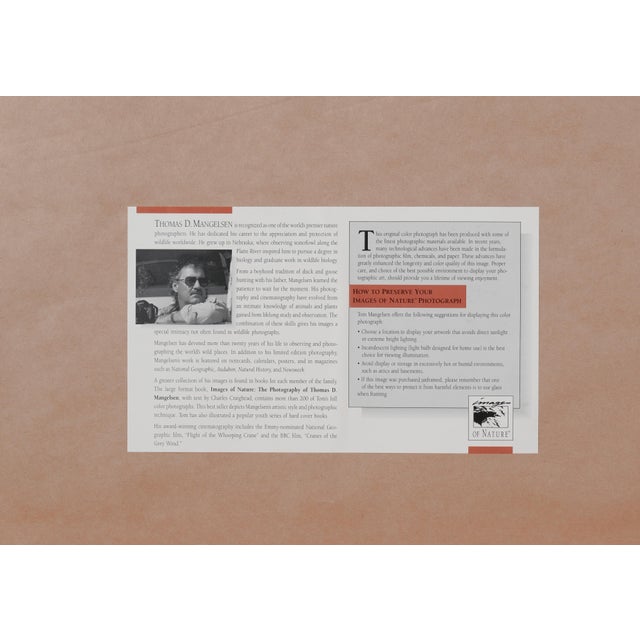
A Nebraska native, Mangelsen’s love of nature, his life outdoors and business success were heavily influenced by his father. An avid sportsman, Harold Mangelsen took his sons to their favorite blinds along the Platte River in Nebraska to observe the great flocks of ducks, geese and cranes that migrate through the valley. From these adventures, Mangelsen learned important lessons for photographing in the field, most notably patience and understanding animal behavior.
In 1965, Mangelsen began studying business at the University of Nebraska. In 1967, Tom transferred to Doane College in Crete, Nebraska, where he changed his major and graduated with a bachelor’s degree in biology. Tom continued postgraduate study in zoology and wildlife biology at the University of Nebraska and Colorado State University.
In 1970 Mangelsen moved to Nederland, Colorado. He spent two years living in the Rocky Mountains in an old mining shack without electricity or running water with his English setter, black lab and raccoon. Tom continued to work on his photography and studied arctic alpine ecology at the University of Colorado’s Mountain Research Station near Nederland. There he met Bert Kempers, a CU film producer, who later hired Tom as cinematographer and film editor for his company Westwind Productions, making educational and nature documentaries. Tom longed to make a documentary about the Platte River and its great wildlife resource. He returned to the Platte each spring to film the great crane migration. These experiences led to Tom traveling to the cranes’ nesting grounds in Alaska and their wintering areas in Texas. National Geographic television wanted to produce a documentary, which would chronicle the plight of the endangered whooping crane and the efforts to bring them back from the brink of extinction. After learning that Tom had been photographing sandhill and whooping cranes for more than ten years, they hired him as cinematographer and associate producer for the television special Flight of the Whooping Crane, which was nominated for an Emmy award. Mangelsen also photographed and produced the PBS NATURE and BBC Natural World film, Cranes of the Grey Wind, a documentary on the life cycle of the sandhill crane.
Initially Mangelsen was fascinated with photographing birds in flight. In the early 1970s, Tom and his brother David began selling limited edition prints of his images. In 1978, Mangelsen opened his first Images of Nature® gallery in Jackson, Wyoming. Since then a number of Mangelsen®—Images of Nature Gallery locations have opened across the United States.
AWARDS | HONORS: One of the most prolific nature photographers of our time, Mangelsen is as much a conservationist as he is an artist. Tom was named the 2011 Conservation Photographer of the Year by Nature’s Best Photography, placing his work in the permanent collection at the Smithsonian’s National Museum of Natural History in Washington, D.C. He was named one of the 40 Most Influential Nature Photographers by Outdoor Photography. His image Polar Dance was selected by the International League of Conservation Photographers as one of the 40 Most Important Nature Photographs of All Time. He was chosen as one of Dr. Jane Goodall’s Heroes of the Animal Planet and profiled in the television series of the same name. Mangelsen was named one of the 100 Most Important People in Photography by American Photo magazine and honored with Nikon’s Legend Behind the Lens recognition. The North American Nature Photography Association named him Outstanding Nature Photographer of the Year, and Mangelsen also received the prestigious British Broadcasting Corporation’s Wildlife Photographer of the Year Award. He was presented with an honorary doctorate from Doane College and received an Honorary Fellowship from The Royal Photographic Society.
EXHIBITIONS: Mangelsen’s photographs have been exhibited internationally. Showcased in Vital Signs: Images of Biodiversity, this exhibit was a combination of Mangelsen’s art and knowledge of natural history, and stressed the importance of maintaining a balanced and diverse ecosystem. It opened in 1997 in museums throughout the United States and Canada.
The Natural World: Photographs by Thomas D. Mangelsen was an exhibit of striking panoramic photographs chronicling ten distinct ecosystems. It was displayed at the National Museum of Wildlife Art in Jackson, Wyoming and the San Diego Natural History Museum. Tom’s photography has been shown at the Natural History Museum in London, the Joslyn Art Museum in Omaha, Nebraska. A Life in the Wild, museum exhibition is scheduled to travel across the United States through 2026.
Tom joined fellow renowned nature photographers Frans Lanting and Art Wolfe in presenting the Masters of Nature Photography Seminars. The three prominent photographers present a unique event drawing on their wide-ranging experience with subjects and locations around the world to change the perception of photography and empower attendees to use the medium to benefit conservation causes and other personal interests.
20260107X10930 S-12612 34x30x6
See less
- Dimensions
- 29ʺW × 2ʺD × 22ʺH
- Art Subjects
- Animals
- Frame Type
- Framed
- Period
- 1990s
- Country of Origin
- United States
- Item Type
- Vintage, Antique or Pre-owned
- Materials
- Color Photography
- Condition
- Good Condition, Original Condition Unaltered, Some Imperfections
- Color
- Ruby Red
- Condition Notes
- Please read ! This wonderful photo by revered nature photographer Thomas D. Mangelsen is of three birds in their natural … morePlease read ! This wonderful photo by revered nature photographer Thomas D. Mangelsen is of three birds in their natural habitat ~ the photograph itself is in excellent overall condition and the frame is in very good condition with some nicks and moderate signs of wear and handling ~ the are no other significant condition issues to note and it's been well cared for ~ it's ready to add charm to any room you choose to display it ~ please see photos for condition details less
Questions about the item?
Returns & Cancellations
Return Policy - All sales are final 48 hours after delivery, unless otherwise specified in the description of the product.
Cancellation Policy - Prior to shipping or local pickup, buyers may cancel an order for up to 48 hours, unless otherwise specified.
Related Collections
- Edward S. Curtis Photography
- Raymond Loewy Photography
- Scarlet Photography
- Soicher Marin Photography
- Renaissance Photography
- Cubism Photography
- Photography in Salt Lake City
- Nick Mele Photography
- Black and White Photos
- Photography in Cleveland
- Photography in Minneapolis
- Gustavian (Swedish) Photography
- Edwardian Photography