









Details
Description
…Museum-Quality Italian Literary Icon
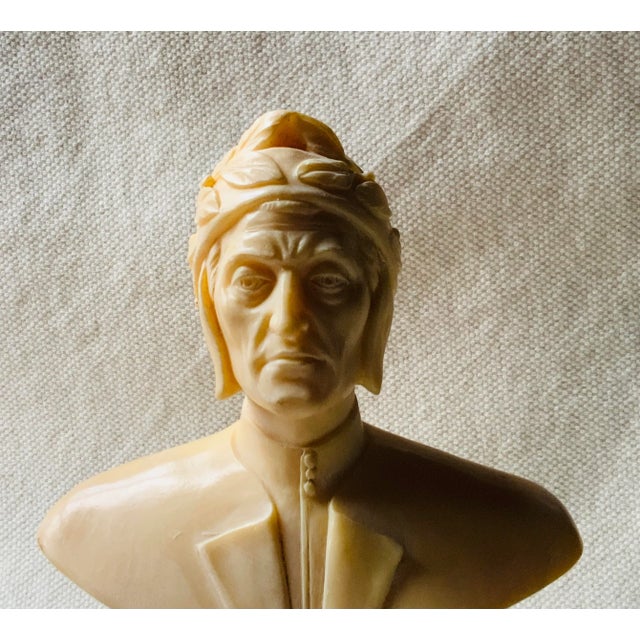
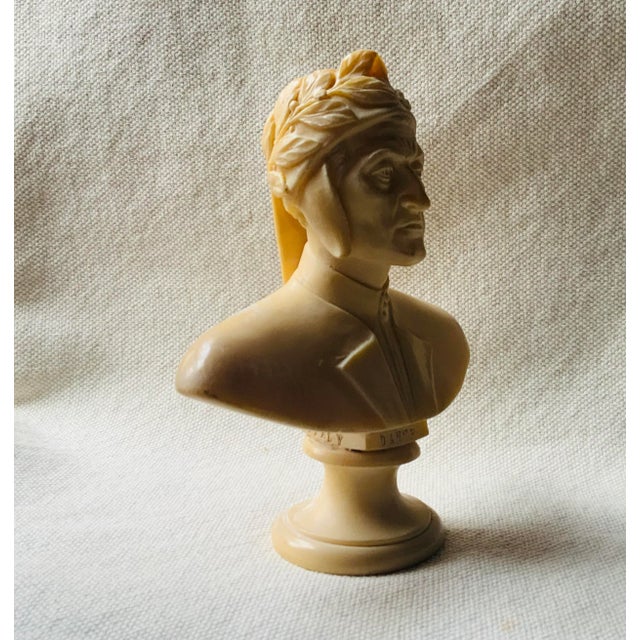
This distinguished sculpture captures the timeless visage of Dante Alighieri, Italy's supreme poet, rendered in lustrous …
Read more
…Museum-Quality Italian Literary Icon
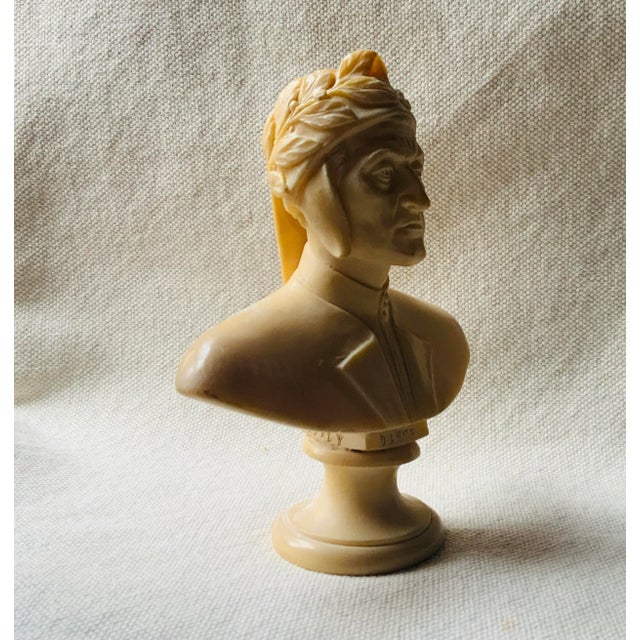
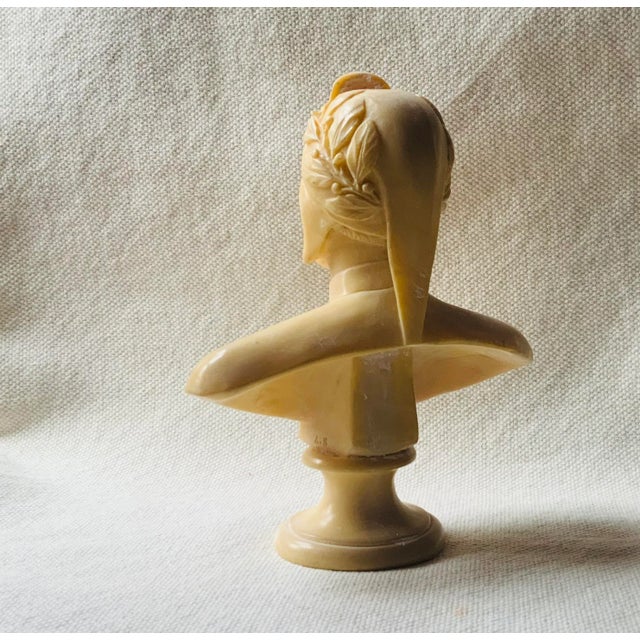
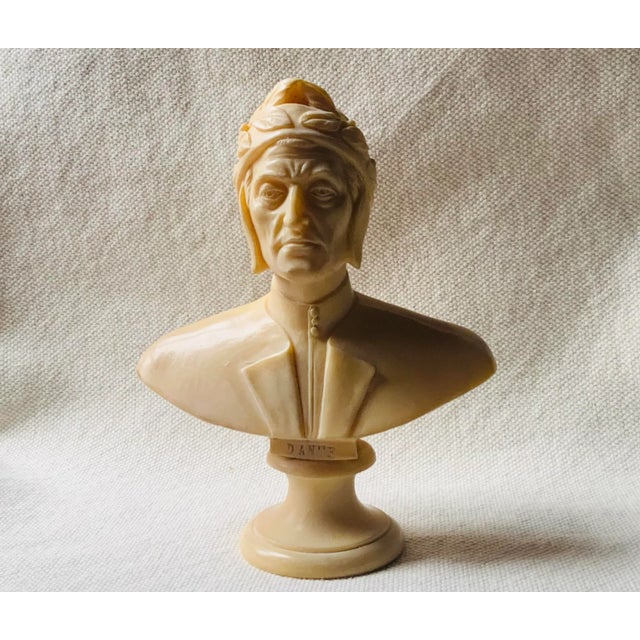
This distinguished sculpture captures the timeless visage of Dante Alighieri, Italy's supreme poet, rendered in lustrous compounded alabaster with classical design sensibility. A stunning tribute to literary genius and Renaissance artistry.
Dimensions & Specifications
Material: Compounded Alabaster
Style: Classica Design
Period: [Add your period/date]
Condition: [Add condition details]
Measurements: [Add height x width x depth]
Description
This commanding sculpture presents Dante Alighieri with the dignified bearing befitting the "Father of the Italian Language." The piece showcases the masterful use of compounded alabaster, which lends the work an ethereal luminosity while maintaining exceptional durability. The classical design approach honors traditional Renaissance portraiture while celebrating the enduring legacy of one of history's greatest poets.
The sculpture's refined details—from the contemplative expression to the period-appropriate draped garments—reflect the reverence with which Dante has been memorialized throughout centuries. This piece serves as both a celebration of literary achievement and a stunning decorative object suitable for libraries, studies, galleries, or any space dedicated to classical beauty and intellectual pursuit.
About Dante Alighieri (1265-1321)
Dante Alighieri stands as one of the most influential figures in Western literature and culture. Born in Florence during the height of the Italian Renaissance, Dante transformed vernacular Italian into a literary language through his monumental works, most notably La Divina Commedia (The Divine Comedy).
His epic poem, which chronicles an allegorical journey through Hell, Purgatory, and Paradise, represents not only a masterpiece of medieval literature but also a profound philosophical and theological exploration of human existence, morality, and divine justice. Dante's work synthesized classical philosophy—particularly that of Virgil and Aristotle—with Christian theology, creating a bridge between ancient wisdom and medieval thought.
Beyond his literary achievements, Dante was deeply involved in the political turmoil of his time. His exile from Florence in 1302 profoundly shaped his writing, infusing his work with themes of justice, corruption, and the search for moral order. His influence extends far beyond literature into art, philosophy, theology, and political theory, making him a foundational figure of Italian culture and European intellectual history.
About Compounded Alabaster
Compounded alabaster represents a refined evolution of traditional alabaster sculpting materials. While natural alabaster has been prized since ancient times for its translucent beauty and workability, compounded alabaster combines crushed natural alabaster with binding resins to create a material that offers distinct advantages for sculptural work.
Historical Context:
Natural alabaster, a fine-grained form of gypsum, has been used for sculptural and decorative purposes for over 5,000 years. Ancient Egyptians carved alabaster vessels and monuments, while Medieval and Renaissance European sculptors favored it for religious statuary due to its stone-like appearance and ability to capture fine detail. The Cathedral of Orvieto and numerous churches throughout Italy showcase alabaster's luminous qualities in windows and decorative elements.
Material Properties:
Compounded alabaster maintains the translucent, luminous quality of natural alabaster while offering enhanced durability and consistency. The manufacturing process allows for:
Greater resistance to chipping and damage
More uniform coloration and texture
Reduced weight compared to solid stone
Excellent detail retention for intricate sculptural work
The characteristic warm, glowing appearance when properly lit
This material has been particularly favored for classical reproductions and decorative sculptures since the mid-20th century, allowing artists and manufacturers to create museum-quality pieces with the timeless aesthetic of traditional alabaster while ensuring longevity and practical display options for collectors.
Styling Suggestions
This sculpture pairs beautifully with:
Traditional and transitional library settings
Italian Renaissance-inspired interiors
Classical European décor schemes
Academic and literary-themed spaces
Museum-quality curio collections
Perfect for the discerning collector who appreciates literary history, Italian artistry, and the enduring beauty of classical sculpture.
Please contact us for additional photographs, detailed measurements, or specific condition inquiries.
See less
- Dimensions
- 5ʺW × 2.5ʺD × 6ʺH
- Period
- 1920s
- Country of Origin
- Italy
- Item Type
- Vintage, Antique or Pre-owned
- Materials
- Alabaster
- Resin
- Condition
- Good Condition, Original Condition Unaltered, Some Imperfections
- Color
- Almond
- Condition Notes
- In very good condition… In very good condition… less
Questions about the item?
Returns & Cancellations
Return Policy - All sales are final 48 hours after delivery, unless otherwise specified in the description of the product.
Cancellation Policy - Prior to shipping or local pickup, buyers may cancel an order for up to 48 hours, unless otherwise specified.
Related Collections
- Straw Sculpture
- Louis XIV Sculpture
- Fernando Botero Sculpture
- Constantin Brancusi Sculpture
- Roman Bronze Works Sculpture
- Worlds Away Sculpture
- Flavio Poli Sculpture
- Far Pavilions Sculpture
- Georgian Sculpture
- Maison Jansen Sculpture
- Bakelite Sculpture
- Magenta Sculpture
- Antique Iron Finish Sculpture
- Gold-Plate Sculpture
- Medium-Density Fibreboard Sculpture
- Sculpture in Columbus
- Polished Brass Finish Sculpture
- Barovier and Toso Sculpture
- René Lalique Sculpture
- Albert Ernest Carrier-Belleuse Sculpture
- Sculpture in Panama City, FL
- Gourd Sculpture
- Recycled/Repurposed Sculpture
- Geode Sculpture
- Photography Sculpture