

Details
Description
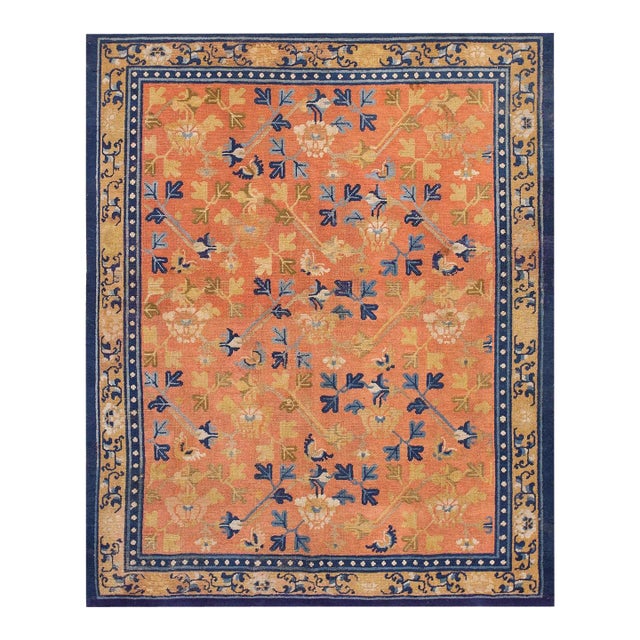
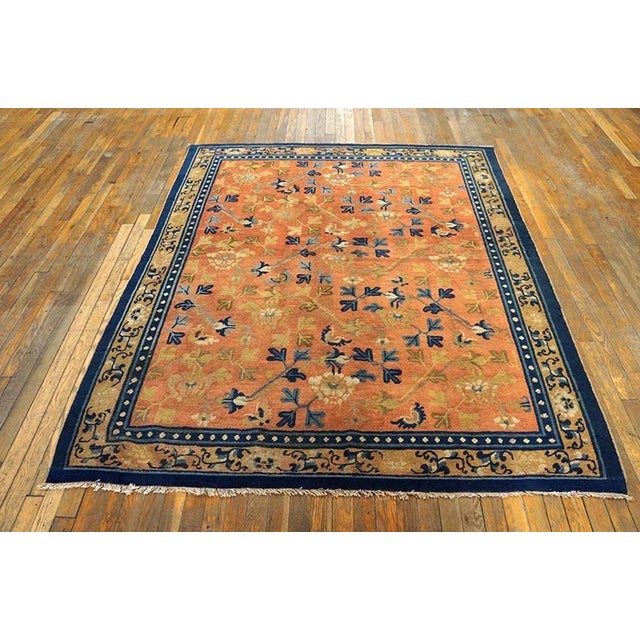
Ningxia rug, North Central China
5.8 6.10,
circa 1800.
Structural analysis:
Warp: Cotton, off-white, natural, Z-4-S, hand spun but tightly …
Read more
Ningxia rug, North Central China
5.8 6.10,
circa 1800.
Structural analysis:
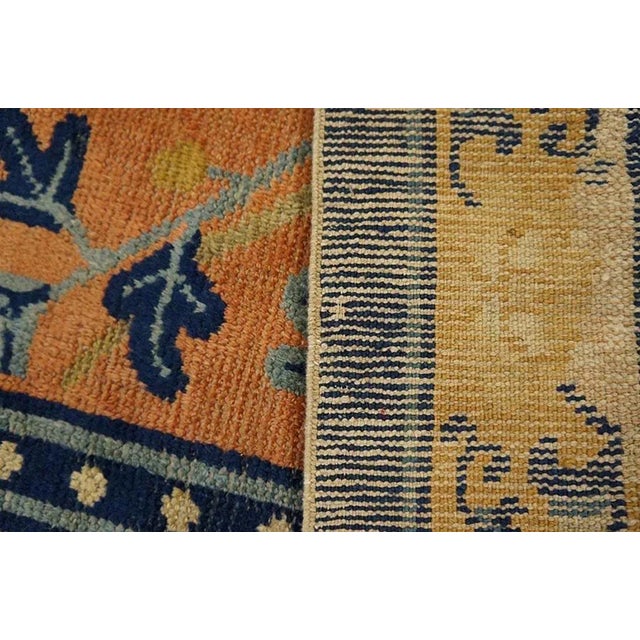
Warp: Cotton, off-white, natural, Z-4-S, hand spun but tightly twisted;
Weft: Cotton, off-white, Z-3-S, winder plied, 2 shoots alternating, slack to wavy, some wefts quite thick’,
Pile: Wool, almost all Z-4,
Knot: PL/no alternate warp depression/ 6 ½ per horizontal inch x 6 per vertical inch = 39 per square inch,
Sides: Single body warp weft attached, wft wrapped, weft wedges into pole area;
Ends: Not original,
Weft/knots: 50/50 even ratio,
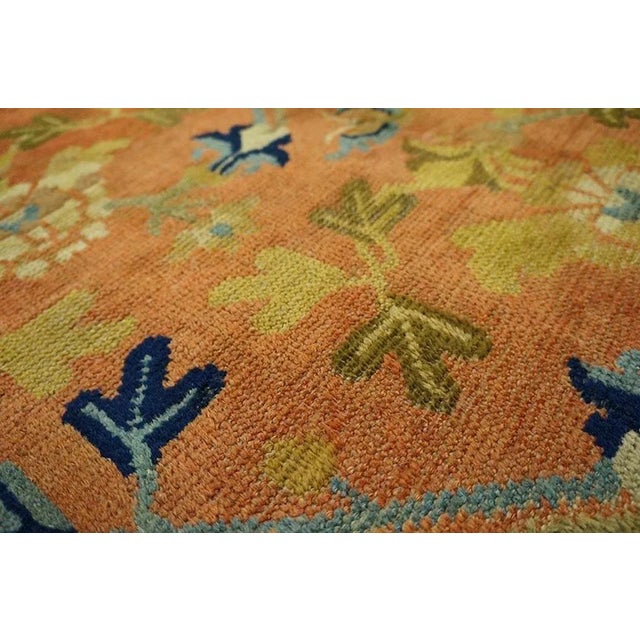
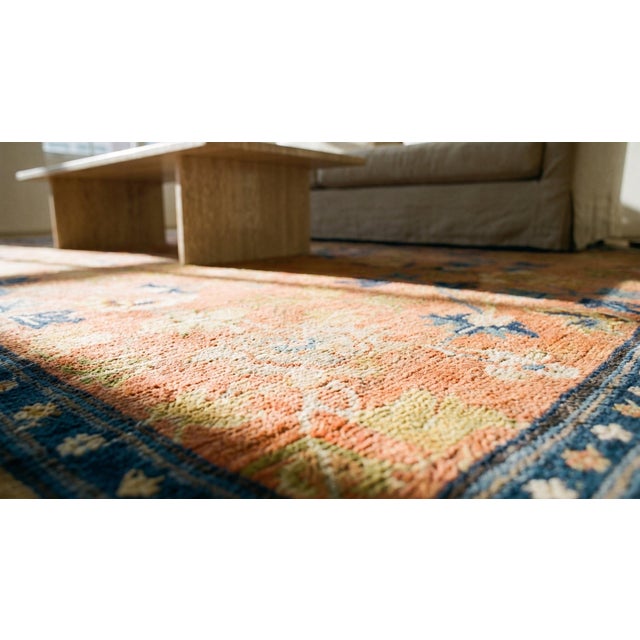
Pile wool somewhat dry, apricot high, yellow and light brown corroded.
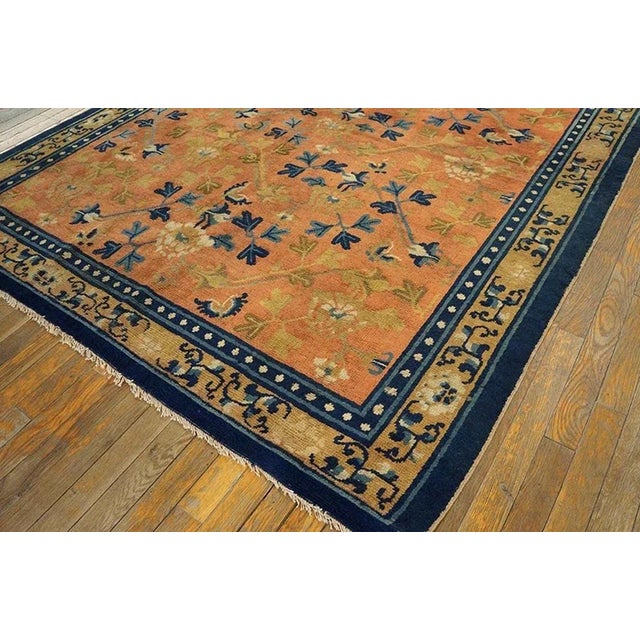
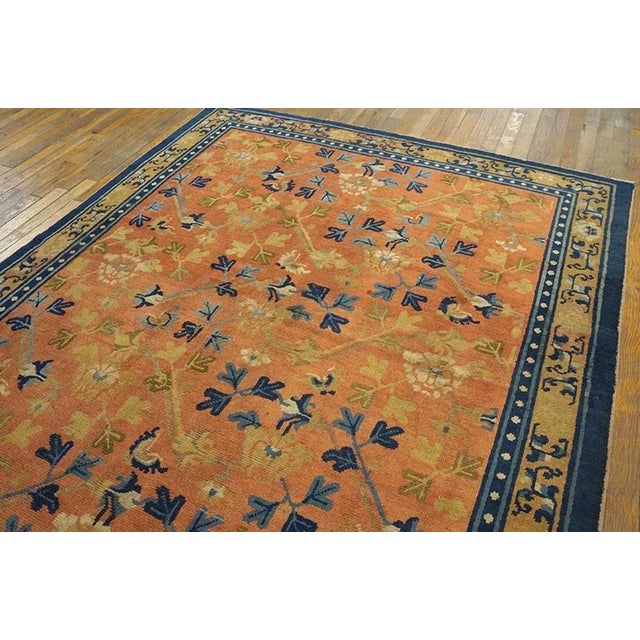
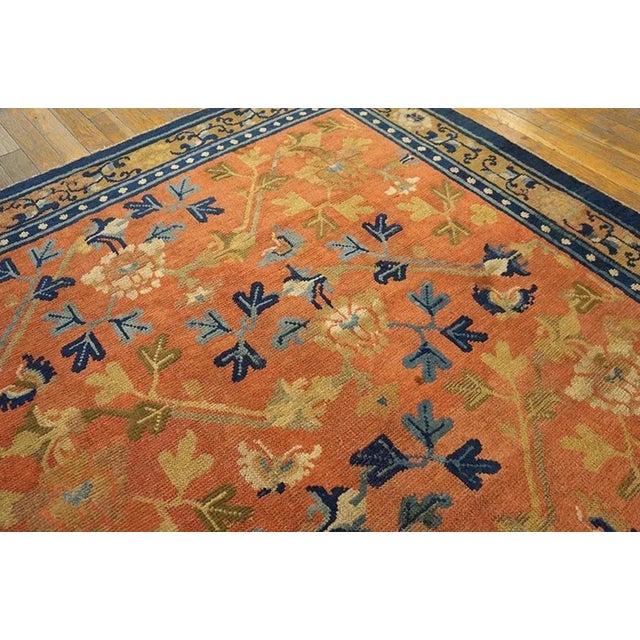
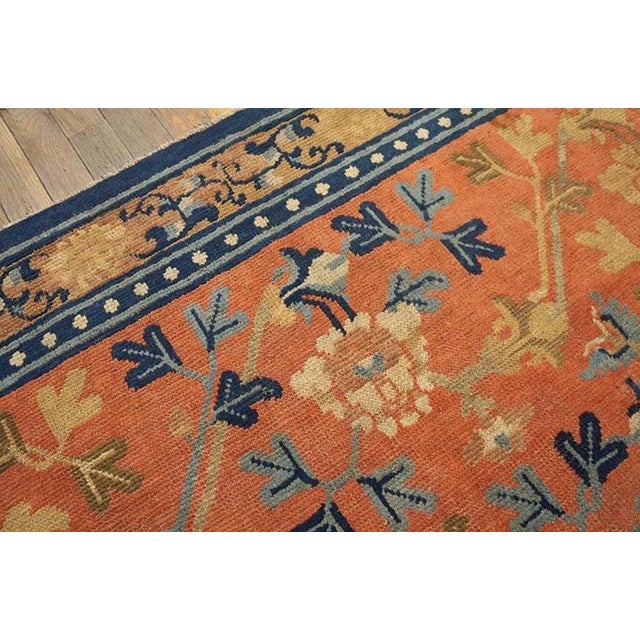
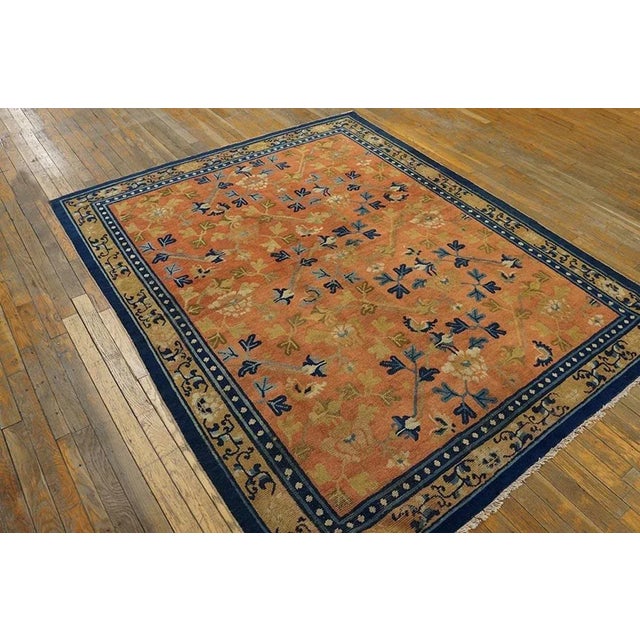
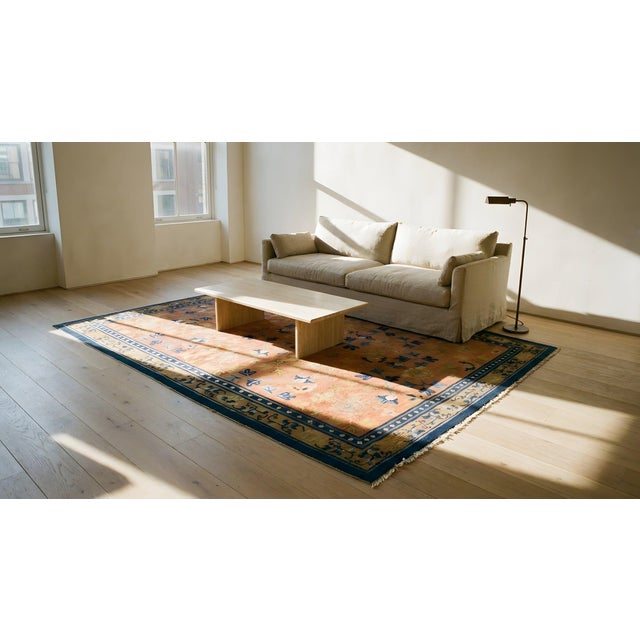
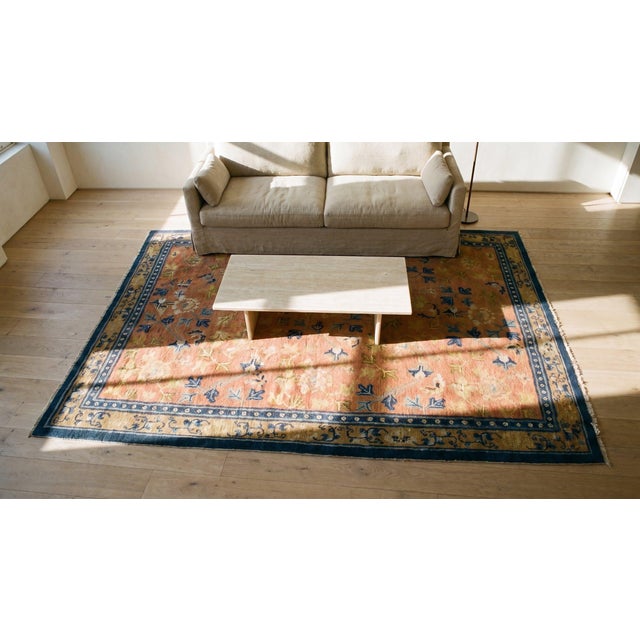
This rug is one of a group of Ningxia pieces, all small, sharing the same palette and pattern. The design is a textile repeat of paeonies, trefoil leaves (or blossoms) and diagonal stems, here paired. The border is an “S” type of paeony palmette and short, leafy sprays, on a gold ground. A slightly smaller, but otherwise almost contemporary comparandum is Lorentz [ ], p.65, 4.5 6.2, with the same inner pearl border and doubled stems. They must come from the same workshop. In both pieces the groups of blue trefoil leaves are randomly scattered. The two rugs are so exact in their similarity that they may have been part of a larger order. In the Lorentz rug there are a few white field detains including a paeony, as well as a dark blue one. Both of these are absent in 21694.The drawing of the Lorentz example is slightly more curvilinear, but this is probably a shop variation rather than a sign of chronological priority. The weavers did not work from cartoons or detailed drawings in Ningxia and this variation is to be expected.
The pattern was obviously a commercial success and there are other contemporary examples known. A borderless (fragment?) piece is in the Textile Museum, Washington, D>C>, R.51.5 [fn.Eiland, 1979, p.].Here the paeonies are more internally detailed and the leafy sprays subtly curve. The floral array is denser and the regularity more obvious. The general effect is greater compactness than 21694. Eiland dates it to the early 19th century, but, like most of his overly conservative attributions, a late Ch’ien Lung period is probably acceptable. Another version, 4.5 x 6.2 was sold in the Jones sale, Anderson Galleries, NY, 18-19.4.1923, lot 165. This has a T-fret main border and a pearl inner. The field paeonies were all ivory and the stems curved noticeably. Bats interrupted the yellow T-fret major band. The rug was already worn and it sold
See less
- Dimensions
- 4′10″ × 6′ and 1.0″ thick
- Styles
- Chinese
- Pattern
- Trellis
- Rug Construction
- Hand Knotted
- Period
- Early 19th Century
- Country of Origin
- China
- Item Type
- Vintage, Antique or Pre-owned
- Materials
- Wool
- Condition
- Good Condition, Original Design Modified, Some Imperfections
- Color
- Brown
- Condition Notes
- Good Rewoven. Repaired. Wear consistent with age and use. Good Rewoven. Repaired. Wear consistent with age and use. less
Questions about the item?
Returns & Cancellations
Return Policy - All sales are final 48 hours after delivery, unless otherwise specified in the description of the product.
Cancellation Policy - Prior to shipping or local pickup, buyers may cancel an order for up to 48 hours, unless otherwise specified.
Related Collections
- Seagrass Rugs
- Classical Greek Rugs
- Bamboo Fabric Rugs
- Cashmere Rugs
- Josef Albers Rugs
- Beaux-Arts Rugs
- Cream Moroccan Rugs
- Blue Moroccan Rugs
- White Moroccan Rugs
- Ivory Moroccan Rugs
- Rugs in Chicago
- Moroccan Rugs
- Scandinavian Rugs
- Persian Rugs
- Art Nouveau Rugs
- Rugs in New York
- Spanish Rugs
- Rugs in Dallas
- Early American Rugs
- Khotan Rugs
- Rugs in Los Angeles
- Rugs in Washington DC
- Karastan Rugs
- Chinese Rugs
- Rugs in San Francisco