




Details
Description
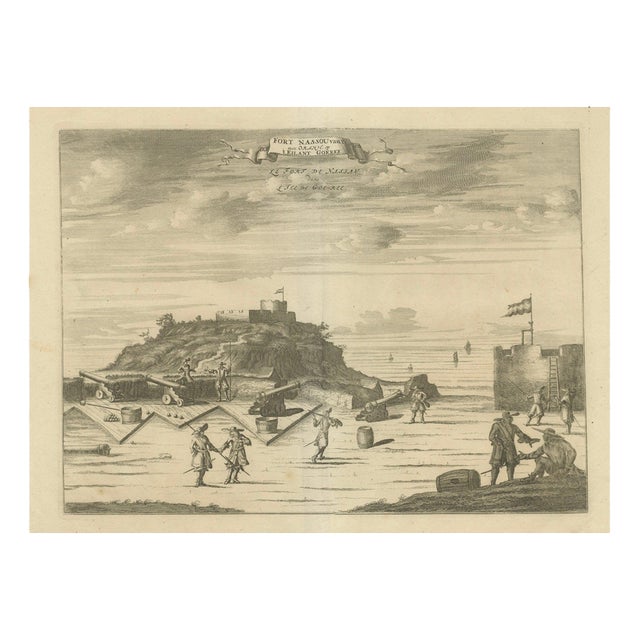
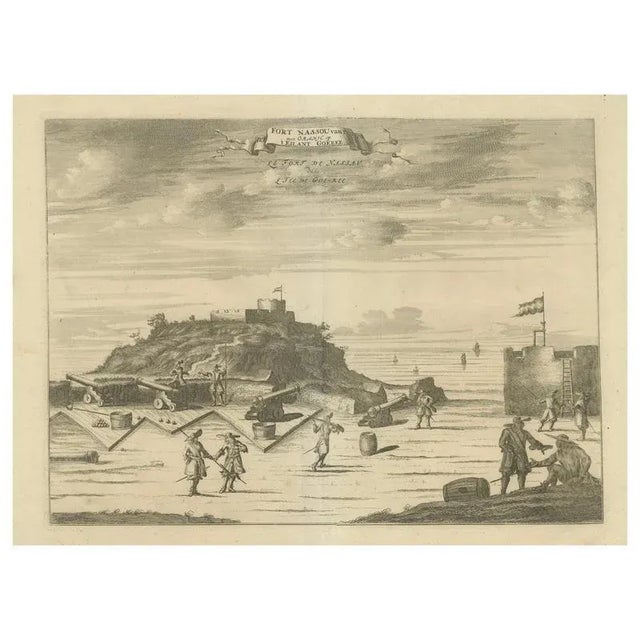
Fort nassau on the island of goree – dutch colonial engraving, c.1700 this original antique engraving, titled fort nassau sur … Read more Fort nassau on the island of goree – dutch colonial engraving, c.1700 this original antique engraving, titled fort nassau sur l’isle de gorée (fort nassau on the island of gorée), dates from around 1700 and presents a historically significant view of the dutch fortifications on gorée island, located off the coast of present-day senegal. The engraving shows the dutch-built fort nassau prominently situated atop a hill, overlooking the atlantic, with soldiers, cannons, and maritime activity in the foreground — a vivid depiction of european colonial presence in west africa during the 17th century. Gorée island was a strategic outpost contested by the dutch, english, french, and portuguese throughout the 1600s and 1700s. The dutch west india company (wic) occupied gorée intermittently from 1617 to 1677, using it as a hub for trade and coastal control. Fort nassau, shown here in elevated position, was one of two dutch forts built to defend the harbor and facilitate commerce. The engraving captures the fortified landscape and bustling activity of soldiers preparing artillery and inspecting supplies, while small vessels appear on the calm sea beyond. The inscription in the decorative cartouche reads: fort nassau sur l’isle de gorée, de l’ouvrage de n. De fer — attributing the design to nicolas de fer (1646–1720), the renowned french cartographer and engraver known for his colonial atlases and views of overseas territories. His works were among the earliest printed depictions of european settlements in africa. This print not only serves as a historical record of dutch expansion but also illustrates the visual propaganda of european colonial powers, emphasizing control, order, and technological dominance through the imagery of forts, cannons, and maritime enterprise. Today, gorée island is recognized as a unesco world heritage site, remembered for its central role in the history of the atlantic trade routes. Condition report: good impression on laid paper with visible plate mark. Light age toning, some marginal tears and small repairs, none affecting the image. Minor handling creases and faint foxing spots typical of early 18th-century prints. Framing tips: a dark walnut or ebony frame with an ivory or warm beige mat suits the monochrome engraving beautifully. Float mounting will highlight the plate mark and natural edges of the paper, enhancing its authenticity and historical charm. Technique: engraving on laid paper maker: nicolas de fer (1646–1720), paris, circa 1700 See less
- Dimensions
- 16.54ʺW × 12.6ʺH
- Country of Origin
- France
- Item Type
- Vintage, Antique or Pre-owned
- Materials
- Paper
- Condition
- Unknown, Some Imperfections
- Color
- Beige
- Condition Notes
- Very Good — This vintage item has no defects, but it may show slight traces of use\. Good impression on … moreVery Good — This vintage item has no defects, but it may show slight traces of use\. Good impression on laid paper with visible plate mark. Light age toning, some marginal tears and small repairs, none affecting the image. Minor handling creases and faint foxing spots typical of early 18th-century prints. less
Returns & Cancellations
Return Policy - All sales are final 48 hours after delivery, unless otherwise specified in the description of the product.
Cancellation Policy - Prior to shipping or local pickup, buyers may cancel an order for up to 48 hours, unless otherwise specified.