

Details
Description
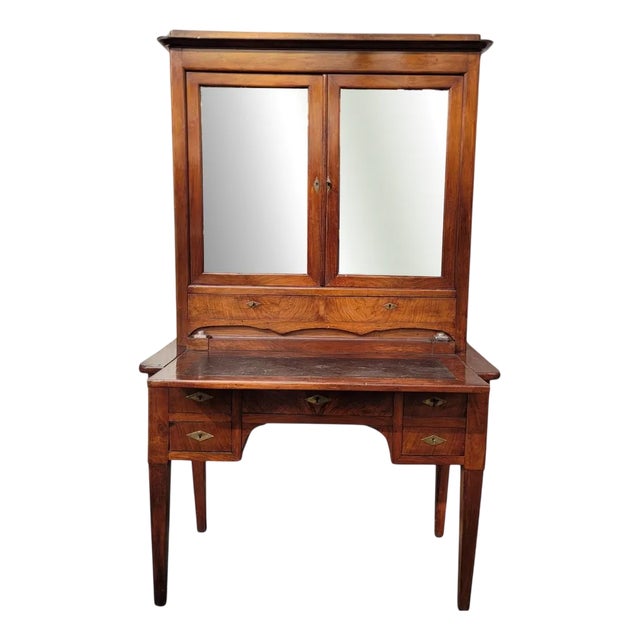
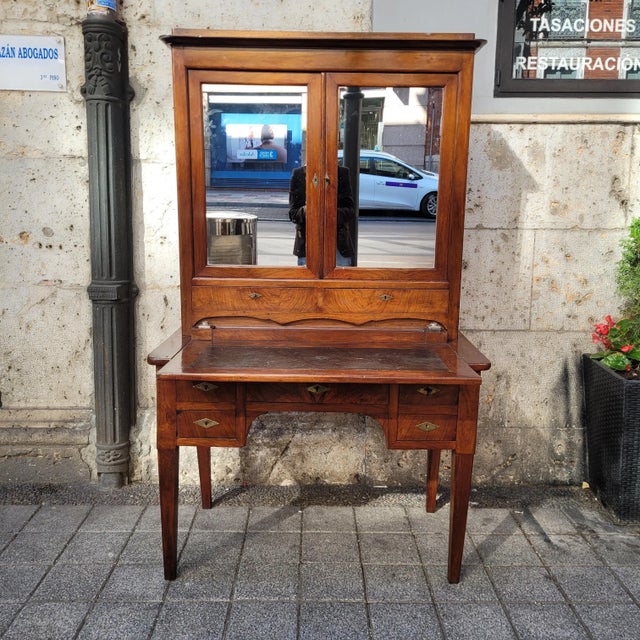
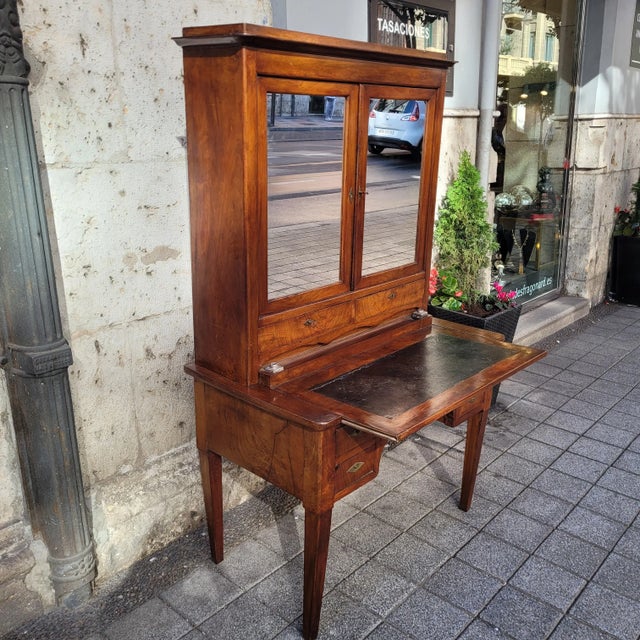
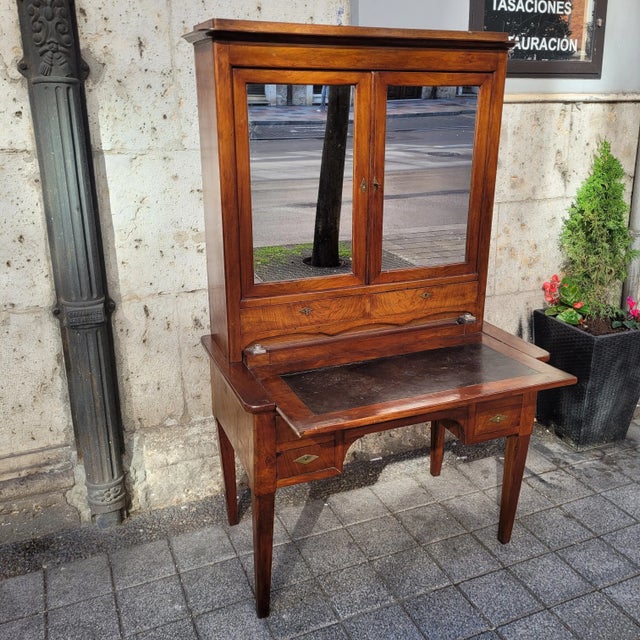
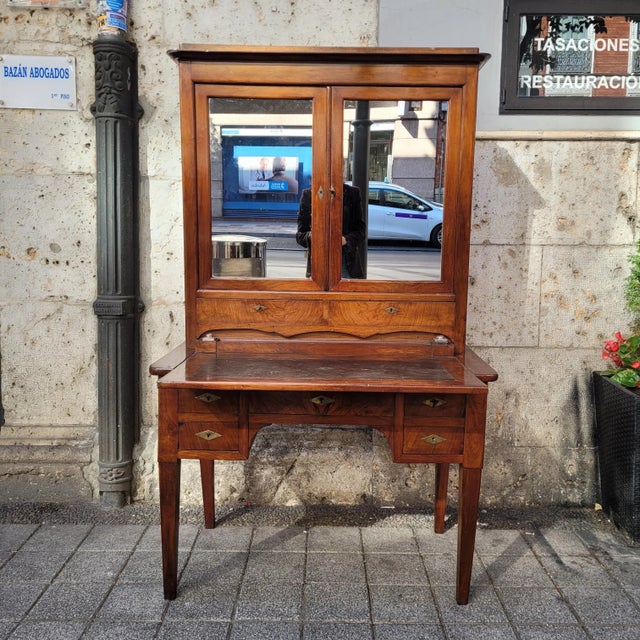
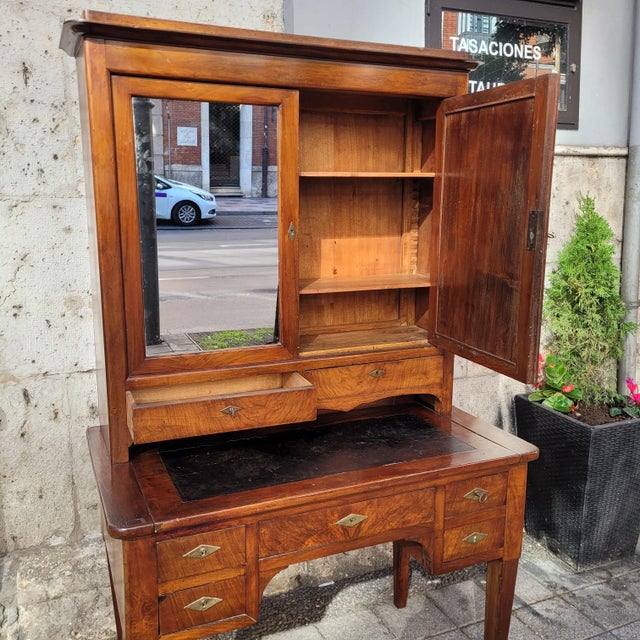
Bonheur du jour bureau, mahogany and leather, directoire style, 19th century - france
type: bonheur du jour bureau
style: directoire
…
Read more
Bonheur du jour bureau, mahogany and leather, directoire style, 19th century - france
type: bonheur du jour bureau
style: directoire
materials: mahogany, leather, mirror
period: early 19th century
country of origin: france
provenance: private collection
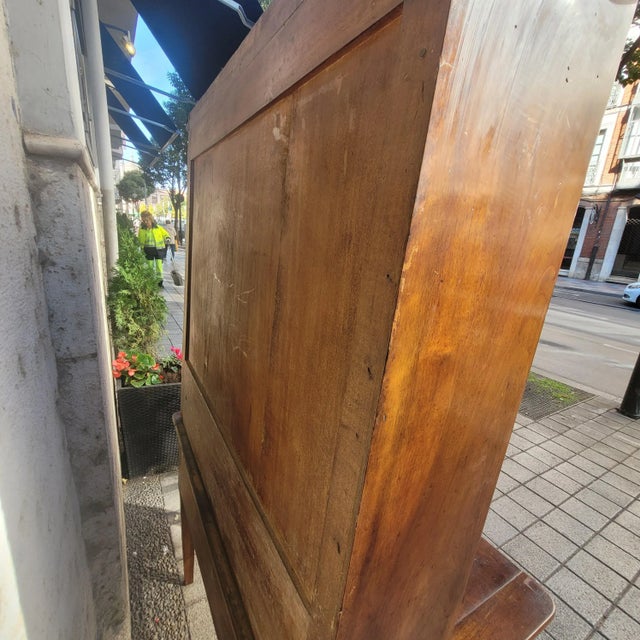
good condition commensurate with its age and use
closed dimensions: 168 x 100 x 59 cm
open dimensions: 168 x 100 x 76 cm
top height: 73 cm
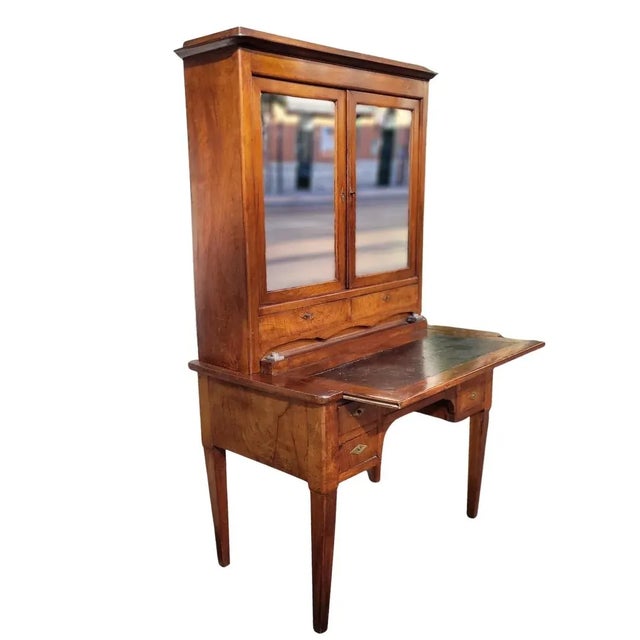
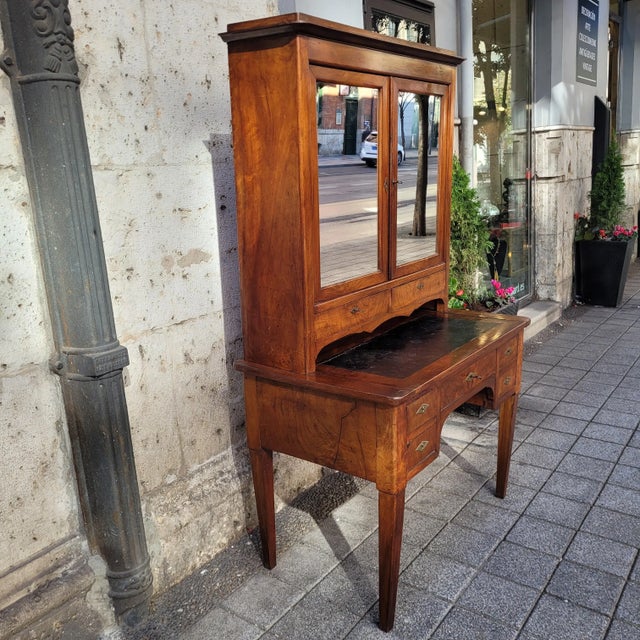
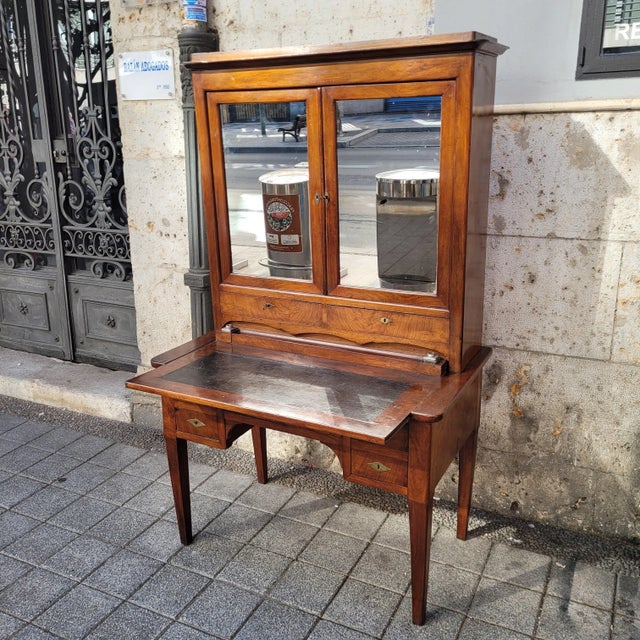
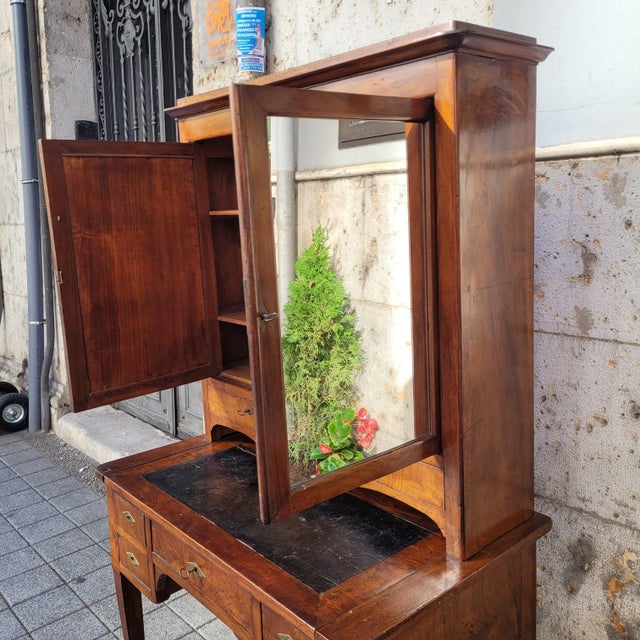
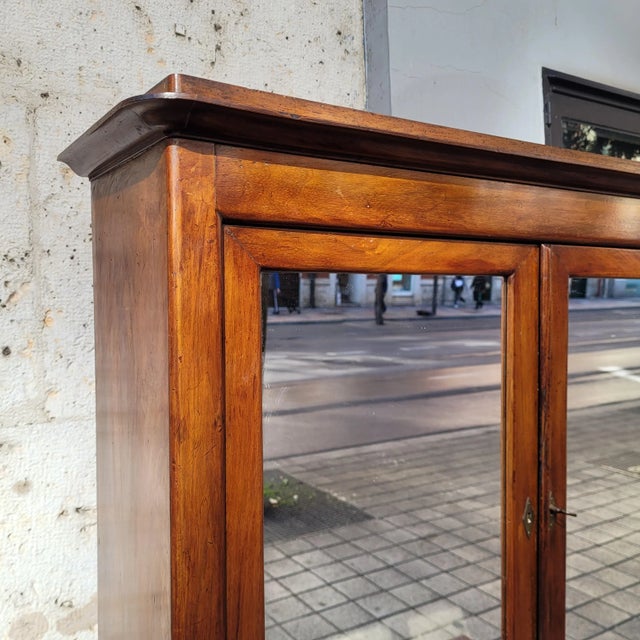
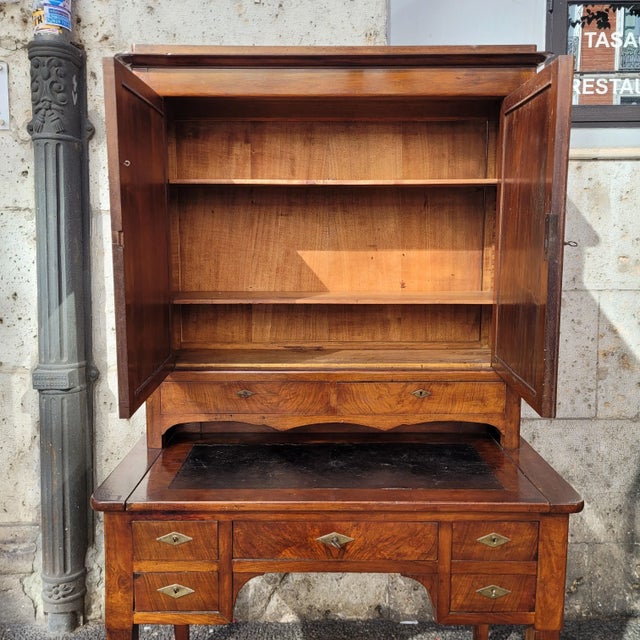
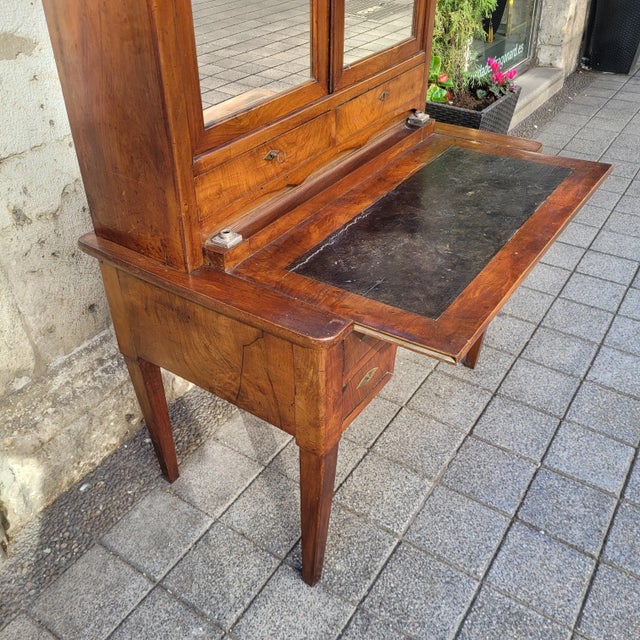
stunning french bonheur du jour mahogany desk or bureau, dating from the early 19th century, with a leather top and mirrored upper doors.
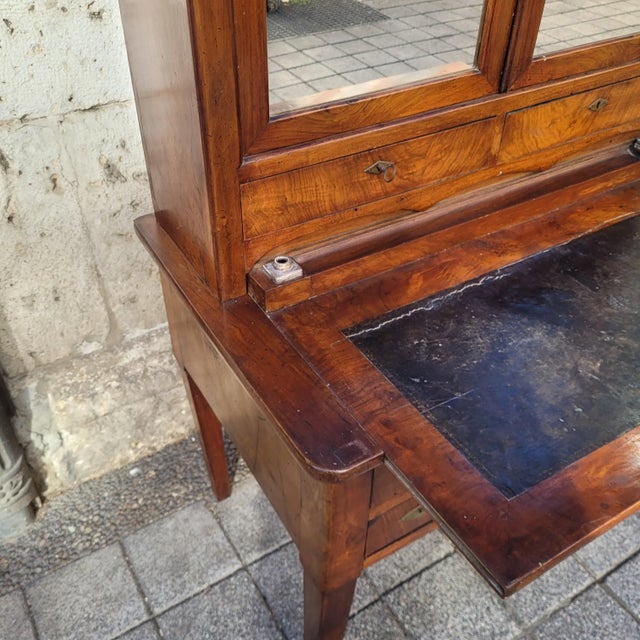
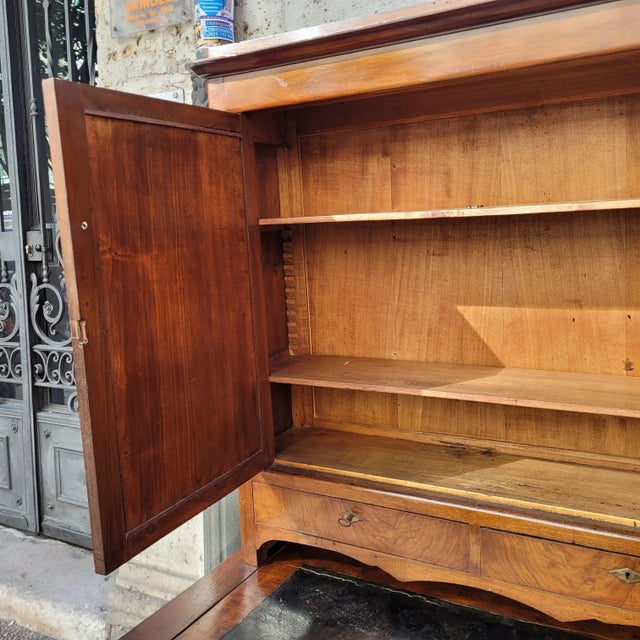
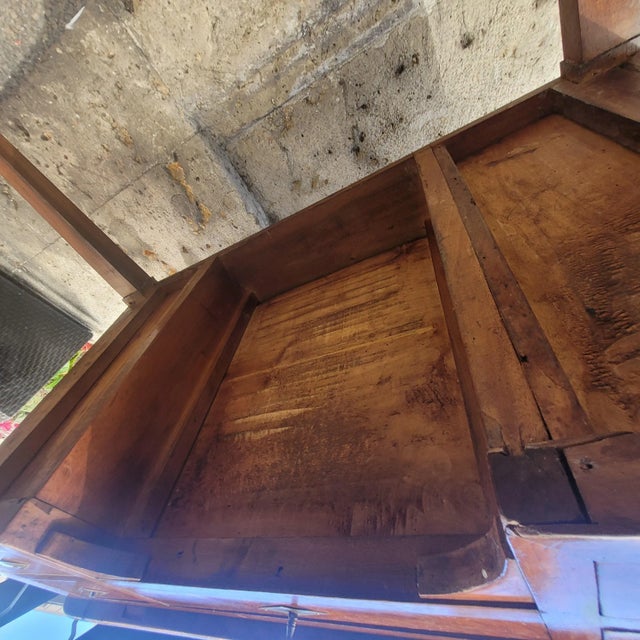
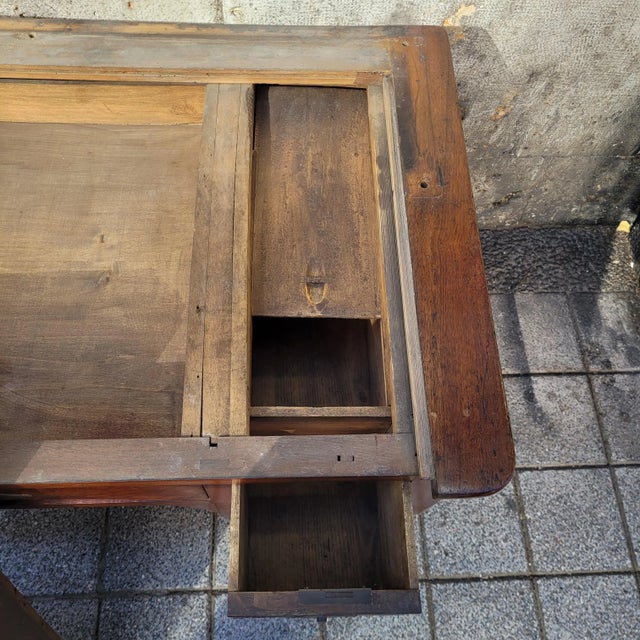
the piece, entirely crafted in a beautiful mahogany wood, stands on four straight, square legs. Above them, we find a fold-out top with an embossed black leather mat, which houses two small drawers on each side and a longer central one. The right-hand drawer has a false bottom and a secret drawer at the back. The top has two small inkwells on each side. In the upper body, we find a narrow drawer that covers part of the top, and above it, two mirrored doors, a result of its function not only as a desk but also as a dressing table. Inside, there are two shelves that divide the space into three. All the drawers, like the doors in the upper section, have locks so they can be locked and store personal belongings privately.
the bonheur du jour
the bonheur du jour (french for happiness/joy of the day) is a type of writing desk introduced by parisian merchants in the 1760s. It is small in size and delicate in shape, as it was originally designed for ladies. It became one of the most popular pieces of furniture in 18th-century france. It is often considered the female counterpart to the secretaire, with more masculine and voluminous forms.
the earliest examples had curved shapes and slender cabriole legs. Later, stricter, straight lines predominated, in the louis xvi style, and tabletops began to be rectangular. Some bonheurs du jour were even equipped with accessories for makeup and hairdressing. A side table with a flat drawer was often used to increase the work surface, or folding extensions were added.
this piece of furniture tended to be small, lightweight, and easy to move, as it was deliberately designed for women's use. They generally followed a very defined structure: usually consisting of a table with tall, slender legs, the top of which supported a small rectangular cabinet, sometimes recessed. The table had open or closed storage compartments and drawers below. The upper end was sometimes formed by a gallery, called "tiers," heavily decorated with marquetry or with brass or bronze. It was closed at the top by hinged doors and usually contained drawers or pigeonholes inside. The back was also decorated, as these pieces were not intended to be attached to the wall.
about the directoire style
during this period, france was undergoing significant political and social changes, which were reflected in the furniture, which took a more rational and functional approach. Symmetry in the design of the drawers and the balanced proportions of the overall piece are key characteristics of classical furniture from this period. Unlike previous styles, such as rococo, the directoire style is characterized by more restrained decoration. Drawer handles and legs feature simple geometric details and classical motifs.
the directoire style is a style of furniture and decoration that developed in france during the period of the directoire (1795–1799) and marks the transition between the louis xvi and empire styles. It is a neoclassical-inspired style characterized by the simplicity of its lines, inspired by roman objects of the 1st century ad. C., from the excavations of pompeii and herculaneum. This revival of classicist taste was evident in painting, furniture, and fashion, especially in women's clothing.
due to the dimensions of the product, it is preferred to agree on shipping with the buyer. Shipping of the product will be paid by the buyer according to the dimensions, weight, and destination. We will contact you to arrange it and agree on a quote. Shipping costs include custom-made professional packaging and personalized shipping, with a tracking number and warranty. The buyer will be responsible for paying import duties and associated taxes in the destination country, if applicable. Please note the seller's disclaimer regarding possible customs charges, as they are levied in the destination country and the amount payable is determined by that country's customs office.
See less
- Dimensions
- 39.37ʺW × 23.23ʺD × 66.14ʺH
- Period
- 19th Century
- Country of Origin
- France
- Item Type
- Vintage, Antique or Pre-owned
- Materials
- Mahogany
- Condition
- Good Condition, Unknown, Some Imperfections
- Color
- Black
- Condition Notes
- Patina Consistent with Age and Use Patina Consistent with Age and Use less
Returns & Cancellations
Return Policy - All sales are final 48 hours after delivery, unless otherwise specified in the description of the product.
Cancellation Policy - Prior to shipping or local pickup, buyers may cancel an order for up to 48 hours, unless otherwise specified.
Related Collections
- Bright Green Writing Desks
- Herter Brothers Writing Desks
- Rope Writing Desks
- Chelsea House Inc Writing Desks
- Gothic Revival Writing Desks
- John Vesey Writing Desks
- Arts and Crafts Writing Desks
- Walnut Writing Desks
- Lexington Furniture Writing Desks
- Maitland - Smith Writing Desks
- Japanese Writing Desks
- Mahogany Writing Desks
- English Traditional Writing Desks
- French Writing Desks
- Ladies Writing Desks
- Black Writing Desks
- Pine Writing Desks
- Green Writing Desks
- Antique Writing Desks
- Louis XVI Writing Desks
- Louis XV Writing Desks
- Italian Writing Desks
- Bamboo Writing Desks
- Mid-Century Modern Writing Desks
- Charles Limbert Writing Desks