

Details
Description
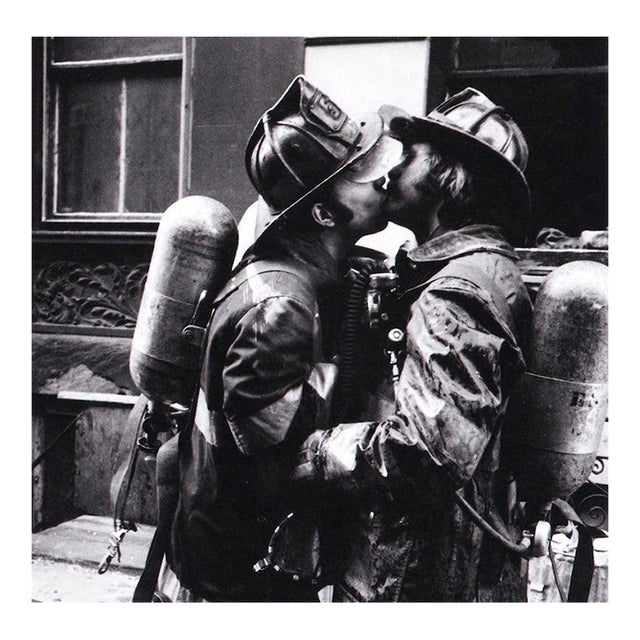
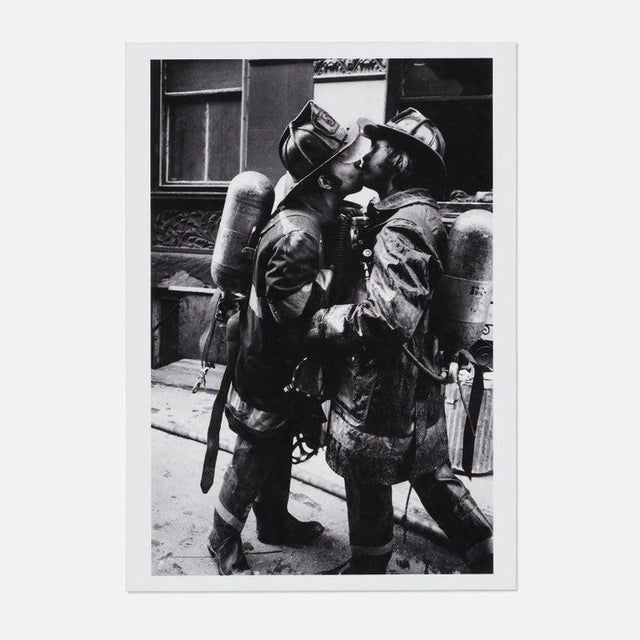
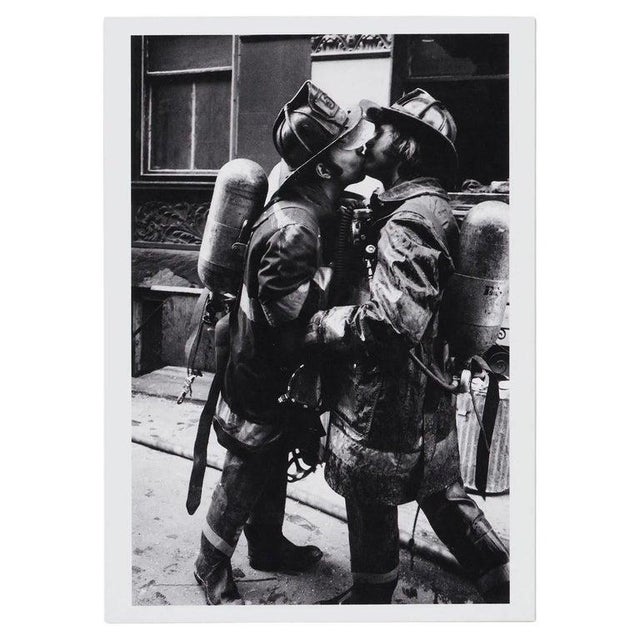
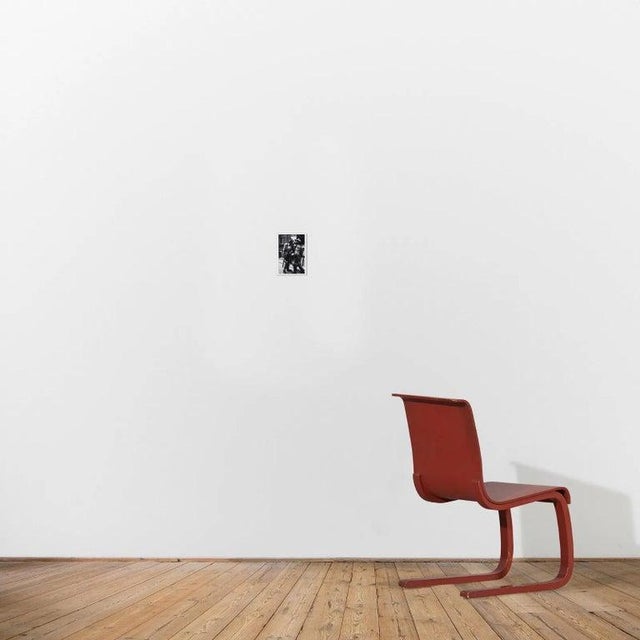
Jill Freedman Kissing FDNY 1976, black & white photo on Kodak Endura, Signed. Image also known as ‘Brotherly Love.” This …
Read more
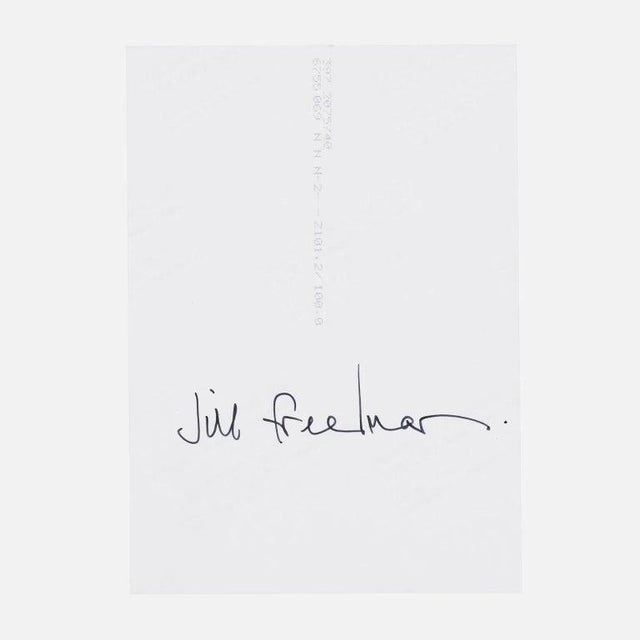
Jill Freedman Kissing FDNY 1976, black & white photo on Kodak Endura, Signed. Image also known as ‘Brotherly Love.” This is a black and white photograph on Kodak Endura, handsigned by the artist. 7 x 5 inches. Unframed.
Jill Freedman (October 19, 1939 – October 9, 2019) was an American documentary photographer and street photographer. In 1964 Freedman came to New York City and had several temporary jobs including advertising copywriter. She only discovered photography while experimenting with a friend's camera.
As a photographer, she was self-taught, influenced by André Kertész, idolizing W. Eugene Smith, according to the artist, primarily helped by her poodle Fang:
“When I was out walking in the street with Fang I saw everything, felt everything. He had a great instinct. He taught me how to look, because he never missed a thing.”
Andy Grundberg would also note the influences on her style of Smith, Henri Cartier-Bresson, Don McCullin, Leonard Freed, and Weegee; but would add that: "To appreciate [her] photographs one needs to consider their substance, not their style. . . . Human relationships – especially the bonds of brotherhood – fascinate her."
On hearing of the assassination of Martin Luther King, Freedman quit her job and went to Washington, DC. She lived in Resurrection City, a shantytown put up by the Poor People's Campaign on Washington Mall in 1968, and photographed there. Photographs from the series were published at the time in Life, and collected in Freedman's first book, Old News: Resurrection City, in 1970. A. D. Coleman wrote of the book: It is a very personal yet highly objective statement, filled with passion, warmth, sorrow and humor. Freedman's pictures are deft and strong; her text witty, sardonic and honest, with quirky insights and touching moments of self-revelation. A brave and moving book.
Freedman then lived in a Volkswagen kombi, following the Clyde Beatty-Cole Brothers Circus. For two months, she photographed "two shows a day and one show each Sunday. Seven weeks of one night stands", and moving across New York, Massachusetts, New Jersey, Rhode Island, New Hampshire, Vermont, Pennsylvania and Ohio. She wanted to photograph the performers as people. ("If I wanted to do freaks, I'd do guys wearing ties in 100-degree weather – to me that's freaks." The work was published as a book, Circus Days, in 1975.
Freedman photographed the then sleazy area of 42nd Street and the glamorous arts scene in Studio 54 and SoHo.
By the second half of 1975, Freedman started to photograph firefighters around Harlem and the Bronx. This took her two years; she lived with the firefighters, sleeping in the chief's car and on the floor. This resulted in a book, Firehouse, published in 1977.
Some of the firefighters had previously been policemen, and they suggested that Freedman might photograph police work. Freedman had disliked the police but reasoned that there must be good policemen among them. For her series Street Cops (1978–1981), she accompanied the police to an area of New York City including Alphabet City and Times Square, spending time with those who seemed good cops. The work resulted in the book Street Cops. A contemporary reviewer for Popular Photography started by observing that "the passionate photojournalistic essay of yesterday" was "an endangered species", before saying that it lived on in photobooks such as this one. The reviewer described Street Cops as "[celebrating] the heroism, compassion, and humor of New York police professionals", and saying that the book "is traditional and satisfying in that it accomplishes a blend rarely successful – or even attempted – these days: an organic fusion of words and photographs".
On photographing in New York at the time:
Hiding behind a camera, [Freedman] found her subjects where others were not looking – "beggars, panhandlers, people sleeping on the street," the police and the firefighters, the people washed ashore by forces bigger than themselves. "It's the theater of the streets," she said. "The weirder, the better."
During the seventies, Freedman was briefly associated with Magnum Photos, but did not become a member. She wanted to tell stories via photography, but also wanted to avoid the schmoozing required to get commissions; and she therefore set her own tasks. She had difficulty making a living, but sold prints from a stand set up outside the Whitney Museum building. In 1983, New York Times critic Andy Grunberg recognized her black and white street photography in New York, grouping Freedman with Lee Friedlander, Fred R. Conrad, Bruce Davidson, Roy DeCarava, Bill Cunningham, Sara Krulwich and Rudy Burckhardt.
In 2016, Freedman's work and career, especially her images of New York City, was the subject of renewed interest, appearing in multiple Vice articles, including their 2016 photography issue and at Art Basel Miami. Freedman passed away in Manhattan on October 9, 2019.
See less
- Dimensions
- 5ʺW × 1ʺD × 7ʺH
- Frame Type
- Unframed
- Period
- 1970s
- Country of Origin
- United States
- Item Type
- Vintage, Antique or Pre-owned
- Materials
- Black & White Photography
- Condition
- Good Condition, Original Condition Unaltered, Some Imperfections
- Color
- Black
- Condition Notes
- good vintage condition. unframed. good vintage condition. unframed. less
Questions about the item?
Returns & Cancellations
Return Policy - All sales are final 48 hours after delivery, unless otherwise specified in the description of the product.
Cancellation Policy - Prior to shipping or local pickup, buyers may cancel an order for up to 48 hours, unless otherwise specified.
Related Collections
- Edward S. Curtis Photography
- Scarlet Photography
- Raymond Loewy Photography
- Soicher Marin Photography
- Cubism Photography
- Renaissance Photography
- Photography in Salt Lake City
- Nick Mele Photography
- Black and White Photos
- Photography in Cleveland
- Photography in Minneapolis
- Gustavian (Swedish) Photography
- Edwardian Photography