




Details
Description
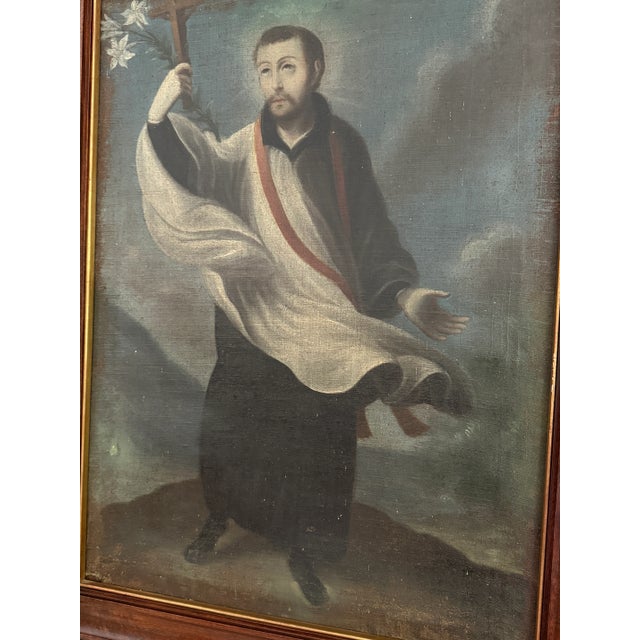
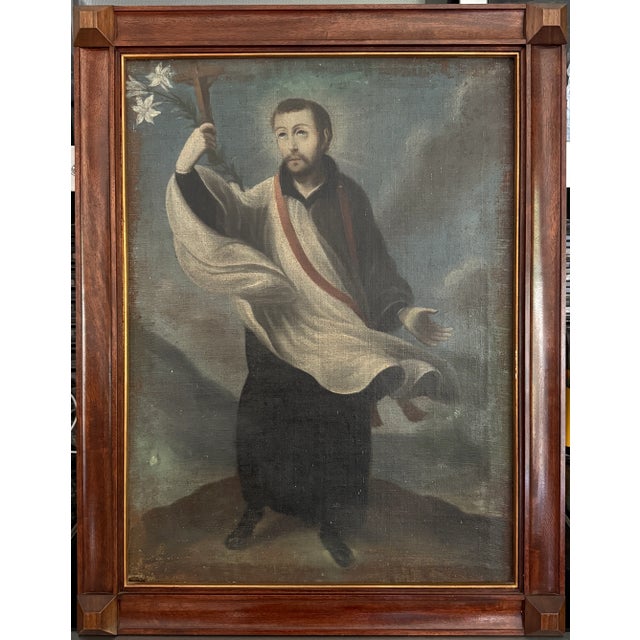
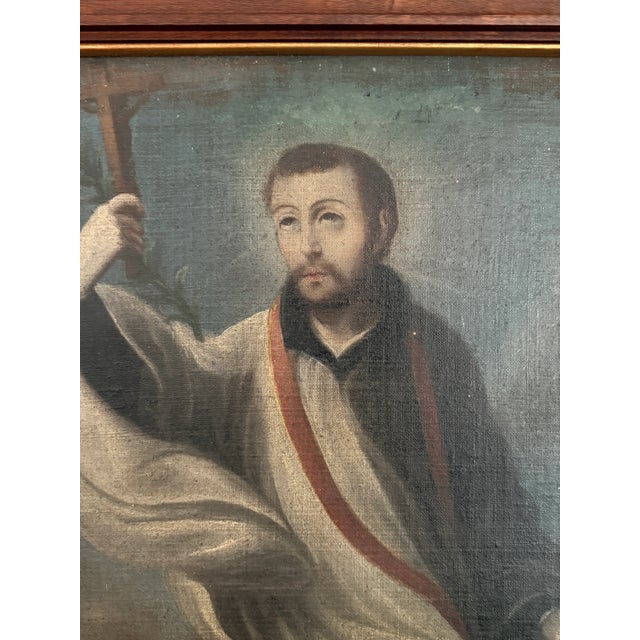
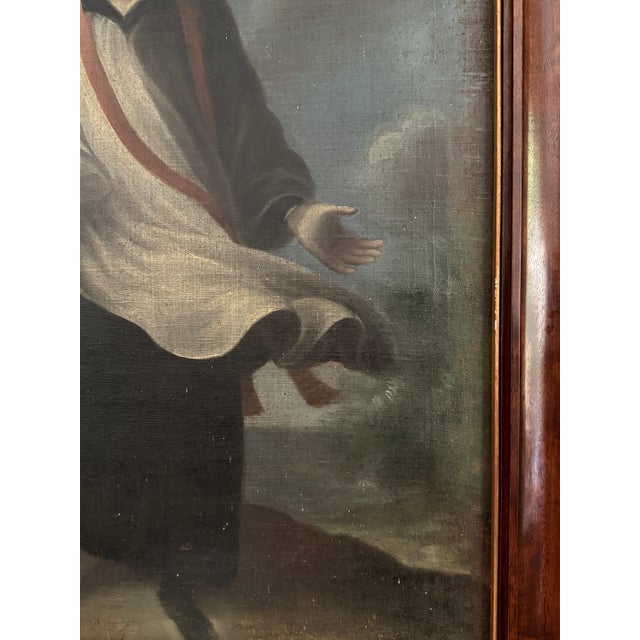
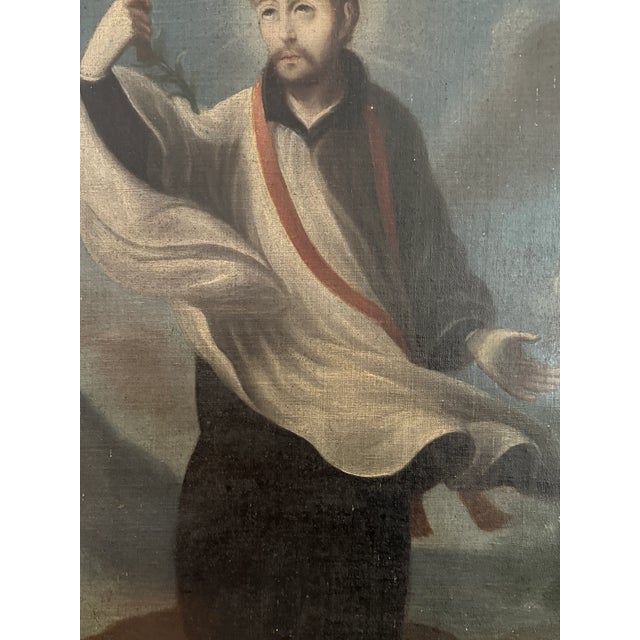
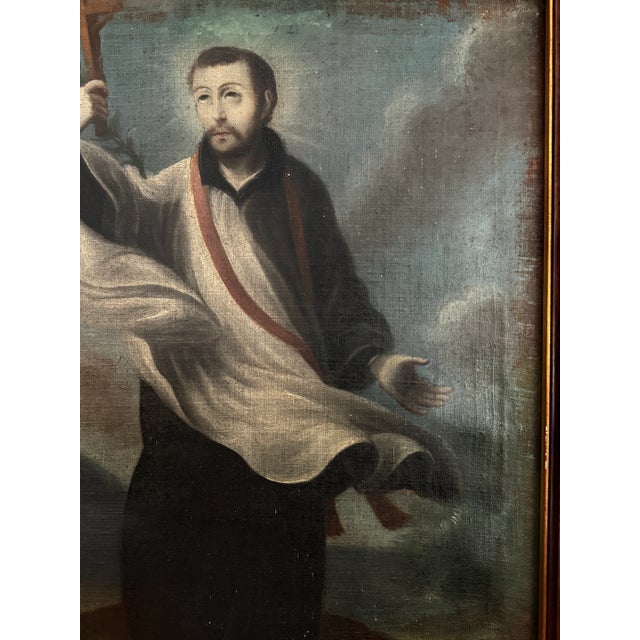
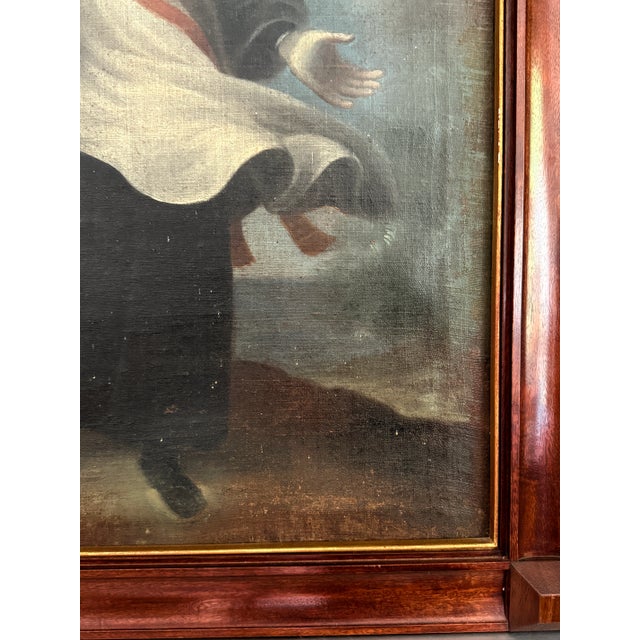
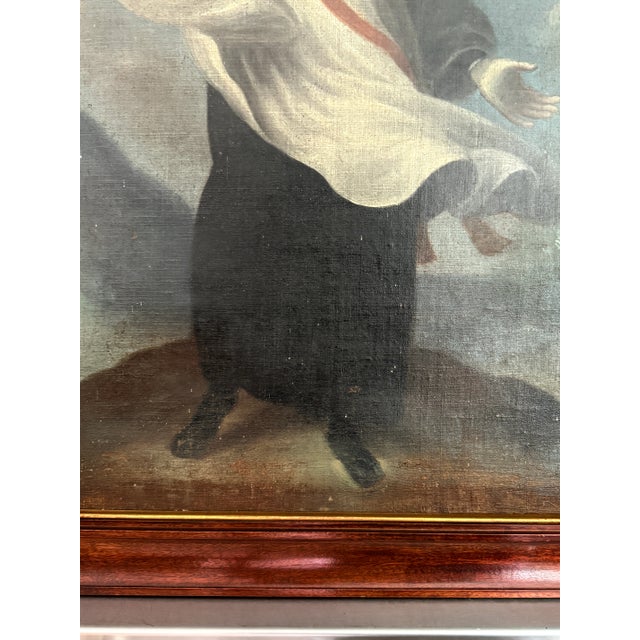
An 18th-century Spanish colonial painting of Saint Aloysius Gonzaga (San Luis Gonzaga), possibly dated 1760. The young male saint wears …
Read more
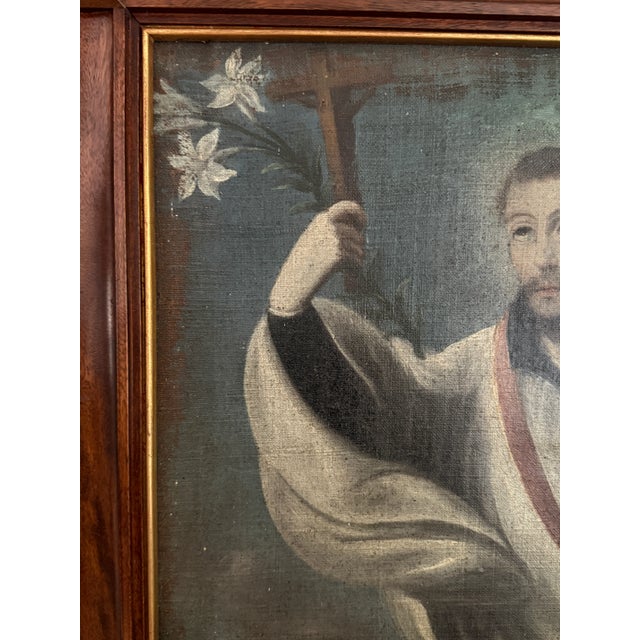
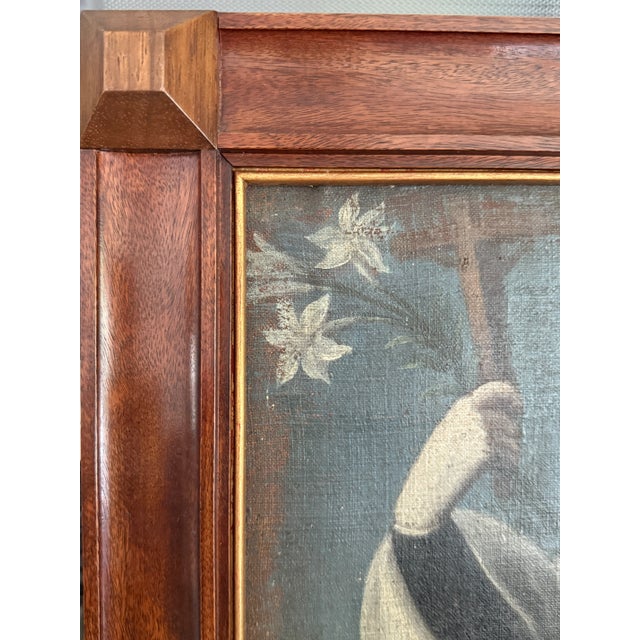
An 18th-century Spanish colonial painting of Saint Aloysius Gonzaga (San Luis Gonzaga), possibly dated 1760. The young male saint wears a black Jesuit cassock with a white lace surplice and a red stole, and he holds a crucifix entwined with white lilies. His left hand is raised in a gesture toward Heaven, and he gazes upward devoutly. The background is a simple blue sky with stylized clouds, a setting that emphasizes the saint’s heavenly focus and the painting’s devotional character. The iconographic attributes clearly identify the figure as St. Aloysius Gonzaga. The lily represents his innocence and purity, and the crucifix signifies his piety and sacrifice. Aloysius (1568–1591), a Jesuit seminarian of noble birth who died while caring for plague victims, was renowned for his angelic chastity and devotion. He is often depicted in the black-and-white clerical attire of a Jesuit novice, sometimes with a rosary as a sign of his devotion to the Virgin Mary. In this painting, his red stole and uplifted hand reinforce his role in ministry and his zeal for God. St. Aloysius became the patron saint of students and Catholic youth (and later of plague victims and caregivers) due to his exemplary piety and youthful holiness.
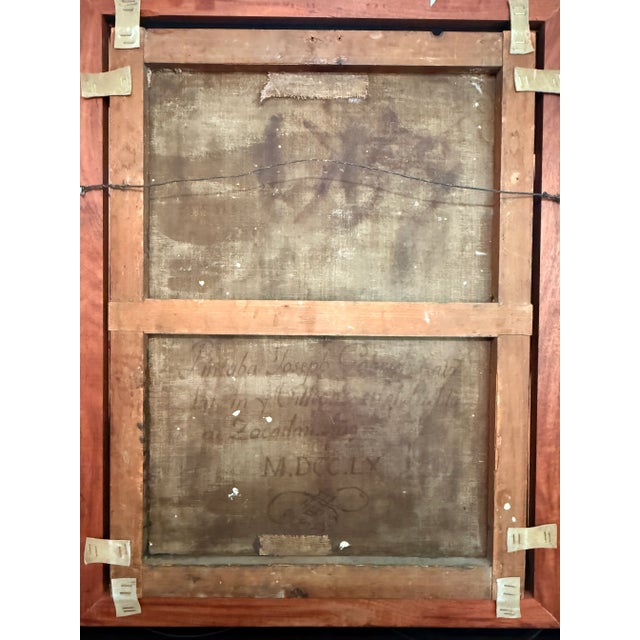
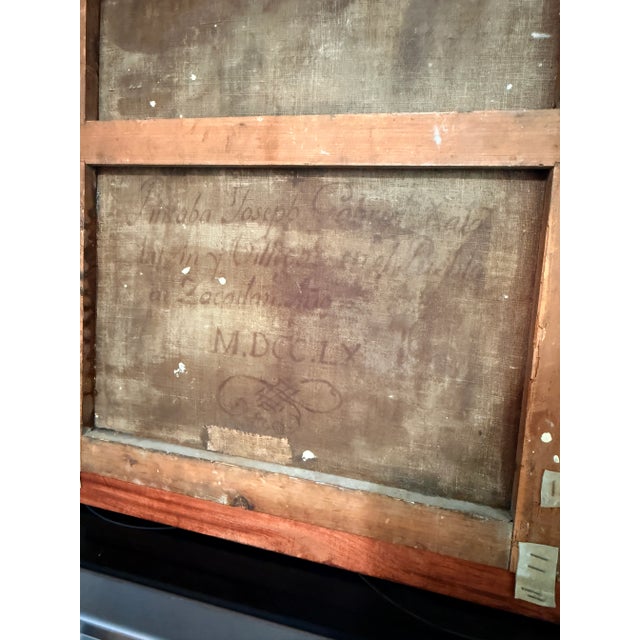
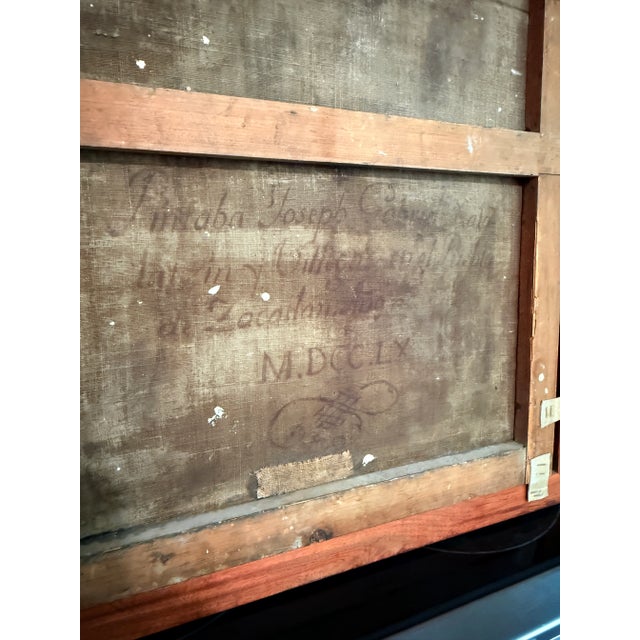
On the reverse of the canvas is a handwritten inscription in Spanish cursive, which appears to read:
“... por devoción de D. [Nombre] ... año de MDCCLX.”
Transcribed in full, it likely states that the image was made “por devoción de [Nombre] ... año de 1760.” In English, this can be rendered as: “[... in] devotion of [Name] ... in the year 1760.” The exact name in the dedication is partially illegible in the photographs, but the inscription clearly includes the date 1760 in Roman numerals (MDCCLX). This suggests the painting was commissioned or gifted as an act of pious devotion by the person named, in the year 1760. Such dedications were common in colonial religious art, often recording the patron or donor who sponsored the work for a church or as a votive offering. The presence of this inscription personalizes the artwork’s origin, indicating it was created for the devotion of a particular individual or institution in 1760, rather than being a later copy or generic inventory piece. It lends insight into the painting’s provenance, hinting that a donor (perhaps a priest or a devotee identified as “Don [Name]”) commissioned the piece as an expression of faith.
Measures: 22" w x 28.5" h (frame), 18.375" w x 25" h (canvas)
See less
- Dimensions
- 22ʺW × 1ʺD × 28.5ʺH
- Styles
- Spanish Colonial
- Frame Type
- Framed
- Art Subjects
- Figure
- Period
- Late 18th Century
- Country of Origin
- Spain
- Item Type
- Vintage, Antique or Pre-owned
- Materials
- Canvas
- Condition
- Good Condition, Original Condition Unaltered, Some Imperfections
- Color
- Brown
- Condition Notes
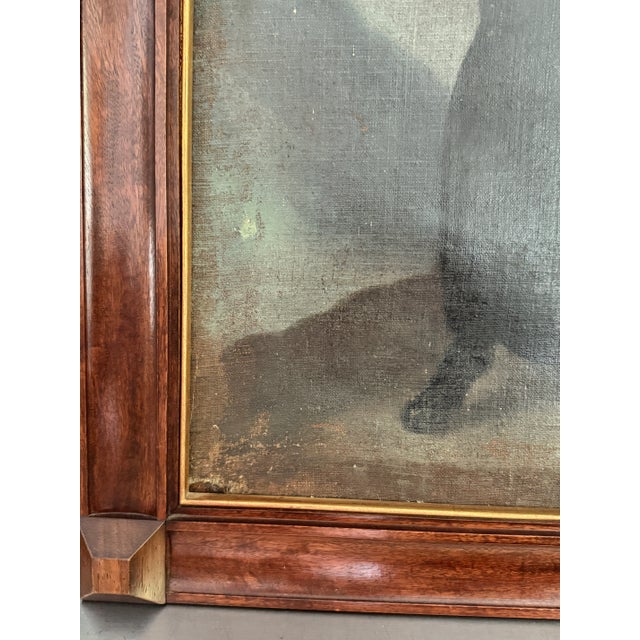
- Minor wear commensurate with age and use. Some rubbing to edges of canvas and paint loss. Minor wear commensurate with age and use. Some rubbing to edges of canvas and paint loss. less
Questions about the item?
Returns & Cancellations
Return Policy - All sales are final 48 hours after delivery, unless otherwise specified in the description of the product.
Cancellation Policy - Prior to shipping or local pickup, buyers may cancel an order for up to 48 hours, unless otherwise specified.
Related Collections
- Photorealism Canvas Paintings
- Ed Ruscha Paintings
- Photorealism Paintings in New York
- Richard Serra Paintings
- Herman Miller Paintings
- BDDW Paintings
- Louise Nevelson Paintings
- Karen Offutt Paintings
- Jo Baskerville Paintings
- Nicola Simbari Paintings
- Karl-Erik Ekselius Paintings
- Carl-Axel Acking Paintings
- Joseph Stella Paintings
- James McCray Paintings
- Leroy Neiman Paintings
- Jaanika Peerna Paintings
- Vienna Secession Paintings
- Cassina Paintings
- Black Photorealism Paintings
- Lawson-Fenning Paintings
- Jean-Paul Barray Paintings
- Hans Andersen Paintings
- Johannes Andersen Paintings
- Pedro Friedeberg Paintings
- Peter Behrens Paintings