




Details
Description
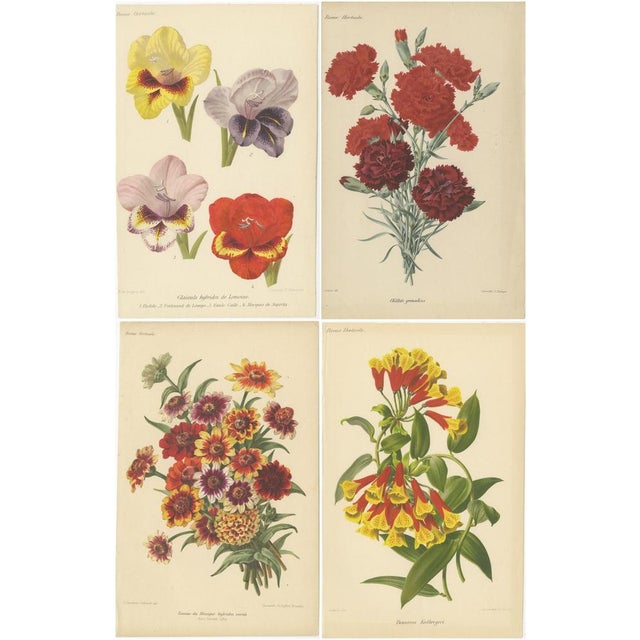
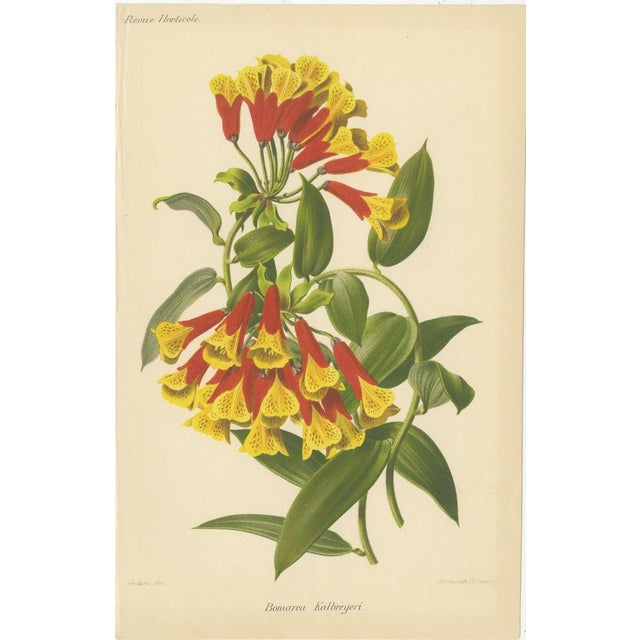
These chromolithographs, originally published in the *Revue Horticole*, represent some of the finest examples of 19th-century botanical art, showcasing an … Read more These chromolithographs, originally published in the *Revue Horticole*, represent some of the finest examples of 19th-century botanical art, showcasing an exquisite level of detail and vibrant colors. The prints were crafted by the artist Godard and chromolithographed by G. Severeyns, a prominent Belgian lithographer renowned for his mastery of the chromolithographic process. Each image captures the essence of the plants, combining scientific precision with artistic expression. The *Revue Horticole* was one of the most important horticultural journals of the 19th century, focusing on the latest developments in horticulture, botany, and garden design. The use of high-quality chromolithographs to accompany the articles elevated the publication, making it a highly respected source of botanical knowledge. The chromolithographs were not only educational but also aesthetically appealing, making them popular among gardeners, botanists, and collectors alike. Detailed s of Each Plant 1. Gladiolus Hybrides de Lemoine - English Name: Lemoine's Hybrid Gladiolus - : This print features several varieties of hybrid gladiolus, known for their tall spikes of large, colorful blooms. Gladiolus is native to South Africa, but French nurseryman **Victor Lemoine** hybridized them to create unique varieties. In the print, each flower shows off a different color combination, including yellow, pink, purple, and red. The varieties listed include 'Pactole,' 'Ferdinand de Lesseps,' 'Émile Gallé,' and 'Marquis de Saporta,' each named after prominent figures of the time. 2. Œillets Grenadins (*Dianthus caryophyllus*) - English Name: Grenadin Carnations - : This print depicts Grenadin Carnations, a variety of *Dianthus caryophyllus* known for its compact, double-flowered heads in vibrant red hues. These carnations were popular in Europe for their spicy fragrance and long-lasting blooms. Often grown for decorative and ceremonial purposes, carnations symbolize fascination and distinction. 3. Zinnia du Mexique Hybrides Variés (*Zinnia elegans*) - English Name: Mexican Hybrid Zinnia - : The Mexican Hybrid Zinnia is depicted in an array of colors, from deep reds to oranges and yellows. *Zinnia elegans* is native to Mexico and was cultivated extensively in European gardens for its showy, daisy-like flowers. The hybrid varieties, as shown in this print, are particularly admired for their vibrant colors and ability to thrive in hot, dry conditions. 4. Bonarea kalbreyeri - English Name: Kalbreyer's Bonarea - : This exotic vine, *Bonarea kalbreyeri*, produces striking tubular flowers in vibrant red and yellow. Native to Colombia, it was introduced to European greenhouses in the 19th century. The plant’s pendulous clusters of colorful flowers make it a standout ornamental species, ideal for warm, temperate climates or greenhouse cultivation. About the Makers Godard (Artist) Godard was a skilled botanical illustrator known for capturing the beauty and complexity of plants. His attention to detail and ability to render flowers with both scientific accuracy and artistic elegance made him a sought-after illustrator in horticultural publications like the *Revue Horticole*. His work not only served an educational purpose but was also admired as fine art. G. Severeyns (Chromolithographer) Severeyns was a renowned Belgian chromolithographer whose workshop produced some of the most exquisite botanical chromolithographs of the 19th century. Based in Brussels, he was known for his ability to produce richly detailed, multi-colored prints that faithfully reproduced the vibrant hues and intricate details of the plants. His work is often associated with prestigious horticultural publications, and he collaborated with many prominent botanists and horticulturists of his time. About the *Revue Horticole* The *Revue Horticole* was a leading French horticultural journal first published in 1829. It provided valuable information on plant cultivation, landscape design, and the latest horticultural innovations. What set it apart was the inclusion of high-quality botanical illustrations, particularly chromolithographs, which offered readers an accurate representation of new and exotic plant varieties being introduced into European gardens. As the horticultural industry grew during the 19th century, the *Revue Horticole* became an essential resource for professional gardeners, botanists, and plant enthusiasts alike. The detailed s, coupled with the vivid chromolithographs, made the publication a comprehensive guide to the world of plants, helping to disseminate knowledge of newly discovered species and innovative hybridizations. The Chromolithography Technique Chromolithography was a method of making multi-colored prints that revolutionized printing in the 19th century. Unlike earlier methods that relied on hand-coloring, chromolithography allowed for mass production of colored images by using multiple lithographic stones, each inked with a different color. The process was labor-intensive, as each color required its own stone, but the results were highly accurate and vibrant. Botanical prints, like those in the *Revue Horticole*, benefitted greatly from this technique because it allowed artists to replicate the true colors of plants in exquisite detail. Chromolithography became the preferred method for botanical illustrations, and prints produced by experts like Severeyns are still highly valued by collectors and art historians today for their craftsmanship and beauty. Conclusion These prints from the *Revue Horticole* exemplify the high standards of botanical illustration in the 19th century. The combination of Godard’s artistic talent and Severeyns' mastery of chromolithography resulted in stunning, lifelike representations of plants that were both educational and aesthetically pleasing. The journal's legacy lives on in the rich visual and botanical history it helped document, making it a cornerstone of 19th-century horticultural literature. See less
- Dimensions
- 6.3ʺW × 9.84ʺH
- Art Subjects
- Still Life
- Item Type
- Vintage, Antique or Pre-owned
- Materials
- Paper
- Condition
- Unknown, Some Imperfections
- Color
- Gold
- Condition Notes
- Very Good — This vintage item has no defects, but it may show slight traces of use\. Condition: Very good, … moreVery Good — This vintage item has no defects, but it may show slight traces of use\. Condition: Very good, given age. General age-related toning and/or occasional minor defects from handling. Please study scan carefully. less
Returns & Cancellations
Return Policy - All sales are final 48 hours after delivery, unless otherwise specified in the description of the product.
Cancellation Policy - Prior to shipping or local pickup, buyers may cancel an order for up to 48 hours, unless otherwise specified.
Related Collections
- Rattan Original Prints
- Medium-Density Fibreboard Original Prints
- Soicher Marin Original Prints
- Silver Finish Original Prints
- Original Prints in Panama City, FL
- Ralph Lauren Original Prints
- Original Prints in Salt Lake City
- Damien Hirst Original Prints
- Johannes Kip Original Prints
- Original Prints in Lexington, KY
- Sam Francis Original Prints
- Dye Transfer Original Prints
- Botanical Prints
- Framed Prints
- Bird Prints
- Woodblock Prints
- Screen Prints
- Japanese Woodblock Prints
- Thomas McKnight Original Prints
- George Barbier Original Prints
- Frank Stella Original Prints
- Gustave Baumann Original Prints
- Teak Original Prints
- Louis XIII Original Prints
- Clay Original Prints