

Details
Description
AFTER FRANÇOIS DUQUESNOY
Flemish, 1594-1643
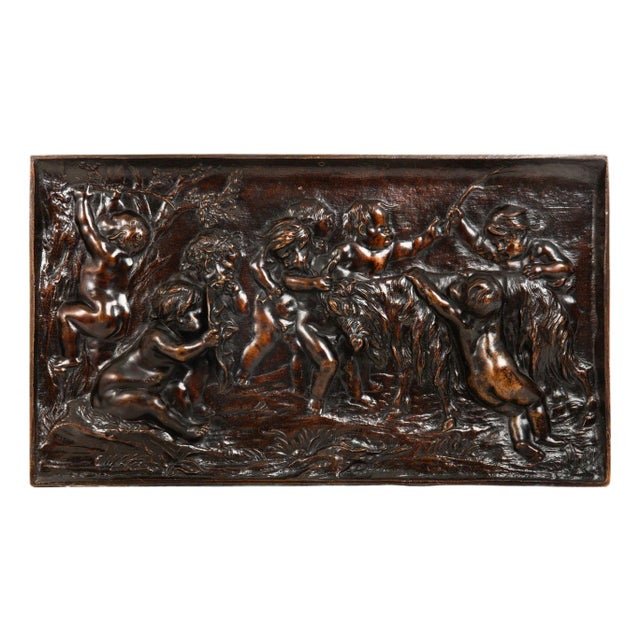
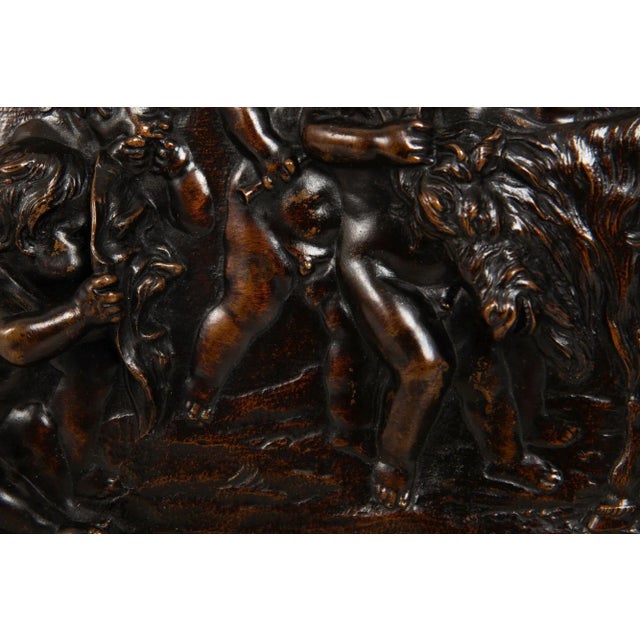
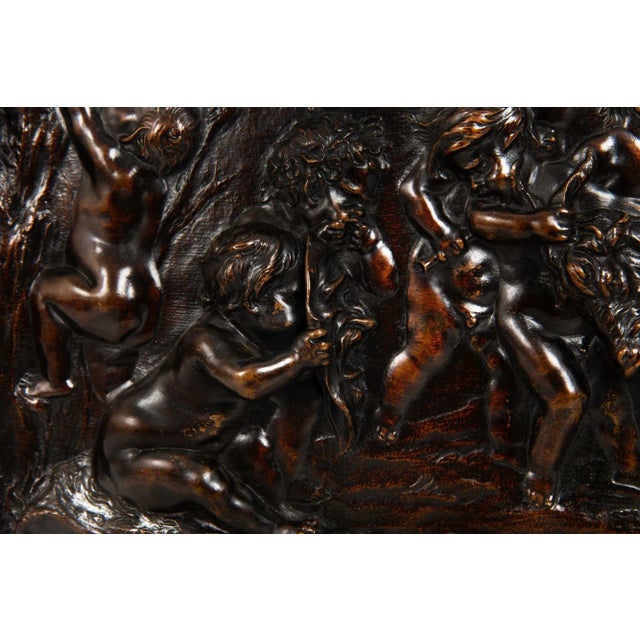
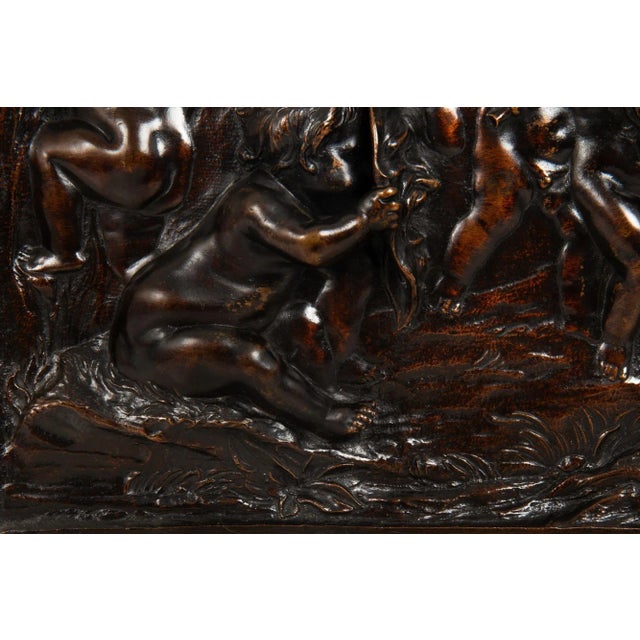
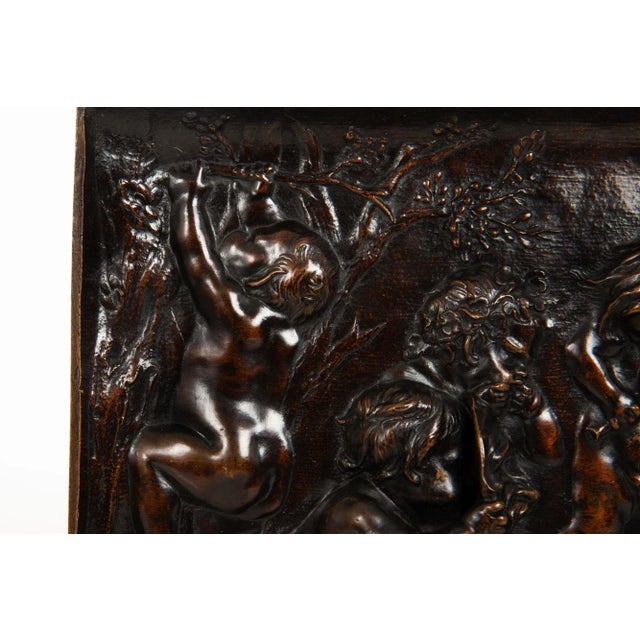
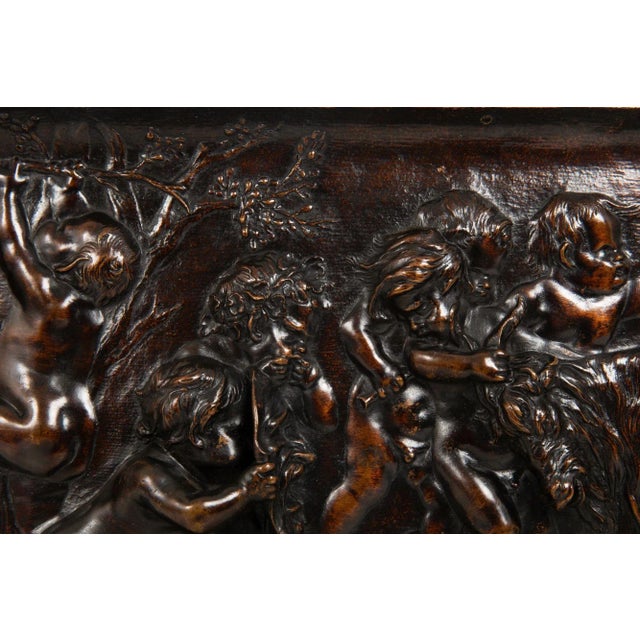
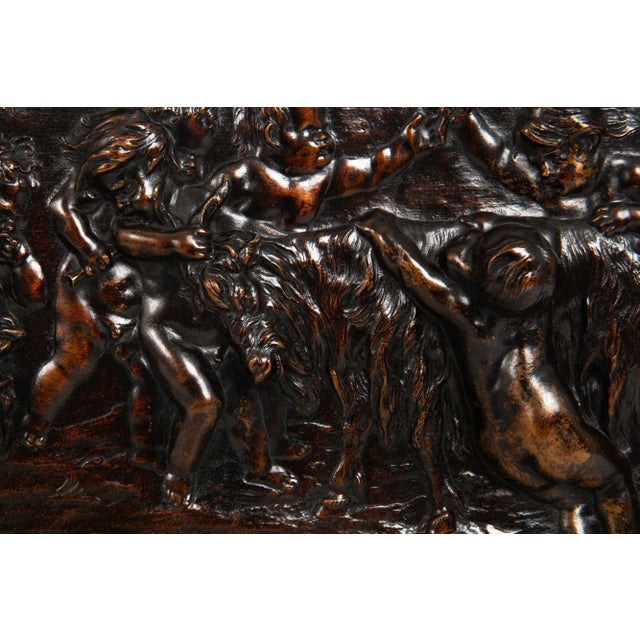
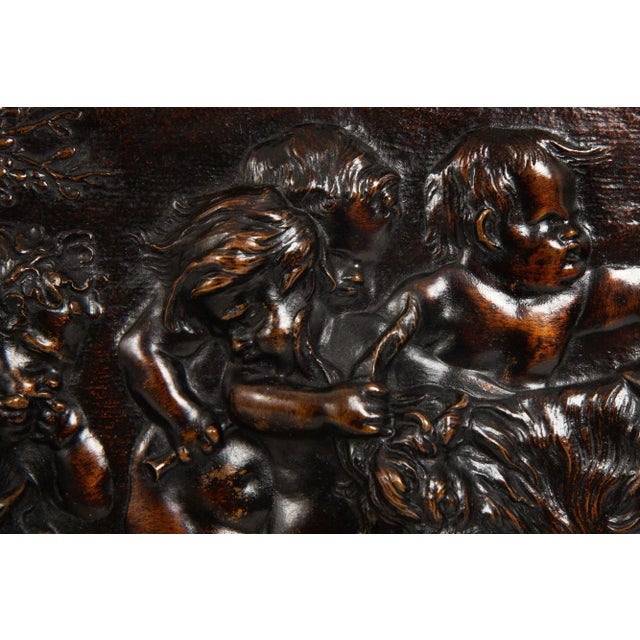
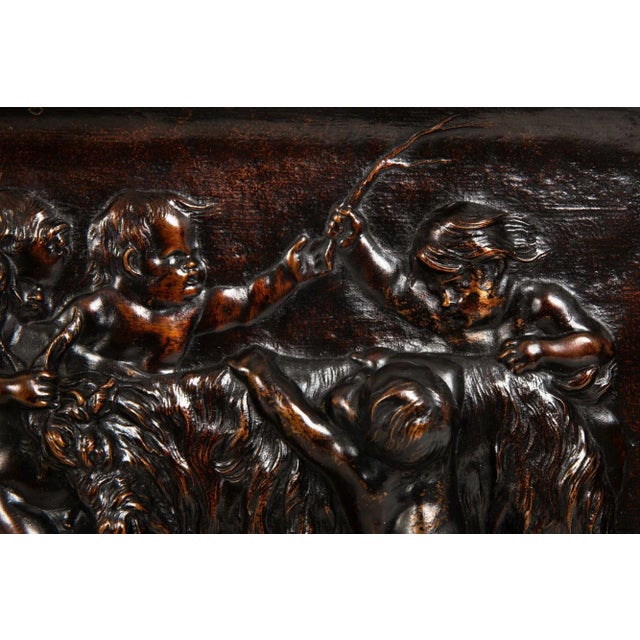
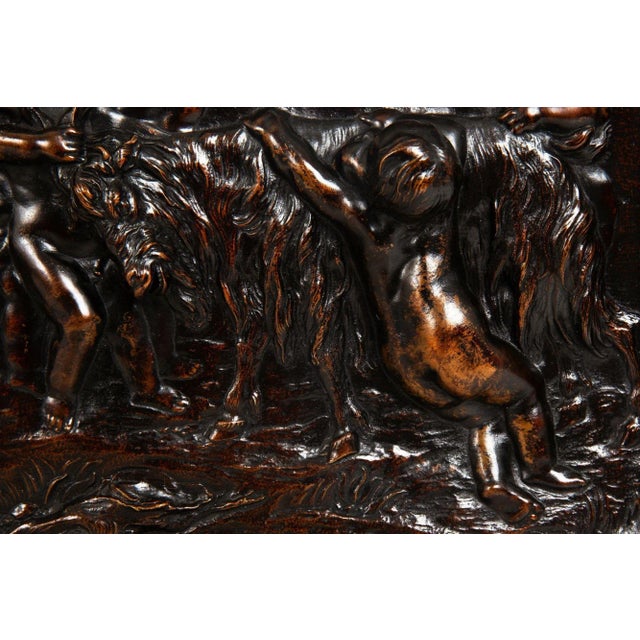
An exceedingly rare bas-relief of "Putti Tormenting a Goat"
Probably Italian, circa 18th century
Sand-cast …
Read more
AFTER FRANÇOIS DUQUESNOY
Flemish, 1594-1643
An exceedingly rare bas-relief of "Putti Tormenting a Goat"
Probably Italian, circa 18th century
Sand-cast bronze, chemical and lacquer patination
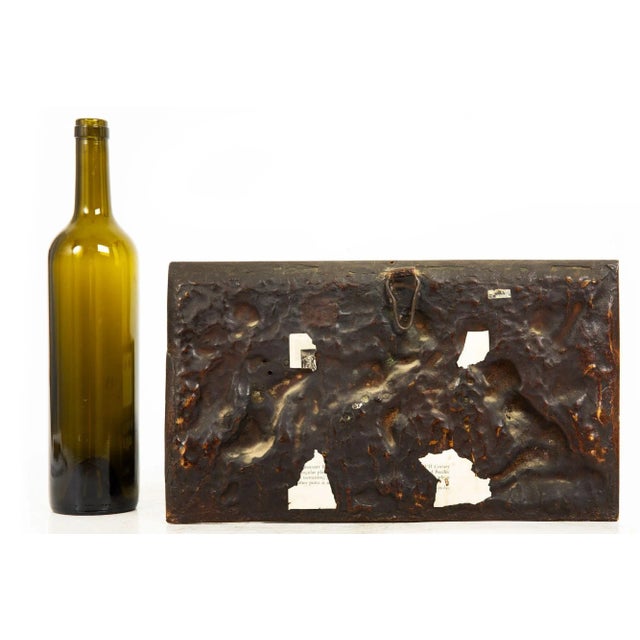
8 5/16" H x 14 3/8" W
Provenance:
Christie's, New York, 29 September 1999, sale 9214, lot 93, achieved $ 5,520
Private Collection
Almost undoubtedly cast from the same mold used for the example sold at Christie's, London, 19 September 2013, lot 443 (achieved 6,875 GBP or $ 10,920 USD at the time of the sale)
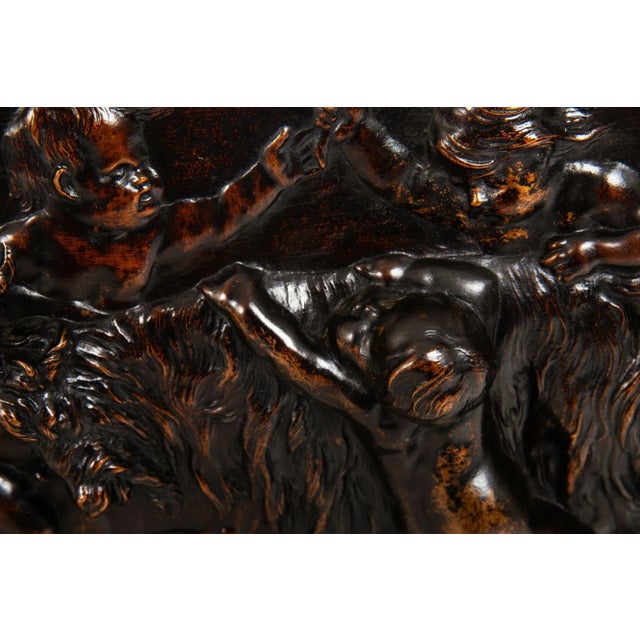
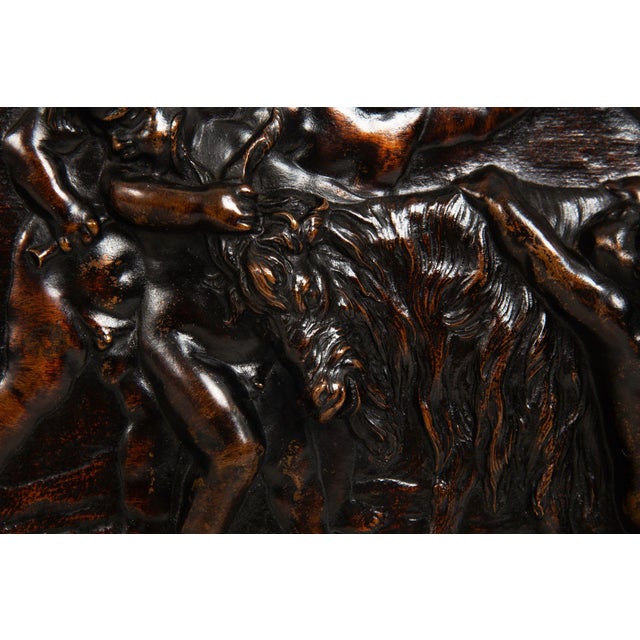
A rare and very finely cast bas-relief bronze plaque depicting a bacchic procession of putti, after the celebrated model by François Duquesnoy (1594–1643). The composition shows a humorous group of putti intensely focused on tormenting a goat. One boy is goading it on with a stick while another tries to grab it from his hand; one is dragging the unhappy goat by his horns while a boy behind him sports a stick with an unknown plan in mind. Directly in front of the goat is a pair of the boys, one making faces with his mouth, pulling at his lips to tease the goat while the other is crouched down within a satyrs mask trying to get his own reaction. Behind him another boy is stripping a fresh sapling from the tree behind them so he can have his own whip. The liveliness of the scene and sheer focus in the faces of the mischievous putti at the expense of the unfortunate goat is enough to put a regular smile on your face, no doubt the reason why the model was so well-received.
François Duquesnoy, a Flemish sculptor active in Rome during the first half of the seventeenth century, was renowned for his idealized portrayals of children. His nickname, fattore di putti (the maker of children) derives from the series of reliefs and small bronzes he produced of putti engaged in playful and bacchic themes. While Duquesnoy contributed to major commissions under Pope Urban VIII, including work at St. Peter’s in Rome alongside Gian Lorenzo Bernini, his reputation among collectors rested equally on these smaller-scale works.
The original marble version of this relief is located in the exedra of the theatre at the Villa Doria Pamphilj in Rome. Its success was immediate and enduring, inspiring later painters such as Gerrit Dou, Desportes, François Boucher, and Jean-Baptiste-Siméon Chardin, who adapted its playful imagery into their own compositions. Further versions in bronze are preserved in European collections, including the Skulpturensammlung in Dresden, attesting to the circulation and lasting appeal of the design. The subject reflects both Duquesnoy’s admiration for antiquity and his engagement with the Renaissance revival of Titian’s Bacchanals, which he and his contemporary Nicolas Poussin greatly admired. An example of this in bronze is held in the permanent collection of the Petit Palais, Musée des Beaux-arts de la Ville de Paris (acc. no. SDUT1329).
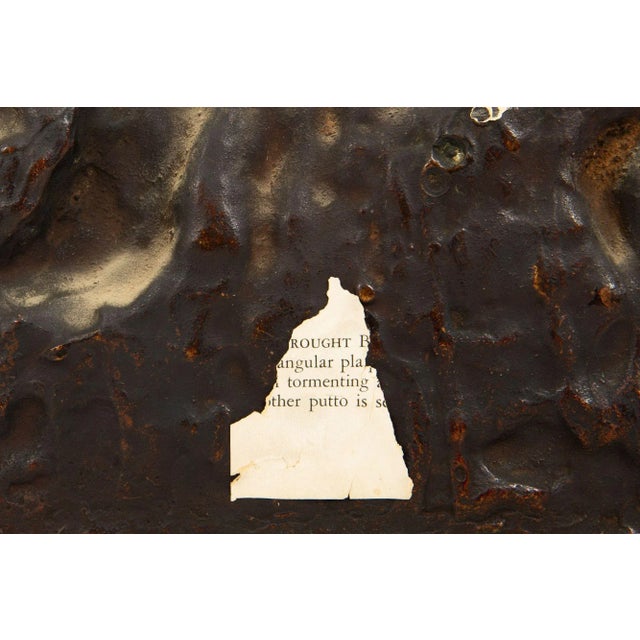
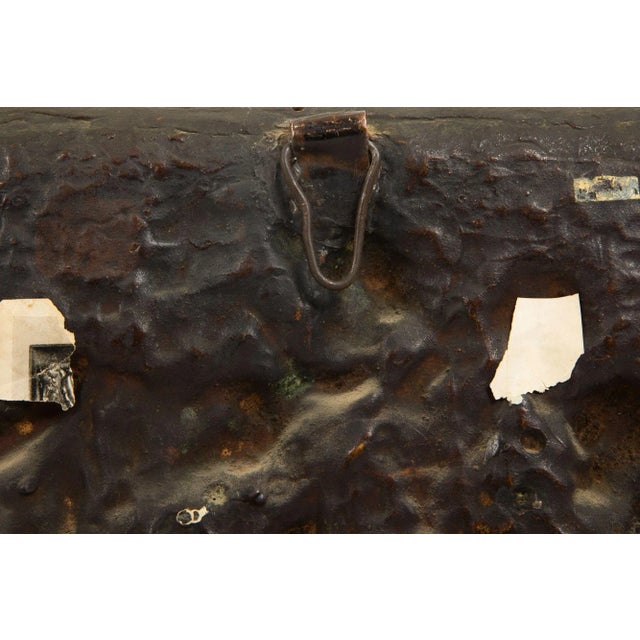
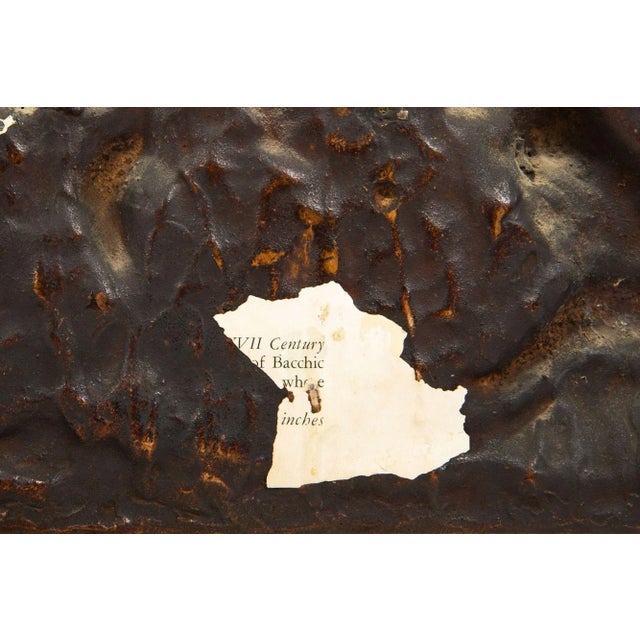
Condition: Rich old patina with rubbing to the figures throughout, particularly the raised hip of the rightmost putti. Originality of the patina is not known, but it is likely a very old repatination using lacquer over underlying chemical oxidization - very fine. Hole bored in mid-top of cove, probably for mounting in a frame. Iron hanging loop on reverse was likely added in the 19th century.
ref. 507CSH30Q
See less
- Dimensions
- 14.38ʺW × 1ʺD × 8.31ʺH
- Styles
- Baroque
- Period
- 18th Century
- Item Type
- Vintage, Antique or Pre-owned
- Materials
- Bronze
- Condition
- Good Condition, Original Condition Unaltered, Some Imperfections
- Color
- Bronze
- Condition Notes
- ich old patina with rubbing to the figures throughout, particularly the raised hip of the rightmost putti. Originality of the … moreich old patina with rubbing to the figures throughout, particularly the raised hip of the rightmost putti. Originality of the patina is not known, but it is likely a very old repatination using lacquer over underlying chemical oxidization - very fine. Hole bored in mid-top of cove, probably for mounting in a frame. Iron hanging loop on reverse was likely added in the 19th century. less
Questions about the item?
Returns & Cancellations
Return Policy - All sales are final 48 hours after delivery, unless otherwise specified in the description of the product.
Cancellation Policy - Prior to shipping or local pickup, buyers may cancel an order for up to 48 hours, unless otherwise specified.
Related Collections
- Maison Jansen Sculptural Wall Objects
- Ralph Lauren Sculptural Wall Objects
- Helmut Friedrich Schäffenacker Sculptural Wall Objects
- Dada Sculptural Wall Objects
- Medium-Density Fibreboard Sculptural Wall Objects
- Antique Copper Finish Sculptural Wall Objects
- Asian Sculptural Wall Objects
- Greg Copeland Sculptural Wall Objects
- Mid-Century Modern Sculptural Wall Objects
- Curtis Jere Sculptural Wall Objects
- Plaster Sculptural Wall Objects
- Brutalist Sculptural Wall Objects
- Japanese Sculptural Wall Objects
- Sarreid Ltd. Sculptural Wall Objects
- Wenge Sculptural Wall Objects
- Arteriors Home Sculptural Wall Objects
- The American School Sculptural Wall Objects
- Stainless Steel Sculptural Wall Objects
- Silverplate Sculptural Wall Objects
- Platinum Sculptural Wall Objects