




Details
Description
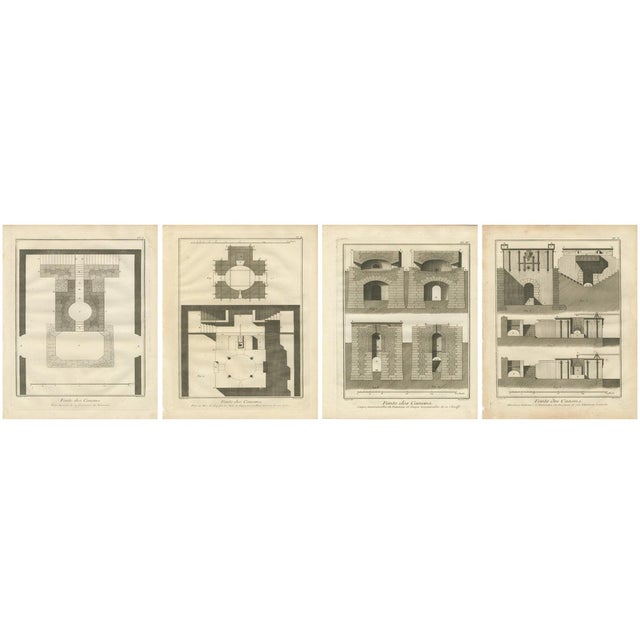
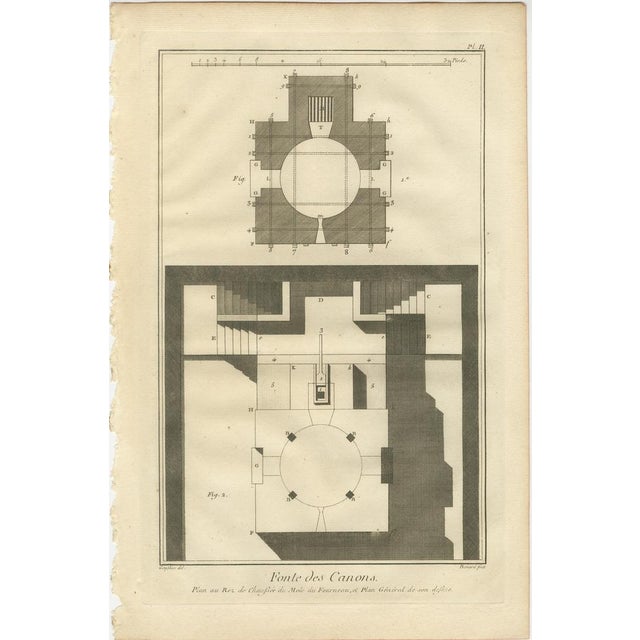
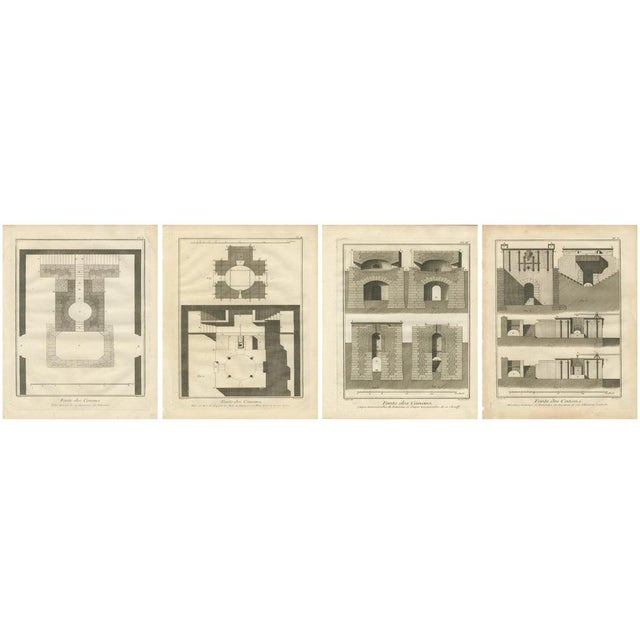
Title: Set of 1770s Cannon Foundry Engravings from Diderot’s Encyclopédie, France : This set of eighteenth-century engravings, titled Fonte des … Read more Title: Set of 1770s Cannon Foundry Engravings from Diderot’s Encyclopédie, France : This set of eighteenth-century engravings, titled Fonte des Canons, originates from Denis Diderot’s Encyclopédie, ou Dictionnaire raisonné des sciences, des arts et des métiers, an influential work that documented industrial, scientific, and artistic knowledge of the Enlightenment. Published between 1751 and 1772, the Encyclopédie sought to consolidate and disseminate the technical expertise of craftsmen, engineers, and scientists of the period. These engravings illustrate the highly sophisticated process of casting cannons, a crucial aspect of warfare and naval supremacy during the eighteenth century. The plates provide intricate technical details of a cannon foundry, showcasing the layout, mechanisms, and architectural elements required for smelting and molding artillery. Each engraving captures an essential aspect of cannon production, ranging from the foundational structure of the furnace to the vertical and cross-sectional schematics of the entire operation. The engravings highlight the methodical process of cannon casting, an area of military and industrial importance during the eighteenth century. The furnaces depicted were used to melt metals at extremely high temperatures, which were then cast into molds to form artillery pieces. The drawings emphasize the engineering ingenuity of the time, with attention given to ventilation, structural integrity, and molten metal flow. Each plate contains a variety of technical components, including: - Ground plans detailing the foundational layout of the foundry, showing the structure and brickwork of the furnace - Cross-sectional views of the heating chamber and the ventilation system used to maintain the proper temperature for metal casting - Elevations of the foundry, featuring bellows, pulley systems, and the intricate furnace mechanics used in cannon production - Structural details of the foundry, including stairways, fire pits, and reinforced vaults that contributed to the stability of the operation The detailed line work in these engravings demonstrates the precision of eighteenth-century printmaking. The engravings were likely produced under the direction of Diderot and his contributors, including artists and engravers who specialized in industrial and mechanical subjects. These plates provide an invaluable visual record of the scientific advancements that shaped the development of metallurgy and artillery in early modern Europe. Condition Report: The engravings are well preserved, with fine paper texture typical of high-quality eighteenth-century prints. The black ink remains crisp, preserving the clarity of the architectural details and mechanical components. There is light age-toning along the edges, a natural occurrence in prints of this age. Minor foxing is present but does not detract from the overall legibility and quality of the engravings. The margins remain intact, with no significant tears, stains, or repairs. Framing Recommendations To properly preserve and showcase these antique engravings, archival-quality materials are recommended. For matting and backing, use acid-free, museum-grade board to prevent further aging. A double mat with a neutral outer mat and a soft gray or deep brown inner accent will enhance the rich black tones of the engraving while highlighting the fine line work. A classic black, dark walnut, or antique-style wooden frame will complement the historical nature of the prints. A multi-panel display with matching frames could be an excellent way to exhibit the full set, emphasizing their technical and artistic value. To protect the engravings, UV-resistant museum glass or acrylic is recommended to prevent fading while maintaining clarity. Anti-reflective glass will ensure that the fine details remain fully visible without glare. For mounting, avoid adhesives that may damage the paper. Instead, use archival-quality corner mounts or Japanese paper hinges to secure the engravings safely without causing harm. These engravings should be displayed in a stable environment, away from direct sunlight, humidity, and temperature fluctuations. They would be ideally suited for libraries, engineering collections, military museums, or private collections focused on eighteenth-century industrial history. This rare set of cannon foundry engravings from Diderot’s Encyclopédie offers a fascinating glimpse into the scientific and industrial advancements of the Enlightenment. It is a valuable addition to collections dedicated to antique prints, military history, and early engineering innovations. See less
- Dimensions
- 10.24ʺW × 15.35ʺH
- Art Subjects
- Figure
- Item Type
- Vintage, Antique or Pre-owned
- Materials
- Paper
- Condition
- Unknown, Some Imperfections
- Color
- Black
- Condition Notes
- Very Good — This vintage item has no defects, but it may show slight traces of use\. Good. Light age-toning … moreVery Good — This vintage item has no defects, but it may show slight traces of use\. Good. Light age-toning along the edges, a natural occurrence in prints of this age. Minor foxing is present but does not detract from the overall quality of the engravings. The margins remain intact, with no significant tears, stains or repairs. less
Returns & Cancellations
Return Policy - All sales are final 48 hours after delivery, unless otherwise specified in the description of the product.
Cancellation Policy - Prior to shipping or local pickup, buyers may cancel an order for up to 48 hours, unless otherwise specified.
Related Collections
- George Barbier Original Prints
- Gustave Baumann Original Prints
- Silver Finish Original Prints
- Robert Kipniss Original Prints
- Rattan Original Prints
- Dye Transfer Original Prints
- Louis XIII Original Prints
- Johannes Kip Original Prints
- Medium-Density Fibreboard Original Prints
- Botanical Prints
- Framed Prints
- Bird Prints
- Woodblock Prints
- Screen Prints
- Japanese Woodblock Prints
- Thomas McKnight Original Prints
- Frank Stella Original Prints
- Teak Original Prints
- Chaim Gross Original Prints