


Details
Description
Some pieces feel miraculous simply for existing—this is one of them. Carved more than a century ago and weathered by …
Read more
Some pieces feel miraculous simply for existing—this is one of them. Carved more than a century ago and weathered by time, it carries a delicate grace and rarity almost never seen in folk art today, a survivor of a fragile tradition that left so few intact examples behind. The kind of piece collectors recognize instantly as irreplaceable.
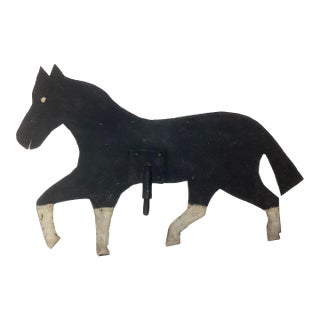
Likely from New England, this shorebird (Sandpiper) is carved from Eastern white pine and mounted on its original iron rod. This diminutive 13 × 7-inch example represents a particularly scarce survival in early American folk art. Wooden vanes—especially of this reduced scale—were inherently fragile, vulnerable to weather, decay, and fire. The smaller the form, the less likely it was to endure more than a few decades of exposure, making this intact specimen an extraordinary rarity.
Its surface bears traces of original black paint, now worn to a naturally oxidized ground with pleasing alligatoring and erosion. The crisp shorebird profile reflects the enduring popularity of waterfowl motifs in 19th-century Americana, where ducks, geese, and roosters symbolized abundance and rural prosperity.
Construction details, including the flat pine silhouette with mortised iron slot and pre-galvanized iron rod, align with late-19th-century small-shop production. Mounted on a rustic wooden block, the piece now reads as both architectural relic and sculptural folk art—a rare survivor from a class of objects seldom encountered in this condition or size.
Highlights
13”wide by 7” tall (body only)
Carved Eastern white pine shorebird vane, ca. 1880–1910
Retains original iron rod mount with natural rusting
Remnants of original black paint with oxidized surface
Rare survival of a fragile medium, most perished outdoors
Rustic block mount for display impact
Iconic Americana motif: waterfowl of abundance and prosperity
Condition: Weathered surface with paint loss and erosion; structurally intact; no modern restoration.
Provenance: Likely New England, ca. 1880–1910.
See less
- Dimensions
- 7ʺW × 1ʺD × 13ʺH
- Period
- Mid 19th Century
- Country of Origin
- United States
- Item Type
- Vintage, Antique or Pre-owned
- Materials
- Wood
- Condition
- Good Condition, Original Condition Unaltered, Some Imperfections
- Color
- Brown
- Condition Notes
- Its surface bears traces of original black paint, now worn to a naturally oxidized ground with pleasing alligatoring and erosion. … moreIts surface bears traces of original black paint, now worn to a naturally oxidized ground with pleasing alligatoring and erosion. Additionally, some minor non structural hairline wood splits (see images). less
Questions about the item?
Returns & Cancellations
Return Policy - All sales are final 48 hours after delivery, unless otherwise specified in the description of the product.