

Details
Description
A highly expressive Ashanti (Asante) Akua’ba fertility figure from Ghana, dating to circa 1930–1940, hand-carved in wood and embellished with …
Read more
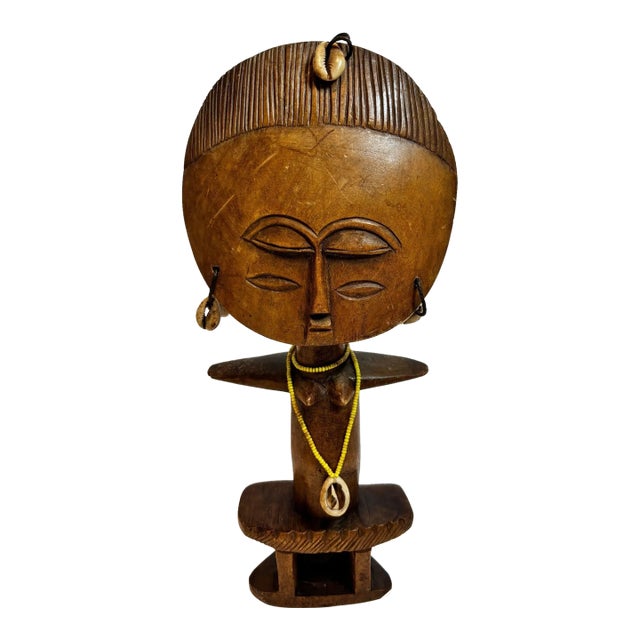
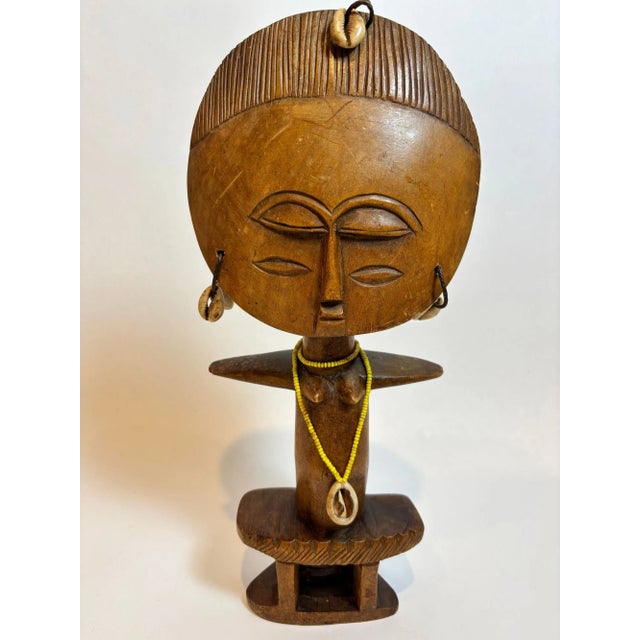
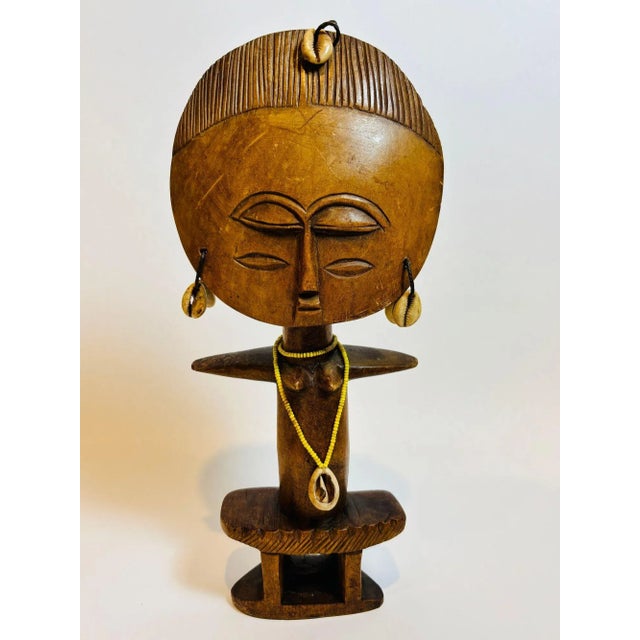
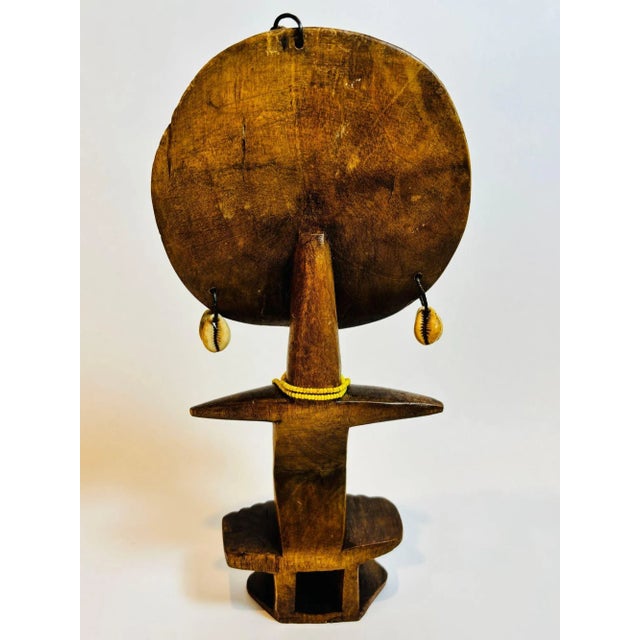
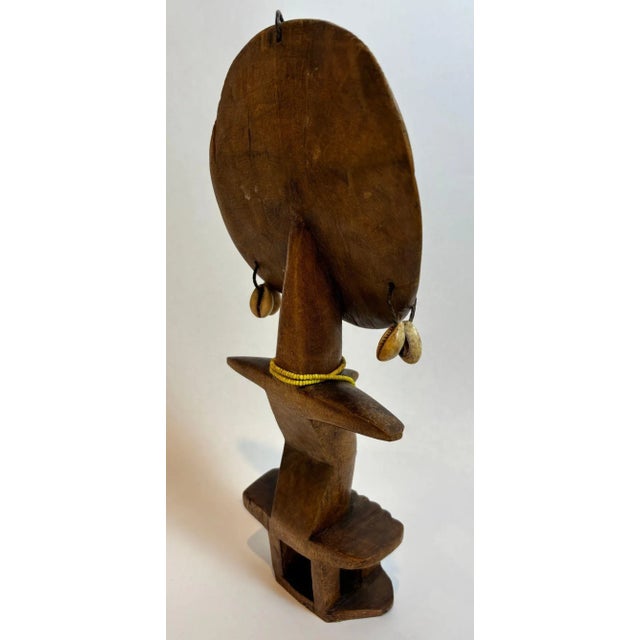
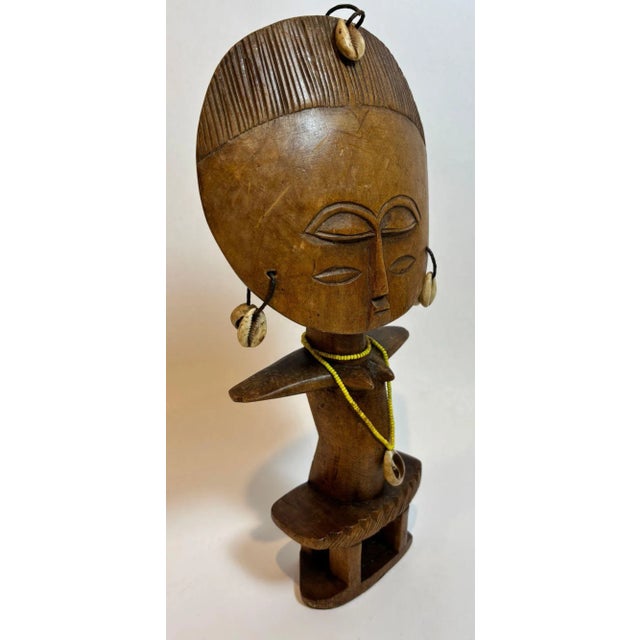
A highly expressive Ashanti (Asante) Akua’ba fertility figure from Ghana, dating to circa 1930–1940, hand-carved in wood and embellished with cowrie shells and beadwork. With its monumental disc-shaped head, stylized female body and warm aged surface, the figure presents a particularly decorative interpretation of one of the most recognizable sculptural traditions of West Africa.
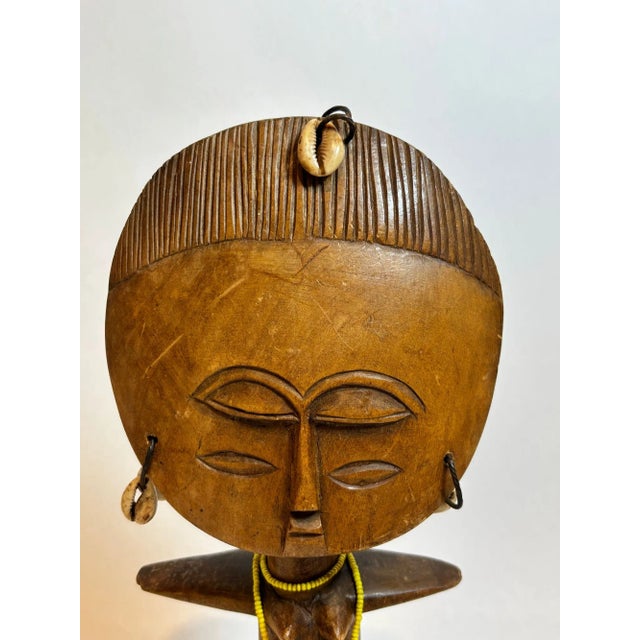
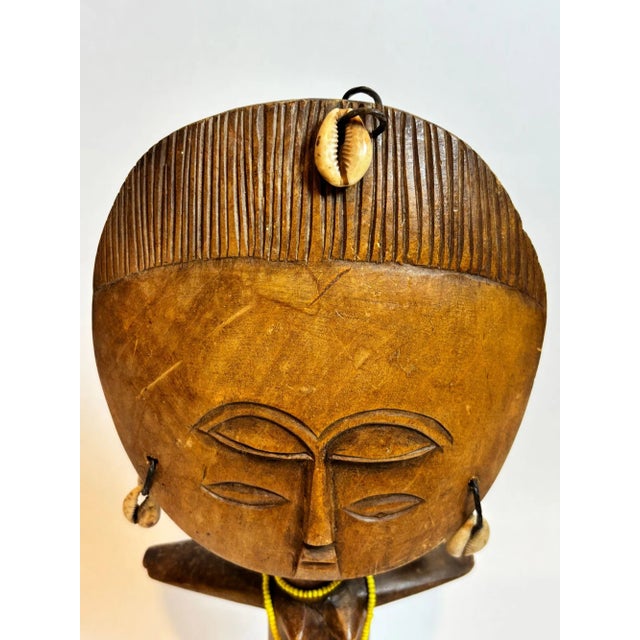
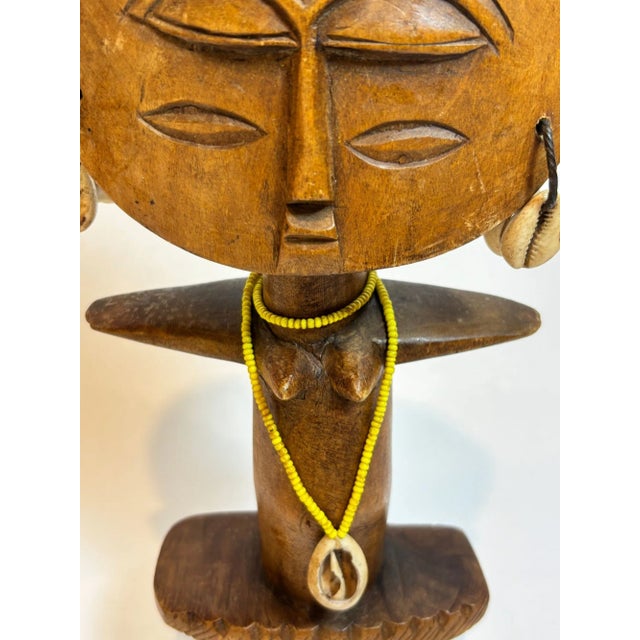
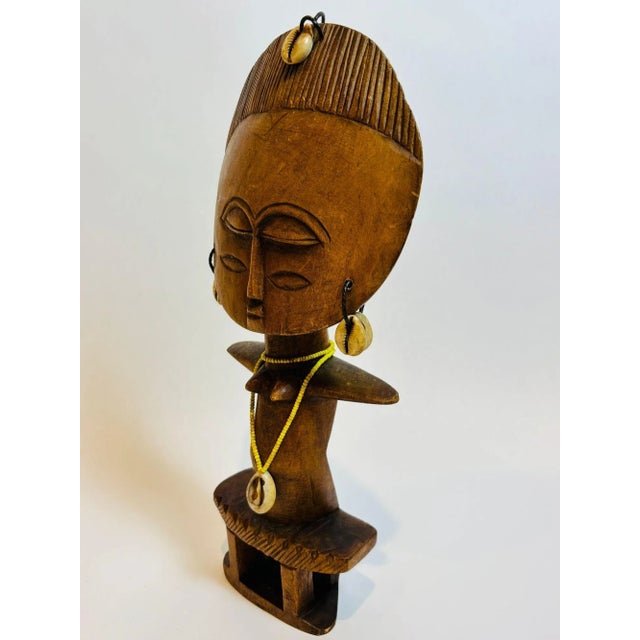
The composition is dominated by the characteristically enlarged, flattened head. A band of deeply incised vertical lines defines the coiffure across the upper portion, while the face is rendered with elegant geometric economy. Arched brows frame elongated almond-shaped eyes, with a slender projecting nose and small articulated mouth completing the restrained facial treatment.
Particularly interesting is the presence of additional smaller carved eye-like motifs beneath the principal eyes, giving this individual figure an unusually complex and compelling expression.
The figure is further ornamented with cowrie shells attached at the head and ears, while yellow beadwork encircles the neck and extends down the torso to a suspended cowrie shell. These additions introduce texture and contrast against the dark, richly patinated wood and contribute significantly to the object's visual character.
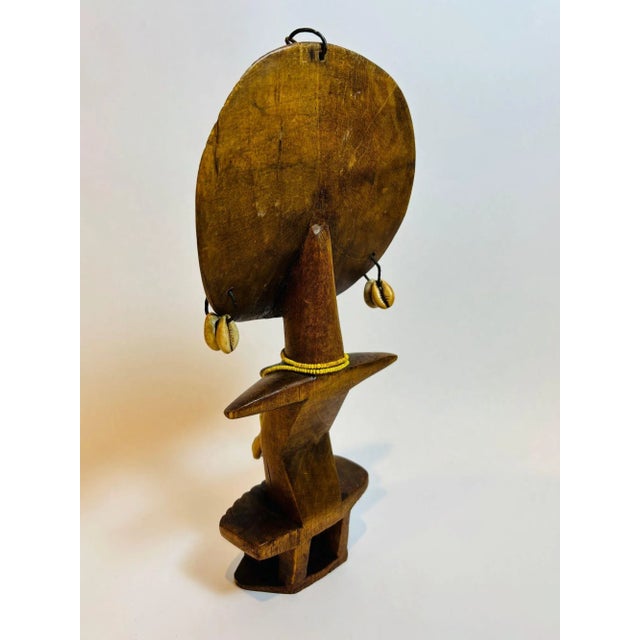
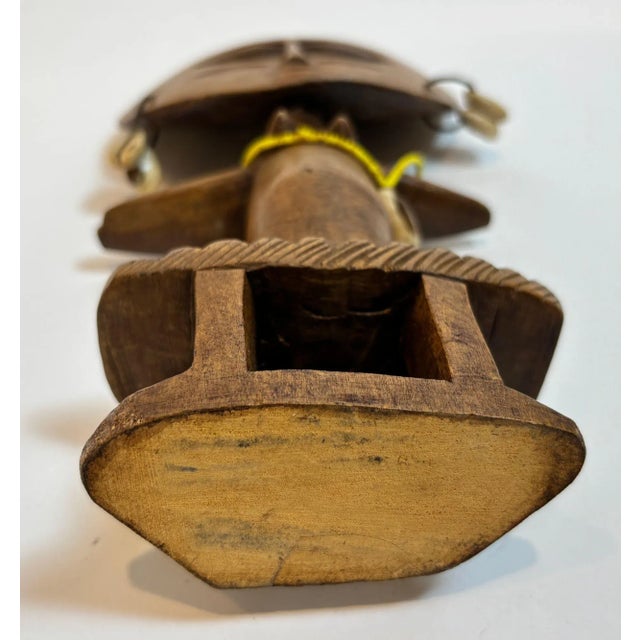
Below the head, the female body has been reduced to a powerful sequence of abstract geometric forms. The slender neck leads to dramatically extended horizontal arms, a narrow torso with indicated breasts, and a broad lower element supported above an open architectural base. Incised ornament along the edges provides an additional layer of hand-worked detail.
Within Asante culture, Akua’ba figures are traditionally associated with fertility, conception, pregnancy, childbirth and ideals of beauty and well-being. The name is connected with the well-known Akan story of a woman named Akua who desired a child and was advised to commission and care for a carved wooden figure as though it were her infant. Following the birth of her child, figures associated with this tradition became known as Akua’ba, commonly interpreted as “Akua’s child.”
Women wishing to conceive could carry such figures against the body and care for them symbolically. The sculptural characteristics of Akua’ba figures therefore extend beyond decoration: their exaggerated proportions and idealized features communicate cultural concepts surrounding fertility, beauty, health and motherhood.
This example is especially compelling because of the relationship between pure geometric abstraction and personal adornment. The enormous circular head, narrow vertical torso and projecting horizontal arms create an almost Modernist silhouette, while the shells, beads, incised coiffure and naturally aged surface preserve the tactile character of a hand-carved cultural object.
The wood displays a handsome deep brown patina with lighter areas of wear, surface variations, scratches and handling marks consistent with age. These characteristics should be retained rather than over-restored, as they contribute considerably to the figure's visual depth.
African sculpture of this type became enormously influential within the development of European and American Modernism, and the radical abstraction of the Akua’ba form continues to appeal to collectors of both African art and 20th-century design.
At 13.25 inches high, this figure is particularly well suited to display on a console, pedestal, library shelf or within a collection of African and ethnographic art. Its strong frontal silhouette also makes it an excellent sculptural accent within a contemporary, Modernist, Wabi-Sabi or sophisticated eclectic interior.
Dimensions: 13.25 in. H × 6.5 in. W × 2.5 in. D
Origin: Ghana
Culture: Ashanti / Asante, Akan
Date: circa 1930–1940
Materials: Carved wood, cowrie shells and beadwork
Condition: Very good condition consistent with age, retaining natural surface wear and patina.
See less
- Dimensions
- 6.5ʺW × 2.5ʺD × 13.25ʺH
- Period
- Early 20th Century
- Country of Origin
- Ghana
- Item Type
- Vintage, Antique or Pre-owned
- Materials
- Wood
- Condition
- Good Condition, Original Condition Unaltered, Some Imperfections
- Color
- Brown
- Condition Notes
- good good less
Questions about the item?
Returns & Cancellations
Return Policy - All sales are final 48 hours after delivery, unless otherwise specified in the description of the product.
Cancellation Policy - Prior to shipping or local pickup, buyers may cancel an order for up to 48 hours, unless otherwise specified.
Related Collections
- Helmut Friedrich Schäffenacker Sculptural Wall Objects
- Antique Copper Finish Sculptural Wall Objects
- Medium-Density Fibreboard Sculptural Wall Objects
- Dada Sculptural Wall Objects
- Maison Jansen Sculptural Wall Objects
- Ralph Lauren Sculptural Wall Objects
- Asian Sculptural Wall Objects
- Greg Copeland Sculptural Wall Objects
- Mid-Century Modern Sculptural Wall Objects
- Curtis Jere Sculptural Wall Objects
- Plaster Sculptural Wall Objects
- Brutalist Sculptural Wall Objects
- Japanese Sculptural Wall Objects
- Sarreid Ltd. Sculptural Wall Objects
- Wenge Sculptural Wall Objects
- Arteriors Home Sculptural Wall Objects
- Stainless Steel Sculptural Wall Objects
- Silverplate Sculptural Wall Objects
- Platinum Sculptural Wall Objects
- The American School Sculptural Wall Objects