

Details
Description
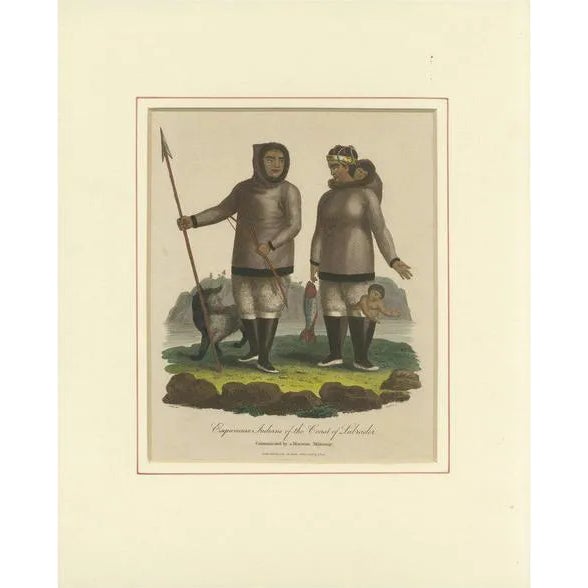
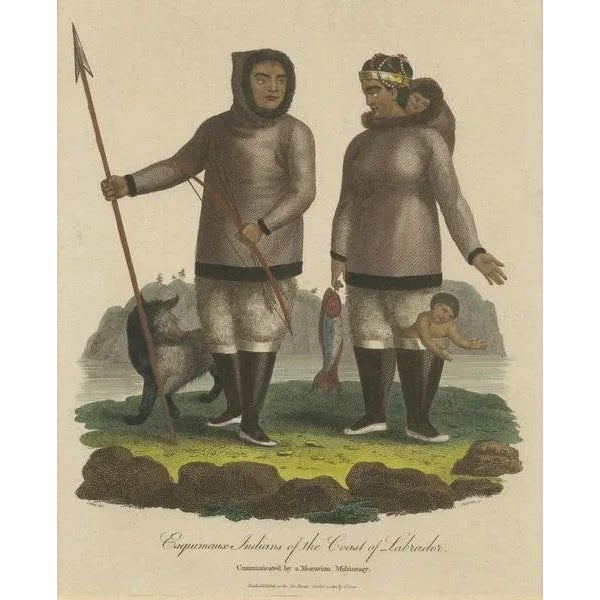
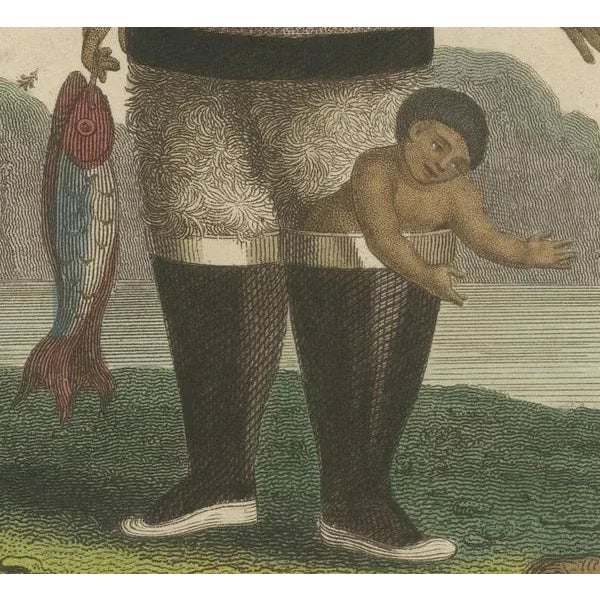
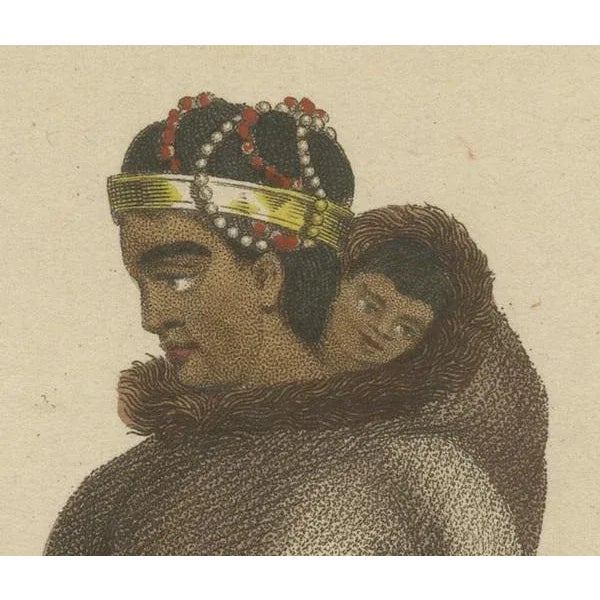
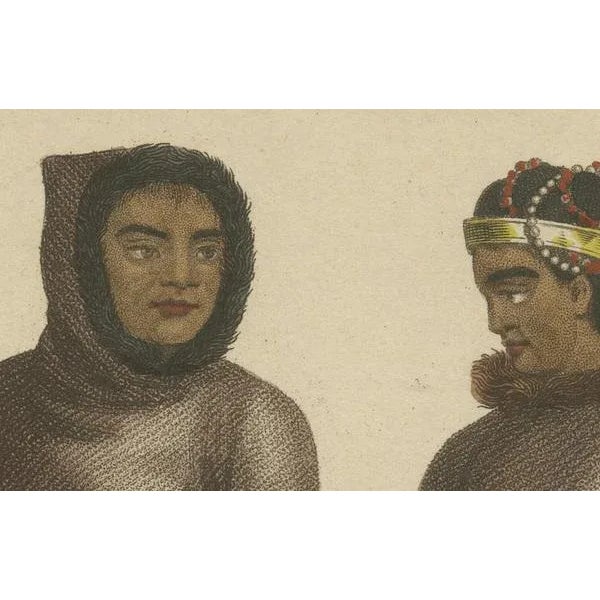
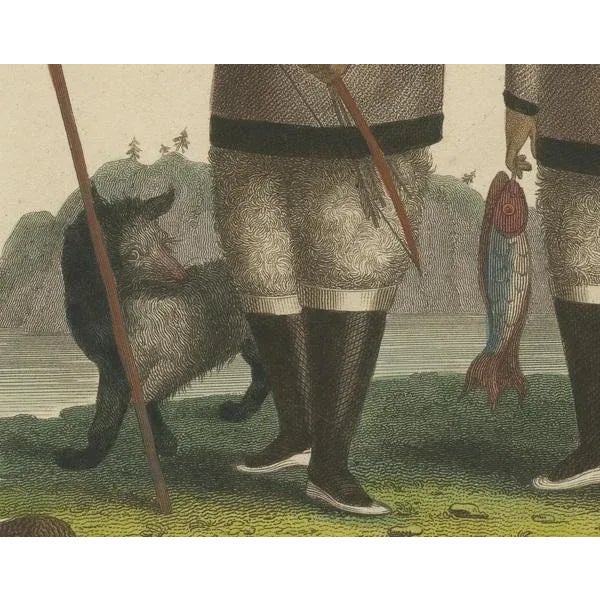
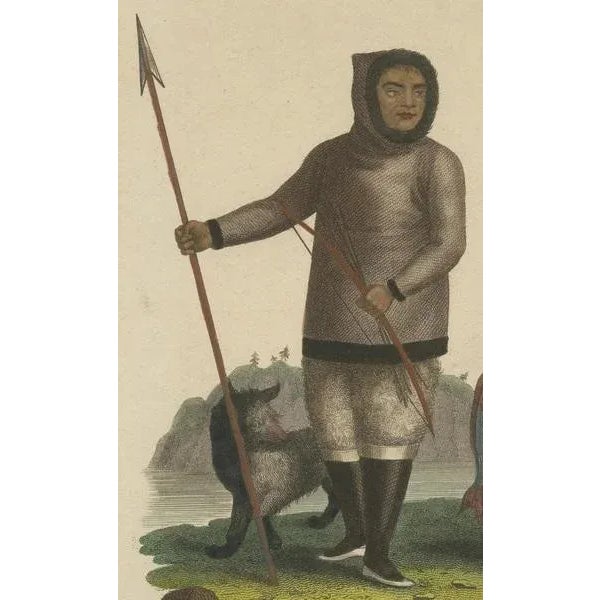
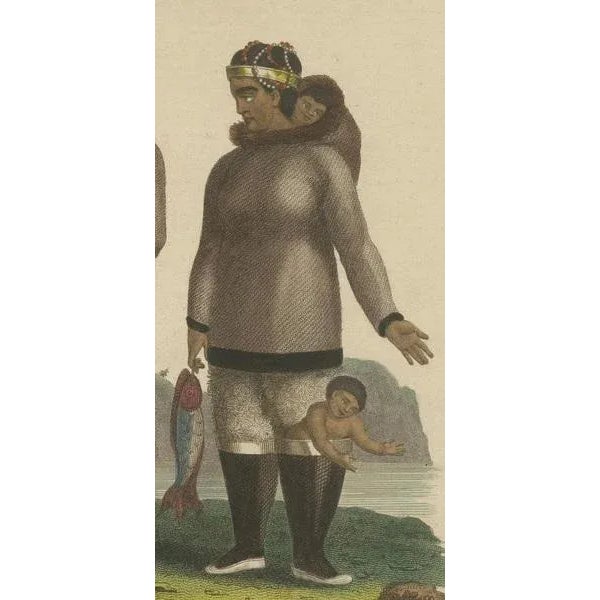
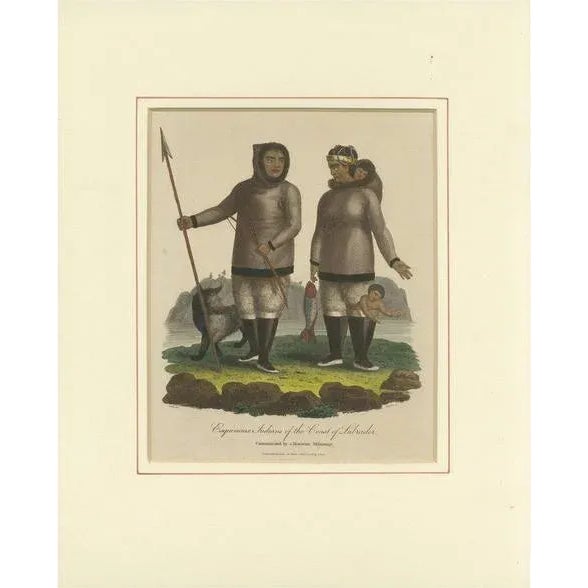
This original hand-colored engraving for sale is a historical print, depicting two indigenous individuals, likely Inuit, referred to in the … Read more This original hand-colored engraving for sale is a historical print, depicting two indigenous individuals, likely Inuit, referred to in the print as "Esquimaux Indians of the coast of Labrador." The scene suggests a representation from the early 19th century, communicated by a Moravian Missionary, which indicates it was likely used to document the people and culture encountered by missionaries in that region. The individuals are dressed in traditional clothing suitable for cold climates, which may include fur-lined parkas. One of them is holding a spear, suggesting hunting as part of their lifestyle. Additionally, there are two small figures of an animal and a child, contributing to the narrative of the scene. The print also includes specific publishing information, stating that it was published in London, as per the Act directs, on October 17, 1812, by G. Jones. Such prints were common in the period for educational and reporting purposes, providing visual documentation of indigenous peoples to audiences unfamiliar with them. The Inuit are indigenous peoples who inhabit the Arctic regions of Greenland, Canada, and Alaska. In Labrador, which is part of the Canadian province of Newfoundland and Labrador, the Inuit have a distinct history and culture. Historically, the Inuit in Labrador have been known as the Labrador Inuit. They traditionally lived in coastal areas, where they engaged in subsistence hunting and fishing. Their survival relied heavily on the hunting of sea mammals such as seals, whales, and walruses, as well as fishing and caribou hunting. They are also known for their skill in navigating and surviving the extreme conditions of the Arctic using tools and techniques passed down through generations. The Labrador Inuit have unique cultural practices, including the construction of igloos, the crafting of kayaks and umiaks (larger open boats), and the creation of intricate clothing designed to protect against the harsh Arctic climate. Their social structure was traditionally organized around families and extended kinship networks. In the 18th and 19th centuries, Moravian missionaries from Germany established missions along the coast of Labrador to convert the Inuit to Christianity. The missionaries also played a role in documenting the language and culture of the Inuit, as well as providing education and medical care. Today, the Labrador Inuit are represented politically by the Nunatsiavut Government, which is an autonomous Inuit region established in 2005 through the Labrador Inuit Land Claims Agreement. This agreement provided the Labrador Inuit with self-government in certain areas and ownership of lands known as Nunatsiavut ("Our Beautiful Land"). The Labrador Inuit maintain a strong cultural identity, with efforts to preserve their language (Inuttitut, a dialect of Inuktitut), traditions, and heritage, while also adapting to contemporary challenges and opportunities. The print is loosely attached to a decorative and protective mounting board. See less
- Dimensions
- 8.27ʺW × 10.63ʺH
- Period
- 19th Century
- Item Type
- Vintage, Antique or Pre-owned
- Materials
- Paper
- Condition
- Good Condition, Unknown, Some Imperfections
- Color
- Black
Returns & Cancellations
Return Policy - All sales are final 48 hours after delivery, unless otherwise specified in the description of the product.
Cancellation Policy - Prior to shipping or local pickup, buyers may cancel an order for up to 48 hours, unless otherwise specified.
Related Collections
- Le Corbusier Posters
- Baroque Posters
- Posters in Savannah
- Posters in Naples, FL
- Silk Posters
- Ceramic Posters
- Screen Print Posters
- Marc Chagall Posters
- Art Deco Posters
- Mid-Century Modern Posters
- Posters in Los Angeles
- Mark Rothko Posters
- Pablo Picasso Posters
- French Posters
- Milton Avery Posters
- Peter Max Posters
- Museum Posters
- Lee Krasner Posters
- Polish Posters
- Japanese Posters
- Keith Haring Posters
- Framed Posters
- Posters in Orlando
- Woodcut Posters