

Details
Description
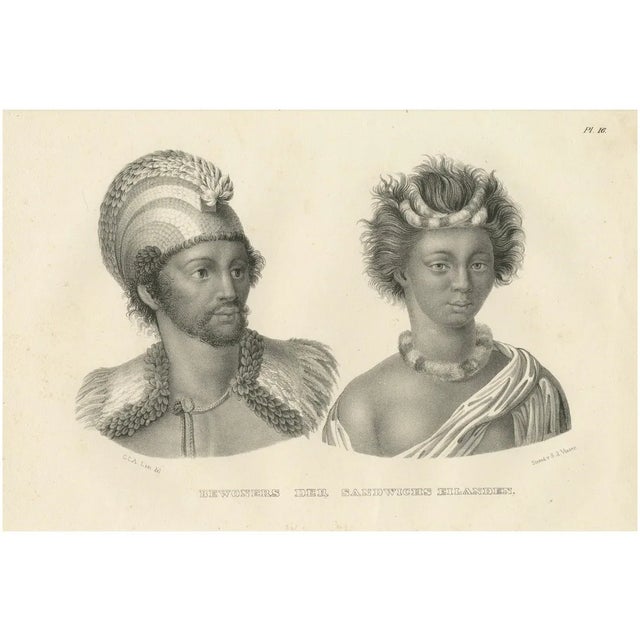
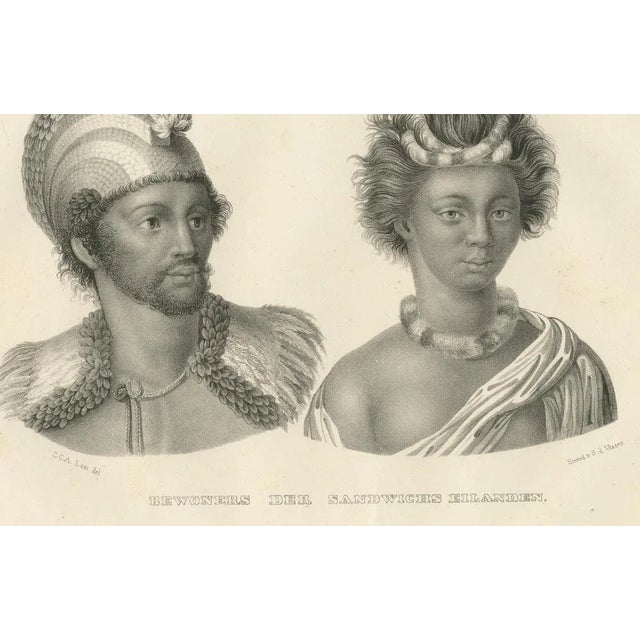
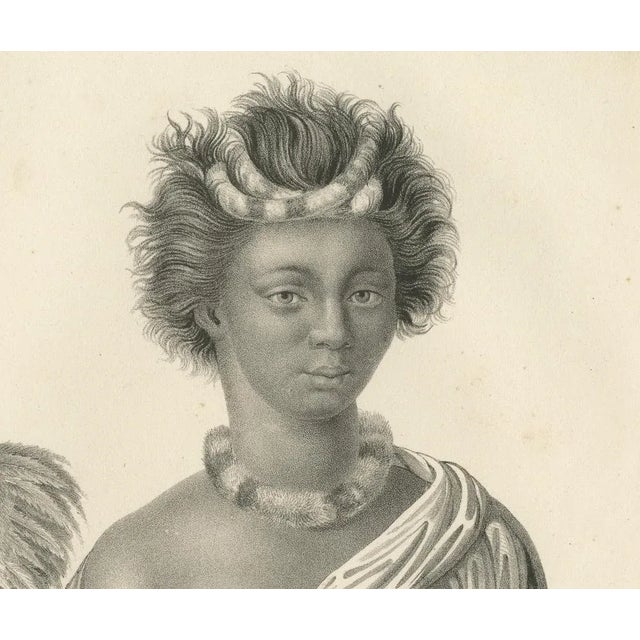
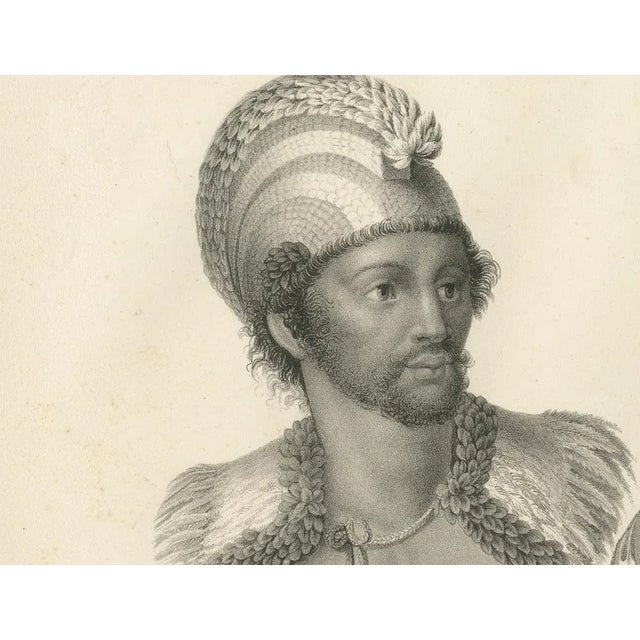
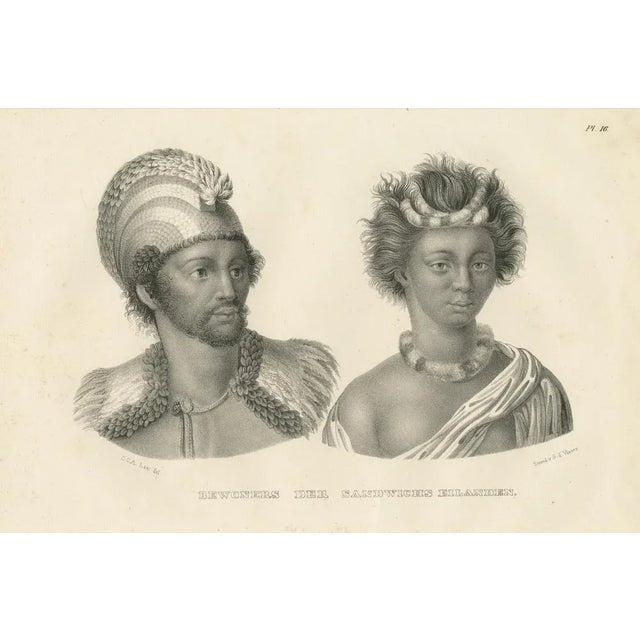
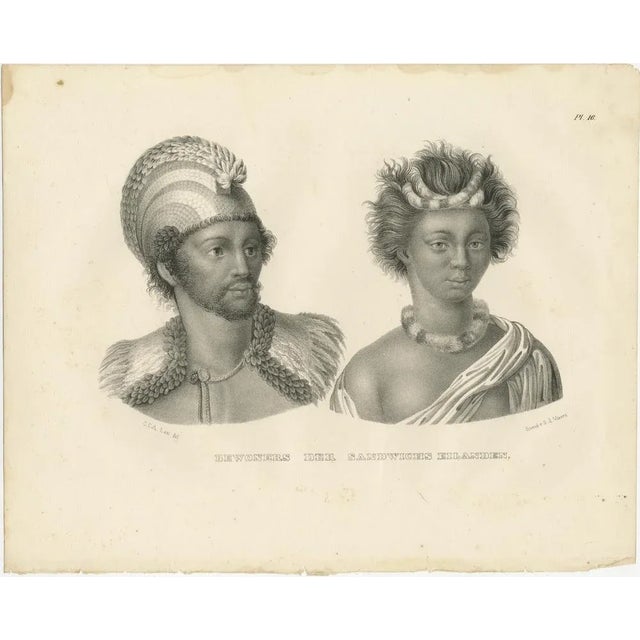
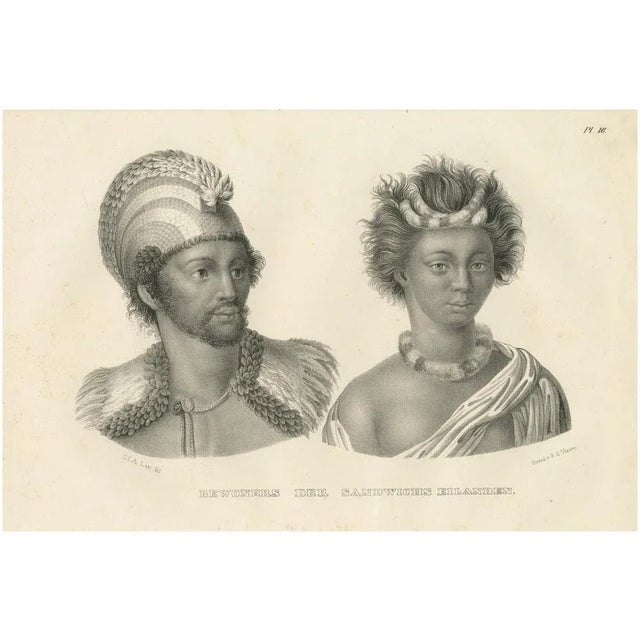
This lithograph by Karl Joseph Brodtmann depicts two individuals from the Sandwich Islands, now known as Hawaii. The artwork reflects … Read more This lithograph by Karl Joseph Brodtmann depicts two individuals from the Sandwich Islands, now known as Hawaii. The artwork reflects Brodtmann’s ethnographic interest in documenting the appearance, clothing, and adornments of the indigenous peoples of the Pacific Islands, particularly during the period of European exploration and contact in the 19th century. : The lithograph presents two detailed portraits of Hawaiian individuals, identified as inhabitants of the Sandwich Islands. These figures are shown in traditional attire and headdresses, showcasing both their individual features and the cultural symbols of status or identity in Hawaiian society. 1. Man (left): The male figure is adorned with a feathered headdress, likely made from native bird feathers, which were symbols of high status in Hawaiian society. The craftsmanship and pattern of the feathers suggest that this man could be a figure of some importance, such as a chief or noble. He also wears a feathered cape, another item traditionally associated with Hawaiian nobility, known as an ‘ahu‘ula. His face is calm and dignified, with a beard and short, curly hair beneath the headdress. 2. Woman (right): The woman is depicted wearing a simple yet elegant adornment, including a lei around her neck made of what appears to be feathers or other natural materials. Her clothing is draped across her shoulder, similar to traditional Hawaiian garments made from kapa (barkcloth). Her hair is worn in a natural, voluminous style, and her expression is serene, reflecting the calm and dignified portrayal common in European depictions of indigenous peoples at the time. The lithograph emphasizes both the distinct physical features and the cultural attire of the Hawaiian people, focusing on the detailed rendering of their adornments and garments. Maker: Karl Joseph Brodtmann (1787–1862) was a Swiss lithographer known for his detailed work in ethnographic and natural history illustration. His works were widely appreciated in scientific circles during the 19th century and contributed to European knowledge of non-Western peoples. Brodtmann’s ethnographic portraits, such as this one, provided European audiences with visual records of the cultural diversity encountered during the age of exploration. Technique and Style: This lithograph was created using lithography, a printmaking technique that allows for the detailed rendering of textures, such as the feathered headdress and lei. Brodtmann’s style is characterized by ethnographic realism, where the subjects are portrayed with a focus on accuracy and cultural markers, balanced with a romanticized European view of foreign cultures. The careful shading and detailing of the clothing, headdresses, and facial features give the figures a lifelike quality. Cultural Context: The Sandwich Islands, now known as Hawaii, were first encountered by Europeans in the late 18th century during the voyages of Captain James Cook. The islands were named after John Montagu, 4th Earl of Sandwich, by Cook. The individuals depicted in this lithograph are likely members of the Hawaiian nobility, as their feathered attire—particularly the feathered cloaks and headdresses—were reserved for high-ranking chiefs (ali‘i) in Hawaiian society. Feathered garments, such as the ones shown here, were highly prized in Hawaiian culture and were symbols of power and prestige. These garments were crafted from the feathers of native birds, including the ‘i‘iwi and ‘ō‘ō, which were often gathered by bird catchers who played an important role in Hawaiian society. The lei, also depicted in the portrait of the woman, was (and still is) a significant cultural symbol in Hawaii, used to show affection, respect, or honor. This lithograph, like others in Brodtmann’s ethnographic series, would have served as both an artistic and scientific representation, providing European audiences with insight into the appearance, dress, and cultural practices of the Hawaiian people during a period of increasing contact with the Western world. See less
- Dimensions
- 10.24ʺW × 12.6ʺH
- Art Subjects
- Portrait
- Period
- Early 19th Century
- Item Type
- Vintage, Antique or Pre-owned
- Materials
- Paper
- Condition
- Good Condition, Unknown, Some Imperfections
- Color
- Black
- Condition Notes
- Very Good — This vintage item has no defects, but it may show slight traces of use\. Condition: good, given … moreVery Good — This vintage item has no defects, but it may show slight traces of use\. Condition: good, given age. General age-related toning and/or occasional minor defects from handling. Some stains along the right border, not affecting the image. Please study scan carefully. less
Returns & Cancellations
Return Policy - All sales are final 48 hours after delivery, unless otherwise specified in the description of the product.
Cancellation Policy - Prior to shipping or local pickup, buyers may cancel an order for up to 48 hours, unless otherwise specified.
Related Collections
- Soicher Marin Original Prints
- Rattan Original Prints
- Medium-Density Fibreboard Original Prints
- Silver Finish Original Prints
- Robert Kipniss Original Prints
- Dye Transfer Original Prints
- Original Prints in Panama City, FL
- Ralph Lauren Original Prints
- Original Prints in Salt Lake City
- Original Prints in Lexington, KY
- Damien Hirst Original Prints
- Sam Francis Original Prints
- Johannes Kip Original Prints
- Botanical Prints
- Framed Prints
- Bird Prints
- Woodblock Prints
- Screen Prints
- Japanese Woodblock Prints
- Thomas McKnight Original Prints
- George Barbier Original Prints
- Frank Stella Original Prints
- Gustave Baumann Original Prints
- Teak Original Prints
- Chaim Gross Original Prints