

Details
Description
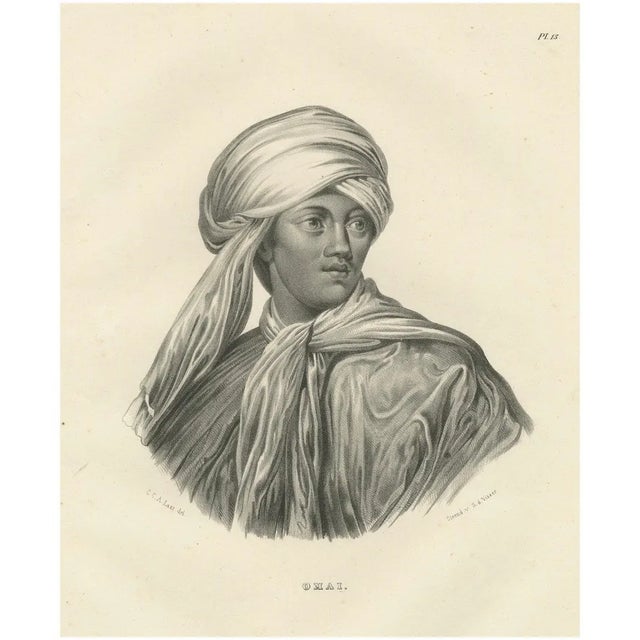
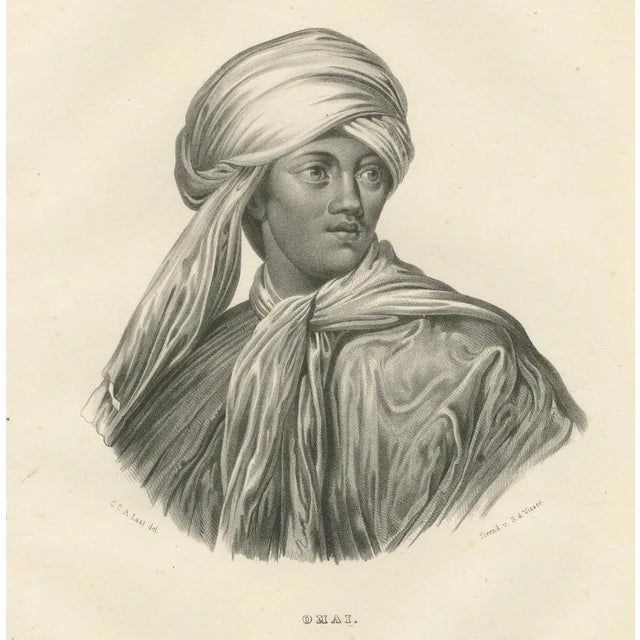
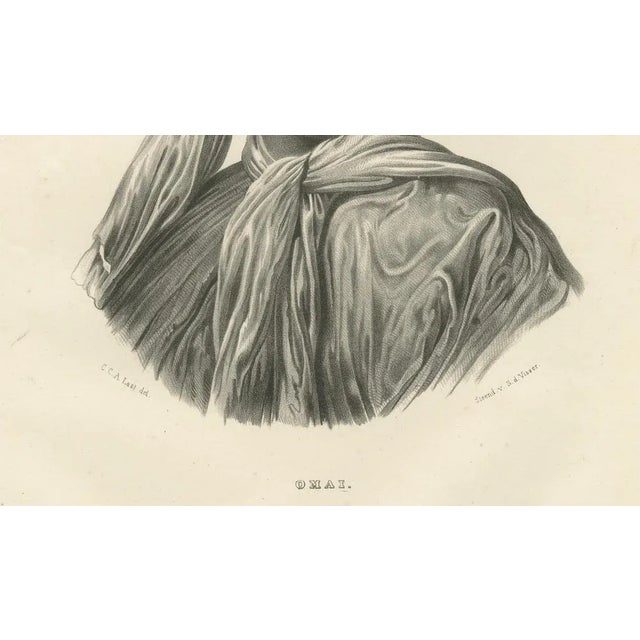
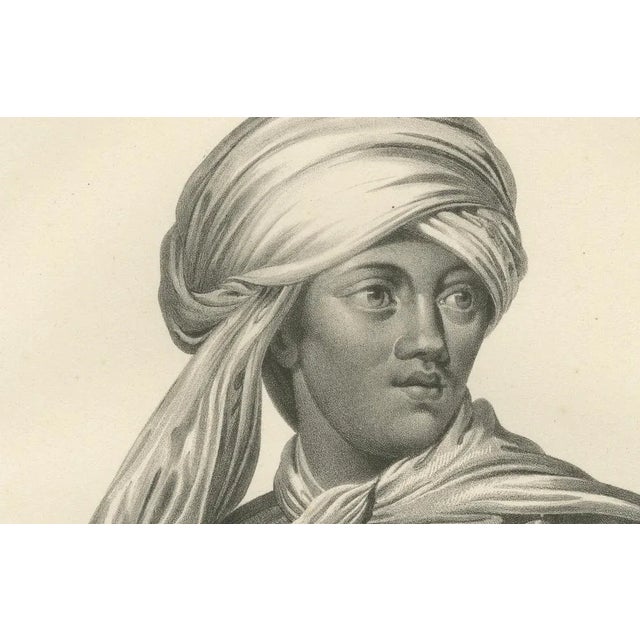
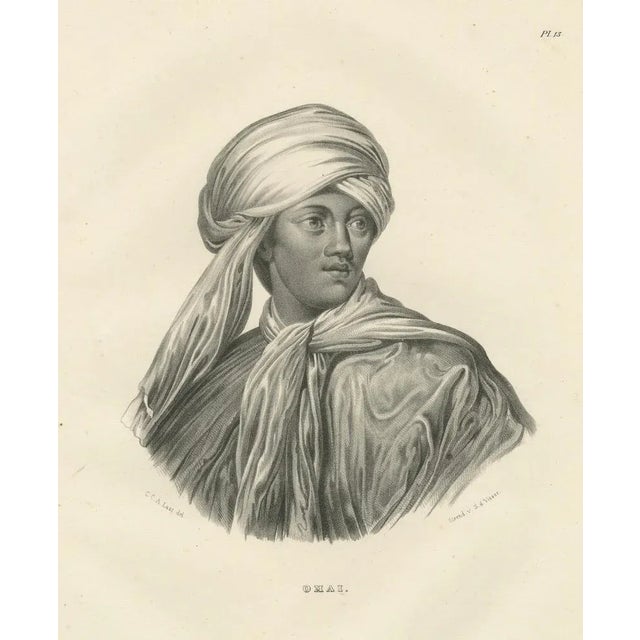
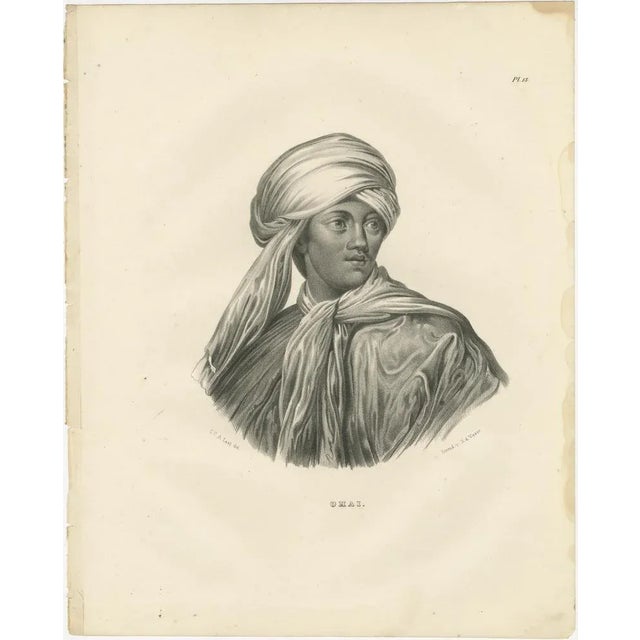
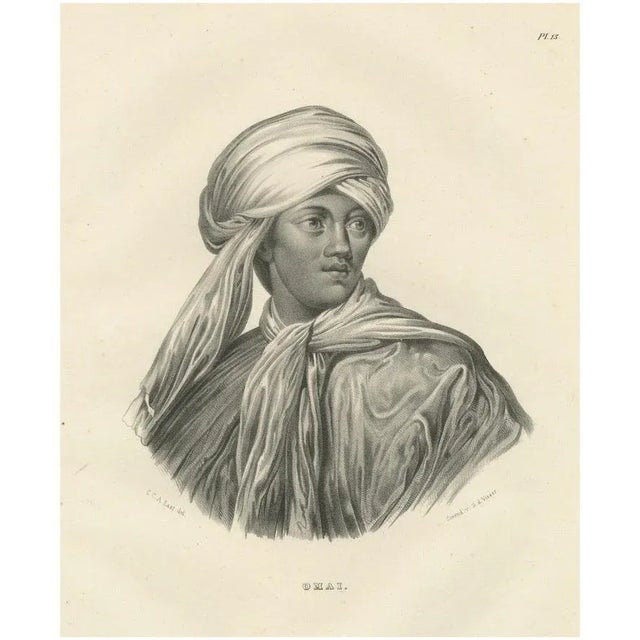
This lithograph, titled Omai, by Karl Joseph Brodtmann, is an example of the artist’s ethnographic studies, showcasing a portrait of … Read more This lithograph, titled Omai, by Karl Joseph Brodtmann, is an example of the artist’s ethnographic studies, showcasing a portrait of Omai, a notable figure from Polynesia who visited Europe in the 18th century. This work highlights Brodtmann’s interest in portraying individuals from distant lands, focusing on their unique cultural attire and expressions. : The portrait represents Omai, a Polynesian man who gained historical significance during the 18th century as one of the first Polynesians to travel to Europe. Omai (also known as Mai) was a central figure in the encounters between Polynesian and European cultures, having been brought to England by Captain James Cook in the 1770s. - Clothing: Omai is depicted in an elegant wrap of flowing fabric, draped around his shoulders and tied in a loose, elegant fashion. His head is adorned with a large turban, a stylistic interpretation that may have been influenced by European artistic conventions when portraying foreign dignitaries or exotic figures. The fabric's folds and shading add a sense of depth and texture, showcasing Brodtmann’s mastery of lithography. - Expression: Omai’s expression is poised and dignified, with his gaze directed slightly off to the side. The sense of serenity and composure in his face is typical of the European portrayals of him as an "exotic noble savage," a term that reflects the European fascination with non-Western peoples during the age of exploration. The lithograph highlights both the individuality of Omai and the cultural significance of his travels to Europe, where he became a symbol of cross-cultural exchange and curiosity during the 18th century. Maker: Karl Joseph Brodtmann (1787–1862), the Swiss lithographer, was known for his detailed illustrations of people from various cultures, natural history subjects, and scientific studies. His ethnographic works were part of a broader effort in 19th-century Europe to document the physical and cultural characteristics of peoples encountered through exploration. Brodtmann’s portraits often struck a balance between realism and the romanticized European views of non-Western cultures. Technique and Style: Brodtmann created this portrait using lithography, a technique that allowed him to achieve fine details and subtle gradations of light and shadow. His style in this portrait combines realism with the romanticized ideal of the "exotic," particularly in the way Omai is dressed in flowing garments, which may not be entirely representative of traditional Polynesian dress but rather influenced by European artistic conventions of depicting foreign figures. The shading in the folds of the fabric, as well as the detailed rendering of Omai’s facial features, showcases Brodtmann’s technical skill in capturing texture and expression, enhancing the overall sense of dignity and presence in the portrait. Cultural Context: Omai was a central figure in 18th-century European exploration history. He was a native of Ra'iatea, an island in French Polynesia, and accompanied Captain Cook back to England during Cook’s second voyage to the Pacific. In England, Omai was introduced to European high society and became something of a celebrity, admired for his intelligence, charm, and exotic background. His presence in Europe sparked fascination and intrigue about the cultures of the Pacific Islands. This portrait would have been part of a European ethnographic collection that sought to document and study non-Western peoples, reflecting the European interest in the "exotic" and the encounters with new cultures during the age of exploration. Omai returned to the Pacific in 1776, but his legacy lived on in European art, literature, and science, where he was often depicted as a symbol of the meeting between the Old World and the New. See less
- Dimensions
- 10.24ʺW × 12.6ʺH
- Art Subjects
- Portrait
- Period
- 19th Century
- Item Type
- Vintage, Antique or Pre-owned
- Materials
- Paper
- Condition
- Good Condition, Unknown, Some Imperfections
- Color
- Gold
- Condition Notes
- Very Good — This vintage item has no defects, but it may show slight traces of use\. Condition: good, given … moreVery Good — This vintage item has no defects, but it may show slight traces of use\. Condition: good, given age. General age-related toning and/or occasional minor defects from handling. Some stains along the right border, not affecting the image. Please study scan carefully. less
Returns & Cancellations
Return Policy - All sales are final 48 hours after delivery, unless otherwise specified in the description of the product.
Cancellation Policy - Prior to shipping or local pickup, buyers may cancel an order for up to 48 hours, unless otherwise specified.
Related Collections
- Soicher Marin Original Prints
- Medium-Density Fibreboard Original Prints
- Rattan Original Prints
- Original Prints in Panama City, FL
- Ralph Lauren Original Prints
- Original Prints in Salt Lake City
- Damien Hirst Original Prints
- Original Prints in Lexington, KY
- Johannes Kip Original Prints
- Silver Finish Original Prints
- Sam Francis Original Prints
- Dye Transfer Original Prints
- Botanical Prints
- Framed Prints
- Bird Prints
- Woodblock Prints
- Screen Prints
- Japanese Woodblock Prints
- Thomas McKnight Original Prints
- George Barbier Original Prints
- Frank Stella Original Prints
- Gustave Baumann Original Prints
- Teak Original Prints
- Clay Original Prints
- Louis XIII Original Prints