


Details
Description
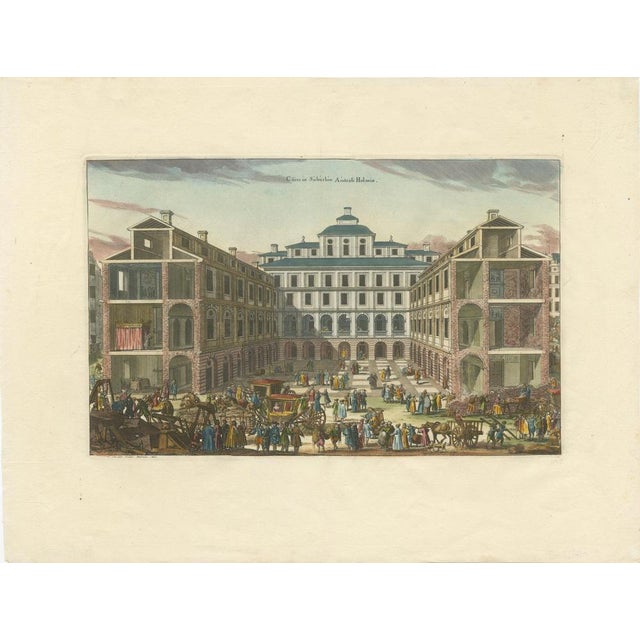
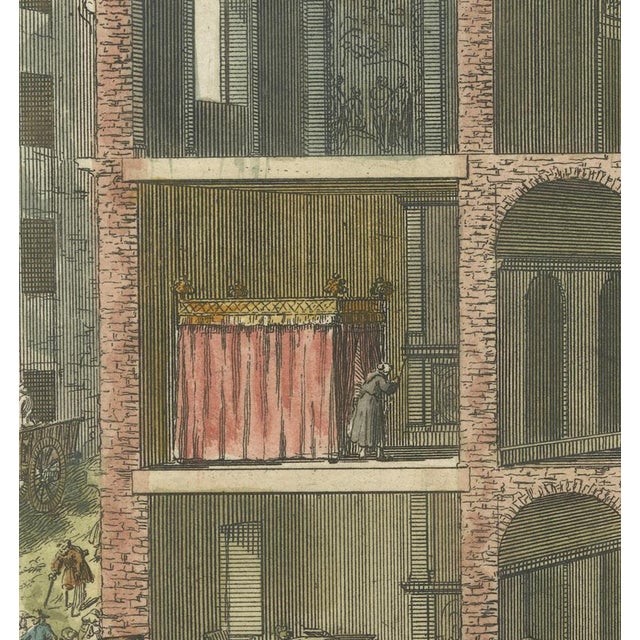
Title: "Cüria in Suburbio Australi Holmiae" - The Southern Courthouse, Now Stockholm City Museum : This historical print, titled "Cüria … Read more Title: "Cüria in Suburbio Australi Holmiae" - The Southern Courthouse, Now Stockholm City Museum : This historical print, titled "Cüria in Suburbio Australi Holmiae," illustrates the Southern Courthouse of Stockholm, which today houses the Stockholm City Museum. Created in 1691 by the artist Willem Swidde, this copperplate engraving is a part of the renowned work "Suecia Antiqua et Hodierna." The scene captures the courthouse in intricate detail, reflecting the architectural style of the era. The foreground is alive with the hustle and bustle of 17th-century city life, depicting citizens in period attire. Carriages and pedestrians enliven the cobblestone streets, while the grandeur of the courthouse stands as a testament to the civic pride of Stockholm. You can also see construction work in Stockholm in 1691; likely the first time the Mursmäckas are depicted. Mursmäcka, also called bruksmäcka or only smäcka, was an historical profession for women in Sweden. A mursmäcka was a female construction worker with the task of handing mortar during construction work. The profession is recorded from at least 1691 (though it is not confirmed by name until the 1830s) and discontinued in 1922. This was a very hard but common job for a poor uneducated woman during the 19th century, particularly in Stockholm. In July 1888, the Mursmäcka of Stockholm performed a great strike action which attracted considerable attention in contemporary Sweden. The newspapers called it The Women's Strike. The last mursmäcka retired in 1922. Swidde's work is characterized by a high degree of precision and clarity, traits that are evident in the fine lines and careful rendering of this print. The courthouse is portrayed with a balanced symmetry, and each window, column, and ornamental feature is meticulously depicted. As part of "Suecia Antiqua et Hodierna," this print contributes to the grand vision of Sweden during its time as a great power, offering a view not just of the structures, but also of the social dynamics of the age. This piece holds significance both as a work of art and as a historical document, providing insight into the urban development and cultural heritage of Stockholm. For collectors and historians alike, it offers a window into the past and the enduring legacy of Swedish architecture and society. Willem Swidde's contributions to the world of engraving, particularly in the context of "Suecia Antiqua et Hodierna," mark him as a significant figure in the field of cartography and illustration during the late 17th century. His move from Amsterdam to Stockholm represents the cross-cultural exchange of artistic skills that was quite common during this period, particularly in the context of grand projects that aimed to document and celebrate national achievements. Swidde's involvement with "Suecia Antiqua et Hodierna" was a major undertaking, and the fact that he engraved 76 of its plates speaks to his skill and the trust placed in him by Erik Dahlbergh. The work they produced together not only served to glorify Sweden but also to create a lasting visual record of the country's landscapes, buildings, and historical moments. Swidde's artistry ensured that these engravings were not mere reproductions of Dahlbergh's drawings but were enhanced and refined in a collaborative process. The history of Charles X Gustav of Sweden, "De Rebus a Carlo Gustavo Sveciae Regis," also benefited from Swidde's engraving talent, with 18 plates attributed to him. This work by Samuel Pufendorf would have been an important historical document for Sweden, and Swidde's engravings contributed significantly to its visual impact. Swidde's premature death in Stockholm cut short a promising career. Despite the lack of extensive documentation on his life, his legacy lives on through the plates he produced, which continue to be appreciated for their beauty and precision. The prints from "Suecia Antiqua et Hodierna" remain valuable for their historical and artistic merit, and they provide a fascinating glimpse into the Sweden of the past as seen through the eyes of a talented Dutch engraver who made Stockholm his home. See less
- Dimensions
- 17.72ʺW × 13.39ʺH
- Period
- 17th Century
- Item Type
- Vintage, Antique or Pre-owned
- Materials
- Paper
- Condition
- Good Condition, Unknown, Some Imperfections
- Color
- Gold
- Condition Notes
- Very Good — This vintage item has no defects, but it may show slight traces of use\. Very good, almost … moreVery Good — This vintage item has no defects, but it may show slight traces of use\. Very good, almost excellent. Visible plate mark. Very good antique condition with one -hardly visible- crease in left top outside the image. Later hand-coloring. less
Returns & Cancellations
Return Policy - All sales are final 48 hours after delivery, unless otherwise specified in the description of the product.
Cancellation Policy - Prior to shipping or local pickup, buyers may cancel an order for up to 48 hours, unless otherwise specified.
Related Collections
- Soicher Marin Original Prints
- Rattan Original Prints
- Medium-Density Fibreboard Original Prints
- Silver Finish Original Prints
- Robert Kipniss Original Prints
- Dye Transfer Original Prints
- Original Prints in Salt Lake City
- Original Prints in Lexington, KY
- Original Prints in Panama City, FL
- Ralph Lauren Original Prints
- Damien Hirst Original Prints
- Sam Francis Original Prints
- Johannes Kip Original Prints
- Botanical Prints
- Framed Prints
- Bird Prints
- Woodblock Prints
- Screen Prints
- Japanese Woodblock Prints
- Thomas McKnight Original Prints
- George Barbier Original Prints
- Frank Stella Original Prints
- Gustave Baumann Original Prints
- Teak Original Prints
- Chaim Gross Original Prints