




Details
Description
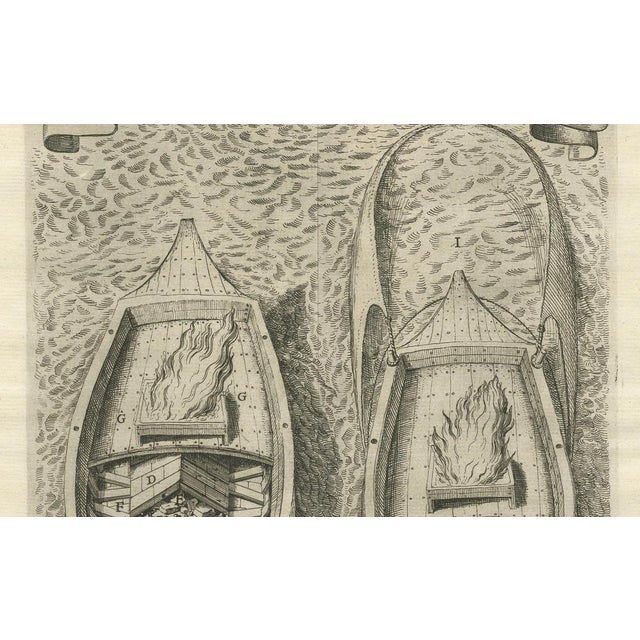
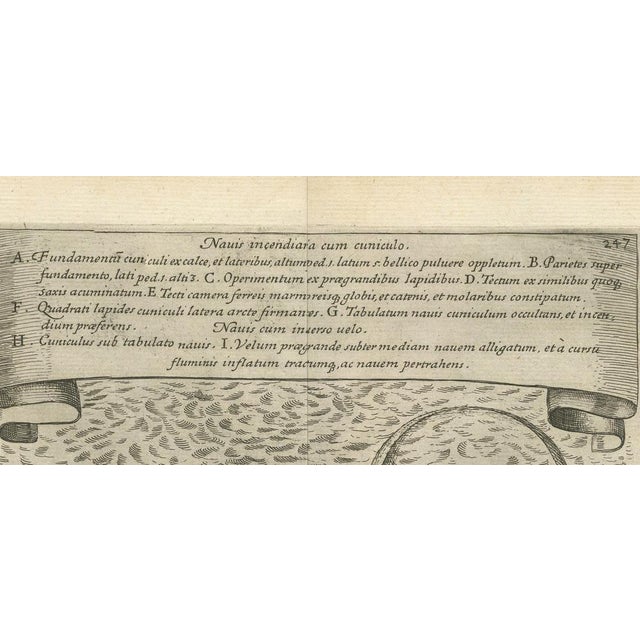
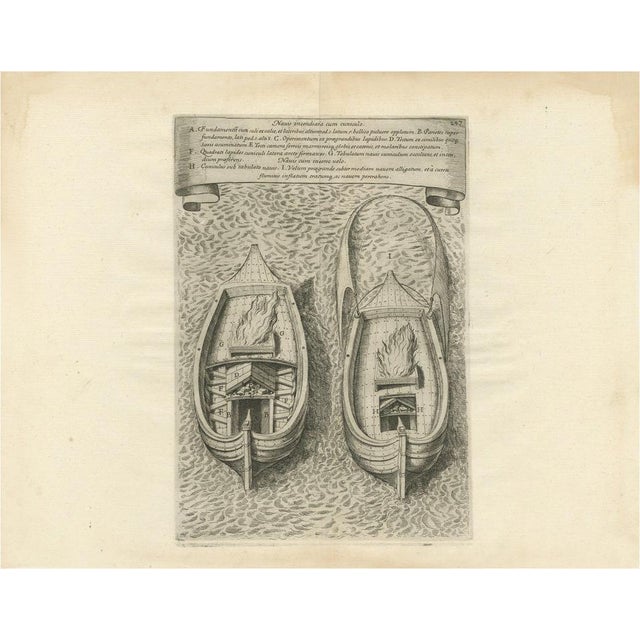
This original engraving is referring depicting a detailed illustration of a fire ship, a type of naval vessel used as … Read more This original engraving is referring depicting a detailed illustration of a fire ship, a type of naval vessel used as a weapon during the eighty years' war. Fire ships were essentially floating bombs, filled with combustibles and explosives, and set ablaze before being directed towards enemy ships or fortifications in an attempt to cause significant damage. In this rare original print, the ship is shown in a cross-sectional view, allowing the viewer to understand the internal structure and components of the vessel. The image likely includes annotations corresponding to various parts of the ship, such as the location where the combustible materials were stored, details about the construction that facilitated the ship’s ability to carry and release the materials effectively, and possibly the mechanisms for steering the ship towards its target. The latin text in the image provided seems to describe technical aspects of a ship, detailing its construction or features. Here is the translation of the latin text: a. Foundation of the turret raised and strengthened by a base, one foot wide and three feet high, filled with war powder. B. Walls above the foundation extended outward nearly touching the water, strengthened by two anchors. C. Oppressed by stones thrown. D. Roof made of similar materials as stones. E. Ceiling of the turret made of iron, marble balls, and chains, and millstones arranged. F. Square stones preferred to be used for the walls of the turret. G. The deck of the ship hiding the turret and opening inwards. H. Tunnel under the deck of the ship. I. Sail to be spread under the middle of the ship tied, and carried by the current of the river inflated downward, and dragging the ship. This text describes the structure of a fire ship (navis incendiaria cum cuniculo) and seems to be a detailed instruction on how to construct and utilize it, likely for military purposes. These ships could be used as weapons, set alight, and sent in the direction of the enemy to cause destruction, especially during naval battles. The precise measurements and the mention of "war powder" (bellico pulvere) suggest that this was a vessel intended to be filled with explosives. The specific terms used in the text, such as "cuniculo" (tunnel) and "velum" (sail), provide technical details on how the ship was engineered for its destructive purpose. See less
- Dimensions
- 17.72ʺW × 13.78ʺH
- Art Subjects
- Figure
- Period
- 17th Century
- Item Type
- Vintage, Antique or Pre-owned
- Materials
- Paper
- Condition
- Good Condition, Unknown, Some Imperfections
- Color
- Gold
- Condition Notes
- Very Good — This vintage item has no defects, but it may show slight traces of use\. Good, given age. … moreVery Good — This vintage item has no defects, but it may show slight traces of use\. Good, given age. General age-related toning, creasing and/or occasional minor defects from handling. Middle fold line as issued, slightly brownish. Please study scan carefully. less
Returns & Cancellations
Return Policy - All sales are final 48 hours after delivery, unless otherwise specified in the description of the product.
Cancellation Policy - Prior to shipping or local pickup, buyers may cancel an order for up to 48 hours, unless otherwise specified.
Related Collections
- Medium-Density Fibreboard Original Prints
- Soicher Marin Original Prints
- Rattan Original Prints
- Silver Finish Original Prints
- Robert Kipniss Original Prints
- Dye Transfer Original Prints
- Sam Francis Original Prints
- Johannes Kip Original Prints
- Original Prints in Salt Lake City
- Original Prints in Lexington, KY
- Original Prints in Panama City, FL
- Ralph Lauren Original Prints
- Damien Hirst Original Prints
- Botanical Prints
- Framed Prints
- Bird Prints
- Woodblock Prints
- Screen Prints
- Japanese Woodblock Prints
- Thomas McKnight Original Prints
- George Barbier Original Prints
- Frank Stella Original Prints
- Gustave Baumann Original Prints
- Teak Original Prints
- Chaim Gross Original Prints