




Details
Description
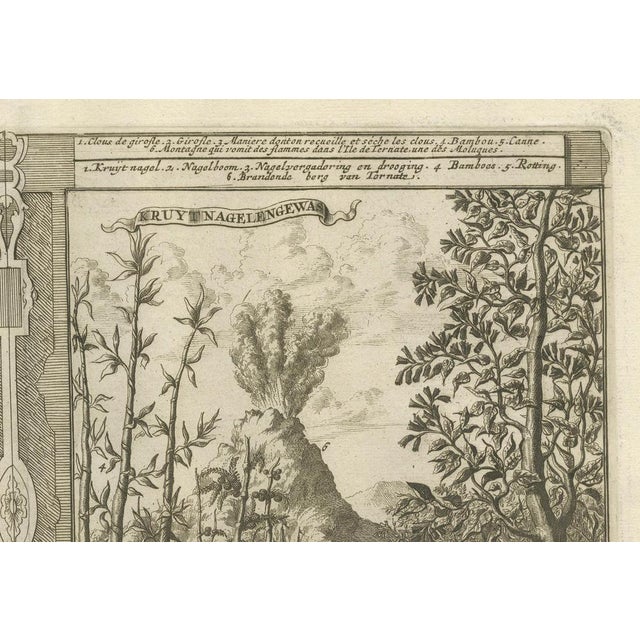
Exotic Bounty: The Spice Lands of the East Indies The engraving depicts scenes from the East Indies, not the West … Read more Exotic Bounty: The Spice Lands of the East Indies The engraving depicts scenes from the East Indies, not the West Indies, which was a common point of confusion in historical texts due to the similar nomenclature. of the Engraving: This engraving titled "Exotic Bounty: The Spice Lands of the East Indies" is part of the series "Les Indes Orientales et Occidentales et autres lieux," emphasizing the global reach of colonial interests during the era of exploration. The artwork captures the lucrative spice trade that was central to European economic ambitions in the East Indies. Left Panel: - Cinnamon and Nutmeg Trees: Shows laborers harvesting cinnamon bark and processing nutmeg, which were highly prized in Europe for their culinary and medicinal uses. Monkeys in the cinnamon trees add a lively, exotic touch that would have intrigued European audiences. - Foreground: A woman extracts oil from nutmeg, illustrating the diverse uses of spices sourced from these islands. - Background: An elephant hunt in Ceylon (now Sri Lanka), pointing to the exotic wildlife of the region and the recreational activities of colonizers. Right Panel: - Clove Trees and Bamboo: Laborers harvest cloves, another valuable spice that drove European colonial ventures in the region. - Background: The depiction of the Ternate volcano, an iconic landmark in the Maluku Islands, a significant center of the spice trade. Artistic and Cultural Significance: The detailed portrayal of these economic activities not only showcases the natural wealth of the East Indies but also reflects the colonial gaze that viewed these lands primarily as sources of economic profit. The inclusion of local flora like bamboo and scenes of spice processing offers a glimpse into the daily life and natural environment of the East Indies during the colonial era. Historical Context: This artwork serves as a historical document, revealing how the East Indies were integral to the spice trade networks that linked Asia and Europe. It provides insight into the colonial economies that were built around the extraction of valuable spices and the exploitation of both natural and human resources. Overall, this engraving is a richly detailed piece that encapsulates the complex interactions between European colonizers and the landscapes they sought to dominate, making it a valuable piece for those interested in the history of colonialism, the spice trade, and Asian-European interactions. The engraving is associated with two prominent figures in the art and publishing world of the 17th and early 18th centuries: Romeyn de Hooghe and Pieter van der Aa. ### Romeyn de Hooghe (1645-1708) Romeyn de Hooghe was a Dutch Baroque artist known for his prolific and versatile artistic output. He worked as an engraver, painter, and draftsman. De Hooghe's engravings are renowned for their intricate detail and dynamic composition, making him one of the most important and innovative printmakers of his time. His works often included political, historical, and allegorical scenes, reflecting the complex social and political climate of the Dutch Golden Age. De Hooghe was also known for his satirical edge, often infusing his artwork with a keen critical perspective on contemporary issues. ### Pieter van der Aa (1659-1733) Pieter van der Aa was an influential Dutch publisher based in Leiden, known for producing maps, atlases, and illustrated works. His publishing career was marked by the ambitious project of issuing atlases that incorporated a wide range of geographic knowledge and exotic illustrations from around the world. Van der Aa's works were highly esteemed for their decorative and detailed plates, which catered to the tastes of the European elite who were eager for knowledge about distant lands. His publications are notable for their meticulous attention to detail and their role in disseminating geographical and historical knowledge during the Age of Exploration. ### Collaboration and Impact The collaboration between Romeyn de Hooghe as an engraver and Pieter van der Aa as a publisher brought together two masters of their respective crafts. Their works, such as the engravings depicting scenes from the East Indies, not only served as decorative pieces but also as educational tools that helped shape European perceptions of the wider world. These works are significant historical documents, reflecting the interplay between art, exploration, and commerce in the early modern period. See less
- Dimensions
- 19.29ʺW × 14.96ʺH
- Period
- 18th Century
- Item Type
- Vintage, Antique or Pre-owned
- Materials
- Paper
- Condition
- Good Condition, Original Condition Unaltered, Some Imperfections
- Color
- Condition Notes
- Excellent — This vintage piece is in near original condition. It may show minimal traces of use and/or have slight … moreExcellent — This vintage piece is in near original condition. It may show minimal traces of use and/or have slight restorations\. Condition: excellent, given age. General age-related toning and/or occasional minor defects from handling. Wide margins and folding line in middle as issued. Please study scans carefully. less
Returns & Cancellations
Return Policy - All sales are final 48 hours after delivery, unless otherwise specified in the description of the product.
Cancellation Policy - Prior to shipping or local pickup, buyers may cancel an order for up to 48 hours, unless otherwise specified.
Related Collections
- Medium-Density Fibreboard Original Prints
- Soicher Marin Original Prints
- Rattan Original Prints
- Silver Finish Original Prints
- Robert Kipniss Original Prints
- Dye Transfer Original Prints
- Sam Francis Original Prints
- Johannes Kip Original Prints
- Original Prints in Panama City, FL
- Ralph Lauren Original Prints
- Damien Hirst Original Prints
- Original Prints in Salt Lake City
- Original Prints in Lexington, KY
- Botanical Prints
- Framed Prints
- Bird Prints
- Woodblock Prints
- Screen Prints
- Japanese Woodblock Prints
- Thomas McKnight Original Prints
- George Barbier Original Prints
- Frank Stella Original Prints
- Gustave Baumann Original Prints
- Teak Original Prints
- Chaim Gross Original Prints