

Details
Description
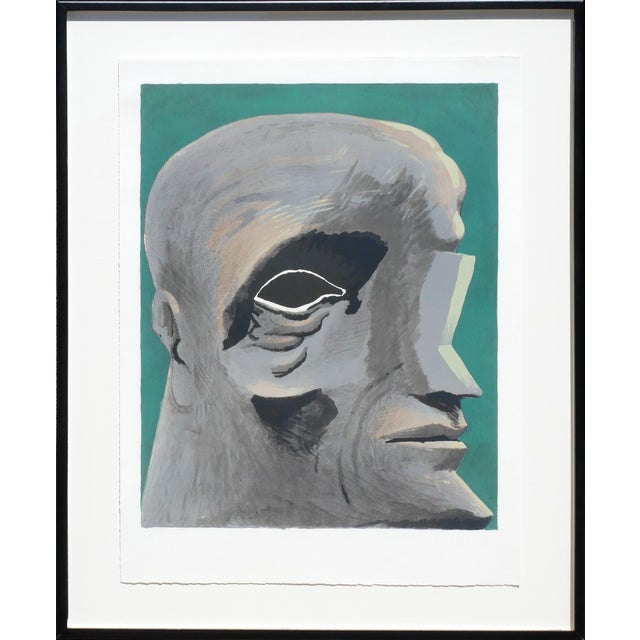
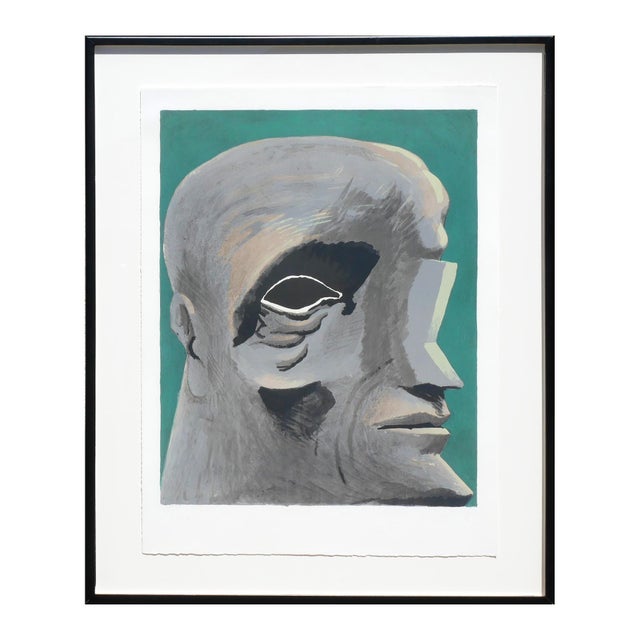
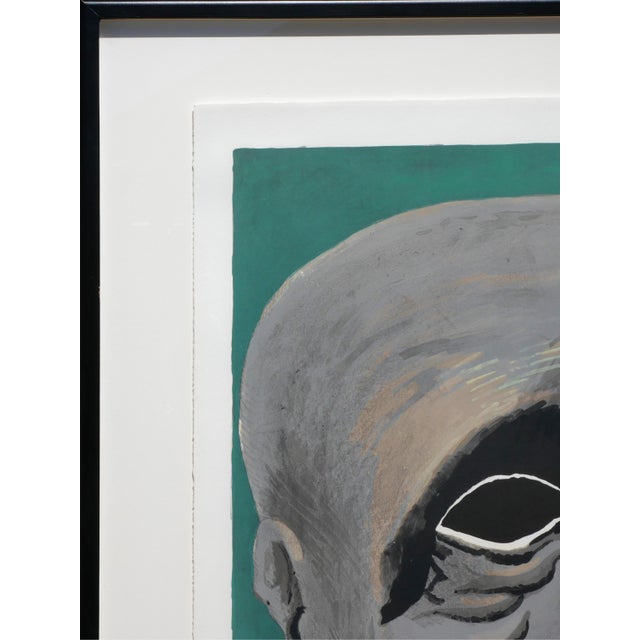
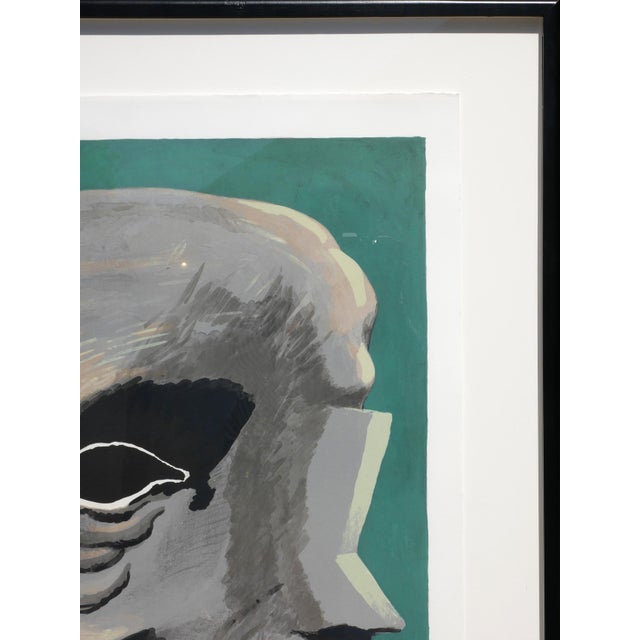
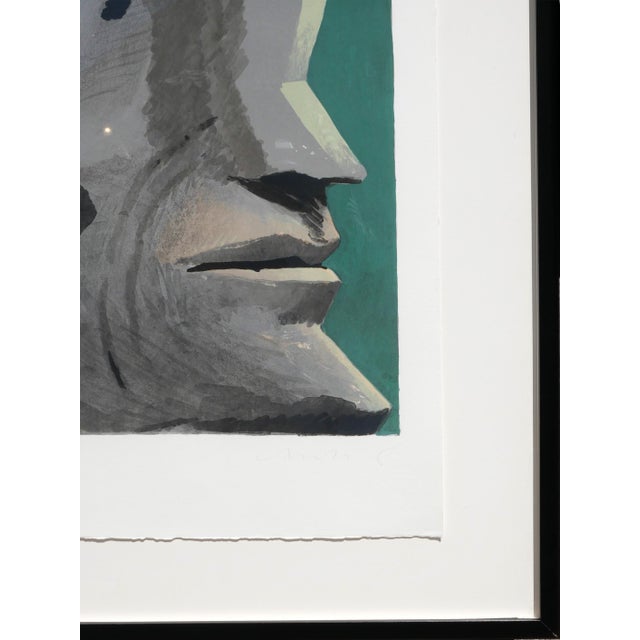
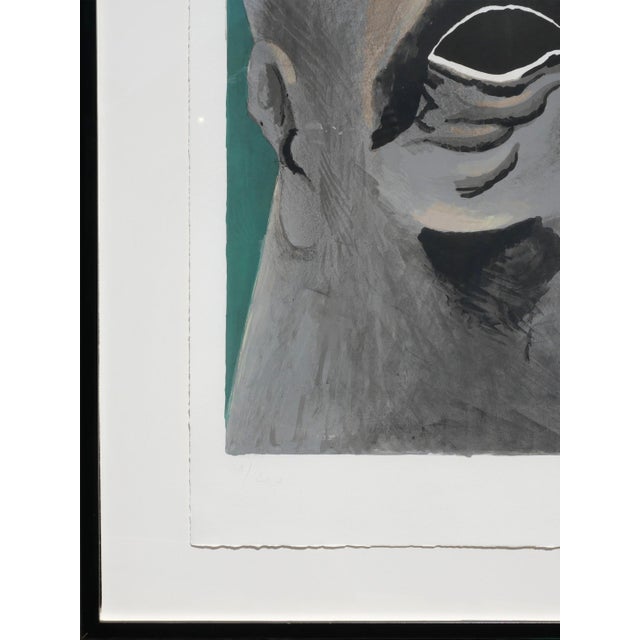
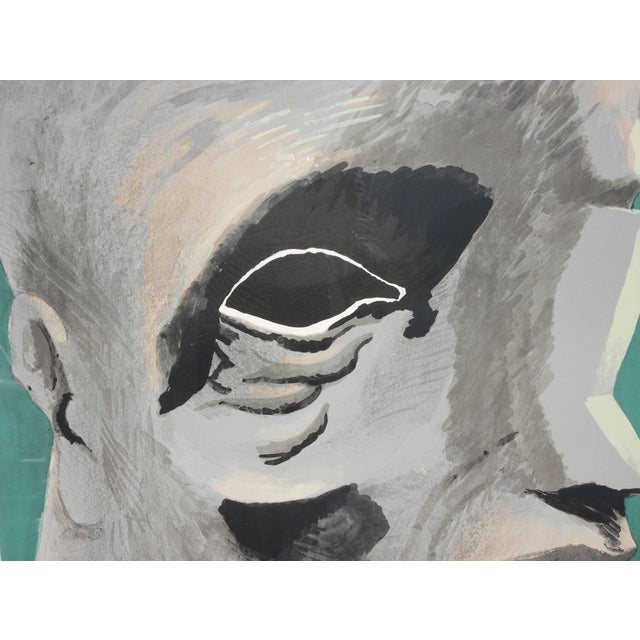
Modern abstract figurative lithograph by German artist Horst Antes. The work features a Cubist inspired figure with abstracted facial features …
Read more
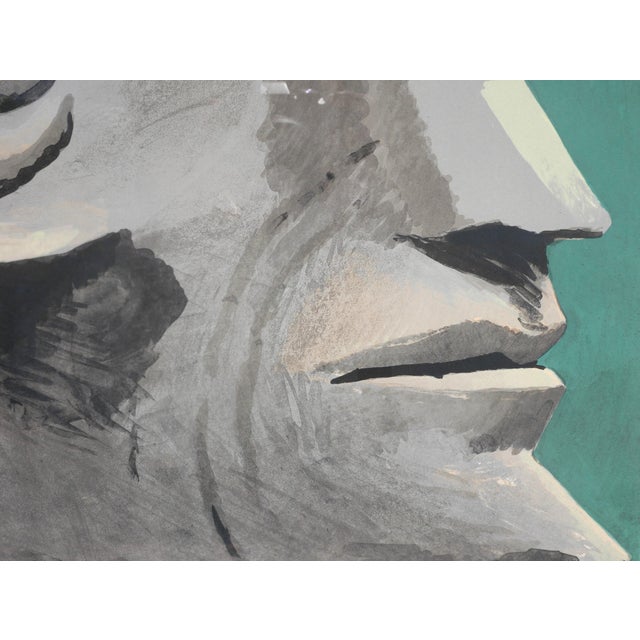
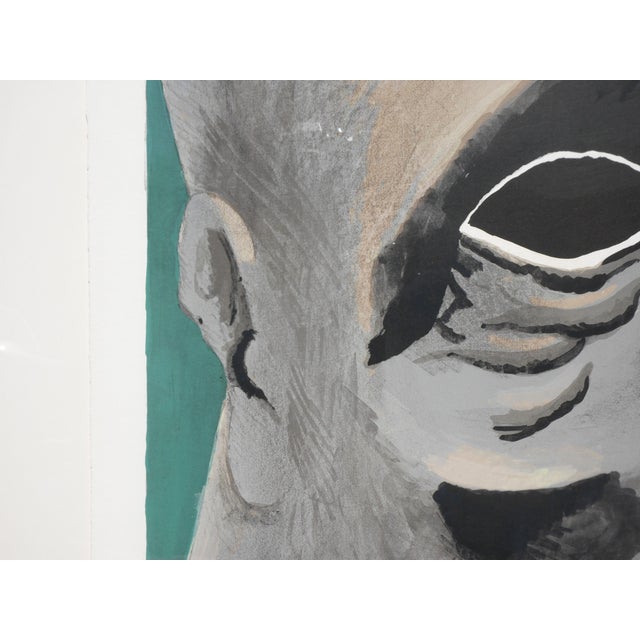
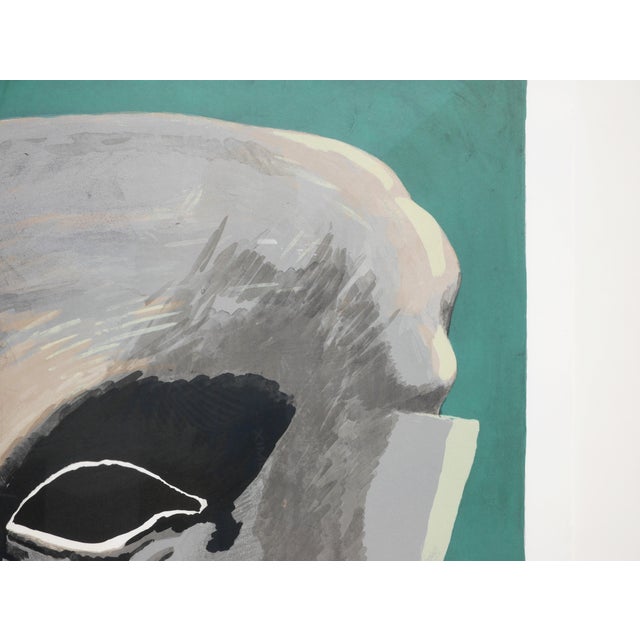
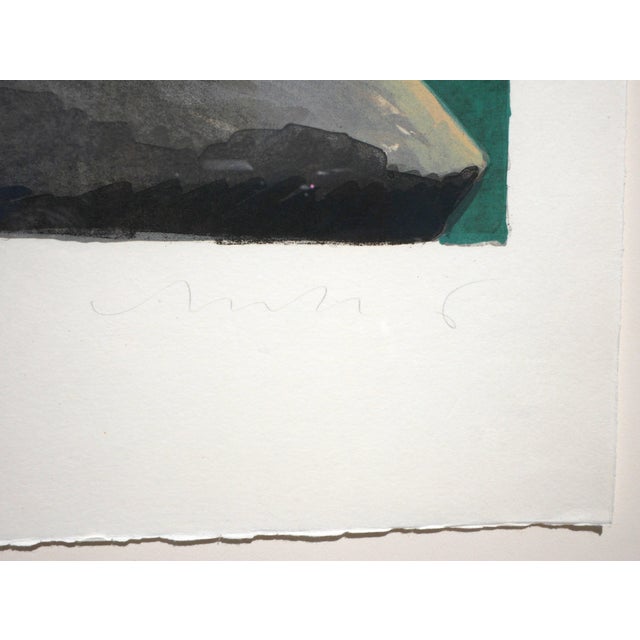
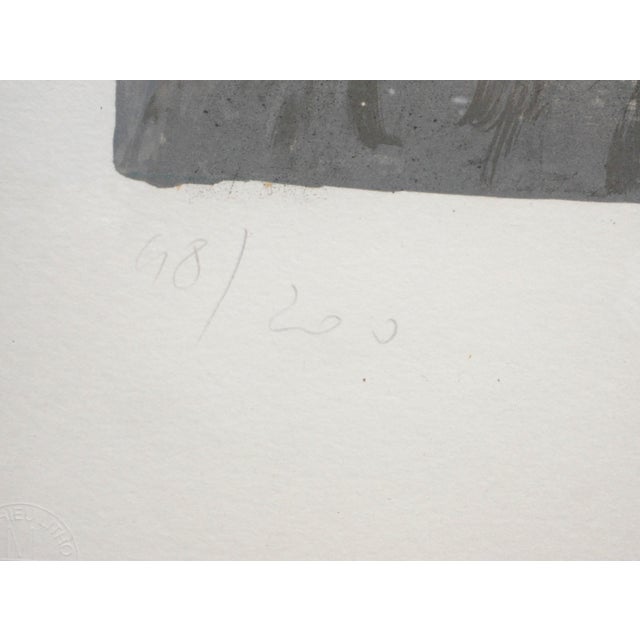
Modern abstract figurative lithograph by German artist Horst Antes. The work features a Cubist inspired figure with abstracted facial features set against a teal background. This work was part of a portfolio of prints created in 1975 to celebrate the 500th anniversary of Michelangelo's birthday. Signed and editioned (98/200) along front lower margin. Currently hung in a black frame.
Dimensions Without Frame: H 31.25 in. x W 23.5 in.
Artist Biography: Horst Antes is a German painter, sculptor, engraver and lithographer born on 28 October 1936 in Heppenheim.
A painter of the New Figuration movement, Horst Antes was a student at the Karlsruhe Academy of Fine Arts from 1957 to 1959, where he was taught by the wood engraver HAP Grieshaber, an engaging character who taught him a solid technique.
His painting is linked to the international trend of narrative figuration. Although he won numerous prizes, this movement was not yet as popular as it later became. In the 1970s and early 1980s, Antes was an isolated and pioneering figure. Critical interest focused on this young painter, who had emerged unscathed from a Germany that had been disqualified in every respect and had repudiated all forms of living art, and whose works were in the wake of the Die Brücke, Blaue Reiter and Bauhaus movements of the 1930s. In a brief initial period, Antes' Expressionism can be compared to that of Max Beckmann and George Grosz, i.e. to the gritty Expressionism that manifested itself in the distraught Germany after its defeat in 1918.
But it was in 1960 that he gave an image of his personality by creating a highly schematised character that became his personal theme, perhaps influenced by Oskar Schlemmer, whose massive graphics encircle surfaces that are usually very vivid and colourful, with a certain sobriety of treatment. This being, a sort of gnome, has no torso. Its arms are fitted directly into the head under the eyes, and the legs under the chin. But to compensate for this lack of body, the head always has eyes, superimposed or not, or two pairs of superimposed eyes, as we sometimes find in Jawlensky or Paul Klee. These figures inspire less disgust than pity.
In the 1970s, he incorporated pieces of cardboard or rags into his paintings on canvas to enrich the textures and increase the strangeness of his figures. As a precursor of the new neo-expressionist figurations that appeared at the time in reaction against the domination of abstract and conceptual art, it seems likely that Antes wanted to testify to a despair of the human condition.
See less
Questions about the item?
Returns & Cancellations
Return Policy - All sales are final 48 hours after delivery, unless otherwise specified in the description of the product.
Cancellation Policy - Prior to shipping or local pickup, buyers may cancel an order for up to 48 hours, unless otherwise specified.
Related Collections
- Rattan Original Prints
- Medium-Density Fibreboard Original Prints
- Soicher Marin Original Prints
- Silver Finish Original Prints
- Robert Kipniss Original Prints
- Dye Transfer Original Prints
- Original Prints in Salt Lake City
- Original Prints in Panama City, FL
- Ralph Lauren Original Prints
- Damien Hirst Original Prints
- Johannes Kip Original Prints
- Original Prints in Lexington, KY
- Sam Francis Original Prints
- Botanical Prints
- Framed Prints
- Bird Prints
- Woodblock Prints
- Screen Prints
- Japanese Woodblock Prints
- Thomas McKnight Original Prints
- George Barbier Original Prints
- Frank Stella Original Prints
- Gustave Baumann Original Prints
- Teak Original Prints
- Chaim Gross Original Prints