

Details
Description
Pauwels Franck, known as Paolo Fiammingo (Antwerp, 1540 - Venice, 1596)
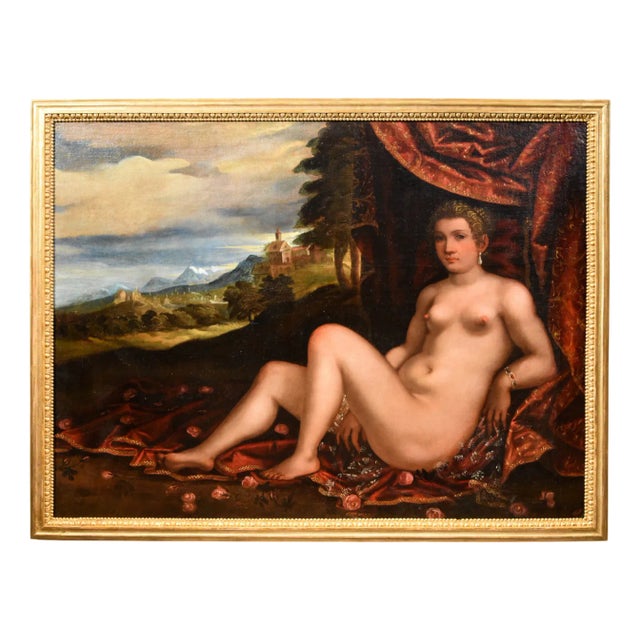
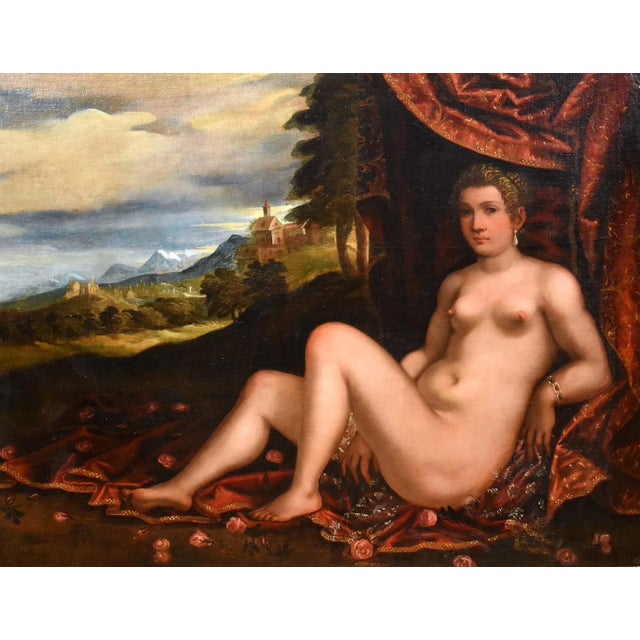
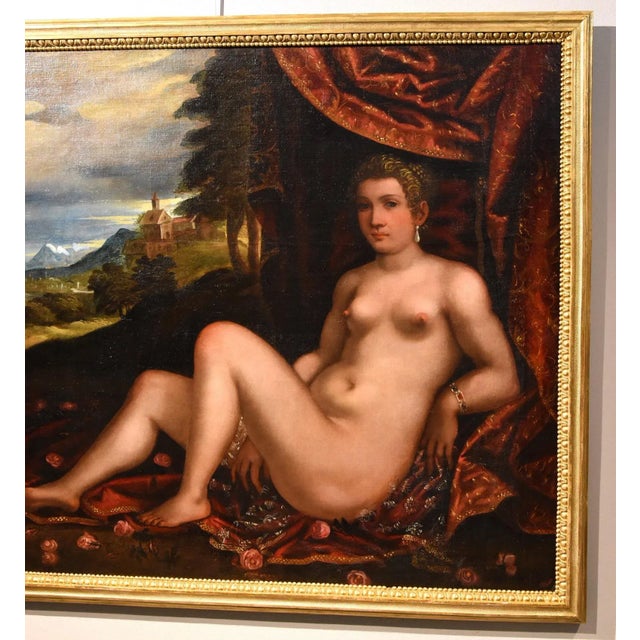
Venus Reclining in a Landscape
Oil on canvas (116 …
Read more
Pauwels Franck, known as Paolo Fiammingo (Antwerp, 1540 - Venice, 1596)
Venus Reclining in a Landscape
Oil on canvas (116 x 150 cm - in an antique frame 136 x 170 cm)
The work is accompanied by a critical note by Dr. Federica Spadotto.
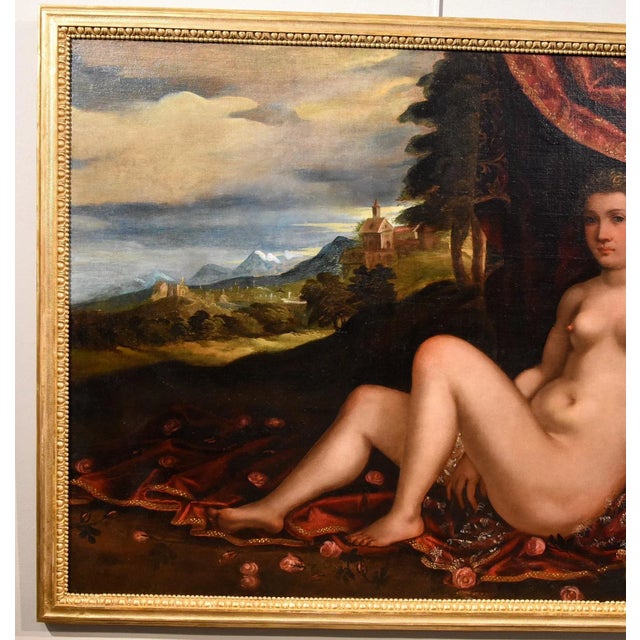
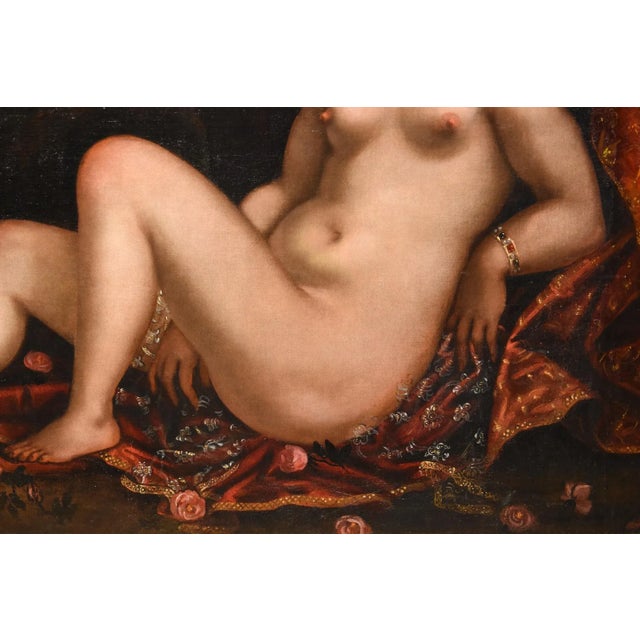
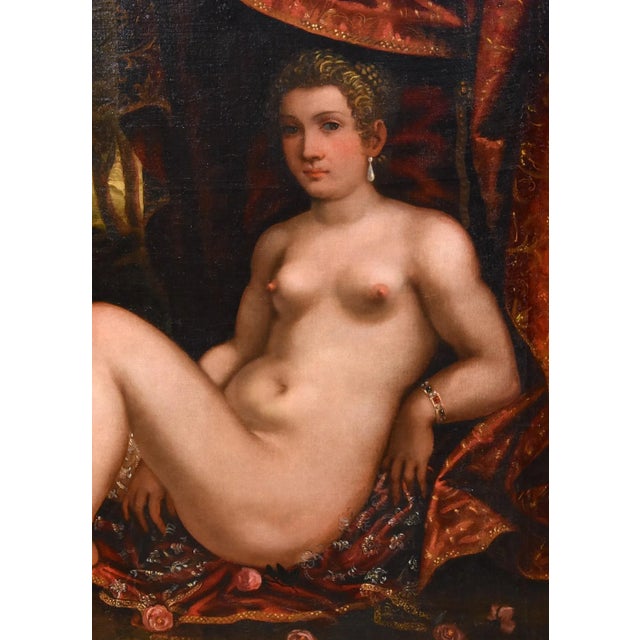
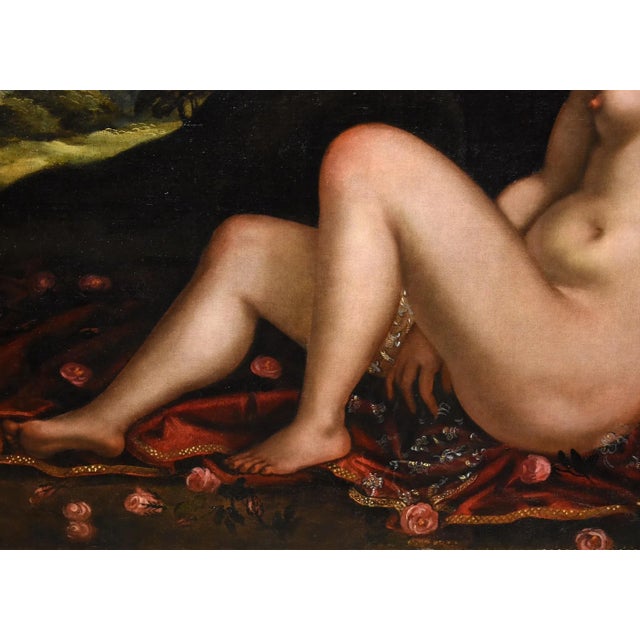
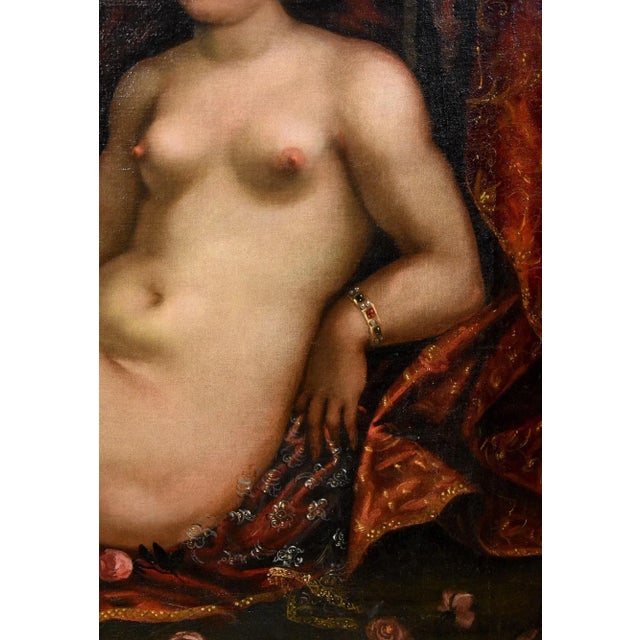
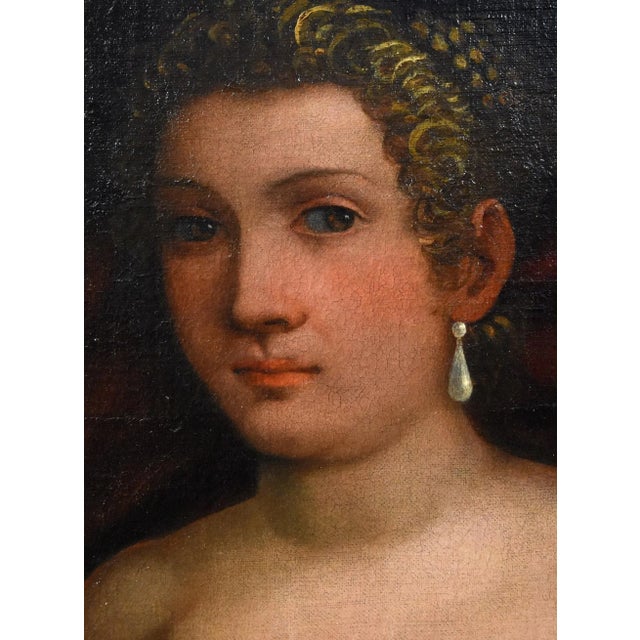
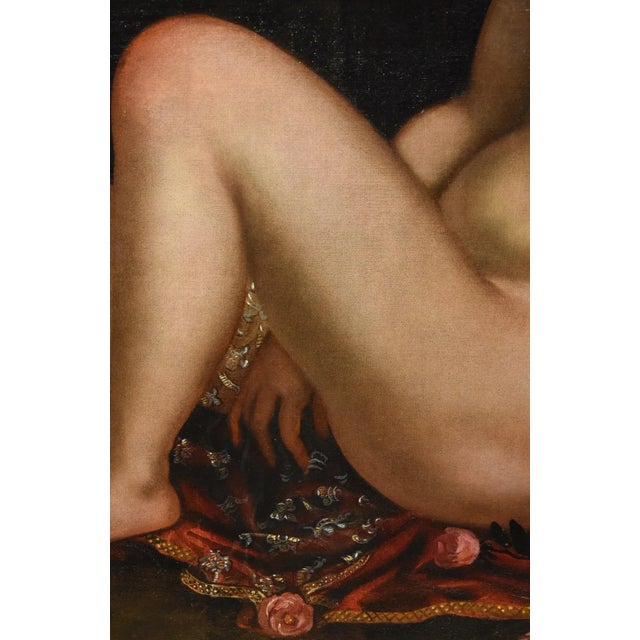
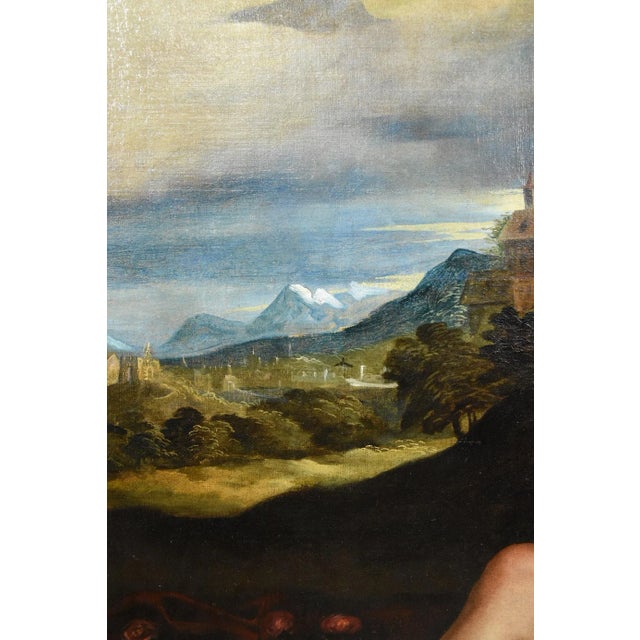
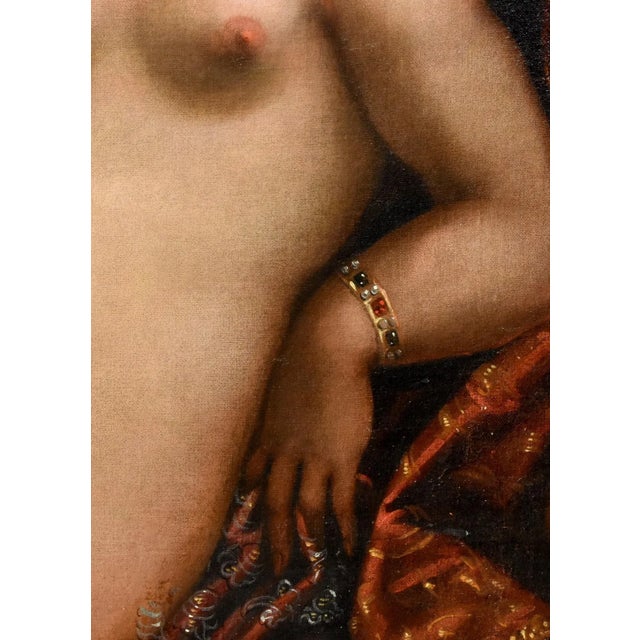
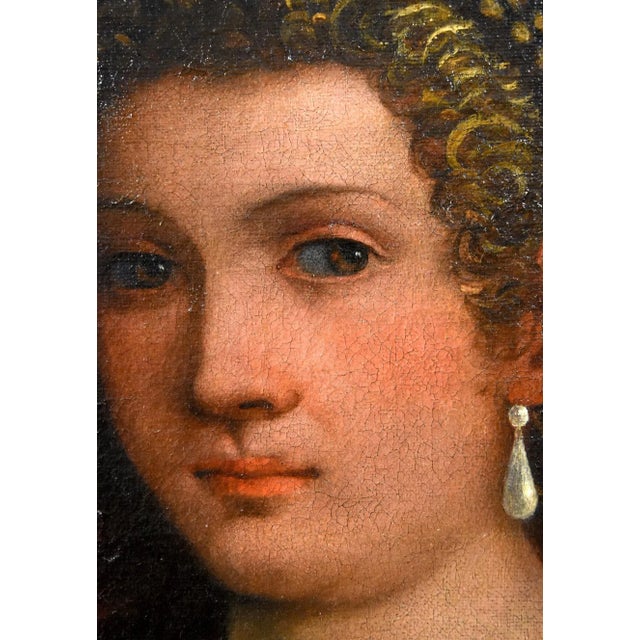
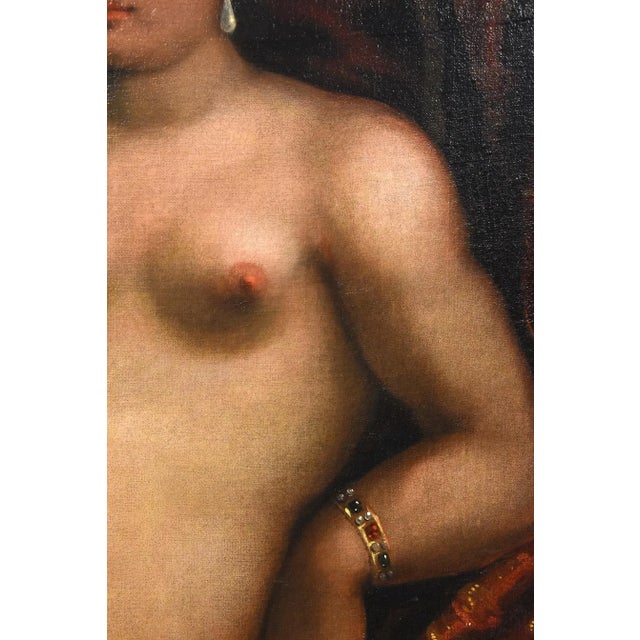
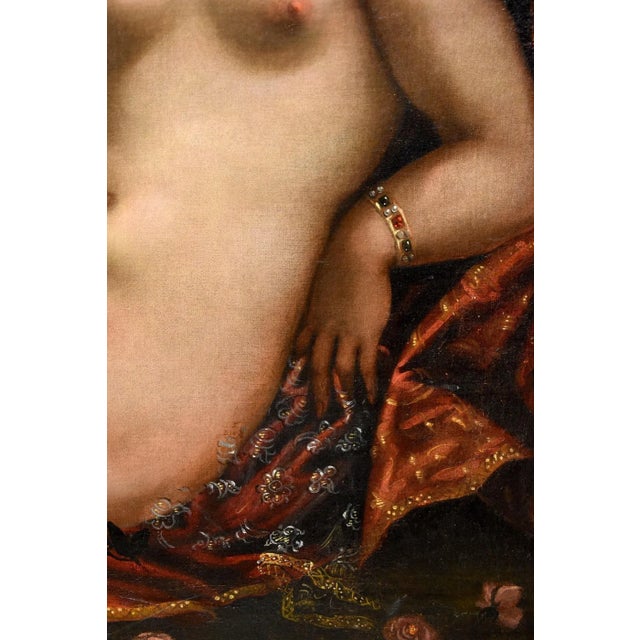
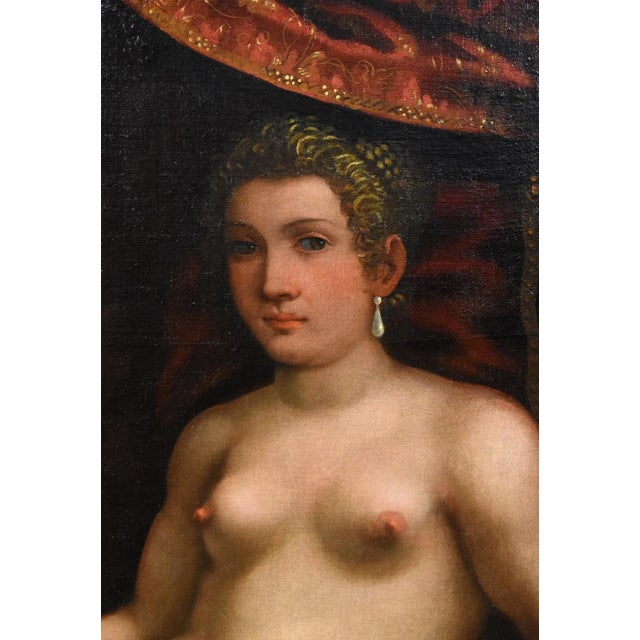
This splendid painting depicts a refined and sensual Venus, half-dressed and reclining on a red gold brocade drape strewn with roses. This composition is deeply symbolic, achieving the perfect representation of the Renaissance woman who, like Venus, becomes an allegory of love, eros, beauty, and fertility.
The canvas is part of the prestigious Venetian artistic and cultural scene of the second half of the sixteenth century, whose distinctive trait lies in its cosmopolitan vocation. This characteristic, as Dr. Spadotto noted in her in-depth study, is part of the very physiology of the Veneto capital: being a highly commercial city, strategically located for trade. Being one of the Mediterranean's busiest ports also meant witnessing the constant passage not only of goods, but also of people, ideas, and influences from distant lands, which influenced not only the tastes of its own people, but above all, art.
This occurred thanks to the circulation of prints, as well as paintings, in addition to the visits of great foreign artists and, above all, the permanent residence in the capital of a not inconsiderable number of Dutch, Flemish, and German masters.
A prime example in this regard comes from Pauwels Franck (Antwerp, 1540 - Venice, 1596), better known as Paolo Fiammingo, who established himself in his native city at a young age—in 1561 he was a member of the Guild of Saint Luke—and arrived in Venice in 1573.
He resided in Venice from 1584 until his death, although the stylistic and formal references in some of his works have led critics to believe that in the preceding years he had undertaken a trip to central Italy, namely to Florence and Rome, where he would have absorbed the lively cultural debate that permeated those cities and which, however, seemed entirely absent in Venice.
Here, Paolo was fascinated by the sense of color and the atmospheric component captured on canvas by Jacopo Tintoretto (Venice 1518–1594), with whom he became a collaborator. Around 1590, he was influenced by Paolo Caliari, known as Veronese (Verona 1528–Venice 1588), both in terms of color and specific guiding elements.
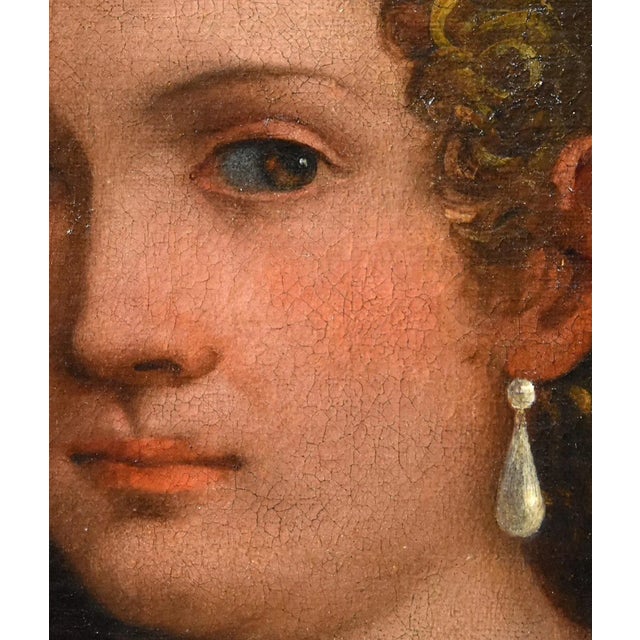
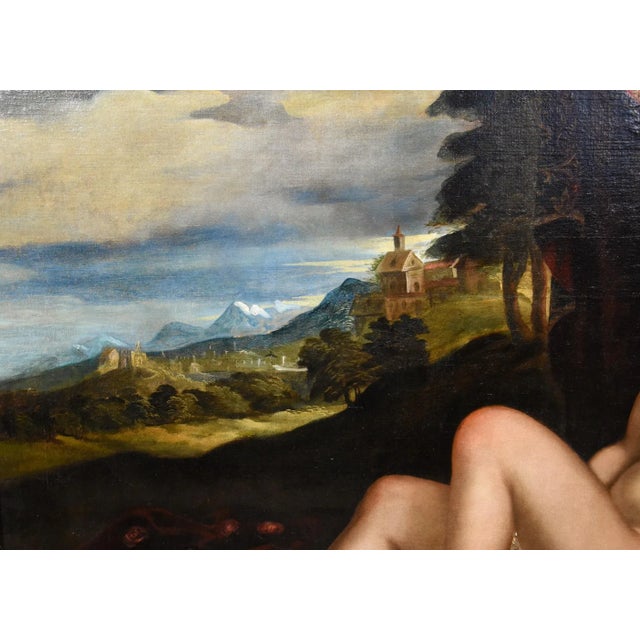
The painting in question stands as an illuminating figurative example of this, as it revisits the Venetian pictorial tradition through a Nordic lens, grafted onto a subject typical of the Renaissance repertoire. In the Venus in the foreground, with her typically Veronese features, the reference to the Venus with Organist, Cupid, and Dog painted by Titian (Pieve di Cadore, 1488–90; Venice, 1576), now in the Staatlische Museum in Berlin, appears as a true homage to the great master. It shares the compositional structure with the latter, with the red curtain draping the goddess and the landscape in the background, albeit revisited in a strictly Nordic style, a style found in the Venus with a Dog at Ca' Rezzonico in Venice.
In this version of the theme, however, the artist still shows a commitment to Flemish influences, which in the large canvas under study constitute a complete synthesis of the aesthetics of Northern Europe and the sensibility of the lagoon. The distinctive Venetian light is clearly perceptible in the small flowers in the foreground and in the delightful landscape backdrop, evocative of the great Flemish masters: a true hallmark, along with the sky derived from Caliari, of the pictorial recipe developed by Pauwels. He creates a smooth cameo imbued with elegance, refinement, and expressive happiness, in which the composed feminine beauty and the landscape, meticulously reproduced in detail, coexist with a swift, lively brushstroke imbued with light.
The painting is in excellent condition, with a beautiful antique frame.
The work is accompanied by a legally required photographic certificate of authenticity. This piece is attributed to the mentioned designer/maker. It has no attribution mark and no
official proof of authenticity,
however it is well documented in design history. I take full responsibility for any authenticity
issues arising from misattribution
See less
- Dimensions
- 66.93ʺW × 4.72ʺD × 53.54ʺH
- Styles
- Baroque
- Art Subjects
- Portrait
- Period
- 16th Century
- Country of Origin
- Italy
- Item Type
- Vintage, Antique or Pre-owned
- Condition
- Good Condition, Unknown, Some Imperfections
- Color
- Condition Notes
- Patina Consistent with Age and Use,Reupholstered,Partially Restored Patina Consistent with Age and Use,Reupholstered,Partially Restored less
Returns & Cancellations
Return Policy - All sales are final 48 hours after delivery, unless otherwise specified in the description of the product.
Cancellation Policy - Prior to shipping or local pickup, buyers may cancel an order for up to 48 hours, unless otherwise specified.
Related Collections
- Ed Ruscha Paintings
- Photorealism Canvas Paintings
- Ralph Lauren Paintings
- Photorealism Paintings in New York
- Louise Nevelson Paintings
- Richard Serra Paintings
- Silk Velvet Paintings
- Herman Miller Paintings
- BDDW Paintings
- Jaanika Peerna Paintings
- Jo Baskerville Paintings
- Jean-Paul Barray Paintings
- Johannes Andersen Paintings
- Peter Behrens Paintings
- Carl-Axel Acking Paintings
- Joseph Stella Paintings
- Karl-Erik Ekselius Paintings
- Pedro Friedeberg Paintings
- Piet Hein Eek Paintings
- Black Photorealism Paintings
- James McCray Paintings
- Lawson-Fenning Paintings
- Milton Avery Paintings
- Raphael Paintings
- Hans Andersen Paintings