

Details
Description
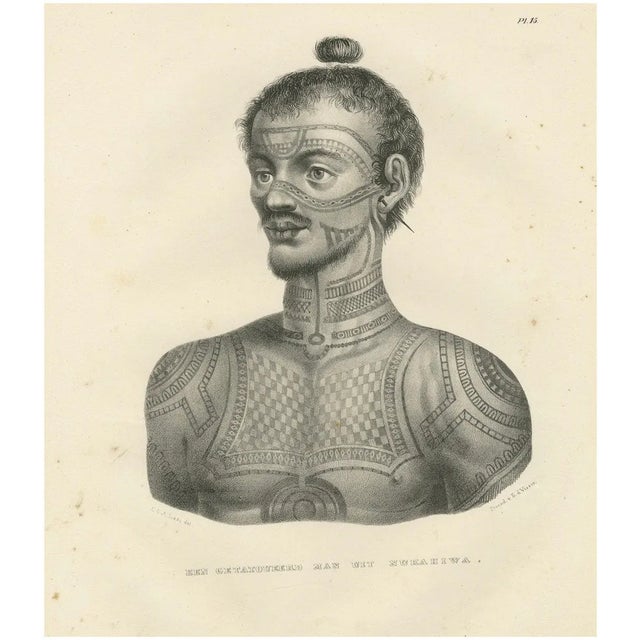
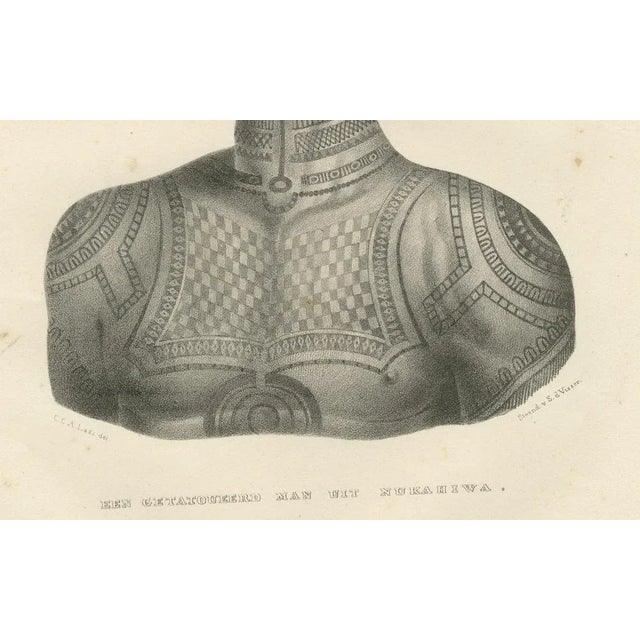
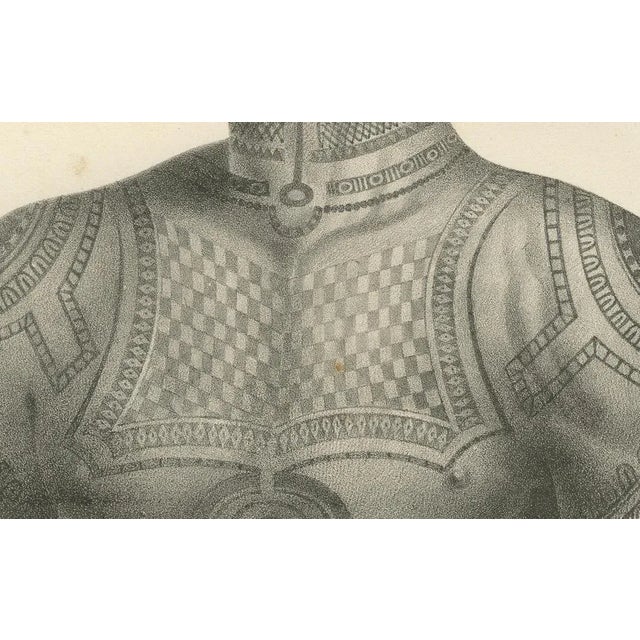
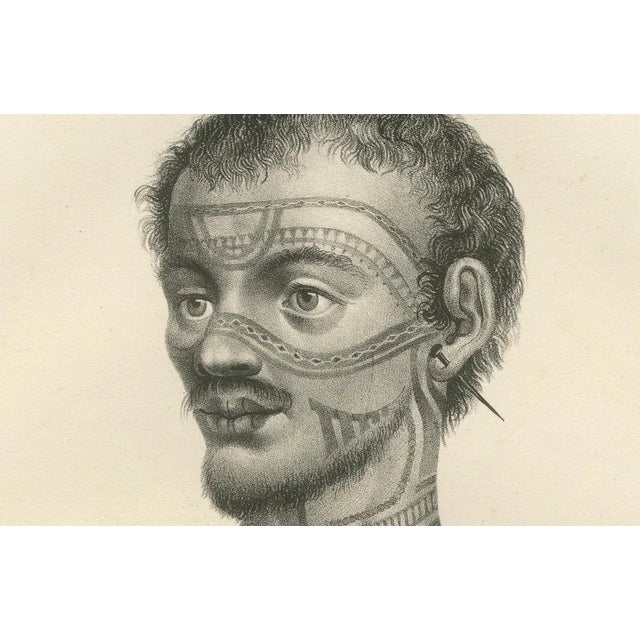
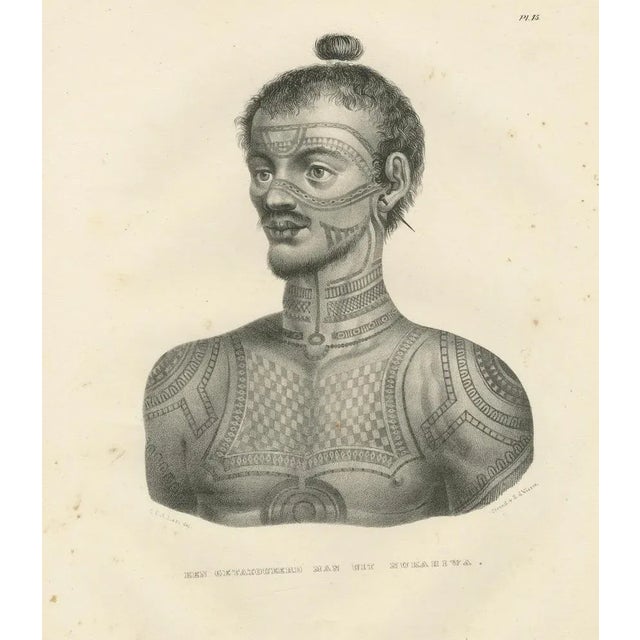
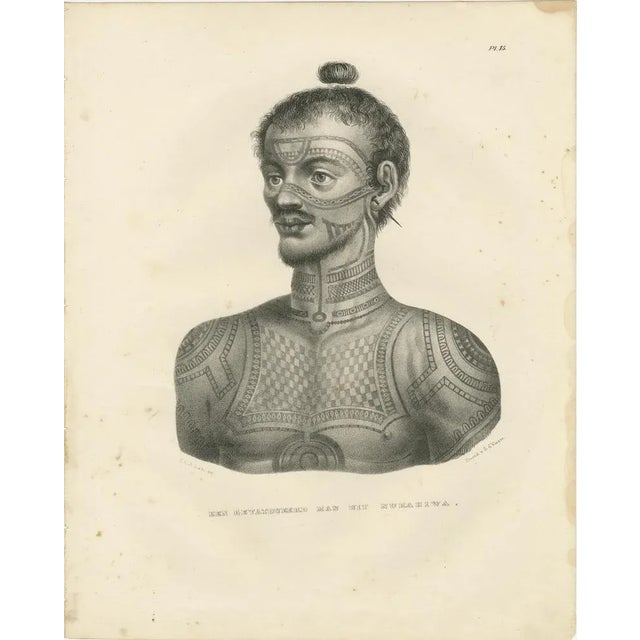
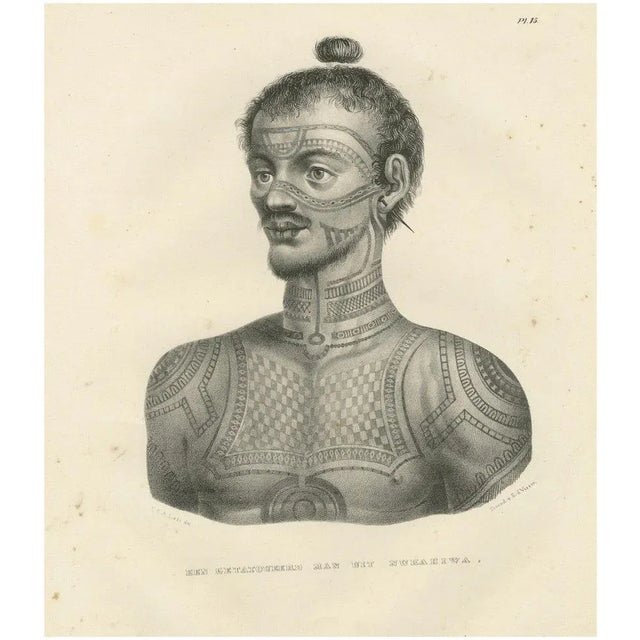
This lithograph by Karl Joseph Brodtmann presents a tattooed man from Nuku Hiva, an island in the Marquesas Islands, located … Read more This lithograph by Karl Joseph Brodtmann presents a tattooed man from Nuku Hiva, an island in the Marquesas Islands, located in French Polynesia. The artwork captures the intricate and culturally significant tattoos that adorned the bodies of Marquesan men, reflecting their social status, identity, and the rich tattooing traditions of the region. : The lithograph depicts a man from Nuku Hiva with highly detailed and elaborate tattoos covering his face, neck, chest, and shoulders. Tattooing was a deeply ingrained cultural practice in the Marquesas Islands, where intricate body art represented various aspects of the individual's identity, including their status, achievements, and lineage. - Tattoos: The tattoos on this man are extensive, covering his entire upper body with geometric patterns, circular motifs, and bands that encircle his arms and chest. The facial tattoos are particularly elaborate, forming symmetrical designs across his forehead, cheeks, and chin, which are consistent with the Marquesan tradition of tā moko, the art of body and face tattooing. These tattoos often signified bravery, social rank, and personal accomplishments. The chest is adorned with a checkered pattern, surrounded by detailed bands of tattooed designs, and the entire composition showcases the complexity and artistry of Marquesan tattoos. - Hairstyle: The man’s hair is tied into a topknot, a traditional style often associated with Polynesian men of high status. His expression is neutral but dignified, emphasizing the cultural importance of his appearance. This portrait not only emphasizes the individuality of the man but also highlights the broader cultural practice of tattooing in the Marquesas Islands, offering European audiences a detailed view of this intricate art form. Maker: Karl Joseph Brodtmann (1787–1862) was a Swiss lithographer whose works focused on ethnographic, scientific, and natural history subjects. His detailed illustrations of people from around the world contributed to European knowledge of distant cultures during the 19th century. Brodtmann’s ability to capture cultural details such as tattoos, clothing, and adornments in a realistic yet artistically compelling way made his work valuable to both scientists and art collectors. Technique and Style: This lithograph, like Brodtmann’s other works, was created using lithography, a method that allowed him to capture fine details and subtle shading. His style here combines ethnographic accuracy with a focus on the intricate beauty of the tattoos, which are carefully rendered to emphasize their patterns and symmetry. The use of shading brings out the three-dimensionality of the tattoos, making them appear as if they are truly part of the man’s skin, while also highlighting the texture of his body. The portrait’s clean, simple composition ensures that all attention is drawn to the tattoos and their significance. Cultural Context: Tattooing in the Marquesas Islands was a central cultural practice for men, and receiving these intricate tattoos was a rite of passage that marked a man’s transition to adulthood. Tattoos in this region were not only decorative but also served as symbols of the individual’s rank, bravery, and personal history. Marquesan tattooing was considered one of the most elaborate and sophisticated tattooing traditions in Polynesia, with designs that often covered the entire body over the course of several years. The man from Nuku Hiva depicted here must have been a person of high status within his community, as the extent and intricacy of his tattoos suggest that he had undergone many sessions of tattooing, a process that was both physically and spiritually significant. Brodtmann’s depiction of this tattooed man provides European audiences with a glimpse into the tattooing practices of the Marquesas Islands, reflecting a broader fascination with the so-called "exotic" customs of Polynesian cultures during the 19th century. The portrait contributes to the ethnographic documentation of the time, offering insight into the complex artistry and cultural importance of tattooing in the Pacific Islands. See less
- Dimensions
- 10.24ʺW × 12.6ʺH
- Art Subjects
- Figure
- Period
- Mid 19th Century
- Item Type
- Vintage, Antique or Pre-owned
- Materials
- Paper
- Condition
- Good Condition, Unknown, Some Imperfections
- Color
- Condition Notes
- Very Good — This vintage item has no defects, but it may show slight traces of use\. Condition: good, given … moreVery Good — This vintage item has no defects, but it may show slight traces of use\. Condition: good, given age. General age-related toning and/or occasional minor defects from handling. Some stains along the right border, not affecting the image. Please study scan carefully. less
Returns & Cancellations
Return Policy - All sales are final 48 hours after delivery, unless otherwise specified in the description of the product.
Cancellation Policy - Prior to shipping or local pickup, buyers may cancel an order for up to 48 hours, unless otherwise specified.
Related Collections
- Frank Stella Original Prints
- George Barbier Original Prints
- Byzantine Original Prints
- Louis XIII Original Prints
- Pedro Friedeberg Original Prints
- Abraham Rattner Original Prints
- Toledo Original Prints
- Rosenthal Original Prints
- Silver Finish Original Prints
- Gustave Baumann Original Prints
- Robert Kipniss Original Prints
- Botanical Prints
- Framed Prints
- Woodblock Prints
- Japanese Woodblock Prints
- Screen Prints
- Bird Prints
- Thomas McKnight Original Prints
- Teak Original Prints
- Paul Wunderlich Original Prints
- Chaim Gross Original Prints