




Details
Description
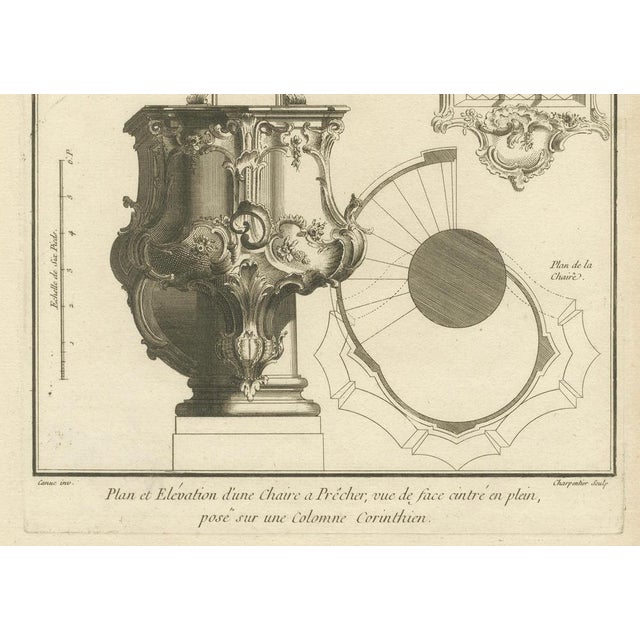
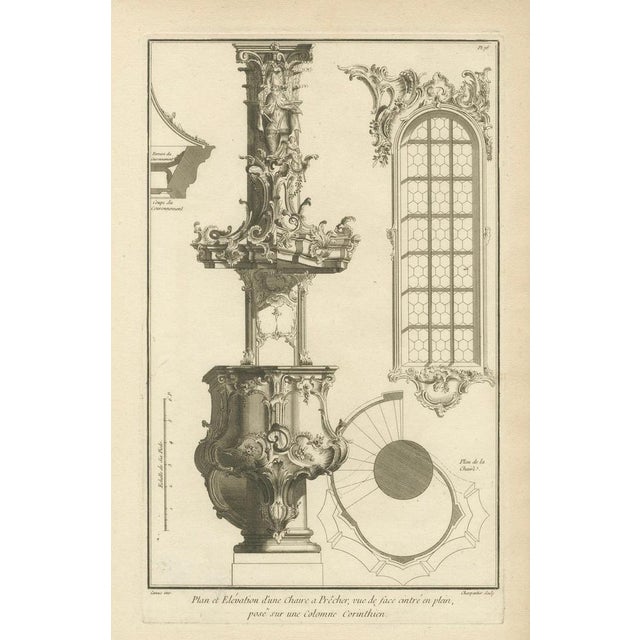
Architectural design with the central elements depicted in the engraving: the Baroque design of the pulpit, the inclusion of a … Read more Architectural design with the central elements depicted in the engraving: the Baroque design of the pulpit, the inclusion of a Corinthian column which suggests a classical influence, and the presence of a staircase plan indicating the approach to the pulpit. Dating approximately between 1740 and 1760. The artist responsible for this design is Franz Xaver Habermann, and it was published by Johann Georg Hertel I in Augsburg. The design shows a richly decorated pulpit and archway, typical of the Rococo style, which is known for its elaborate ornamentation, asymmetry, and curves. This image is one of four numbered plates related to this work. The detail in the engraving is meticulous, showcasing the elaborate aesthetic that characterized much of the European art and architecture during the mid-18th century. Franz Xaver Habermann (1721–1796) was a German engraver and etcher who was active during the 18th century, a period marked by the Rococo style. Although not as widely known as some of his contemporaries, Habermann contributed significantly to the graphic arts during his time. Habermann's work often featured architectural designs, such as the intricate pulpit depicted in the image you've provided. He was skilled in creating prints that detailed elaborate decorative schemes and architectural fantasies, which were popular during the Rococo period. His creations were known for their intricate details and the fluidity of their lines, capturing the lightness and ornamental excesses that characterized Rococo design. Johann Georg Hertel I, who published Habermann's work, was part of a notable family of engravers and publishers in Augsburg, a city that was an important center for publishing in Europe at the time. The Hertel family played a significant role in disseminating artistic and architectural designs through their publications. While specific details about Habermann’s life and training may not be as well-documented as those of major artists of his time, his surviving works suggest that he was a highly skilled engraver who had mastered the Rococo style, contributing to the spread of this aesthetic through his printed works. His designs would have influenced the tastes of the period, both within Germany and across Europe, where the appetite for such elaborate designs was significant. More in detail about this engraving: This engraving features a detailed representation of a Baroque-style preacher's pulpit, intricately designed and placed upon a Corinthian column, demonstrating the grandeur of religious architecture during the Baroque period. The pulpit is richly adorned with elaborate scrollwork, acanthus leaves, and possibly religious iconography, all common elements in Baroque ecclesiastical design. A significant feature of this print is the inclusion of architectural details such as the Corinthian column base, known for its ornate capital with acanthus leaves and scrolls, which supports the pulpit above. This classical element signifies stability and order, providing a stark contrast to the exuberant decoration of the pulpit itself. To the right of the pulpit, there's a tall, slender window filled with panes that could either be clear or stained glass, framed by an ornate window arch with similar florid designs, echoing the overall style of the pulpit. The window provides a sense of the scale and the context within which this pulpit would have been situated, likely a large, well-lit church interior. Below the main image, there is a floor plan showing the approach to the pulpit, including the staircase that leads up to it, allowing one to imagine how a preacher would ascend to deliver a sermon. The plan and elevation together give a comprehensive view of the design, illustrating not only the pulpit's form but also its function within a sacred space. Overall, the print is a testament to the lavish attention to detail typical of the period and provides a window into the artistry involved in creating spaces designed to inspire and uplift. Note from seller: In our shop we also published the other three engravings in this series and they might still be on offer as well. See less
- Dimensions
- 10.24ʺW × 16.54ʺH
- Art Subjects
- Still Life
- Item Type
- Vintage, Antique or Pre-owned
- Materials
- Paper
- Condition
- Unknown, Some Imperfections
- Color
- Gold
- Condition Notes
- Very Good — This vintage item has no defects, but it may show slight traces of use\. Good, given age. … moreVery Good — This vintage item has no defects, but it may show slight traces of use\. Good, given age. Light soiling near paper edges. Light staining. Left paper edges a bit rough from binding. Very light creasing from handling. General age-related toning and/or occasional minor defects from handling. Please study scan carefully. less
Returns & Cancellations
Return Policy - All sales are final 48 hours after delivery, unless otherwise specified in the description of the product.
Cancellation Policy - Prior to shipping or local pickup, buyers may cancel an order for up to 48 hours, unless otherwise specified.
Related Collections
- George Barbier Original Prints
- Byzantine Original Prints
- Frank Stella Original Prints
- Rosenthal Original Prints
- Toledo Original Prints
- Fornasetti Original Prints
- Shaun Ellison Original Prints
- Abraham Rattner Original Prints
- Gustave Baumann Original Prints
- Silver Finish Original Prints
- Pedro Friedeberg Original Prints
- Botanical Prints
- Framed Prints
- Japanese Woodblock Prints
- Screen Prints
- Woodblock Prints
- Bird Prints
- Thomas McKnight Original Prints
- Teak Original Prints
- Spray Paint Original Prints
- Chaim Gross Original Prints
- Paul Wunderlich Original Prints