

Details
Description
Alphonse Mucha (1860-1939)
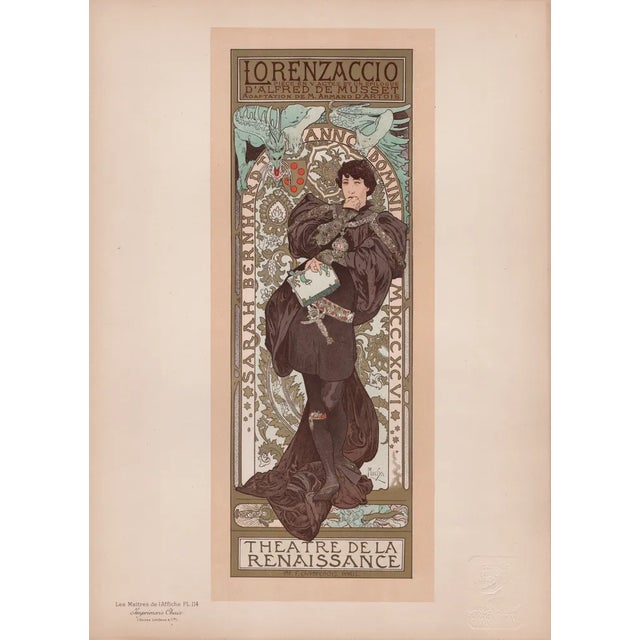
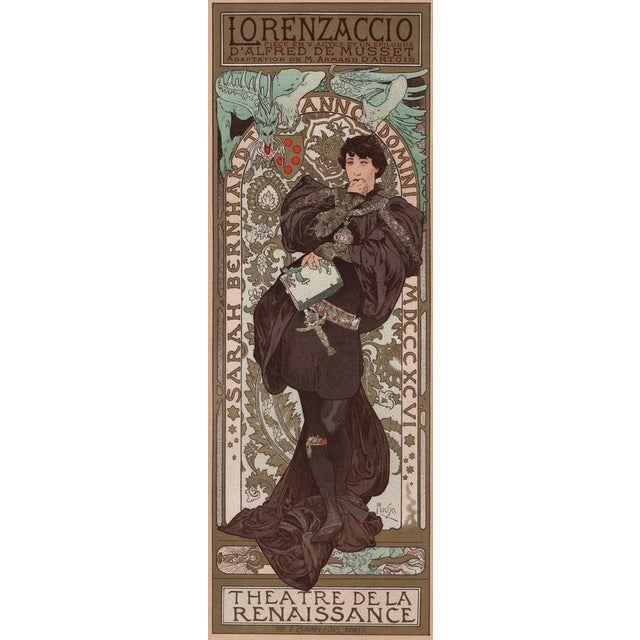
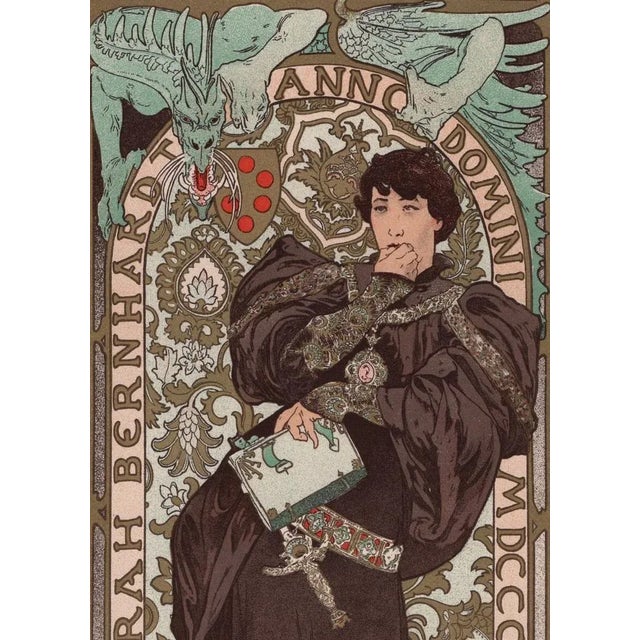
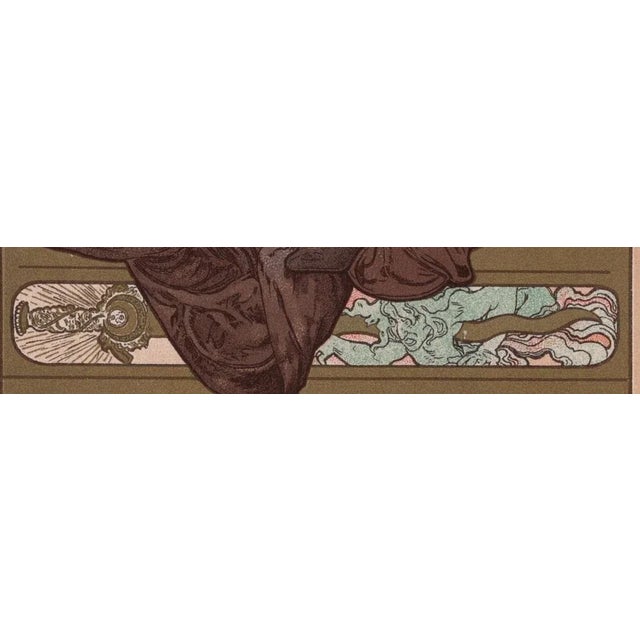
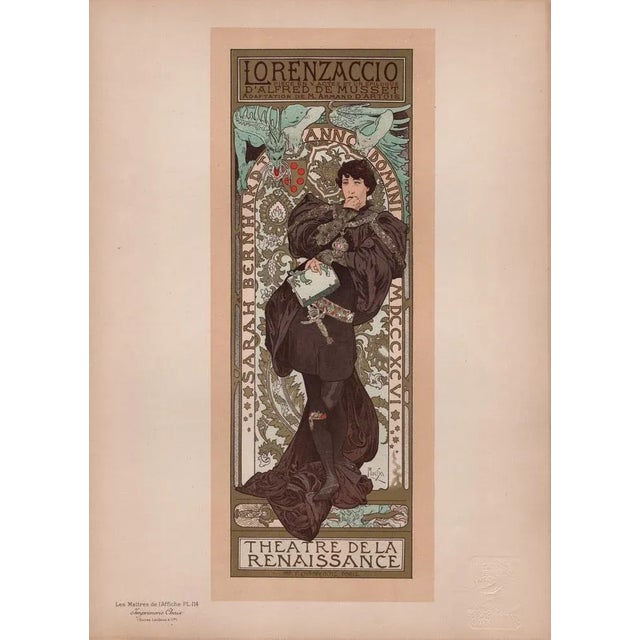
Lorenzaccio - Sarah Bernhardt
Year of ideation: 1896
Year of printing: 1898
Lithograph on wove paper with …
Read more
Alphonse Mucha (1860-1939)
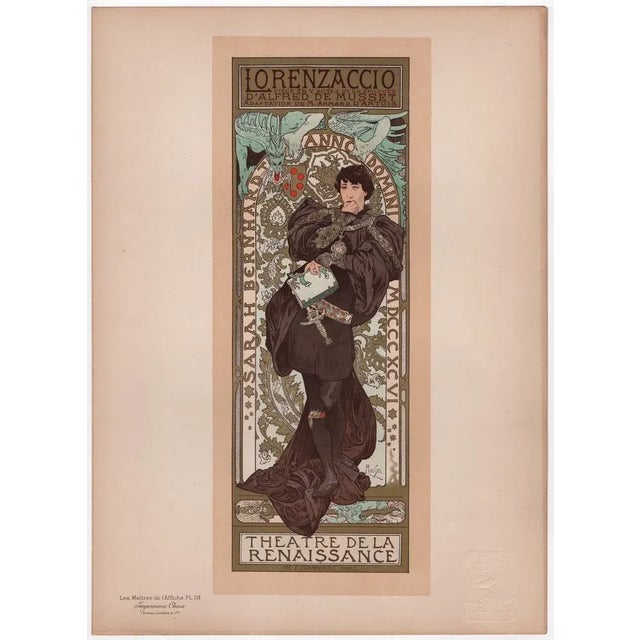
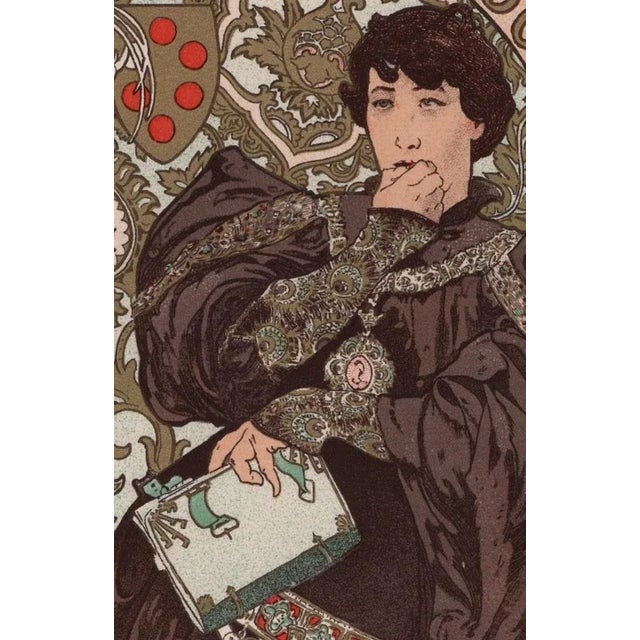
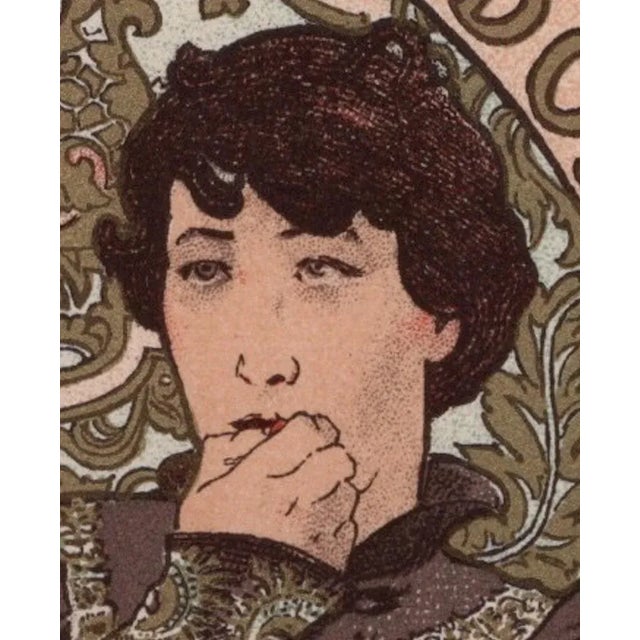
Lorenzaccio - Sarah Bernhardt
Year of ideation: 1896
Year of printing: 1898
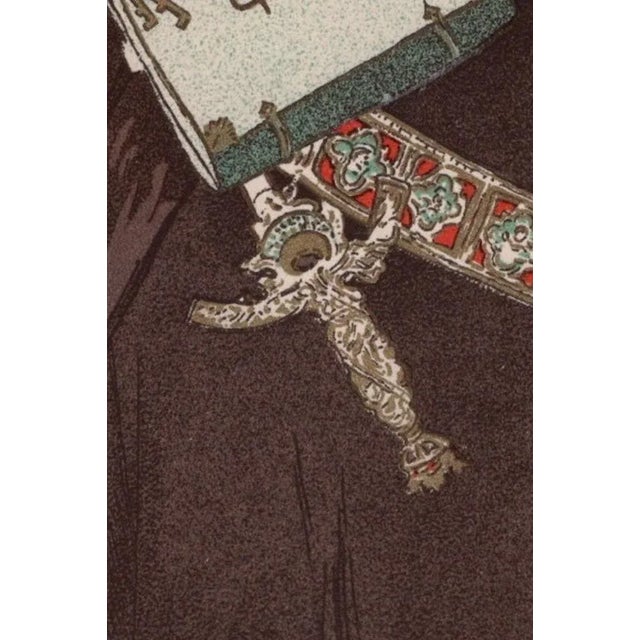
Lithograph on wove paper with Gold
Publisher: Chaix
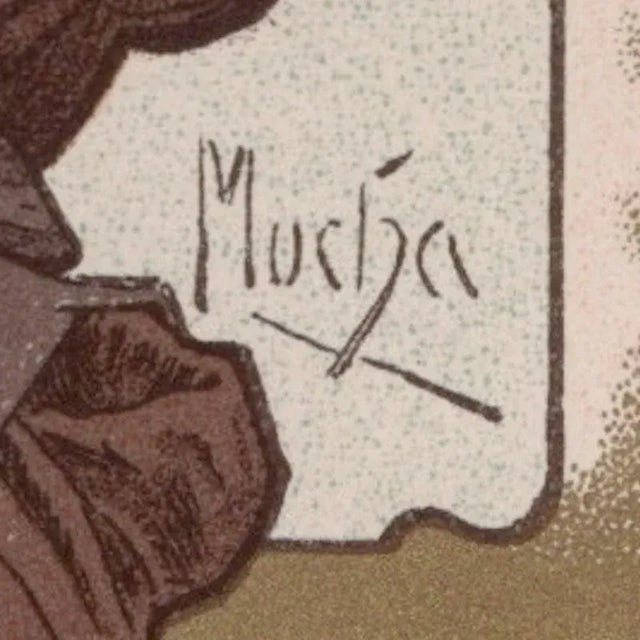
Signed in the plate, lower right
from the famous collection "Les Maîtres de l'Affiche"
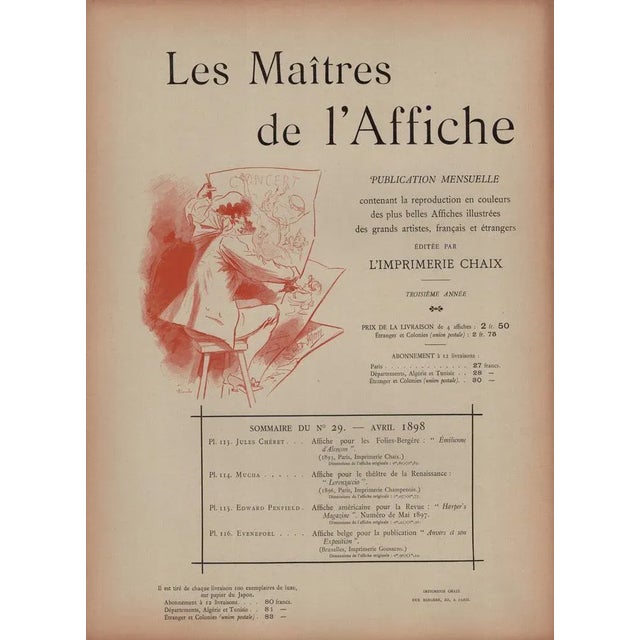
Issue # 29, Plate #114, April 1898
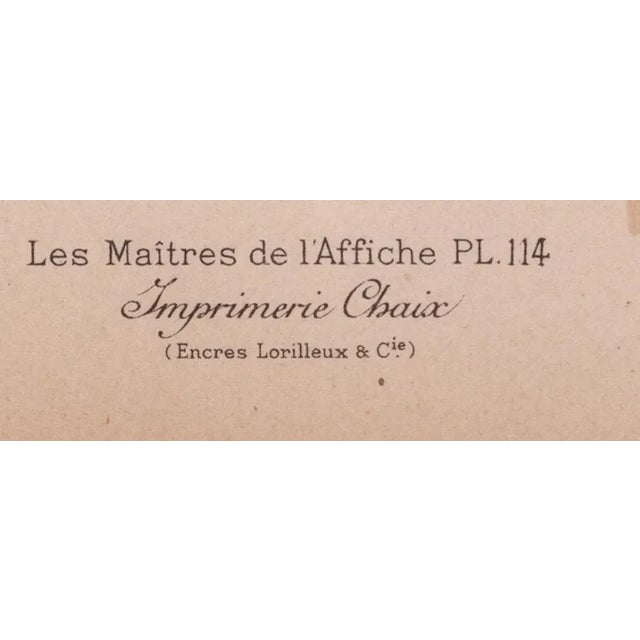
Bottom left:
Les Maîtres de l'Affiche PL. 114
Imprimerie Chaix
(Encres Lorilleux & Cie.)
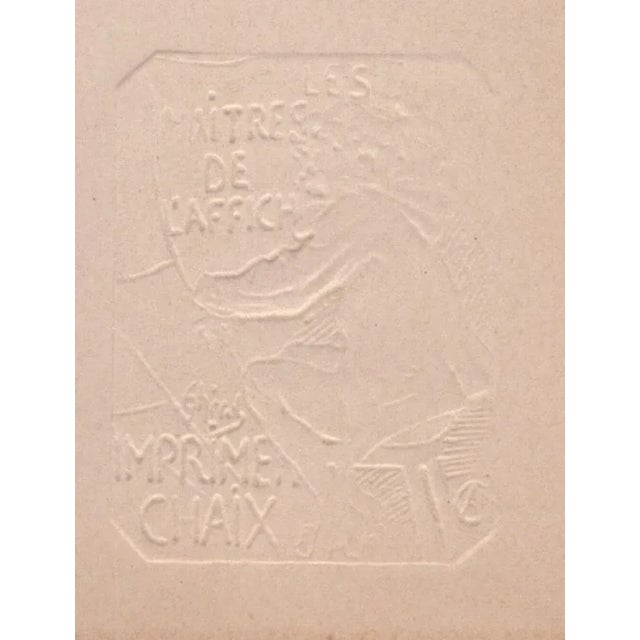
Bottom right, blind stamp of publisher / edition
Excellent Condition
Literature:
"The Complete Masters of the Poster", edited by Stanley Appelbaum, Dover, New York, 1990, p. 114
___
About the collection "Les Maîtres de l'Affiche"
Les Maîtres de l'Affiche (The Masters of the Poster) is one of the most prestigious and influential art publications in history Its 256 color plates have preserved for each succeeding generation a wide-ranging selection of outstanding posters from the turn of the century, when that popular art form had reached its first peak.
The earliest printed posters were chiefly typographic, with relatively few illustrated examples. But in the second half of the nineteenth century, when all types of commercial products, including printed matter, were being aesthetically upgraded, largely thanks to various arts-and-crafts movements, serious artists such as Manet began to see new possibilities in the poster medium. It was especially Jules Chéret (1836-1932) whose unique combination of artistic, technical and entrepreneurial talents was to pave the way for a true poster industry. After Chéret opened his own print shop in Paris in 1866, his work continued to inspire numerous emulators in Europe and America. from 1881 on, his shop operated as a branch of the large Chaix firm (Imprimerie Chaix)
By the 1890s the streets of every great metropolis were enlivened by large, colourful posters.
This Chaix publication, Les Maîtres de l'Affiche, was issued as separate numbered sheets measuring 40 x 29 cm. Every month for 60 months, from December 1895 through November 1900, subscribers received a wrapper containing four consecutively numbered poster. On 16 occasions the monthly wrapper also contained a bonus plate, a specially created art lithograph. Jules Chéret, artistic director of Chaix and father of the modern poster, emerged with the lion's share of the plates, one Chéret being included in each monthly issue of four, and seven of the 16 unnumbered bonus plates.
Of the 97 artists represented in Les Maîtres de l'Affiche, some were preeminent painters and printmakers at various stages of their careers: Toulouse-Lautrec, Denis, Bonnard, Vallotton, Puvis de Chavannes. Others were famous illustrators and cartoonists of the period, still well known to art collectors and bibliophiles. Forain, Caran d'Ache, Ibels, Willette, Boutet de Monvel, Léandre. But there were also all those whose names say "poster," the conquering pioneers of the new medium. Chéret himself, Mucha, Steinlen, the Beggarstaffs, Grasset, Penfield, Parrish, Bradley, Hardy The list could go on and on.
___
About the Artist
Alfons Maria Mucha (1860 – 1939), known internationally as Alphonse Mucha, was a Czech painter, illustrator, and graphic artist. Living in Paris during the Art Nouveau period, he was widely known for his distinctly stylised and decorative theatrical posters, particularly those of Sarah Bernhardt. He produced illustrations, advertisements, decorative panels, as well as designs, which became among the best-known images of the period.
He is considered the most important pure Art Nouveau artist and one of the prominent poster artists of all times.
Mucha and Sarah Bernhardt
At the end of 1894, Mucha's career took a dramatic and unexpected turn when he began to work for the French stage actress Sarah Bernhardt. As Mucha later described it, on 26 December, Bernhardt made a telephone call to Maurice de Brunhoff, the manager of the publishing firm Lemercier, which printed her theatrical posters, ordering a new poster for the continuation of the play Gismonda. The play, by Victorien Sardou, had already opened with great success on 31 October 1894 at the Théâtre de la Renaissance on the Boulevard Saint-Martin. Bernhardt decided to have a poster made to advertise the prolongation of the theatrical run after the Christmas break, insisting it be ready by 1 January 1895. Because of the holidays, none of the regular Lemercier artists was available.
When Bernhardt called, Mucha happened to be at the publishing house correcting proofs. He already had experience painting Bernhardt; he had made a series of illustrations of her performing in Cleopatra for Le Costume au Théâtre in 1890. When Gismonda opened in October 1894, Mucha had been commissioned by the magazine Le Gaulois to make a series of illustrations of Bernhardt in the role for a special Christmas supplement, which was published at Christmas 1894, for the high price of fifty centimes per copy.
Brunhoff asked Mucha to quickly design the new poster for Bernhardt. The poster was more than life-size; a little more than two meters high, with Bernhardt in the costume of a Byzantine noblewoman, dressed in an orchid headdress and a floral stole, and holding a palm branch in the Easter procession near the end of the play. One of the innovative features of the poster was the ornate rainbow-shaped arch behind the head, almost like a halo, which focused attention on her face; this feature appeared in all of Mucha's future theater posters. Probably because of a shortage of time, some areas of the background were left blank, without his usual decoration. The only background decoration was the Byzantine mosaic tiles behind her head. The poster featured extremely fine draftsmanship and delicate pastel colors, unlike the typical brightly colored posters of the time. The top of the poster, with the title, was richly composed and ornamented, and balanced the bottom, where the essential information was given in the shortest possible form: just the name of the theater.
The poster appeared on the streets of Paris on 1 January 1895 and caused an immediate sensation. Bernhardt was pleased by the reaction; she ordered four thousand copies of the poster in 1895 and 1896, and gave Mucha a six-year contract to produce more. with his posters all over the city, Mucha found himself quite suddenly famous.
Following Gismonda, Bernhardt switched to a different printer, F. Champenois, who, like Mucha, was put under contract to work for Bernhardt for six years. Champenois had a large printing house on Boulevard Saint Michel that employed three hundred workers, with twenty steam presses. He gave Mucha a generous monthly salary in exchange for the rights to publish all his works. with his increased income, Mucha was able to move to a three-bedroom apartment with a large studio inside a large historic house at 6 rue du Val-de-Grâce originally built by François Mansart.
Mucha designed posters for each successive Bernhardt play, beginning with a reprise of one of her early great successes, La Dame aux Camelias (September 1896), followed by Lorenzaccio (1896); Medea (1898); La Tosca (1898) and Hamlet (1899). He sometimes worked from photographs of Bernhardt, as he did for La Tosca. In addition to posters, he designed theatrical programs, sets, costumes, and jewellery for Bernhardt. The enterprising Bernhardt set aside a certain number of printed posters of each play to sell to collectors.
___
Important:
. The listing is for the original lithograph.
. The cover of the issue by Jules Chéret is shown for reference.
This piece has an attribution mark,
I am sure that it is completely authentic and take full responsibility for any authenticity
issues arising from misattribution
See less
- Dimensions
- 11.42ʺW × 15.75ʺH
- Art Subjects
- Nude
- Period
- Late 19th Century
- Country of Origin
- France
- Item Type
- Vintage, Antique or Pre-owned
- Condition
- Good Condition, Original Condition Unaltered, Some Imperfections
- Color
- Condition Notes
- Excellent — This vintage piece is in near original condition. It may show minimal traces of use and/or have slight … moreExcellent — This vintage piece is in near original condition. It may show minimal traces of use and/or have slight restorations\. Near Mint Condition, consistent with age less
Returns & Cancellations
Return Policy - All sales are final 48 hours after delivery, unless otherwise specified in the description of the product.
Cancellation Policy - Prior to shipping or local pickup, buyers may cancel an order for up to 48 hours, unless otherwise specified.
Related Collections
- Frank Stella Original Prints
- George Barbier Original Prints
- Byzantine Original Prints
- Robert Kipniss Original Prints
- Dye Transfer Original Prints
- Silver Finish Original Prints
- Gustave Baumann Original Prints
- Medium-Density Fibreboard Original Prints
- Louis XIII Original Prints
- Johannes Kip Original Prints
- Botanical Prints
- Framed Prints
- Bird Prints
- Woodblock Prints
- Screen Prints
- Japanese Woodblock Prints
- Thomas McKnight Original Prints
- Teak Original Prints
- Red Grooms Original Prints
- Paul Wunderlich Original Prints
- Chaim Gross Original Prints