




Details
Description
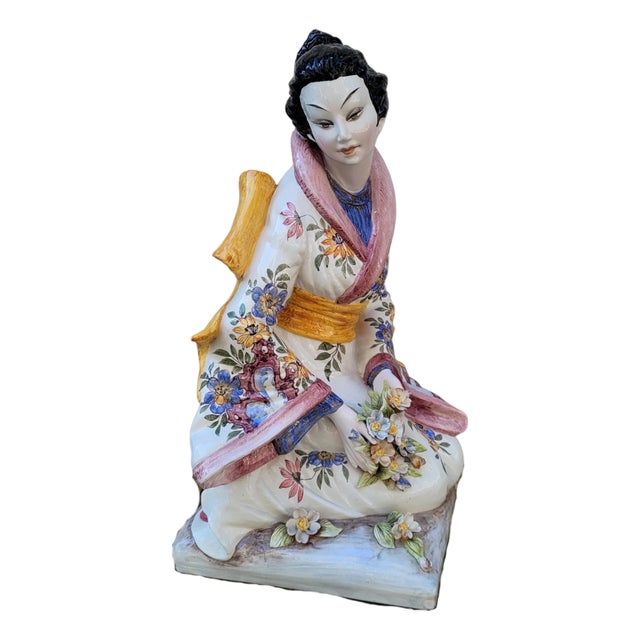
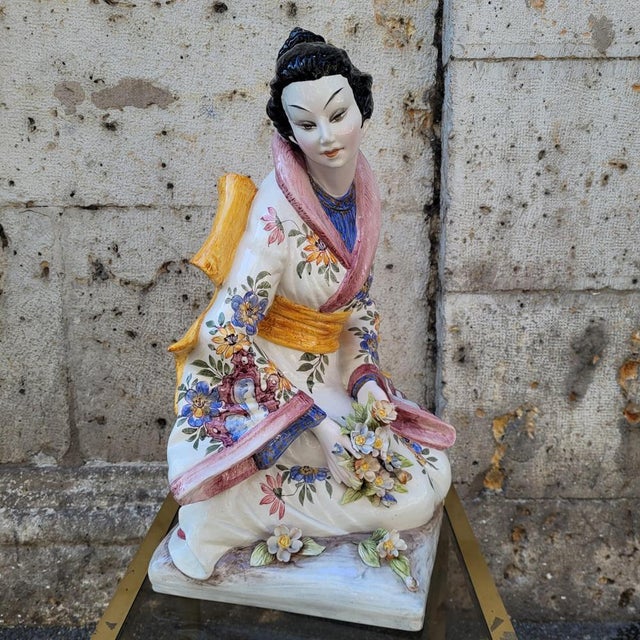
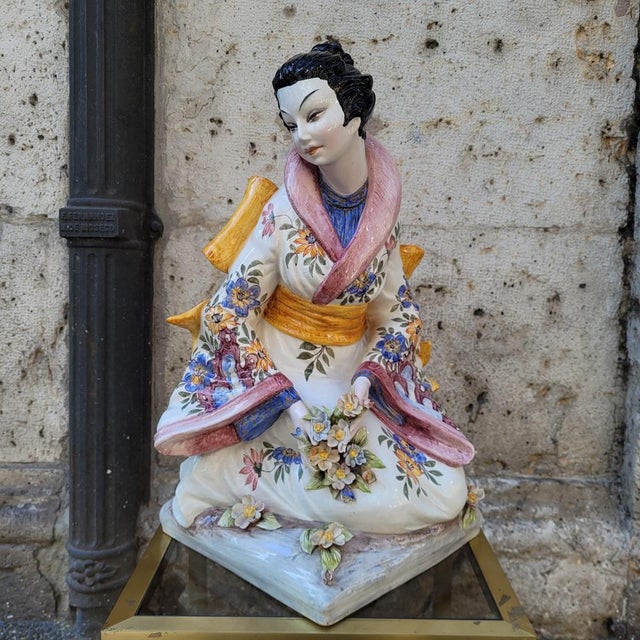
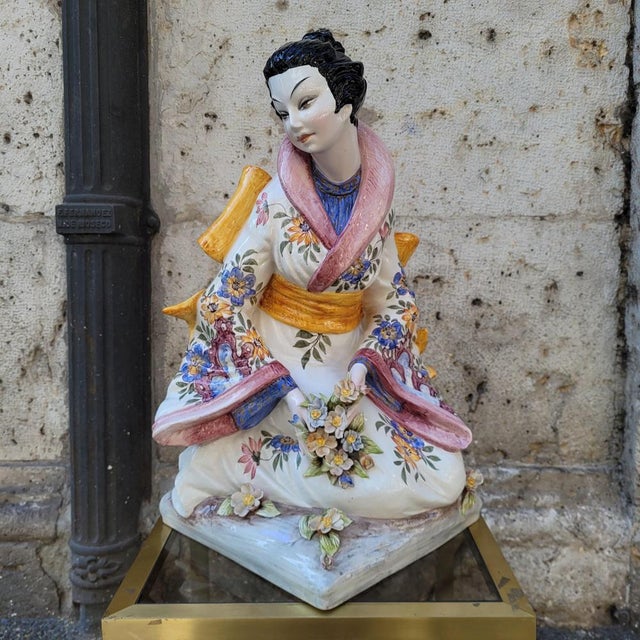
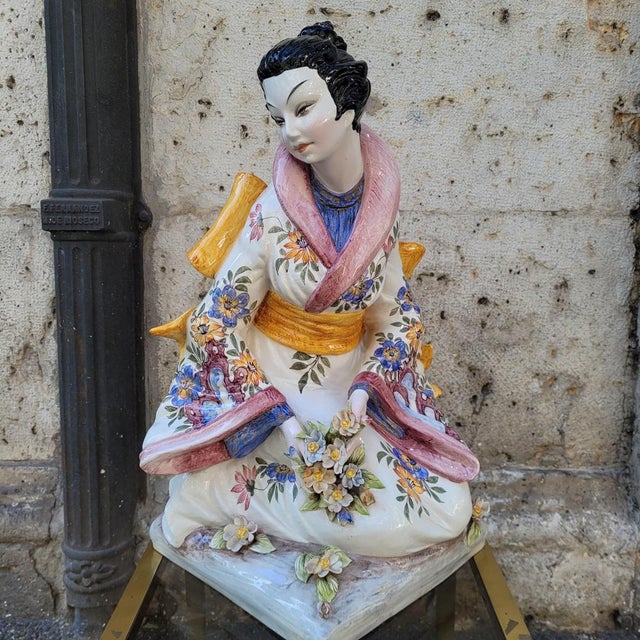
“Geisha,” glazed ceramic or majolica, Domenico Poloniato, 1960s – Italy
Spectacular porcelain sculpture of a geisha, made by Italian ceramist …
Read more
“Geisha,” glazed ceramic or majolica, Domenico Poloniato, 1960s – Italy
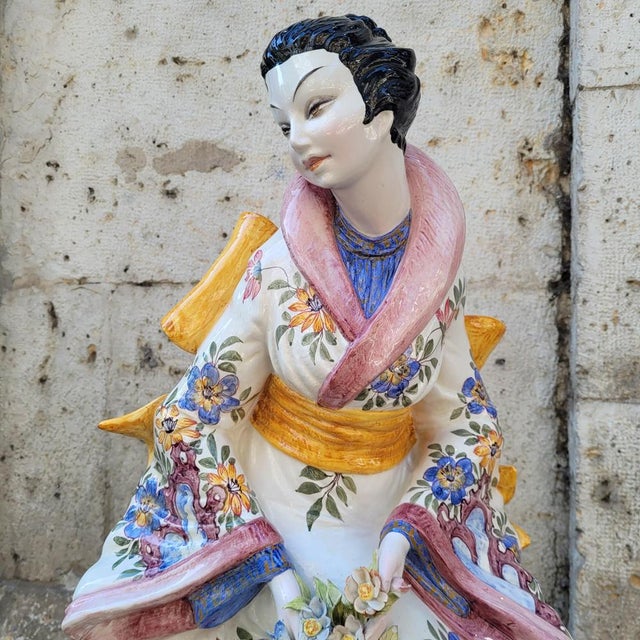
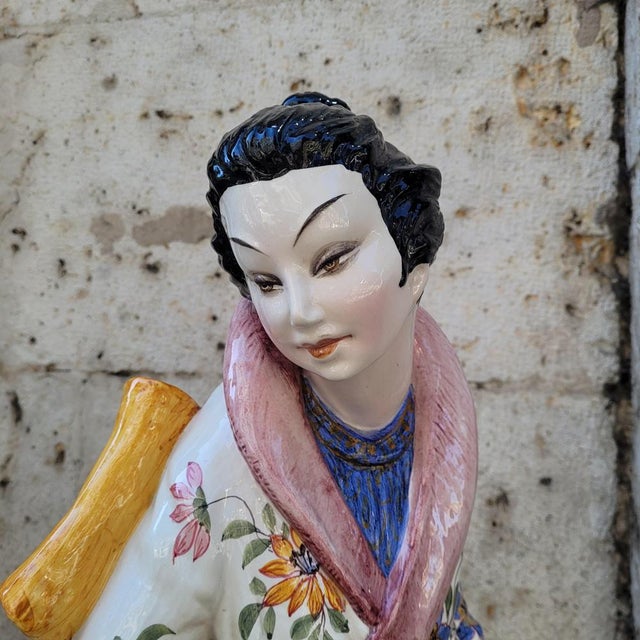
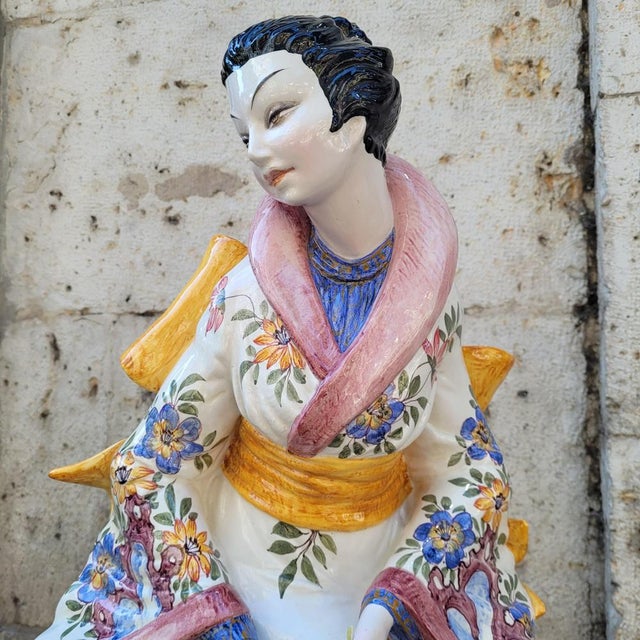
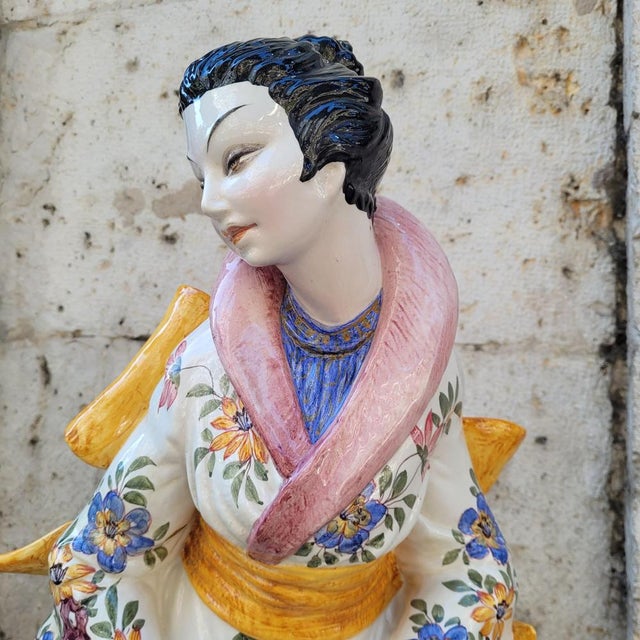
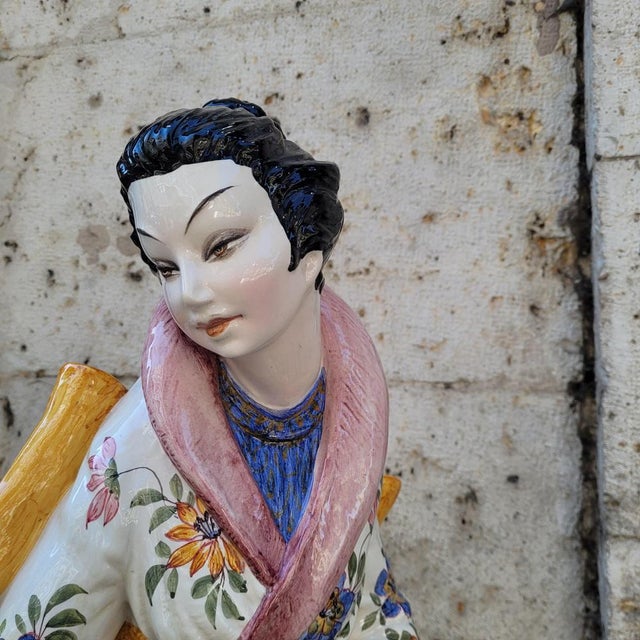
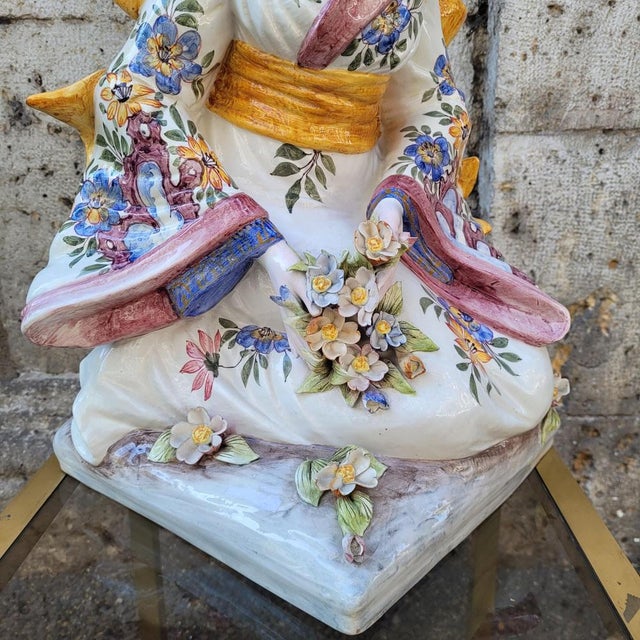
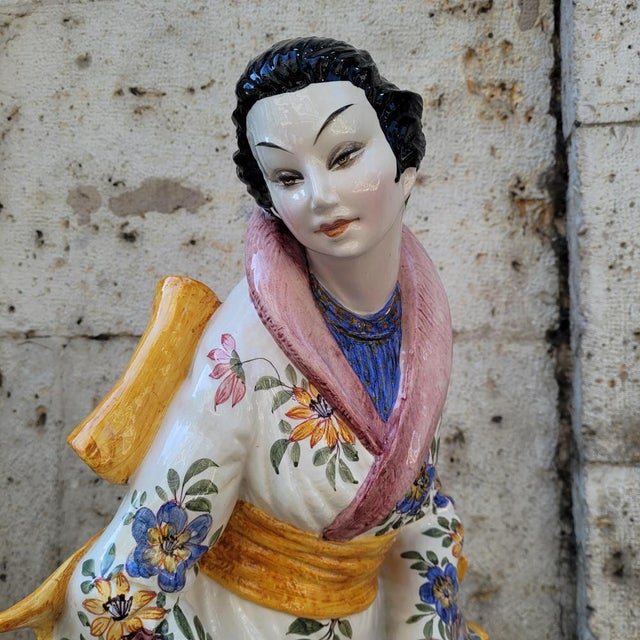
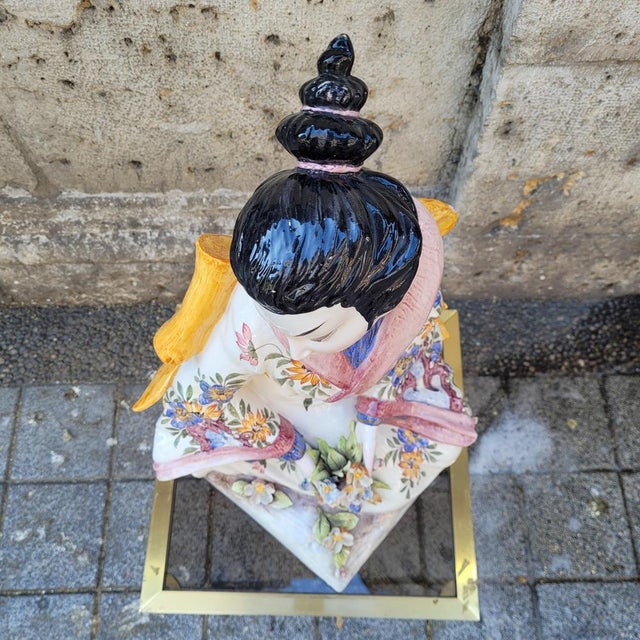
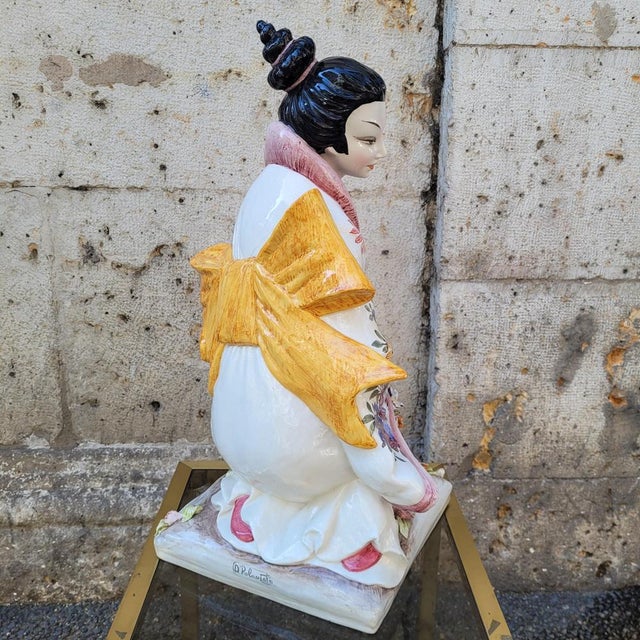
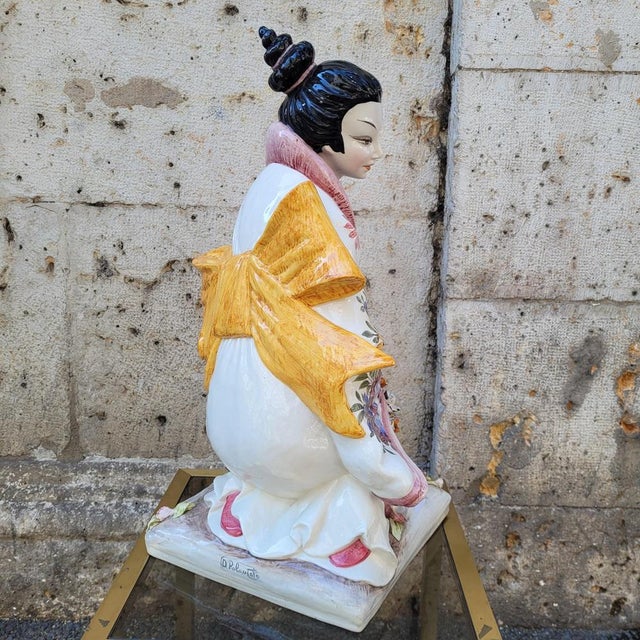
Spectacular porcelain sculpture of a geisha, made by Italian ceramist Domenico Poloniato in the 1960s. Japanese geisha were women who entertained at banquets and gatherings with music, dance, and conversation. She is depicted seated, knees resting to one side, dressed in a white kimono decorated with floral motifs in shades of pink, blue, and orange, with a pink trim and a large yellow bow tied in the back that hugs her waist.
She holds a delicate bouquet of flowers in her hands, which also spread out on the ground, as if she were picking them right then and there. Her face is serene, pale, with reddish-orange lipstick and thin, diagonally positioned eyebrows, typical geisha traits. Her elegant posture captures the aura of femininity and sensitivity. Her hair is tied back in a bun, divided into three sections by pink elastic bands, which stand out against her dark hair. The back of the base is signed, "D. Poloniato." Inside, a stamp reads, "Spiller Italy."
Majolica is a type of tin-glazed ceramic decorated with colors on a white background. It is distinguished by its layer of opaque tin oxide-based glaze, which gives it its characteristic white, glossy surface. Designs are painted onto the glaze before firing. The technique was developed in Spain and spread to Italy during the Renaissance, where it achieved great popularity.
Domenico Poloniato (1926-2013)
Poloniato was known for his passion for large-scale sculptures and intricately detailed porcelain. He was deeply drawn to oriental exoticism, a fascination reflected in his celebrated collection of Japanese warriors and glazed female figures, crafted in shades of orange, pink, and blue, which appear both as ornamental sculptures and in the form of ceramic lamps. Currently, his son Diego is responsible for maintaining the Homo Faber workshop.
Material: Porcelain
Author: Domenico Poloniato
Period: 1960s
Country of Origin: Italy
Good condition according to age and use
Dimensions: 62 x 40 x 40 cm. This piece has an attribution mark,
I am sure that it is completely authentic and take full responsibility for any authenticity
issues arising from misattribution
See less
- Dimensions
- 15.75ʺW × 15.75ʺD × 24.41ʺH
- Period
- 1960s
- Country of Origin
- Italy
- Item Type
- Vintage, Antique or Pre-owned
- Materials
- Porcelain
- Condition
- Good Condition, Unknown, Some Imperfections
- Color
- Blue
- Condition Notes
- Good — This vintage item remains fully functional, but it shows sign of age through scuffs, dings, faded finishes, minimal … moreGood — This vintage item remains fully functional, but it shows sign of age through scuffs, dings, faded finishes, minimal upholstery defects, or visible repairs. less
Returns & Cancellations
Return Policy - All sales are final 48 hours after delivery, unless otherwise specified in the description of the product.
Cancellation Policy - Prior to shipping or local pickup, buyers may cancel an order for up to 48 hours, unless otherwise specified.
Related Collections
- Wildwood Models and Figurines
- Rose Quartz Models and Figurines
- Ardalt Models and Figurines
- Villeroy and Boch Models and Figurines
- Models and Figurines in Lexington, KY
- Bennington Potters Models and Figurines
- Political and Patriotic Models and Figurines
- Unlacquered Brass Finish Models and Figurines
- Sèvres Porcelain Models and Figurines
- William Kent Models and Figurines
- Acrylic Paint Models and Figurines
- Vinyl Models and Figurines
- Maison Jansen Models and Figurines
- Jasper Models and Figurines
- Bright Pink Models and Figurines
- Brass Models and Figurines
- Staffordshire Dog Figurines
- Italian Models and Figurines
- Elephant Figurines
- Cat Figurines
- Antique Model Ships
- Ceramic Cats
- Bird Figurines
- Dog Figurines
- Jade Models and Figurines