

Details
Description
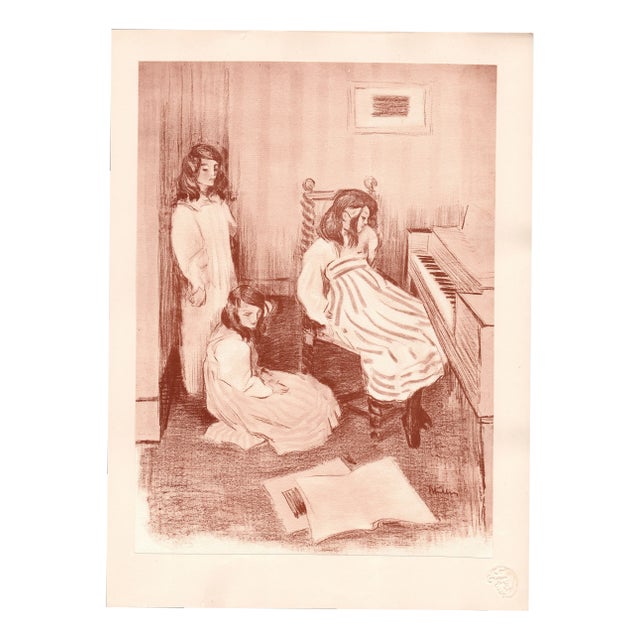
Alfredo Müller
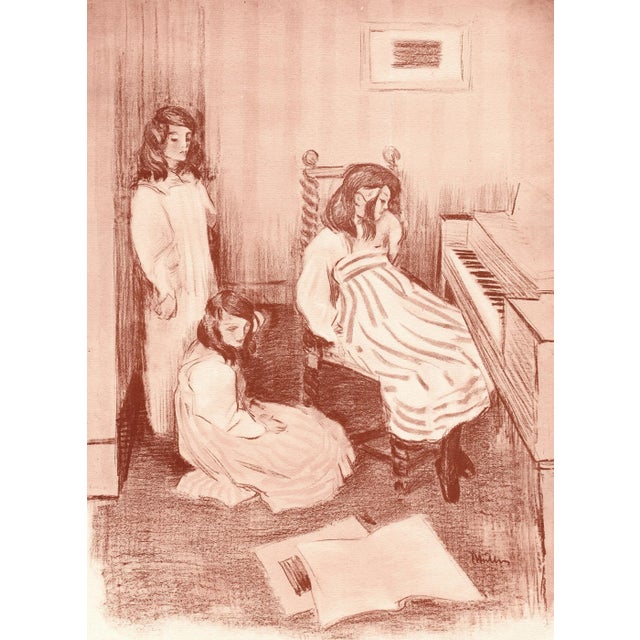
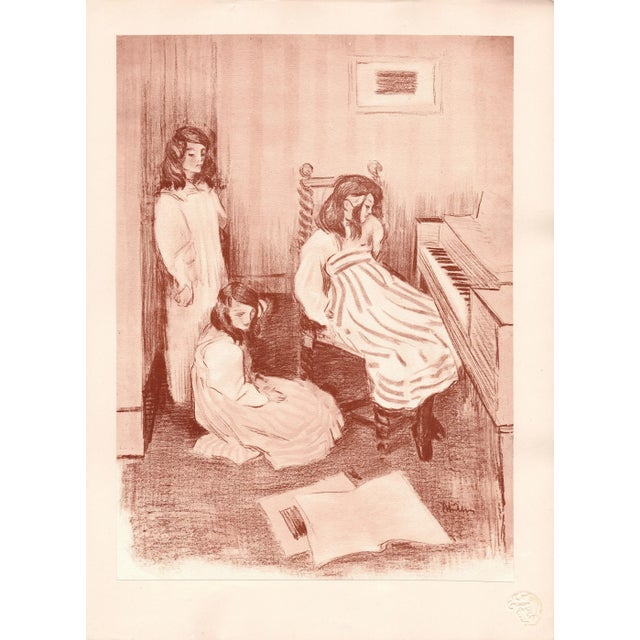
Bouderie
(Sulking)
Original Lithograph from the glorious portfolio "L'Estampe Moderne", issue #18 (October 1898)
On wove paper
Year: …
Read more
Alfredo Müller
Bouderie
(Sulking)
Original Lithograph from the glorious portfolio "L'Estampe Moderne", issue #18 (October 1898)
On wove paper
Year: 1898
Size (sheet): 405 x 305 mm
Size (image): 346 x 252 mm
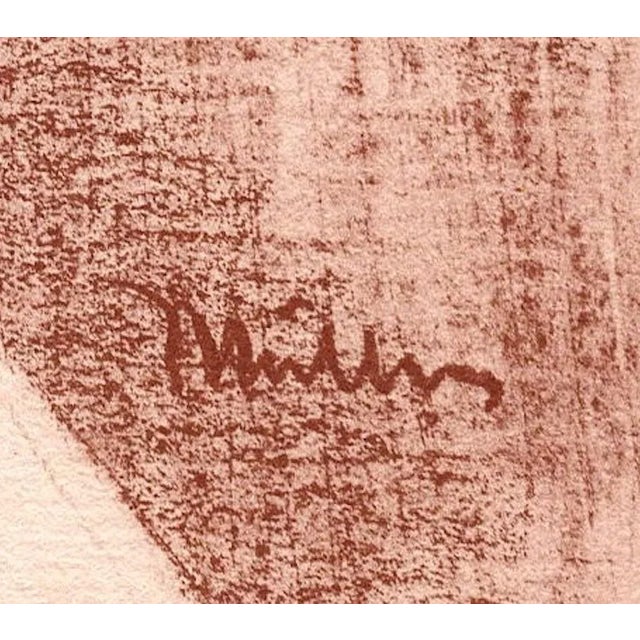
Signed in the plate, bottom right
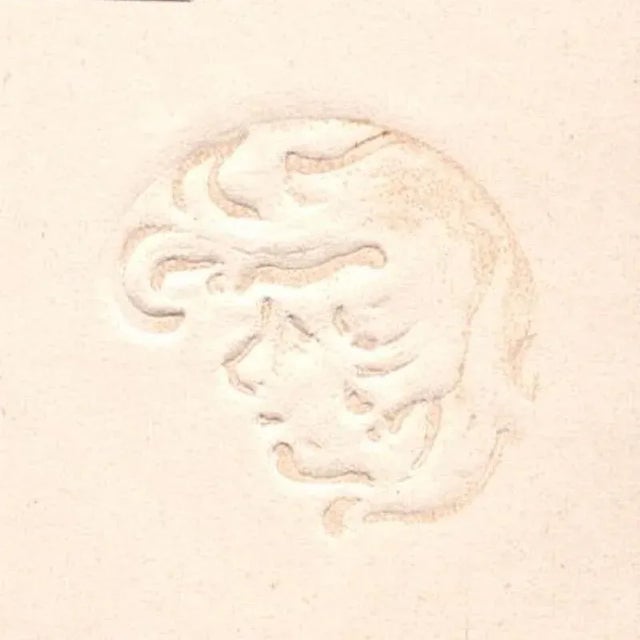
Blind stamp of the publisher, bottom right, out of the image
Excellent condition: minor signs of age and handling
Great colours
Full margins (not cropped, not trimmed)
___
About the Collection (L'Estampe Moderne)
L'Estampe Moderne appeared in 1897-1899 as a series of 24 monthly fascicles, each containing 4 original lithographs, printed by Parisian Imprimerie Champenois. Many accomplished European Art Nouveau painters contributed works to this publication, which contained only Original prints invented and produced especially for this collection. The publication was edited by Charles Masson and H. Piazza. Each issue came in a paper cover bearing an original lithograph by Alphonse Mucha.
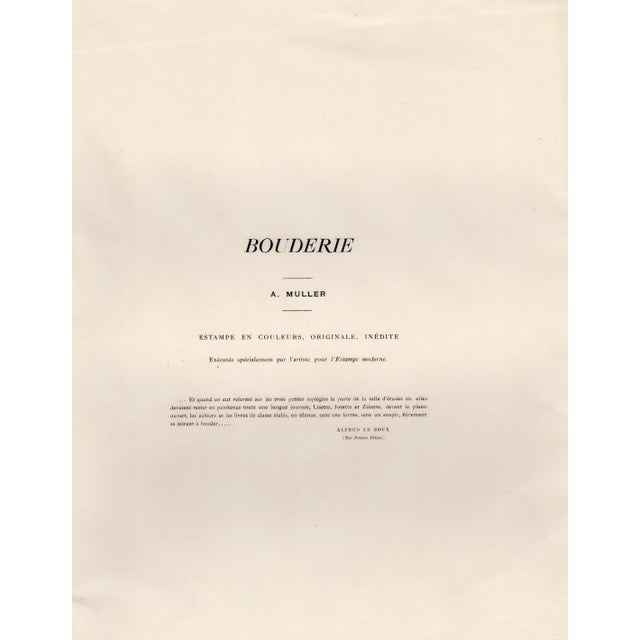
Each lithograph was accompanied by a tissue containing the details (title of the artwork, name of the artist, etc.) and a short text by a well-known author who inspired the artist (this one being from Nos Petites Filles, by Alfred Le Roux).
___
About the artist
Alfredo Müller (1869 – 1939) was a Franco-Italian painter and printmaker of Swiss nationality. As a painter from Livorno, he might have belonged to the group of the Postmacchiaioli, together with Mario Puccini, Oscar Ghiglia, Plinio Nomellini, Ulvi Liegi, Giovanni Bartolena, and others, but he is a disciple of the Florentine portraitist Michele Gordigiani. As a French engraver, he was close to Francis Jourdain, Manuel Robbe, Richard Ranft, Eugène Delâtre, Théophile Steinlen.
In 1886, as a young painter, he participated in the First Exhibition of Fine Arts of Livorno, together with established painters such as Giovanni Fattori and Silvestro Lega.
In 1889, he exhibited two of his paintings at the Universal Exhibition in Paris, where he discovered Impressionism. This moment represented a turning point in the career of the young painter, as he was always concerned with colours and vibrations of light. After his return to Tuscany, his paintings, which now reflected the influence of Impressionism, sparked debate for their overly French character.
At the same moment, the failure of the Bank of Livorno provoked the ruin of his father's house, and a few years later Müller emigrated to Paris, eventually settling in Montmartre. He made friends in the social circle of artists, writers and musicians, becoming acquainted in particular with Renoir, but also with Pissarro and Cézanne, whom he considered his master, and became a well-known etcher in colours. Among his Italian friends in Paris, we find his relative Leonetto Cappiello and Libero Andreotti.
In 1914, he was in Rome with Marguerite, whom he married in 1908. In Rome he exhibited 12 paintings at the Second Secession. Because of the war, he moved to Florence initially for a short while but he ended up staying for 18 years. The couple found a little house in the hills overlooking Florence, at Settignano. Müller painted frequently, always working on the movement of light. A great part of his work in this period was dedicated to decorative arts, in which he could express his fascination for theater and its magic. After the political situation worsened, he returned to France in 1932 where he spent his last years. He died in Paris in 1939.
___
from the text on the tissue paper, by Alfred Le Roux:
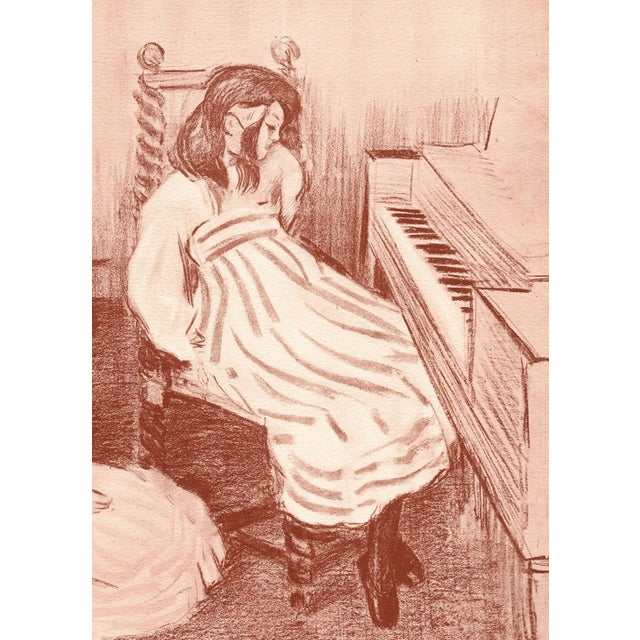
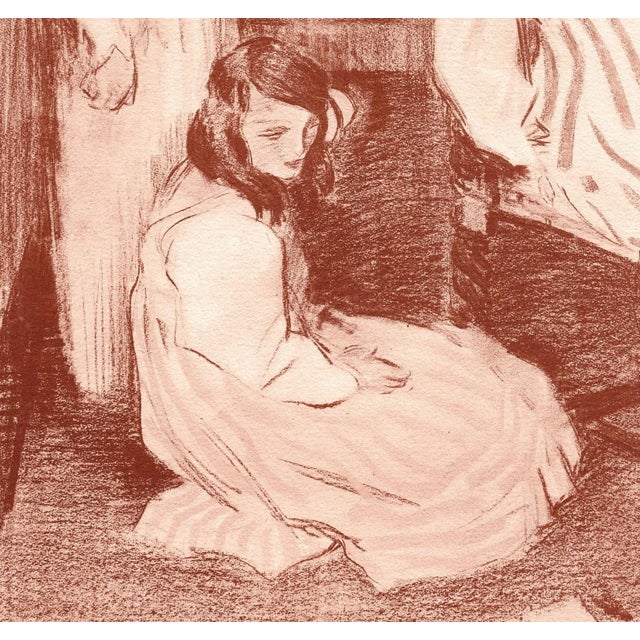
Et quand on eut refermé sur les trois petites espiègles la porte de la salle d'études où elles devaient rester en pénitence toute une longue journée, Lisette, Josette et Zézette, devant le piano ouvert, les cahiers et les livres de classe étalés, en silence, sans une larme, sans un soupir, fièrement se mirent à bouder\.\.
___
Important:
. The listing is for the original print, in the above mentioned very good / excellent condition.
. The original tissue paper introduction has some folds and tears, especially along the margins, and it will be given as is to the buyer as a gift for confirming the authenticity.
. The cover by Mucha is shown as a reference This piece has an attribution mark,
I am sure that it is completely authentic and take full responsibility for any authenticity
issues arising from misattribution
See less
- Dimensions
- 11.81ʺW × 15.75ʺH
- Art Subjects
- Nude
- Period
- Late 19th Century
- Country of Origin
- France
- Item Type
- Vintage, Antique or Pre-owned
- Condition
- Good Condition, Original Condition Unaltered, Some Imperfections
- Color
Returns & Cancellations
Return Policy - All sales are final 48 hours after delivery, unless otherwise specified in the description of the product.
Cancellation Policy - Prior to shipping or local pickup, buyers may cancel an order for up to 48 hours, unless otherwise specified.
Related Collections
- Frank Stella Original Prints
- George Barbier Original Prints
- Byzantine Original Prints
- Gustave Baumann Original Prints
- Silver Finish Original Prints
- Robert Kipniss Original Prints
- Rattan Original Prints
- Johannes Kip Original Prints
- Medium-Density Fibreboard Original Prints
- Dye Transfer Original Prints
- Louis XIII Original Prints
- Botanical Prints
- Framed Prints
- Bird Prints
- Woodblock Prints
- Screen Prints
- Japanese Woodblock Prints
- Thomas McKnight Original Prints
- Teak Original Prints
- Paul Wunderlich Original Prints
- Chaim Gross Original Prints