



Details
Description
Alexej von jawlensky
torschok 1864 - 1941 wiesbaden
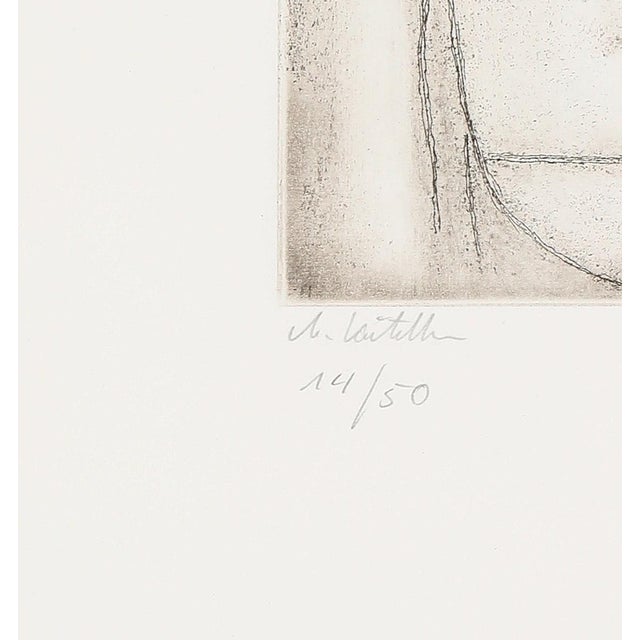
head (amazement), c. 1923.
etching in umber, hand-printed.
catalogue raisonné rosenbach 41.
…
Read more
Alexej von jawlensky
torschok 1864 - 1941 wiesbaden
head (amazement), c. 1923.
etching in umber, hand-printed.
catalogue raisonné rosenbach 41.
monogrammed in the plate.
with the embossed artist's monogram "aj".
signed and numbered by the printer.
from an edition of 50.
on heavy rives laid paper. 15.8 x 11.9 cm (6.2 x 4.6 in).
paper: 43.8 x 31.7 cm (17.2 x 12.4 in).
posthumously printed in a limited edition in 2014 from the original printing plate by the martin katelhön art print shop, cologne. Published by ernst rathenau kunsthandel und verlag.
a former officer in the tsarist army, jawlensky did not begin his artistic training until 1889 in st. Petersburg. He studied under ilya repin and, through him, met marianne von werefkin and helene nesnakomoff, his future wife. Jawlensky moved with the two of them to munich in 1896 to attend a private art school. Here he met wassily kandinsky. The artist made several trips to france and, thanks to sergei diaghilev, was able to show ten paintings at the salon d'automne in 1905. Jawlensky met henri matisse for the first time. In the summer of 1908, he worked together with kandinsky, marianne von werefkin, and gabriele münter for the first time in murnau. It was here that the idea for founding the "neue künstlervereinigung münchen" (new munich artists' association) was born, which the four painters and other munich artists joined together in 1909. The group's first exhibition took place in munich in december of that year. Two years later, the "blue rider" was founded as a new, grand idea for artistic collaboration. In 1913, jawlensky participated in herwarth walden's first german autumn salon in berlin. When the first world war began in 1914, jawlensky was expelled from germany as a russian citizen. He moved with his family and marianne von werefkin to st. Prex on lake geneva and lived in switzerland until 1921, where he began his abstract "heads" in 1918. Jawlensky then settled permanently in wiesbaden. A severe bout of arthritis in 1929 resulted in several spa treatments, which the artist had to undergo regularly. Jawlensky suffered from progressive paralysis and could only paint with difficulty. In 1933, the nazis banned him from exhibiting. The following year, the painter began the series of small-format "meditations." in 1937, 72 of his works were confiscated as 'degenerate'. Three years later, in 1941, jawlensky died in wiesbaden. His style was initially influenced by the fauves, especially matisse. However, the painter then found his own expressionist style, characterized by strong color in simple drawing. Later, quiet, introspective images of the mystically spiritualized human face became characteristic of jawlensky. This piece has an attribution mark,
i am sure that it is completely authentic and take full responsibility for any authenticity
issues arising from misattribution
See less
Returns & Cancellations
Return Policy - Cancel within 24 hours. This item is non-returnable.
Related Collections
- Rattan Original Prints
- Medium-Density Fibreboard Original Prints
- Soicher Marin Original Prints
- Johannes Kip Original Prints
- Silver Finish Original Prints
- Sam Francis Original Prints
- Dye Transfer Original Prints
- Original Prints in Panama City, FL
- Original Prints in Salt Lake City
- Donald Sultan Original Prints
- Original Prints in Lexington, KY
- Damien Hirst Original Prints
- John Kiraly Original Prints
- Ralph Lauren Original Prints
- Botanical Prints
- Framed Prints
- Bird Prints
- Woodblock Prints
- Screen Prints
- Japanese Woodblock Prints
- Thomas McKnight Original Prints
- George Barbier Original Prints
- Frank Stella Original Prints
- Gustave Baumann Original Prints
- Teak Original Prints