






Details
Description
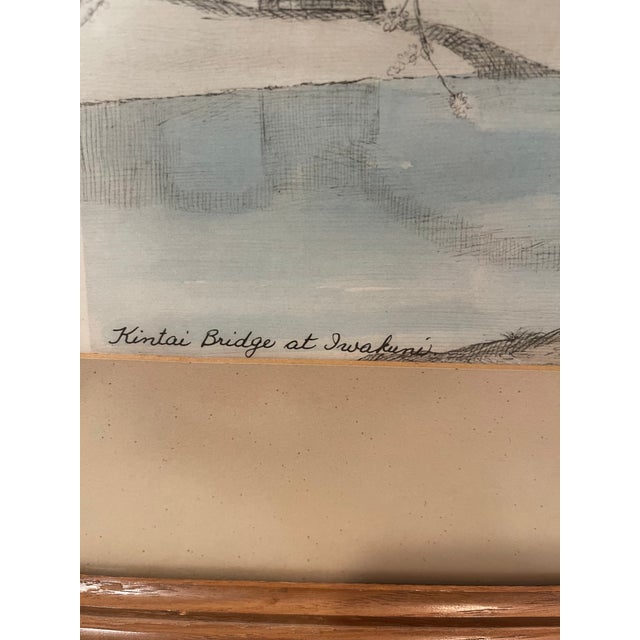
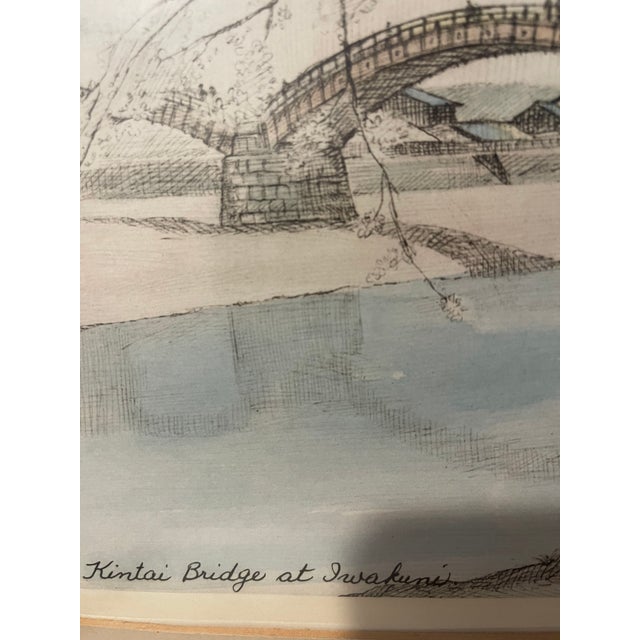
Soft ground copperplate hand-colored etching. Framed in a wooden frame with art glass.
Kintai Bridge in Iwakuni, Japan. This iconic …
Read more
Soft ground copperplate hand-colored etching. Framed in a wooden frame with art glass.
Kintai Bridge in Iwakuni, Japan. This iconic wooden arch bridge spans the Nishiki River and is known for its five distinctive arches supported by stone pillars.
The bridge is made of cypress, chestnut, zelkova, pine, and oak, using a special wood assembly technique without nails.
Originally built in 1673, the bridge has been rebuilt several times, most recently in 1951 after a typhoon.
Kintai Bridge is considered one of Japan's three most famous bridges and is a designated Site of Scenic Beauty.
Located in Iwakuni City, Yamaguchi Prefecture, it is a popular tourist destination, especially during cherry blossom season.
About the Artist:
Willy Otto Oskar Seiler (1903-1985)
Born in 1903 in Dresden, he commenced his artistic education and continued his studies in art in Munich. Departing from Germany in 1928, Seiler embarked on what seemed to be a perpetual journey across various European countries, potentially including visits to America and Asia. Some sources suggest that he might have encountered Japan before World War II.
Throughout his extensive travels, Willy Seiler seemingly sustained himself through his artistic endeavors.
Following the conclusion of World War II, Willy Seiler found his home in Japan. In addition to producing etchings, he delved into crafting 'Japanese' folk dolls, marketing these creations to members of the American occupation forces stationed in Japan.
Moreover, Seiler took on the role of an art instructor at an American army college located in Tokyo.
According to research conducted by Darrel C. Karl, a private collector, there is speculation that Willy Seiler might have returned to Europe in the 1960s and potentially passed away in 1997 in Switzerland. However, this information remains unverified.
Willy Seiler specialized in etching as his primary printmaking technique. This preference suggests his inclination towards creating works tailored for non-Japanese audiences, specifically members of the American occupation force and other Western foreigners. Unlike artists who employed the traditional Japanese woodblock technique, Seiler, like many of his Western contemporaries in Japan such as Paul Jacoulet, didn't necessitate collaboration with a Japanese publisher for the intricate carving and printing processes.
Seiler's subject matter often catered to American clients, portraying picturesque scenes from Japan and Korea that aligned with Western perceptions of these regions. His artworks depicted charming Japanese children, serene landscapes, rural life, Japanese nudes, and farming communities. Notably, Seiler's imagery retains its appeal without appearing kitschy, even when viewed through a modern lens.
Additionally, some of Seiler's etchings were meticulously colored by hand.
etching)
While Seiler’s oil paintings only intermittently turn up today, beginning in late 1940s Seiler began to make the soft ground copperplate etchings for which he is best remembered today. Anita Lorenz said this switch was of economic necessity, as most of Seiler's former patrons could no longer afford to buy his oil paintings after the War. The majority of these etchings, which were primarily sold at various military base post exchanges in the Far East, feature sympathetic portraits of peasant farmers and fisherman at work, children at play, and women chatting or shopping. Seiler also made landscape etchings, but he eschewed the usual depictions of temples and castles, focusing instead on the natural beauty of the Japanese countryside.
See less
- Dimensions
- 19ʺW × 1.3ʺD × 17ʺH
- Frame Type
- Framed
- Art Subjects
- Architecture
- Botanic
- Landscape
- Period
- 1940s
- Country of Origin
- Japan
- Item Type
- Vintage, Antique or Pre-owned
- Materials
- Etching
- Paper
- Condition
- Good Condition, Original Condition Unaltered, Some Imperfections
- Color
- Sky Blue
- Condition Notes
- Soft ground copperplate etching, hand-colored. Looks to be preserved in excellent condition. Has a vintage look. Frame is acceptable, as … moreSoft ground copperplate etching, hand-colored. Looks to be preserved in excellent condition. Has a vintage look. Frame is acceptable, as is an upgrade. less
Questions about the item?
Returns & Cancellations
Return Policy - All sales are final 48 hours after delivery, unless otherwise specified in the description of the product.
Cancellation Policy - Prior to shipping or local pickup, buyers may cancel an order for up to 48 hours, unless otherwise specified.