

Details
Description
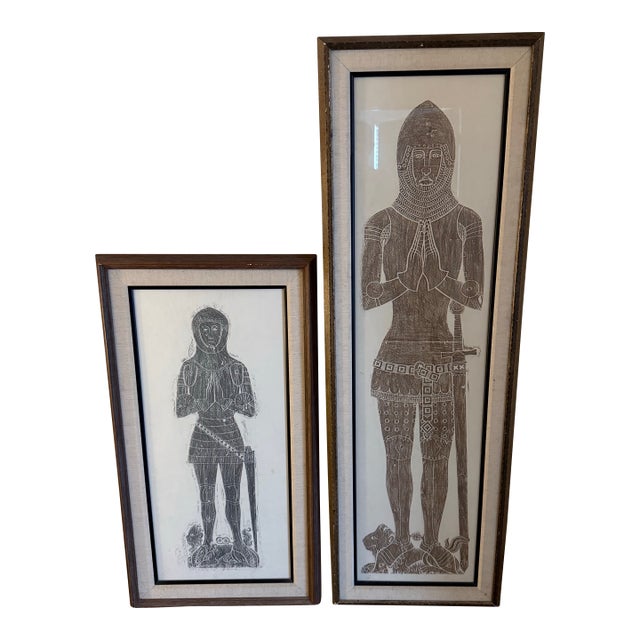
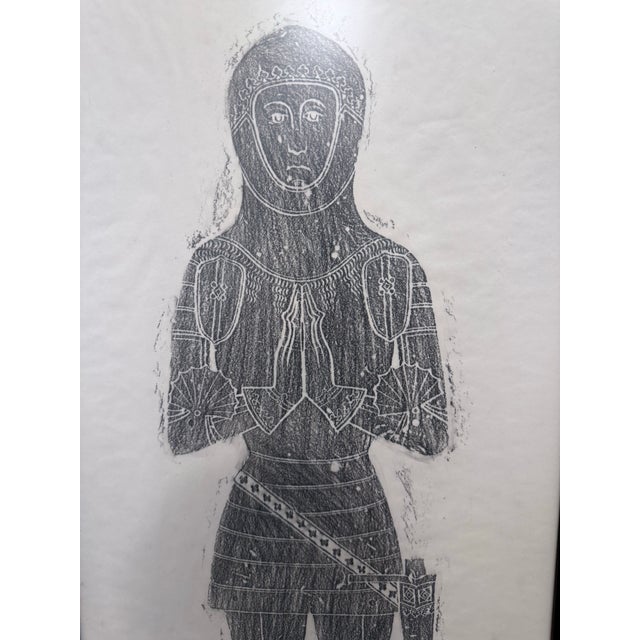
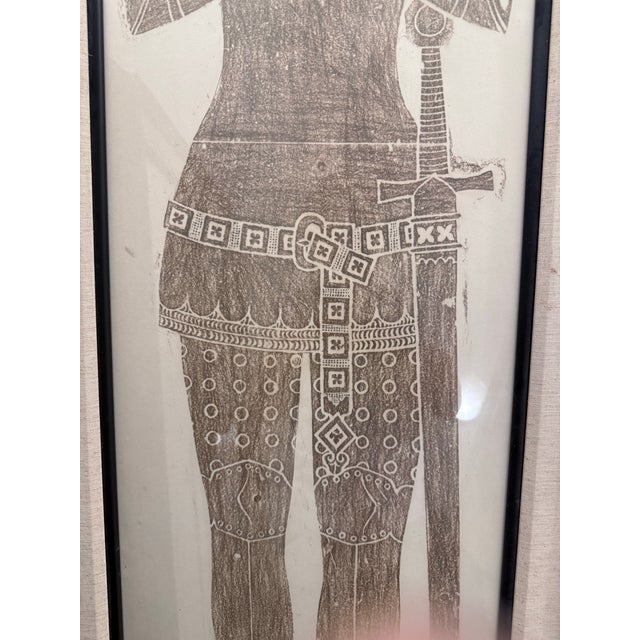
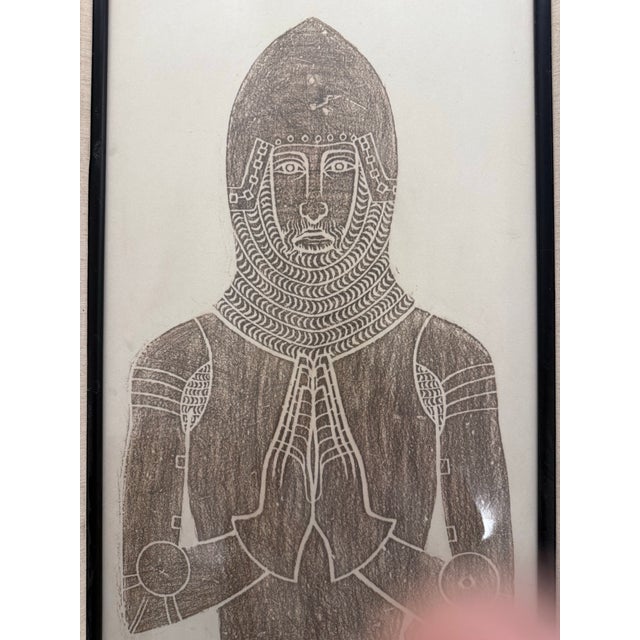
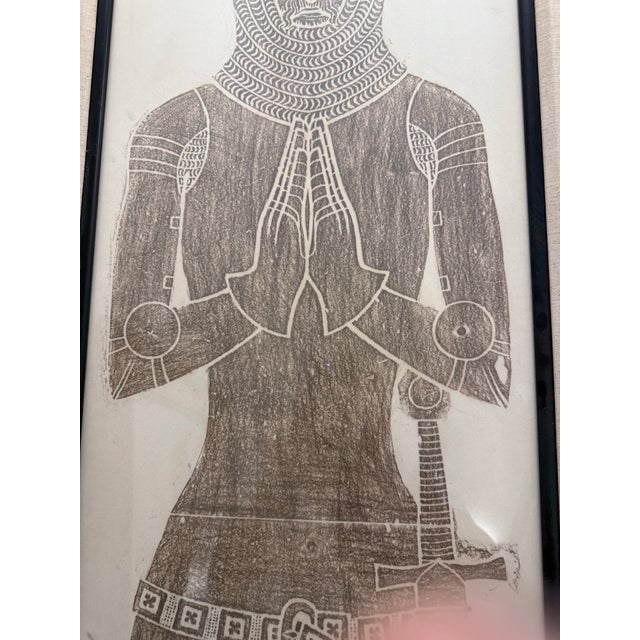
This is a rare, professionally framed set of original brass rubbings made by hand in London in the mid-20th century …
Read more
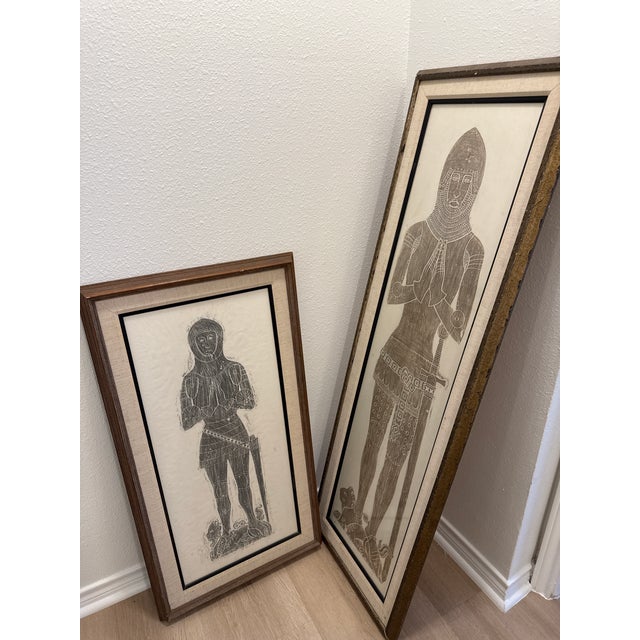
This is a rare, professionally framed set of original brass rubbings made by hand in London in the mid-20th century by my great aunt. These stunning pieces capture two of the most iconic knight memorials in England and are no longer available for rubbing at the original sites (especially Westminster).
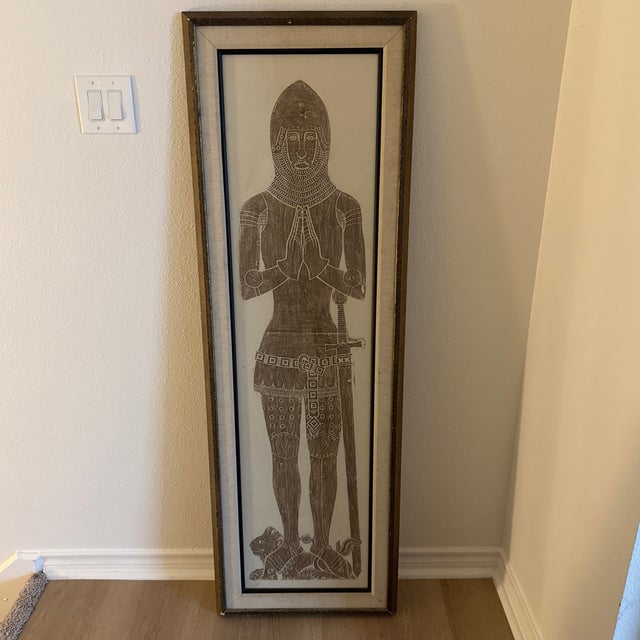
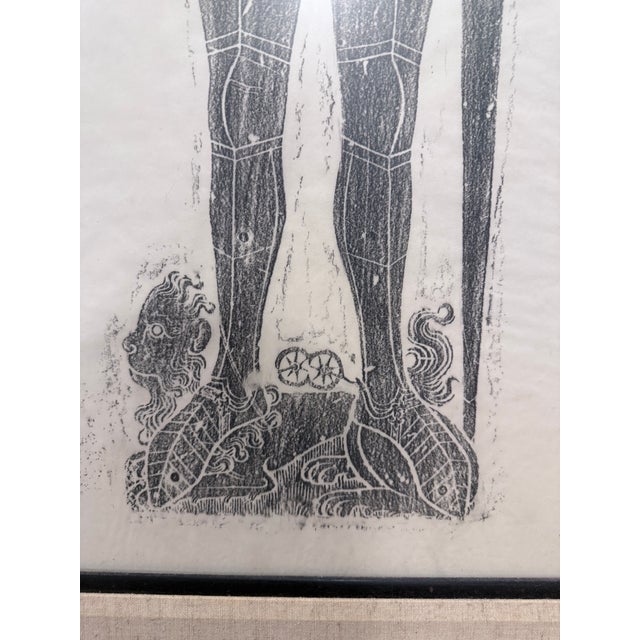
1. Sir John Harpedon (d.1438) – Westminster Abbey, London
This brass represents the transition from mail to plate armor and is part of the earliest surviving English brass series. His distinctive belt, lion footrest, and scalloped armor detail are captured beautifully in the rubbing.
This rubbing corresponds to Sir John Harpedon, a 15th-century knight whose brass in Westminster Abbey (London) shows him in full late-medieval plate armor . He died in 1438, and his memorial brass (now in the Abbey’s north ambulatory) presents him standing with hands together in prayer, wearing complete plate armor from head to toe – breastplate, articulated pauldrons and fan-shaped elbow couters (visible in the rubbing), gauntlets, plate leg greaves and multiple faulds (horizontal plate segments) around his waist. His head rests on a helm with a sculpted crest of a hind’s head, and under his feet is a lion – again signifying knightly valor . A sword hangs at his side from a narrow belt, which along with his armor is simpler in style than earlier medieval harness, reflecting the plainer Late Gothic plate design. Sir John’s brass originally included four heraldic shields around him, each impaling his arms with those of his wives’ families . In fact, Sir John Harpedon married into the prominent Cobham family – he was the fifth and last husband of Lady Joan de la Pole, Baroness Cobham. Lady Cobham’s previous husband had been the famous Sir John Oldcastle (a Lollard leader and inspiration for Shakespeare’s Falstaff), who was executed in 1417 . This connection adds historical interest to Harpedon’s otherwise modest personal record (he was not a nationally renowned figure, and little is recorded of his deeds ). The brass itself, however, is of high quality – “an excellent brass” per antiquarian accounts – and it was moved to its present location in 1772. Sir John is depicted with the lion at his feet (indicating masculine courage and honor) and in a devout pose, embodying the ideal of the Christian knight. His memorial in Westminster Abbey stands as a noteworthy example of a mid-15th-century London brass, complete with the iconic lion footrest and prayerful stance
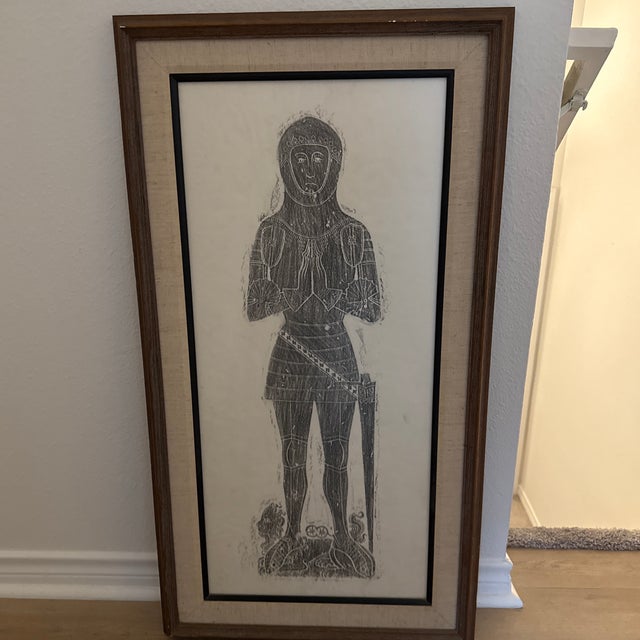
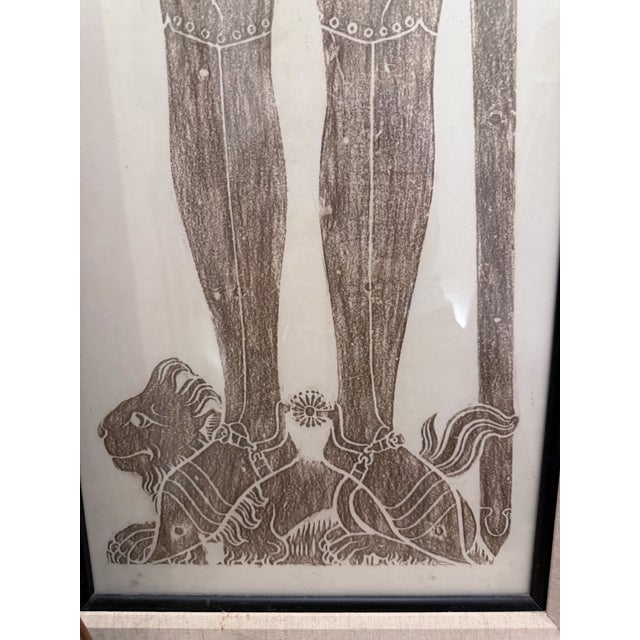
2. Sir John d’Aubernoun the Younger (d.1327) – Stoke d’Abernon, Surrey
Depicted in full late-Gothic plate armor, hands in prayer, with a lion beneath his feet. This brass is one of the few surviving knightly monuments in Westminster Abbey.
This brass rubbing depicts Sir John d’Aubernoun the Younger, a knight who died in 1327 and is commemorated in St. Mary’s Church, Stoke d’Abernon (Surrey). His figure is shown in the prayer posture with hands together, clad in early 14th-century transitional armor – a mix of mail and newly introduced plate. Notably, he wears a knee-length cyclas (surcoat) over mail, and you can see plate knee guards (poleyns) and circular elbow defenses beginning to appear. His sword is suspended from an elaborate diagonally across his hips, with a belt decorated by square rosettes (a typical style of the period). At his feet lies a lion – a classic motif on medieval knight monuments symbolizing courage, nobility, and even resurrection. (In contrast, women’s effigies often feature dogs for fidelity.) The Latin inscription is mostly lost (only a fragment “…eit merci” remains), but historical records note that Sir John served as a Member of Parliament and Sheriff of Surrey and Sussex in the 1320s. Importantly, the d’Aubernoun family brasses at Stoke d’Abernon are among the earliest in England – Sir John’s father (d.1277) is commemorated by the oldest surviving English brass, and this brass of 1327 (the son) shows the evolution of armor in the years just before the Hundred Years’ War. The presence of the lion at his feet and his hands in prayer are iconographic hallmarks of chivalric piety and valor in that era.
Key Features:
• Handmade brass rubbings – not reproductions or prints
• Historical provenance from English churches
• Professionally framed under glass, ready to hang
• Perfect for collectors, libraries, decorators, or medieval history lovers
References: Medieval knight brasses like these were commonly rubbed as souvenirs or for study, and similar examples can be found in collections such as the Ashmolean Museum’s brass rubbing archive. The Temple Church in London, while known for its earlier effigial knight tombs (e.g. the 13th-century effigy of William Marshal with a lion at his feet), does not feature monumental brasses – the rubbings in question are instead matched to the authentic brasses of Sir John d’Aubernoun (Surrey) and Sir John Harpedon (Westminster) discussed above. Each illustrates the distinctive iconography of its era: the former showing the transition from mail to plate around 1300, and the latter exemplifying the fully developed plate armor of the 1400s, both with lions proudly guarding their feet as symbols of knightly virtue 
The identification of these figures is confirmed by their unique armor styles, inscriptions, and known church locations – providing name, date, and context for each knight’s memorial.
Visual Matches / Sources: For comparison, see a photograph of the Stoke d’Abernon brass of Sir John d’Aubernoun the Younger (with his mailed coif, scalloped cyclas, and lion footrest) , and the Westminster Abbey record for Sir John Harpedon’s brass describing his plate armor and heraldic shields . These references, along with collections like the Ashmolean and Yale Center for British Art (which house brass rubbing catalogs), corroborate the attributions and offer visual confirmation of the rubbings’ details  . Each knight’s brass is not only a work of funerary art but also a valuable historical document – preserving the armor design, heraldry, and epitaph (where surviving) of medieval London-area nobility.
See less
- Dimensions
- 20ʺW × 1.25ʺD × 61.5ʺH
- Styles
- Medieval
- Art Subjects
- Figure
- Frame Type
- Framed
- Period
- 1950s
- Country of Origin
- United Kingdom
- Item Type
- Vintage, Antique or Pre-owned
- Materials
- Glass
- Graphite
- Parchment
- Condition
- Good Condition, Original Condition Unaltered, Some Imperfections
- Color
- Charcoal
- Condition Notes
- Excellent vintage condition. Both rubbings are crisp and well-preserved. Professionally framed under glass. Light wear consistent with age on the … moreExcellent vintage condition. Both rubbings are crisp and well-preserved. Professionally framed under glass. Light wear consistent with age on the frame edges. Artwork itself is clean with no fading or stains. These were handmade in London by a family member in the mid-1900s using authentic brasses from Westminster Abbey and Stoke d’Abernon. less
Questions about the item?
Returns & Cancellations
Return Policy - All sales are final 48 hours after delivery, unless otherwise specified in the description of the product.
Cancellation Policy - Prior to shipping or local pickup, buyers may cancel an order for up to 48 hours, unless otherwise specified.