

Details
Description
Item description:
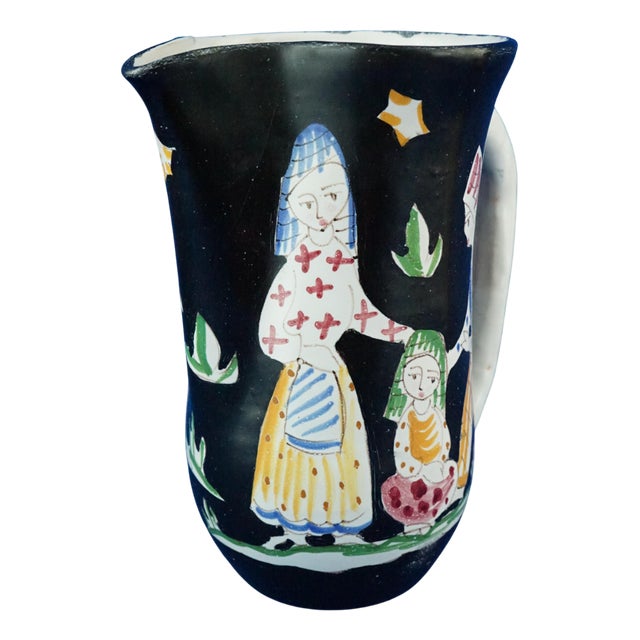
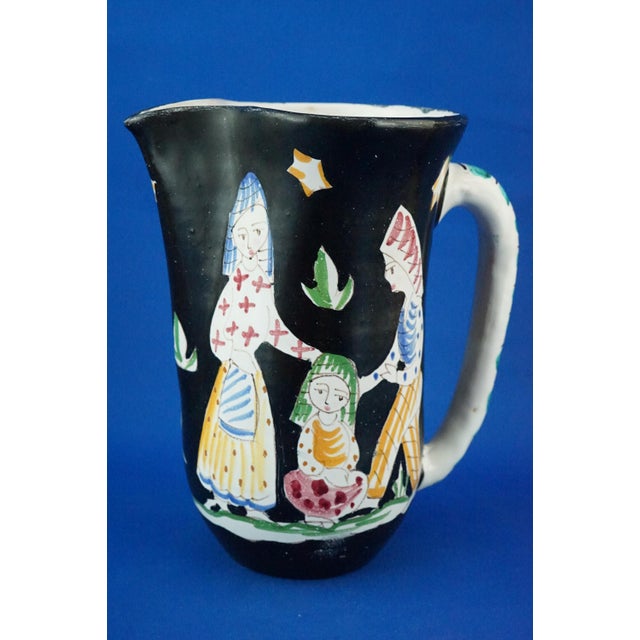
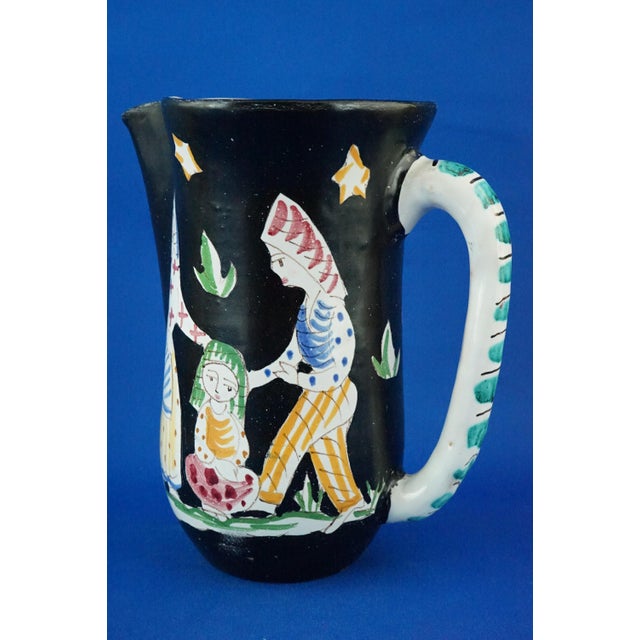
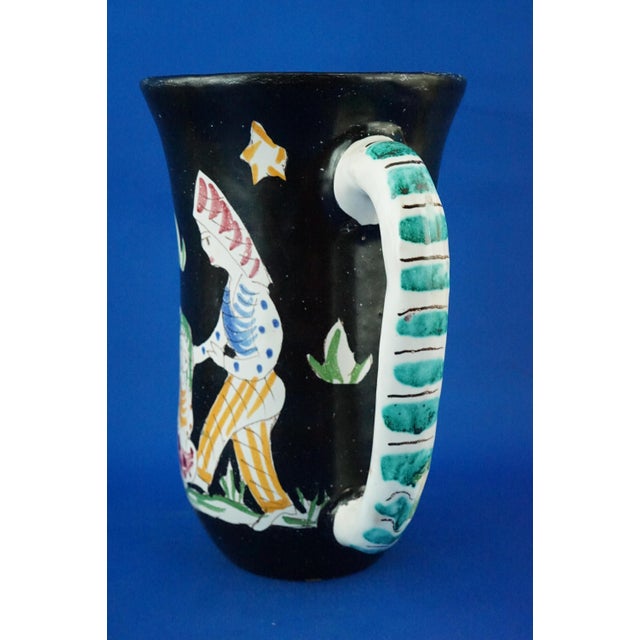
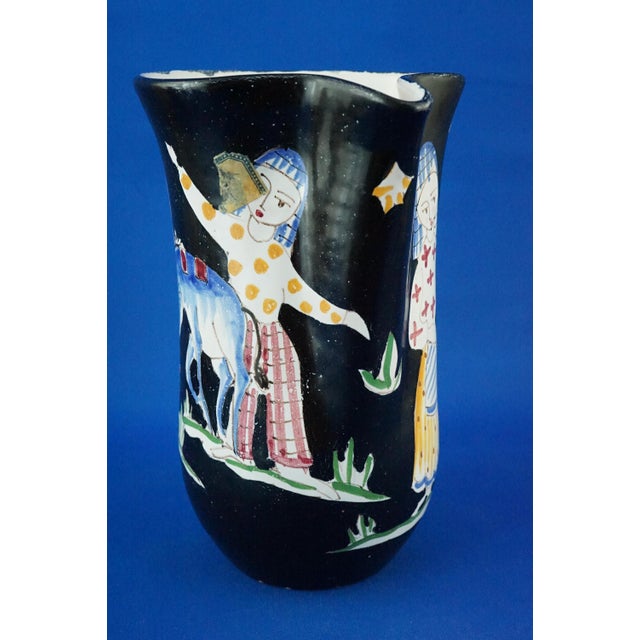
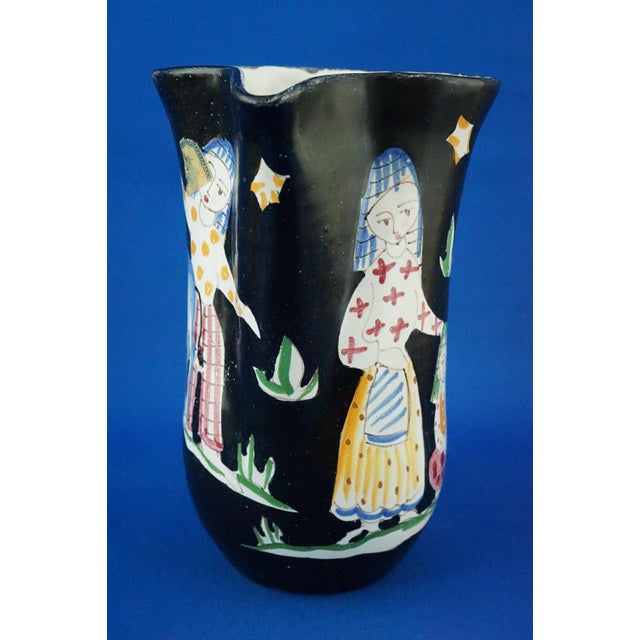
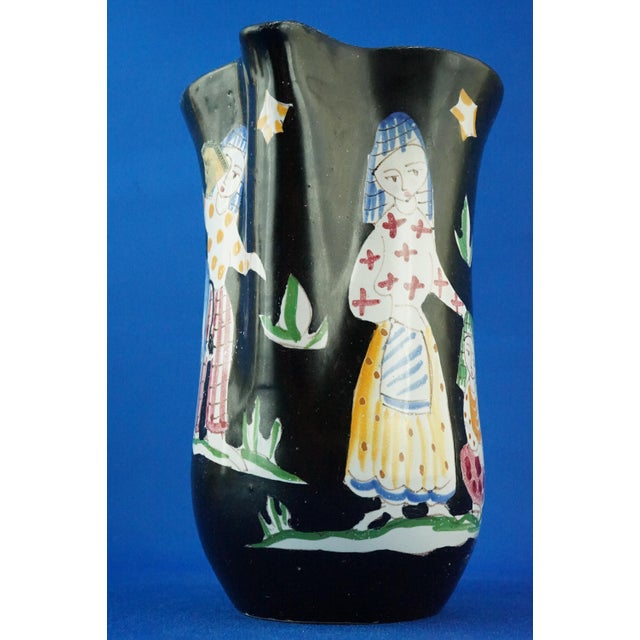
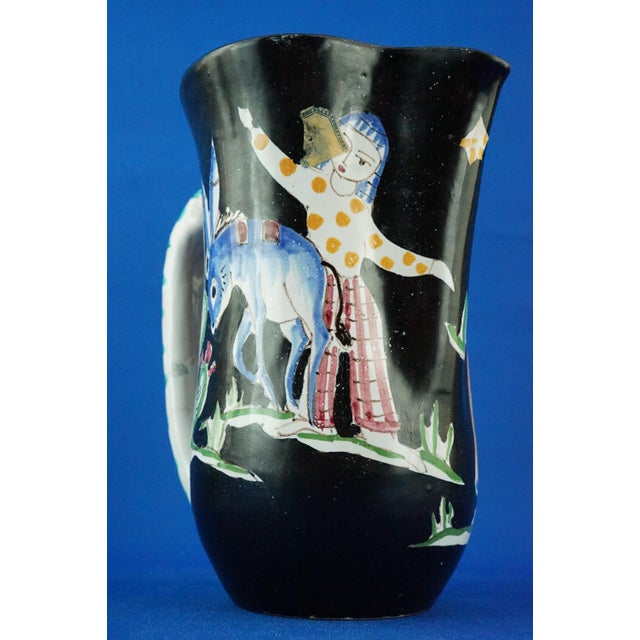
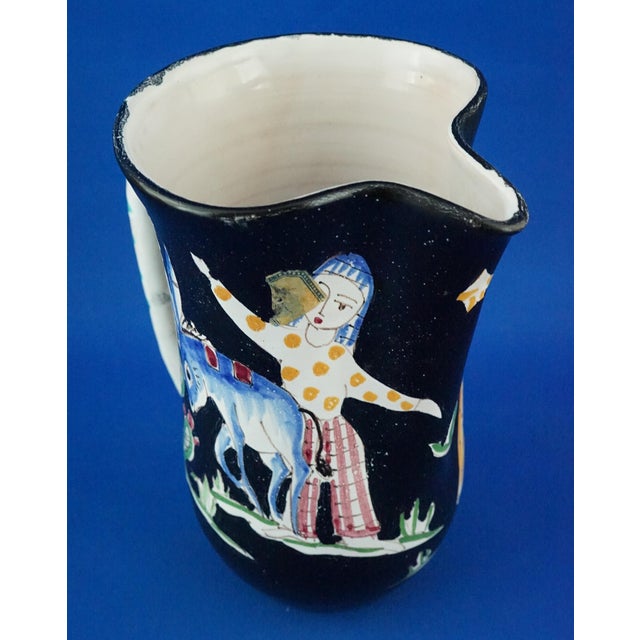
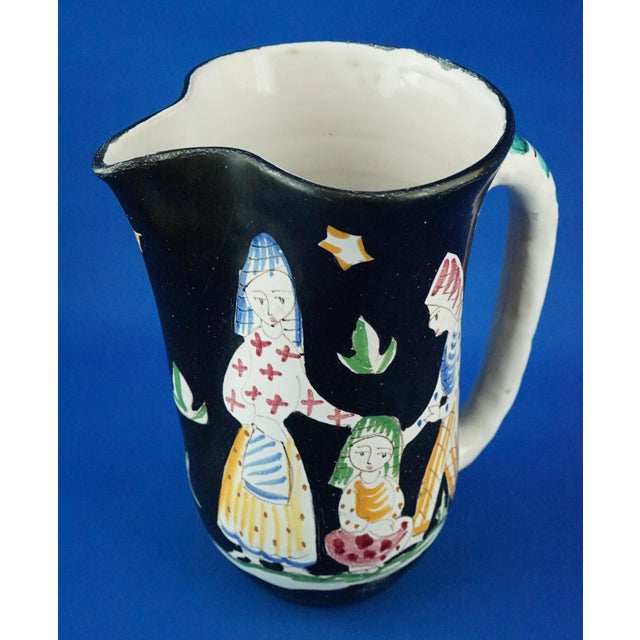
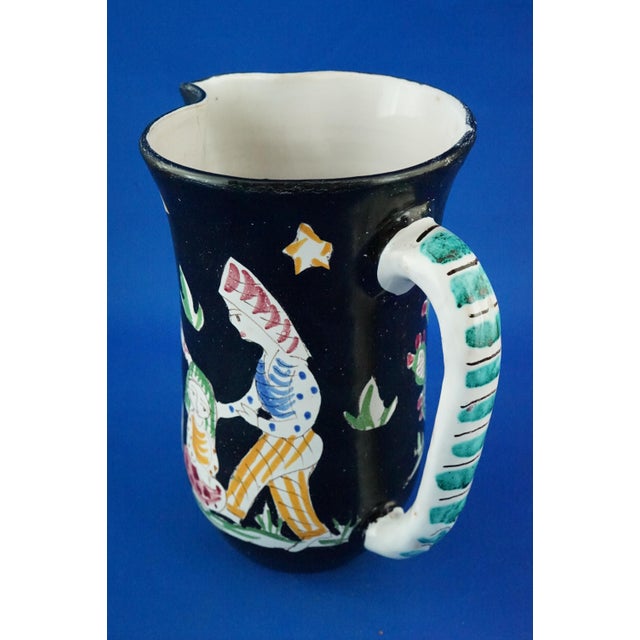
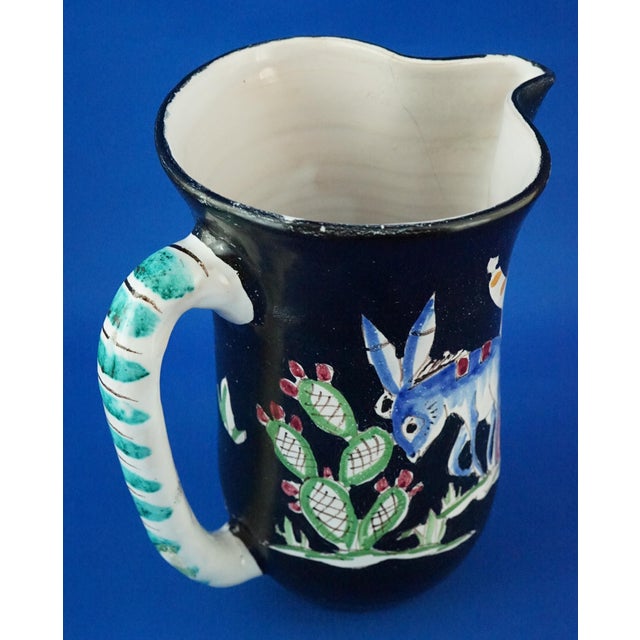
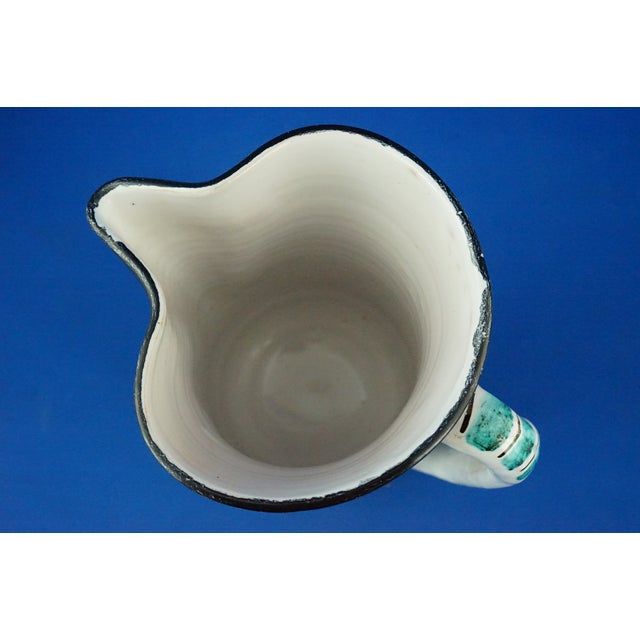
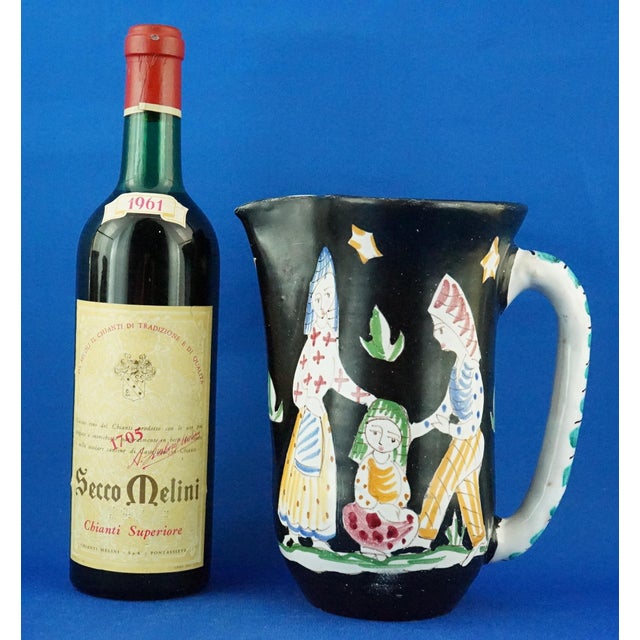
Large jug with a three-lobed spout, made of glazed and vitrified majolica ceramic, entirely modeled on a potter's …
Read more
Item description:
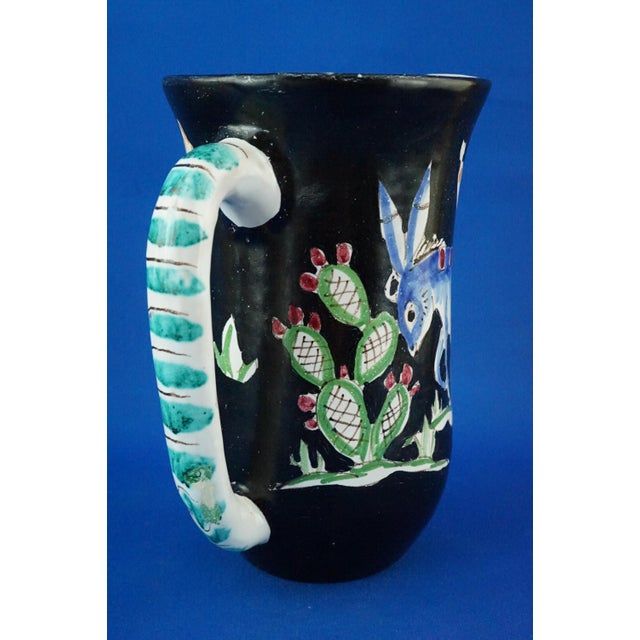
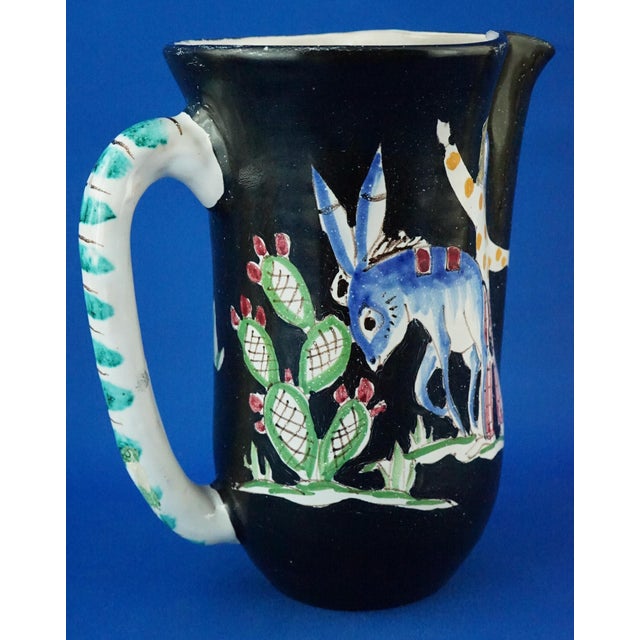
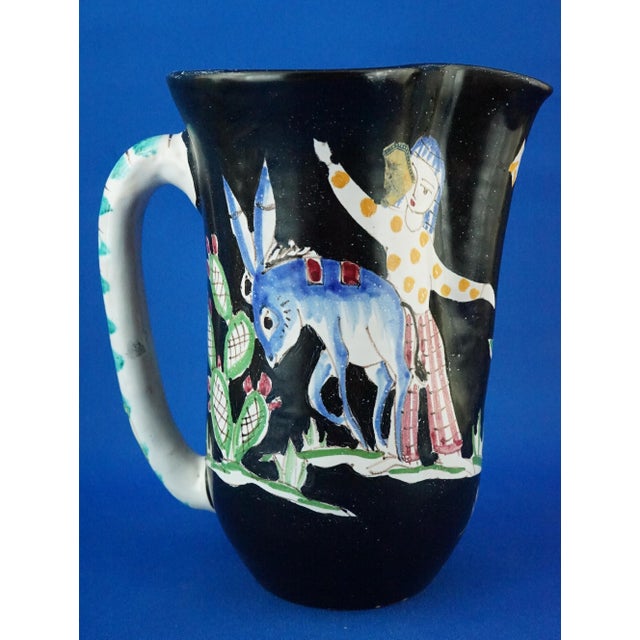
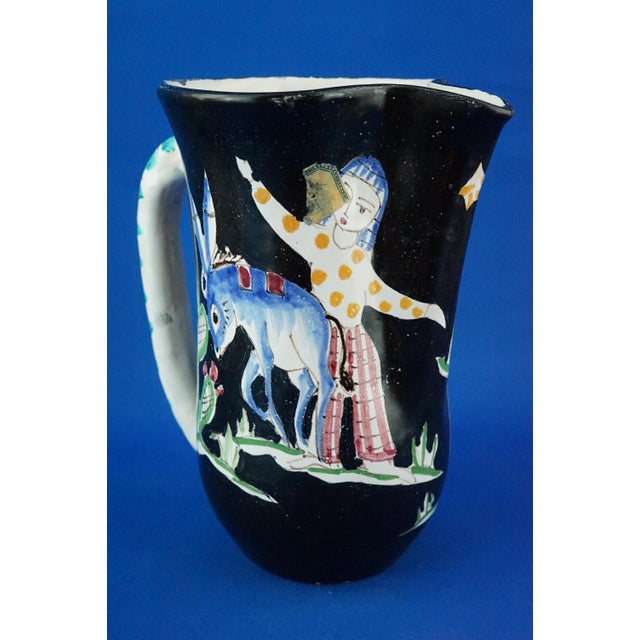
Large jug with a three-lobed spout, made of glazed and vitrified majolica ceramic, entirely modeled on a potter's wheel and decorated by hand with a donkey and classic Vietri polychrome characters on a black background, while the inside of the jug is white, as is the handle, which is further embellished with small rectangles in classic Vietri aqua green, interspersed with thin black lines. Made and signed, under the base, by the Cas di Vietri factory, founded by Vincenzo Solimene, one of the most important manufacturers active in Vietri sul Mare, with which some of the most important Vietri artists collaborated, many from the German period, such as Kowalisca, Thewalt-Hannash, Dolker, and Gambone. In our opinion, the authorship of this jug can be attributed to Irene Kowalisca, who often created decorations and subjects very similar to those on our vase in her artistic ceramics.
Information about the artist and/or manufacturer:
As evidence of our attribution, we have included (see last photo) two tiles with decorations and subjects very similar to those on our vase, both made by Irene Kowalisca and valued at €3,500 - €4,000.
Information about the artist and/or manufacturer:
The ceramic manufacturer "C.A.S." (Ceramiche Artistiche Solimene) in Vietri Marina, in the province of Salerno, was founded in 1937 by Vincenzo Solimene (first of that name), who took over the premises of the disused "Amabile" factory. After a few years, production, consisting of decorative objects and decorative panels in floor and wall tiles and rustic and modern majolica in the traditional Vietri style, was interrupted due to the war. In 1943, with the arrival of the Allies and the restoration of the electricity grid, the company restarted production and, at the end of the 1940s, Vincenzo Solimene (first of that name), assisted by his sons Antonio (first of that name), Francesco (first of that name), and Vincenzino, purchased a rocky ridge in Via Madonna degli Angeli in Vietri and, based on a design by architect Paolo Soleri, began construction of a new, larger factory equipped with an impressive wood-fired kiln in 1951. The old factory remained in operation until 1954 when, destroyed by a violent flood and with the new factory not yet ready, production continued in the premises of the former "Musa" ceramics factory in Via Scialli under the name "Fornace Ceramica d'Arte". In 1956, the company began operating in its newly built factory under the name "Ceramiche Artistiche Solimene." In 1969, it purchased the large complex formerly occupied by "Vetreria Meridionale Ricciardi." Five of Vincenzino's ten children joined the company, and a second factory was opened for the large-scale production of functional ceramics, without neglecting artistic ceramics. Over the years, Guido Gambone, Giovannino Carrano, Antonio Franchini, Irene Kowalisca, Margaretha Thewalt-Hannash, Carlos Carlè, Susanne Dolker, wife of the great German ceramist Riccardo Dolker, and, in the 1970s, Vincenzo Dino Patroni, among others, worked at "C.A.S.". Still active today, the factory is run by Francesco's sons (first of that name), Antonio (second of that name), Vincenzo (second of that name), and Gennaro, and by Antonio's son (first of that name) Francesco (second of that name), with the collaboration of ceramist Lucio Ronca. In the 1980s and 1990s, the factory's kilns produced a number of ceramics designed by architect Ugo La Pietra. In the early 1990s, Vincenzo Solimene (second of that name) took over an old factory near Bonea together with his children Giovanna, Antonio (third of that name), and Francesco (third of that name). Two years later, the "Bottega-Scuola di Ceramica Centro Studio d'Arte Vietrese" (Vietri Ceramics Workshop and School) was established. On the top floor of the factory building, there is a museum space where, in addition to the works of the family members, the artistic creations of those who have collaborated with the factory over the years are preserved. The factory closed in 2005.
Weight of the object: 0.946 kg This piece has an attribution mark,
I am sure that it is completely authentic and take full responsibility for any authenticity
issues arising from misattribution
See less
- Dimensions
- 7.87ʺW × 5.51ʺD × 8.66ʺH
- Period
- 1960s
- Country of Origin
- Italy
- Item Type
- Vintage, Antique or Pre-owned
- Materials
- Ceramic
- Condition
- Good Condition, Original Condition Unaltered, Some Imperfections
- Color
- Black
Returns & Cancellations
Return Policy - All sales are final 48 hours after delivery, unless otherwise specified in the description of the product.
Cancellation Policy - Prior to shipping or local pickup, buyers may cancel an order for up to 48 hours, unless otherwise specified.
Related Collections
- Gold-Plate Bottles and Jars and Jugs
- Medieval Bottles and Jars and Jugs
- Borosilicate Glass Bottles and Jars and Jugs
- Bottles and Jars and Jugs in Lexington, KY
- Khaki Bottles and Jars and Jugs
- Port 68 Bottles and Jars and Jugs
- Acrylic Bottles and Jars and Jugs
- Roger Capron Bottles and Jars and Jugs
- Ralph Lauren Bottles and Jars and Jugs
- Crocks
- Wicker Bottles and Jars and Jugs
- Apothecary Jars
- Cookie Jars
- Japanese Bottles and Jars and Jugs
- 1800s Perfume Bottles
- Candy Jars
- Antique Water Jugs
- Murano Glass Bottles and Jars and Jugs
- 1950s Perfume Bottles
- Apothecary Bottles
- Deruta Bottles and Jars and Jugs
- Portieux Vallerysthal Bottles and Jars and Jugs
- Carl Auböck Bottles and Jars and Jugs
- Lead Bottles and Jars and Jugs
- Mottahedeh Bottles and Jars and Jugs