




Details
Description
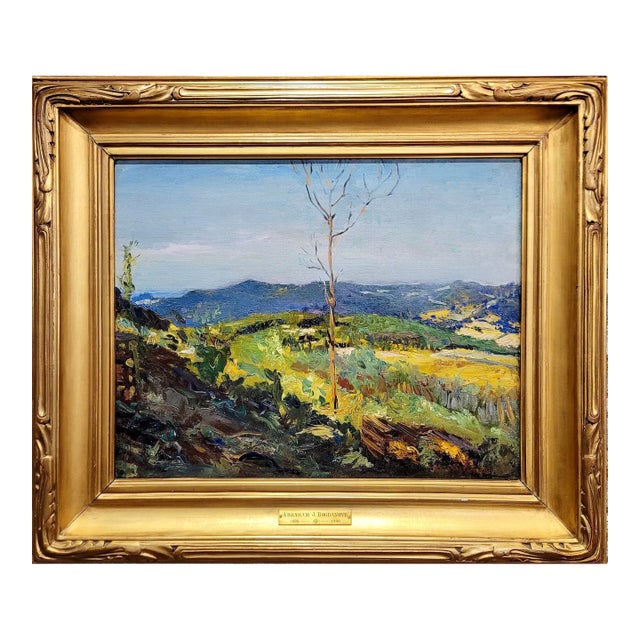
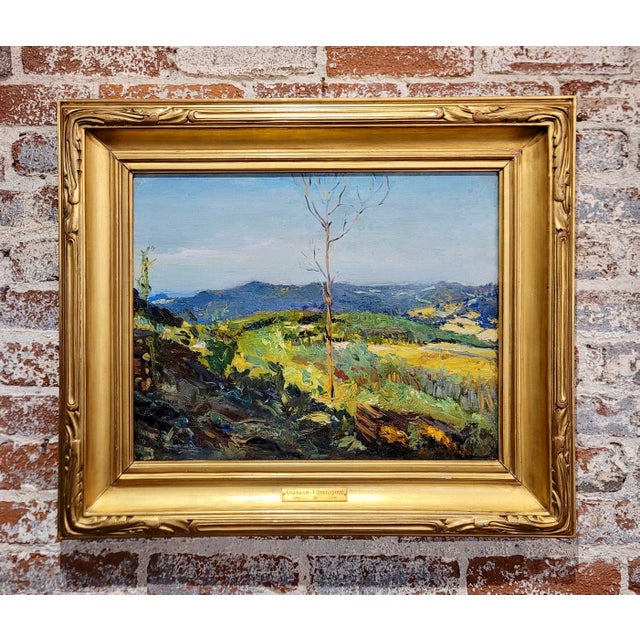
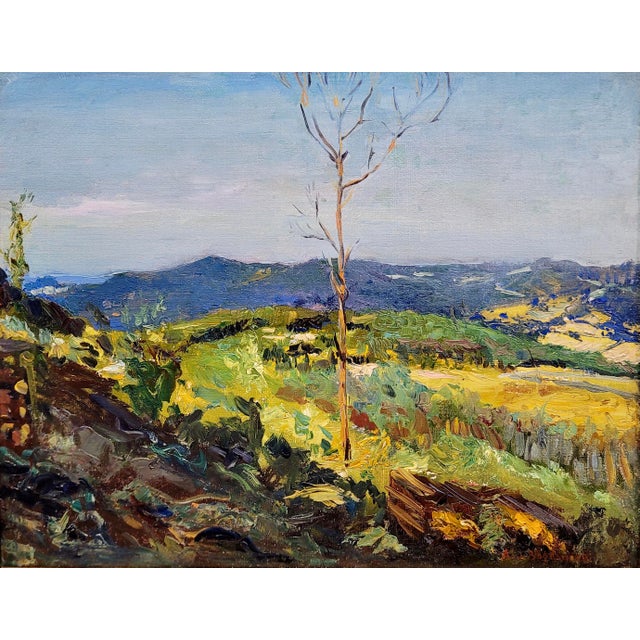
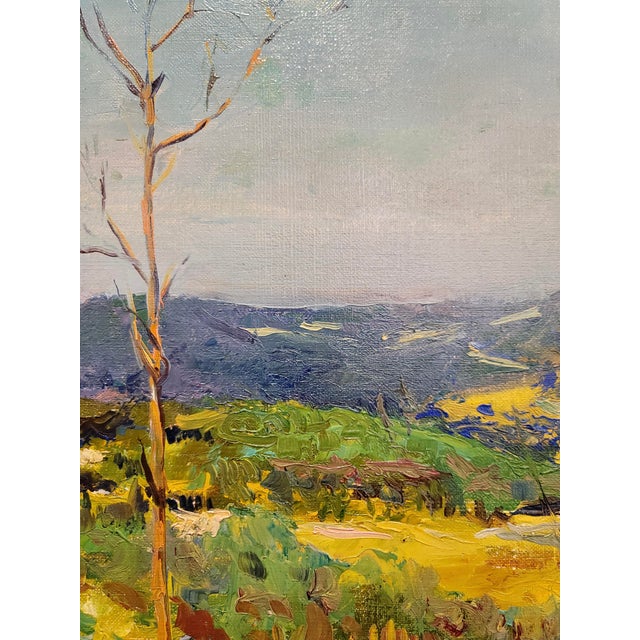
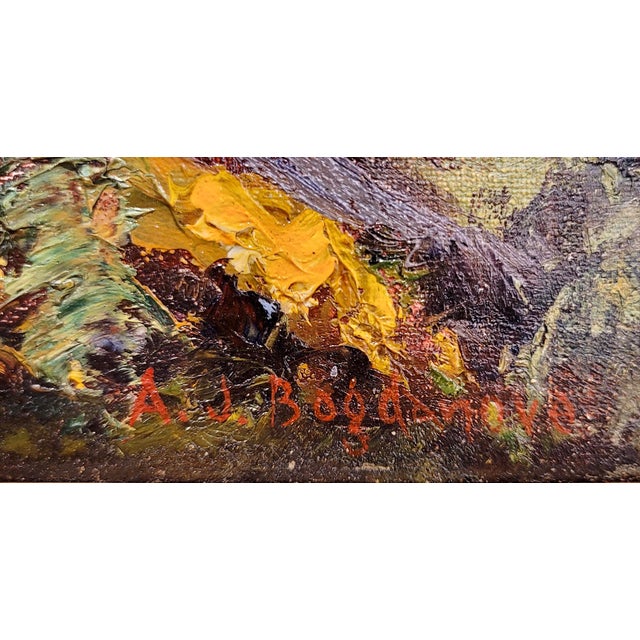
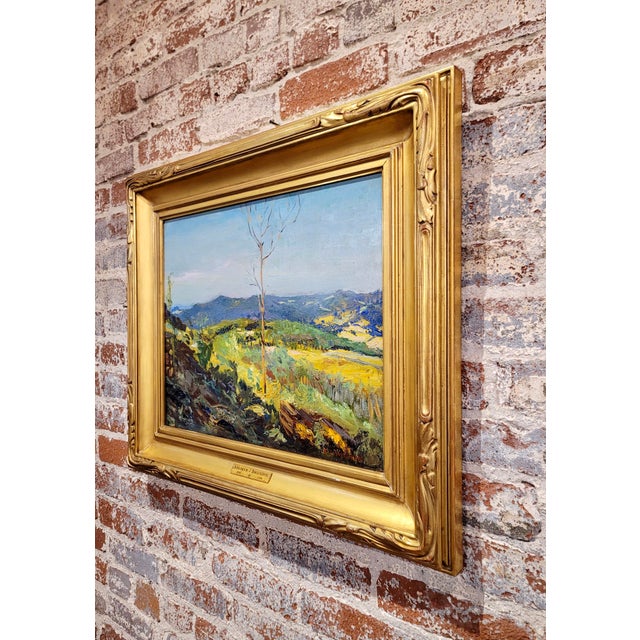
Abraham Bogdanove -The Lone Tree in a New England Landscape-1920s Oil painting
American Impressionist - Oil Painting on Canvas - …
Read more
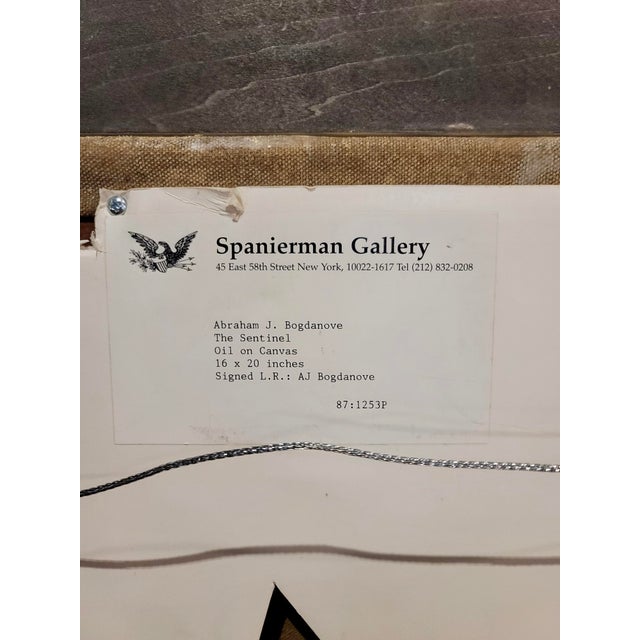
Abraham Bogdanove -The Lone Tree in a New England Landscape-1920s Oil painting
American Impressionist - Oil Painting on Canvas - Signed - circa 1920s
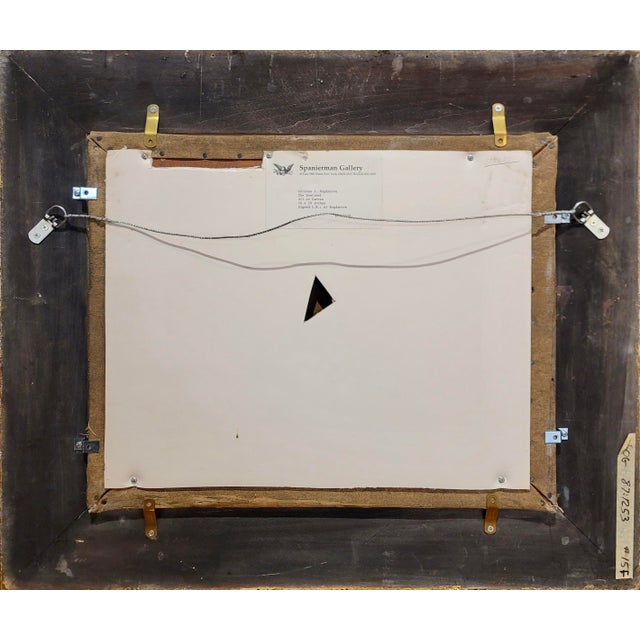
Canvas size : 16x20" - Frame size 24x28 x2"
Condition Notes: Excellent - Minor wear consistent with age and history
Artist Biography
Abraham Jacob Bogdanove (1887 - 1946) was active/lived in New York, Maine / Russian Federation.He is known for Seascape, landscape, and portrait painting, mural.Abraham Bogdanove was a landscape painter, portraitist, muralist, and art teacher, who is best known for his dynamic images of Monhegan Island, Maine. Born in Minsk, Russia, he emigrated with his family to the United States in 1900, when he was fourteen years old. Almost immediately upon arrival in this country, he began to study art at the Cooper Union Institute of Art. In 1903, he entered the National Academy of Design school and, at the same time, served an apprenticeship, painting advertisement displays for the Bull Durham Company in New York. Through this dual education, Bogdanove developed his abilities in design, draftsmanship, and painting. His studies at the Academy were directed by the painters George Willoughby Maynard (1843-1923) and Francis Coates Jones (1857-1932), and by the end of his tenure in 1911, he had earned several honors. For three consecutive years, he received the distinguished annual Hallgarten Prize, which was bestowed upon the three best paintings exhibited at the academy by artists under the age of thirty-five.Bogdanove rounded out his education by studying from 1908 to 1910 at the Columbia University School of Architecture, where he trained under Francis Davis Millet (1846-1912), one of the leading mural painters in the country. At the conclusion of his formal education, Bogdanove followed in the footsteps of many artists with a pilgrimage to Europe. He traveled first to Italy in 1912, and then visited Germany, Austria, and France. After his return from Europe in the following year, Bogdanove earned a New York City Board of Education license as a specialist in art mural decoration, and began to teach at the New York Evening School of Industrial Art. In 1913, he received his first mural commission, from the Hebrew Sheltering and Guardian Society, a home for children in Pleasantville, New York. Other murals soon followed as the artist won commissions for works in civic buildings in New York City. These included a three-part mural on the theme of education for Commercial High School, and three paintings illustrating the European discovery and colonization of North America for P.S. 43 in the Bronx. One of Bogdanove's most successful public works was a nineteen-by- fifteen-foot painting, "Peace,"for the main stairway in Brooklyn's Manual Training High School. Bogdanove's last major mural commission, "The Great Teachers," was completed in 1930 for the College of the City of New York, now City College, The City University of New York, where he taught from 1919 to 1942.As his aspirations as a muralist were realized, Bogdanove increasingly devoted his free time to painting for himself. By the 1910s, he had made his first forays into landscape painting, with trips to the countrysides of Connecticut and New Jersey. He visited Maine for the first time in 1915, when he spent a summer at Seal Harbor on Mount Desert Island. There he was inspired by the dramatic vistas of mountains plunging to the sea that had been painted by Frederic E. Church and Fitz Hugh Lane, and participated in the town's social scene to which he was introduced by his friend, Clara Clemens, the daughter of Mark Twain. At the afternoon teas she hosted, Bogdanove met John D. Rockefeller and the actor John Barrymore, among others. By 1918, the refinements of summer life on Mount Desert had lost their attraction for Bogdanove, and seeking a rougher locale, he found his way to Monhegan, a tiny island seventeen miles off the midcoast of Maine. Instead of mountainous scenery, Monhegan offered a compact and varied landscape, unique among the hundreds of islands that dot Maine's coastal waters. Less than two miles long and a mile wide, the island includes a picturesque harbor lined with fish houses, rolling meadows, pine woods, and cliffs soaring two hundred feet above the open ocean. Among the other artists who had spent time on Monhegan were Robert Henri, George Bellows, Rockwell Kent, and Edward Hopper, and on the island, Bogdanove joined a colony of artists who sought to escape the urban world for a remote and picturesque locale that was highly paintable. On the island, Bogdanove found a subject worthy of sustained focus. After a captivating first encounter, he returned every summer for the rest of his life. In 1935, he expressed his delight in his time on Monhegan, stating: "There are a number of reasons why I prefer Monhegan to all other places on the Atlantic Coast. It is so far from the mainland that we are not disturbed by the outer world and there are no social demands. The cliffs here are so bold and precipitous and the studies offered by the island shore so inexhaustible. The climate suits me. Perhaps because it is more like that of Russia, where my ancestors lived." Within two years of his first visit on the island, Bogdanove had purchased a house on Horn's Hill, overlooking the village, and had become part of a new generation of painters, including Andrew Winter and Jay Hall Connaway, who came to Monhegan and stayed. During the summers, Bogdanove's preference was not to paint in the studio, and he spent his days at the water's edge with his paintbox and easel, directly recording the rocks, surf, weather-beaten fish houses, and harbor scenery. Perhaps even more than the ocean, he delighted in painting rocks. Like Hopper, he was more attracted to their mass than he was to the movement of the water. While Bogdanove's focus on the solidity and monumentality of Monhegan's rocks reflects his affinity with Hopper, his vivid, intense colors are akin to those of Kent and his vigorous brushwork resembles that of Bellows. On Monhegan, one influential source was the work of color theorist and chemist Maximilian Toch, who advocated the use of natural pigments and a limited palette--in opposition to the profusion of pre mixed colors in hundreds of shades, and the accompanying color theories, then flooding the art market. Toch, with whom Bogdanove appears to have studied, encouraged the artist to create harmonious palettes and paintings that were "permanent"--that would not discolor or disintegrate because of poor chemistry. From the time of his first solo exhibition in 1920 at the Young Men's Hebrew Association, Bogdanove had worked aggressively in the winters to show his Maine paintings. His work was included in annual exhibitions at the National Academy of Design, the Pennsylvania Academy of the Fine Arts, the Carnegie Institute, and the Corcoran Gallery. By the late 1920s, he was represented by the Leonard Clayton Gallery in New York. Secure in his success, Bogdanove ventured further afield in search of new locales in the mid-1930s. Early in the summer of 1935, he traveled with his wife and two young sons to Canada's Gaspé Peninsula. There he made oil sketches of the cliffs and fishing villages which he brought back to be developed into paintings during the summer on Monhegan. Three years later, he took a semester's leave from teaching to travel with his family throughout Europe. On his second trip to the continent, Bogdanove visited Italy, Spain, France, Holland, and Great Britain. Once again, he found inspiration in coastal scenery, sketching in seaside villages in Italy, France, and England. Following his retirement from teaching at the College of the City of New York in 1942, Bogdanove moved with his family to Dunbarton, New Hampshire, not far from Manchester. Four years later, he died suddenly at the young age of sixty. In 1957, a show featuring Bogdanove's coastal views of Maine was held at the Farnsworth Museum in Rockland, Maine. In 1961, a memorial exhibition of his work was presented at the College of the City of New York, and in 1965, The Incurable Collector, a New York gallery organized a show of Bogdanove's paintings. Bogdanove's work is included in many important private and public collections including the Farnsworth Museum, Rockland, Maine, and the Monhegan Museum, Maine.
See less
- Dimensions
- 28ʺW × 2ʺD × 24ʺH
- Frame Type
- Framed
- Art Subjects
- Landscape
- Period
- 1920s
- Country of Origin
- United States
- Item Type
- Vintage, Antique or Pre-owned
- Materials
- Canvas
- Oil Paint
- Condition
- Good Condition, Original Condition Unaltered, Some Imperfections
- Color
- Blue
- Condition Notes
- Excellent - Minor wear consistent with age and history Excellent - Minor wear consistent with age and history less
Questions about the item?
Returns & Cancellations
Return Policy - All sales are final 48 hours after delivery, unless otherwise specified in the description of the product.
Cancellation Policy - Prior to shipping or local pickup, buyers may cancel an order for up to 48 hours, unless otherwise specified.
Related Collections
- Limoges, France Paintings
- Donald Judd Paintings
- Margaret Kennedy Paintings
- Joseph Solman Paintings
- Paul Jenkins Paintings
- George Coggeshall Paintings
- Blown Glass Paintings
- Michelle Arnold Paine Paintings
- Jacobean Paintings
- Mark Lewis Art Paintings
- Mark Lewis Paintings
- Louis Wolchonok Paintings
- Black Photorealism Paintings
- Vienna Secession Paintings
- Photorealism Paintings in New York
- Jeff Slemmons Paintings
- Karen Offutt Paintings
- Paintings in Panama City, FL
- Photorealism Canvas Paintings
- Photorealism Paintings in Los Angeles
- Damien Hirst Paintings
- Sol LeWitt Paintings
- Keith Haring Paintings
- Lee Reynolds Paintings
- Mid-Century Modern Paintings