


Details
Description
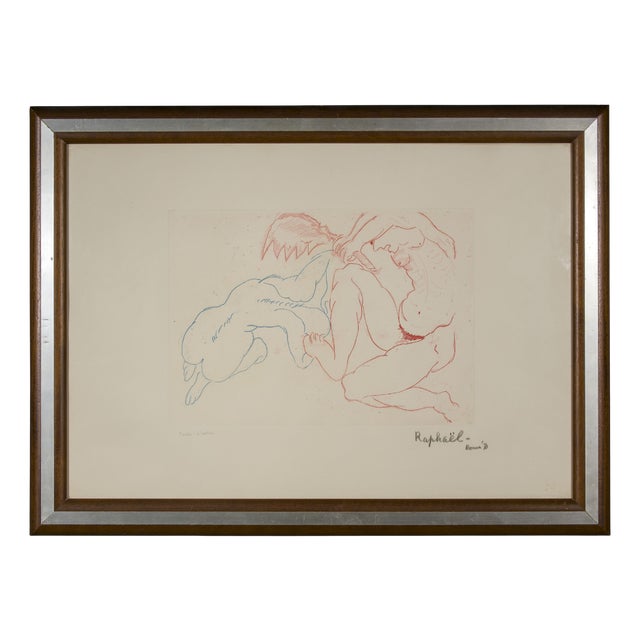
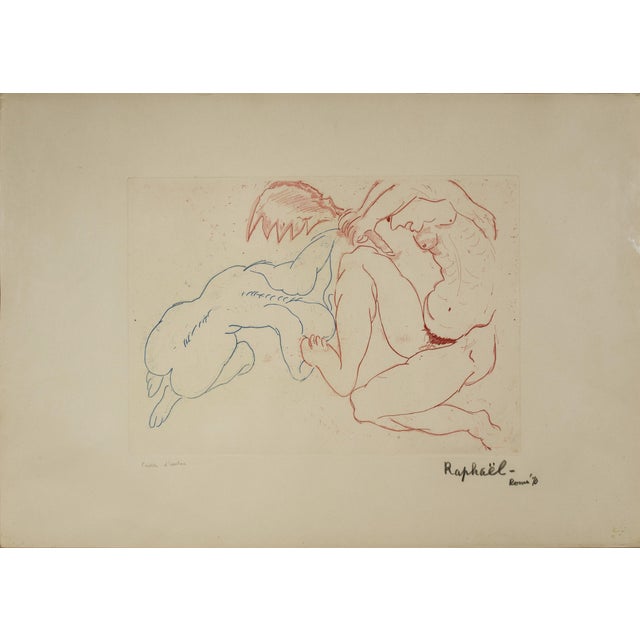
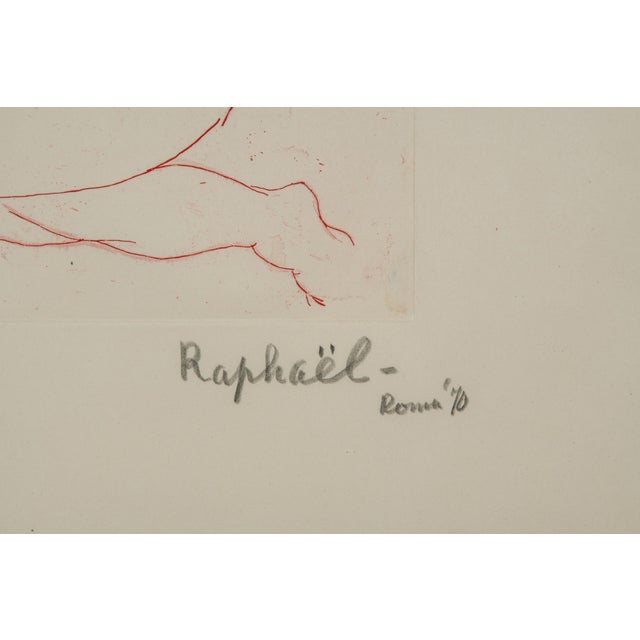
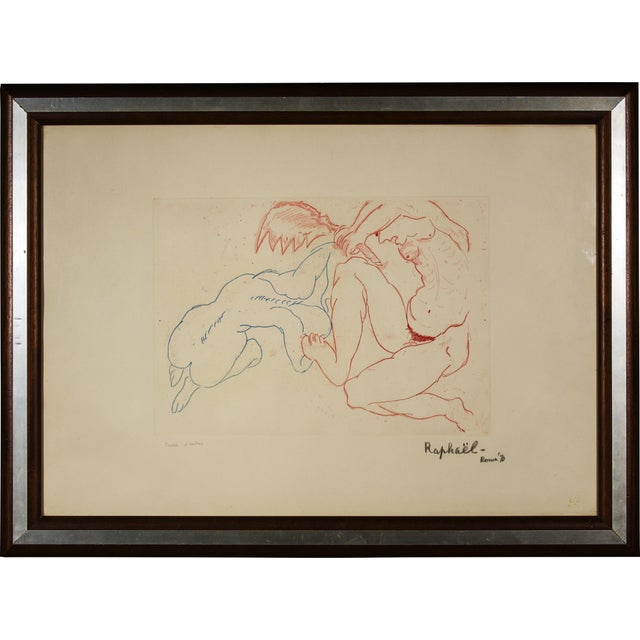
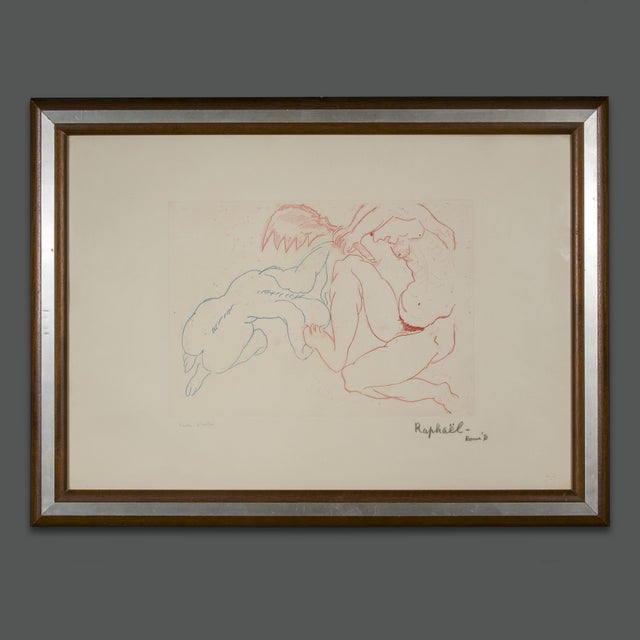
Rare and important colour lithograph “prova d’autore” signed localised and dated ‘raphael roma “70”.
it depicts in his unmistakable style …
Read more
Rare and important colour lithograph “prova d’autore” signed localised and dated ‘raphael roma “70”.
it depicts in his unmistakable style a couple pictured in an intimate but discreet pose.
antonietta raphaël, the wife of mario mafai and co-founder of the roman school, is here at the highest level of her artistic expression.
this artwork, never before on the market, comes from an important private collection and is beautified by an impressive original frame in silvered wood, in almost perfect condition.
dimensions are frame included
the painting is also protected by glass
antonietta raphaël (1895 – 5 september 1975) was an italian sculptor and painter of jewish heritage and lithuanian birth, who founded the scuola romana (roman school) movement together with her husband mario mafai.
she was an artist characterised by a profound anti-academic conviction, also affirmed by her sculptures which, especially after world war ii, dominated her output.
they highlighted the tender and vibrant carnality present in stone, with works such as miriam dormiente (sleeping miriam) and nemesis.
a rabbi's daughter, raphael moved to london with her mother after her father's death.
there she attended the british museum, and came to know jacob epstein and ossip zadkine, the renowned french sculptor of russian origin and member of the expressionist movement.
however, antonietta in those days concentrated on studying music, and eventually graduated in piano at the royal academy of music and teaching solfeggio in the east end.
at her mother's death in 1919, she moved to paris and in 1924 to rome. In 1925 antonietta attended the accademia di belle arti, befriended artist mario mafai and went to live with him, in a long-lasting relationship. They had three daughters: miriam (1926), a journalist, partner of communist politician giancarlo pajetta; simona (1928) member of the italian senate and author; and giulia (1930), a scenographer and costume designer.
in 1927, raphael and mafai moved to an apartment in via cavour in rome which quickly became a meeting point for literati including giuseppe ungaretti and leonardo sinisgalli, as well as young artists including scipione, renato marino mazzacurati, and corrado cagli.
this represented the birth of the scuola romana.
in 1929, raphael exhibited for the first time at i sindacale of lazio, supported by art historian roberto longhi.
in 1930 she and mafai went to paris, and there she began to concentrate on sculpture rather than painting.
in 1932 she was in london and met jacob epstein. She then moved permanently to rome and started working on her masterpiece fuga da sodoma (escape from sodom), working as a guest of sculptor ettore colla in his studio for a year.
between 1936 and 1938 she exhibited at the sindacali.
her plastic shapes, during this phase, show a lack of influence from any italian sculpture movement of the period, but there are distinct references to emile-antoine bourdelle.
due to the fascist racial laws and their implementation, raphael escaped to genoa together with her husband and daughters.
the family was assisted and kept safe by art collector emilio jesi and philanthropist alberto della ragione.
during world war ii (from 1943 to 1945) raphael stayed in rome with her daughter giulia, then moved again to work in genoa with an influential group of older sculptors, though one that did not have a common style.
this included edoardo alfieri, nanni servettaz, raimondi, camillo maine, lorenzo garaventa, sandro cherchi, agenore fabbri, roberto bertagnin (brother-in-law of arturo martini) and luigi navone.
in 1948, raphael exhibited at the biennale di venezia, after a difficult period of financial restrictions.
as from 1952 art critics began fully appreciating raphael's work and selected pieces were exhibited at the galleria dello zodiaco in rome.
in 1956 she travelled to china, where she exhibited in beijing her artwork together with aligi sassu, agenore fabbri, giulio turcato and others - continuing other exhibitions throughout europe, asia, and the americas.
at the 8th rome quadriennale of 1959-1960, dedicated to the scuola romana, many of her works were presented to the public, placing her among the greater exponents of this school.
by this stage, raphael was working almost exclusively on sculpture, leaving aside painting.
due to her free and open personality, and her diverse cultural experiences, antonietta raphael introduced within the roman circle a note of unconventional internationalism.
during the via cavour years, she produced portraits and landscapes characterised by a formal simplification, with compositive deformations in between the naïve and the chagallian oneiric fantasy.
from 1932, her sculptures achieved vigorous naturalistic tones with symbolic and monumental emphases, recalling eastern art cultures.
this artwork is shipped from rome. Under existing legislation, any artwork in italy created over 70 years ago by an artist who has died can requires a license for export regardless of the work’s market price. The shipping may require additional handling days to require the license according to the destination of the artwork.
this piece has an attribution mark,
i am sure that it is completely authentic and take full responsibility for any authenticity
issues arising from misattribution
See less
- Dimensions
- 31.5ʺW × 0.79ʺD × 22.83ʺH
- Styles
- Mid-Century Modern
- Modern
- Art Subjects
- Figure
- Period
- 1970s
- Country of Origin
- Italy
- Item Type
- Vintage, Antique or Pre-owned
- Condition
- Good Condition, Unknown, Some Imperfections
- Color
- Red
- Condition Notes
- Patina Consistent with Age and Use Patina Consistent with Age and Use less
Returns & Cancellations
Return Policy - All sales are final 48 hours after delivery, unless otherwise specified in the description of the product.
Cancellation Policy - Prior to shipping or local pickup, buyers may cancel an order for up to 48 hours, unless otherwise specified.
Related Collections
- Patrick Nagel Reproduction Prints
- Hable Reproduction Prints
- Reproduction Prints in Panama City, FL
- William Hogarth Reproduction Prints
- Sister Parish Reproduction Prints
- Jonathan Adler Reproduction Prints
- Lauren Ralph Lauren Reproduction Prints
- Leather Reproduction Prints
- Edward S. Curtis Reproduction Prints
- Mark D. Sikes Reproduction Prints
- Dorothy Draper Reproduction Prints
- Gold-Plate Reproduction Prints
- Jute Reproduction Prints
- Sam Francis Reproduction Prints
- William Gropper Reproduction Prints
- Alvar Aalto Reproduction Prints
- Polychrome Reproduction Prints
- Serena and Lily Reproduction Prints
- Utagawa Kunisada (Toyokuni Iii) Reproduction Prints
- Daylight Dream Editions Reproduction Prints
- Reproduction Prints in Mobile
- Restoration Hardware Reproduction Prints
- Joshua Reynolds Reproduction Prints
- Port 68 Reproduction Prints
- Bunny Williams Home Reproduction Prints