


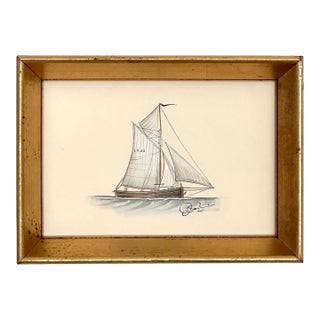


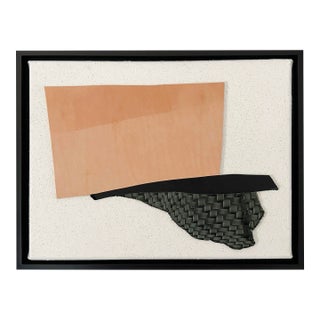
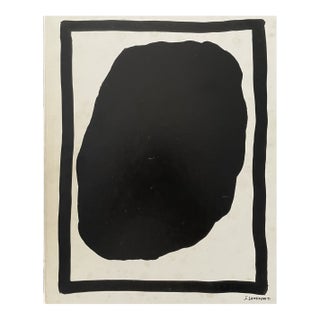


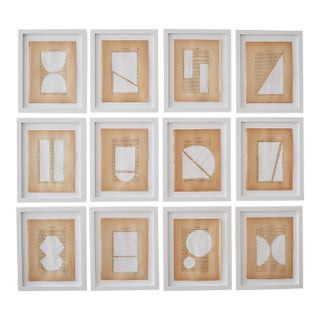
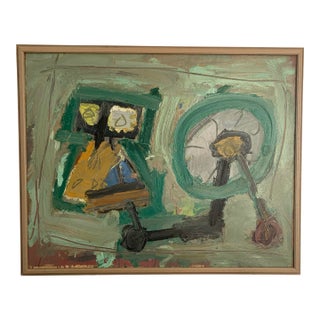






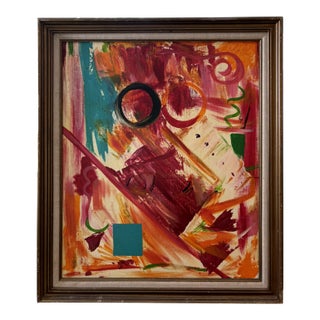
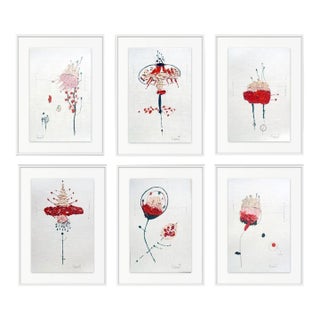


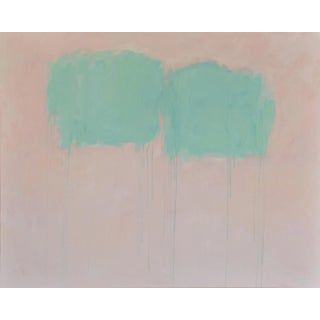
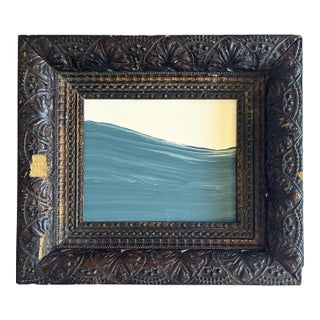
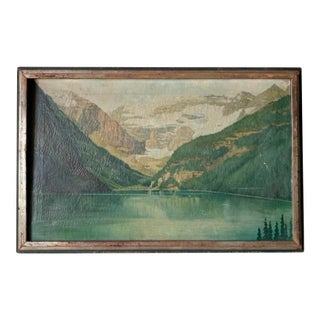

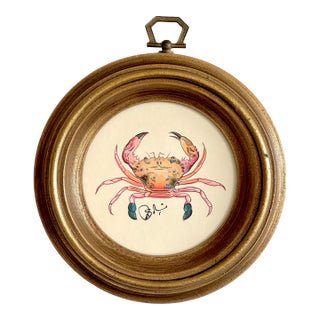

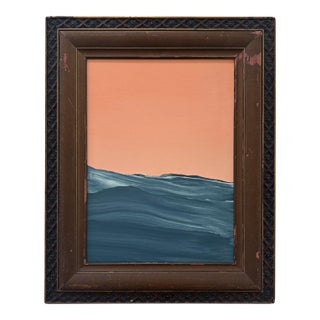
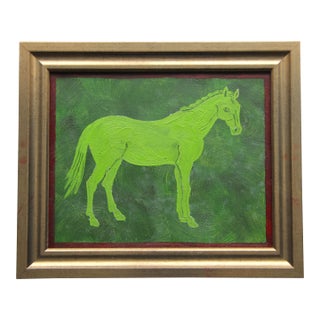
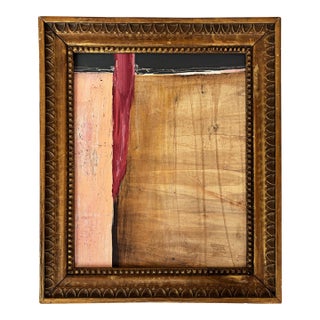


Few things add character to a space like vintage paintings. Whether hung on a wall in a dining room, leaned on a credenza, or mixed with a series of framed drawings to create a one-of-a-kind gallery wall, old oil and acrylic paintings are among the easiest ways to imbue a space with irresistible character. While shopping for original art by vintage artists can be a time-consuming endeavor, at Chairish, we strive to make it as easy as possible. Our collection of vintage paintings for sale is expertly curated by our vintage and art experts who are well-versed in current art trends and the sorts of paintings that top designers are looking for when they shop for vintage art. At Chairish, you won’t have to sift through less-than-stellar paintings. Every piece in our ready-to-ship assortment has been hand-vetted by one of our stylish buyers or curators. Discover thousands of framed and unframed paintings for sale all in one place.
Enthrall Your Walls with Vintage Chairish Art
Whether you’re on the hunt for vintage florals, still life, portraits, or landscapes, you’re likely to find something that fits the bill within our collection. We partner with some of the country's most eminent art dealers and galleries to bring you a best-in-class selection of vintage paintings for sale. When you find the perfect art piece to call your own, add it to your cart to bring it home today, or make an offer using our beloved “Make an Offer” feature to see if you can score it for less than list! Didn’t find exactly what you were looking for? Check back soon! All-new art arrivals land daily, so you never know what you’ll find.
Abstract Wall Art
Abstract are generally grouped in with modern art, as the style didn’t come into fruition until the mid 19th century. Among the earliest abstract wall artists? Wassily Kandinsky, a Russian painter and art theorists known for his dynamic, geometric paintings rendered in bold, bright primary hues. If you appreciate Kandinsky’s modern art paintings, but you desire something a bit more organic-feeling, consider art inspired by Joan Miro’s contemporary art. A Barcelona-born painter, Miro created abstract wall art that feels like a hybrid between Kandinsky’s geometry and Picasso’s whimsicality. The more square the better? Consider reproductions or art that’s inspired by Piet Mondrian's red, yellow, and blue cubist paintings.
When it comes to loose, scribbly abstracts, consider canvas art by or inspired by Jackson Pollock, the 20th century master was known for larger-than-life canvases covered in an intricate tangle of color and line. For a softer approach, you may want to seek out works in the style of Willem de Kooning. de Kooning was renowned for expressive canvases covered in riotous brushwork. These days, it’s de Kooning’s paintings featuring soft pastels that are among his most-emulated works. If acrylic paintings by Pollock and de Kooning feel too visually busy for your space, you may want to hunt down works that pay homage to Mid 20th century artist Mark Rothko. Rothko’s color field paintings consisting of painterly rectangles of color prove that abstract art doesn’t need to always incite tension. In fact, abstract canvas art can be downright harmonic.
Landscapes
Landscape paintings tend to fall into one of two categories: realist or abstract. Previous to the 19th century, virtually all landscapes were realist, with most aiming to achieve a photographic-like quality. The majority of the original paintings you’ll see on the market today have some abstract qualities. These abstractions can be traced back to late 19th century and early 20th century landscape painters like Claude Monet, Vincent Van Gough, Paul Cezanne, and Henri Matisse. Claude Monet and Vincent Van Gough were both impressionist painters and undoubtedly the most influential when it comes to contemporary original landscape paintings. Claude Monet was renowned for his original paintings starring his home’s water lily pond, while Van Gough was known for dramatic representations of the French countryside.
Because art by Monet and Van Gough are extremely well-known, not everyone feels they possess unique enough character for their home. If you desire a painting that’s less recognizable for your bedroom or living room, consider landscape paintings either by or influenced by Paul Cezanne or Henri Matisse. Cezanne was a French impressionist who laid the foundation for Cubism. His pastoral paintings range from vaguely realist to extremely abstract. More consistent among Cezanne’s body of works is his painterly palette of pastels. Today, numerous artists have adopted his penchant for soft greens, pastel blues, and shades of blush when painting landscapes. Henri Matisse is another artist who has heavily influenced the contemporary artits of today. Generally considered to be a Fauvist—a movement that is characterized by vivid colors and free treatment of form—Matisse landscapes have a sense of rhythmic movement that many modern-day painters openly emulate.
Looking for a landscape featuring a more modern edge? Retro art by and inspired by David Hockney paintings and Edward Hopper paintings tend to showcase suburban landscapes, including tract homes, backyard pools, and all-night diners. Both artists’ styles are hard-edged, featuring large, flat planes of color. They also play with light and shadow, making them deeply atmospheric.
Portraits
Portrait paintings add an element of intrigue to a space. Among designers’ favorite places to hang portrait art? Over a fireplace or in a hallway. Although most of us tend to think of portraits as being overtly traditional pieces, portrait paintings come in a wide variety of styles, ranging from classical to Pop Art. Choosing an oil portrait is extremely personal and often requires a time-consuming search, but once discovered, they’re often lifelong possessions.
The most famous of all portraits, of course, is the Mona Lisa by Leonardo da Vinci. Many portraits from the 15th century until the 20th century emulate the style put into play by the Mona Lisa. Other famous examples include Johannes Vermeer’s Girl with a Pearl Earring and Arnolfini Portrait by Jan van Eyck. In the 20th century, portraits began to take on a more abstract style, as illustrated by Gustav Klimt’s Portrait of Adele Bloch-Bauer and self portraits by Vincent Van Gough, Frida Kahlo, and Andy Warhol. Among the artists to strike the most perfect balance between classical and abstract was James Abbott McNeill Whistler, who worked in the mid 19th century. His portrait of his mother, Arrangement in Grey and Black No 1, is undoubtedly one of the most famous portraits in the world to date.
When shopping for original portraits, it’s possible to find paintings inspired by all of the above. Paramount to consider when shopping for portraiture is what style you’re most attracted to. Narrow your search down by applying search terms like realist portraits, impressionist portraits, Pop Art portraits, or retro portraits. Last but not least, don’t forget the importance of a frame. While a frame will elevate any original canvas, they make an especially large impact with portraits.
Related Collections
- New & Custom Paintings
- Carrie Bergey Paintings
- Steve Kaufman Paintings
- Limoges, France Paintings
- Lee Krasner Paintings
- Paul Jenkins Paintings
- René Magritte Paintings
- Roy Lichtenstein Paintings
- Sol LeWitt Paintings
- Rolph Scarlett Paintings
- Richard Anuszkiewicz Paintings
- Gino Hollander Paintings
- Laminate Paintings
- Keith Haring Paintings
- Design Paintings
- George Coggeshall Paintings
- William IV Paintings
- Donald Judd Paintings
- Camille Pissarro Paintings
- Damien Hirst Paintings
- Michelle Arnold Paine Paintings
- Nikolaos Schizas Paintings
- Jacobean Paintings
- Lee Reynolds Paintings
- Mid-Century Modern Paintings