



Details
Description
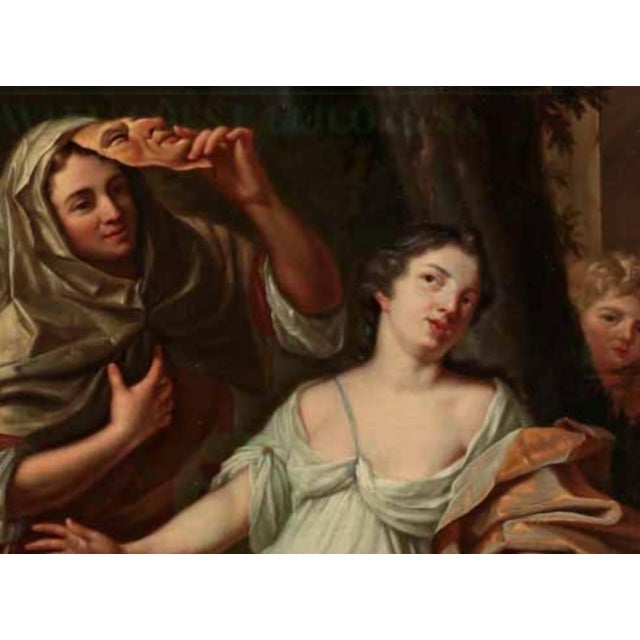
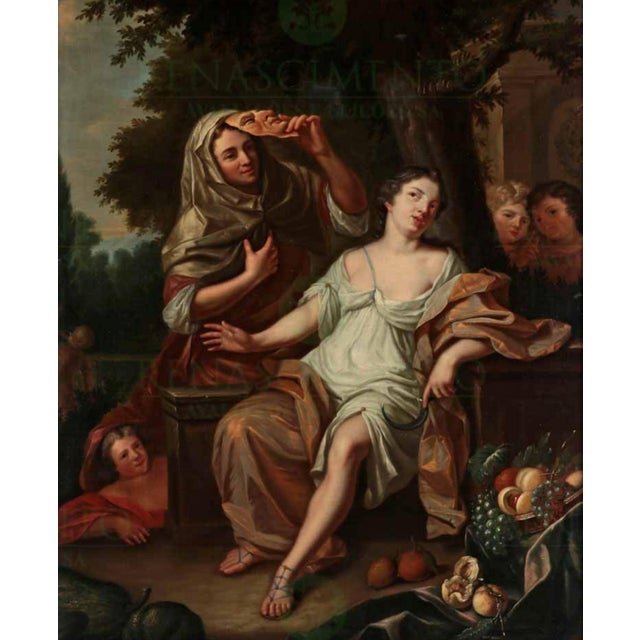
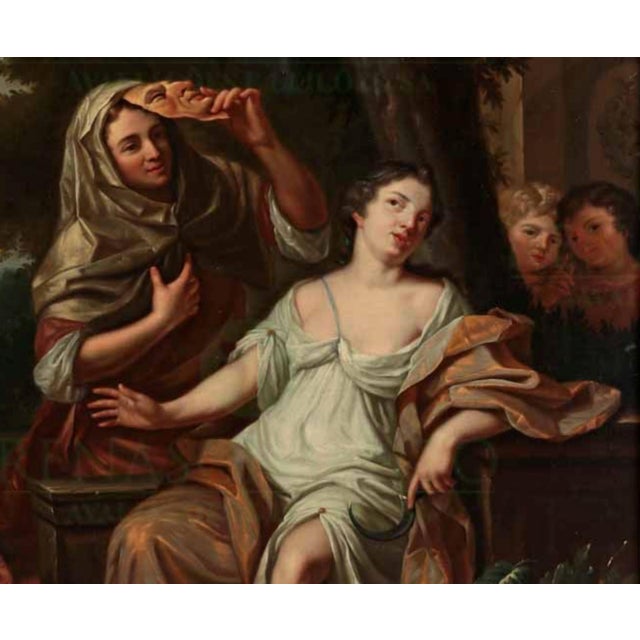
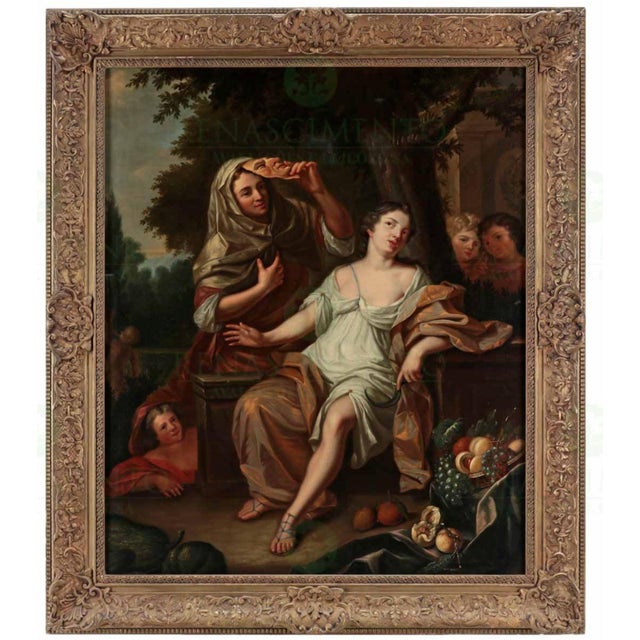
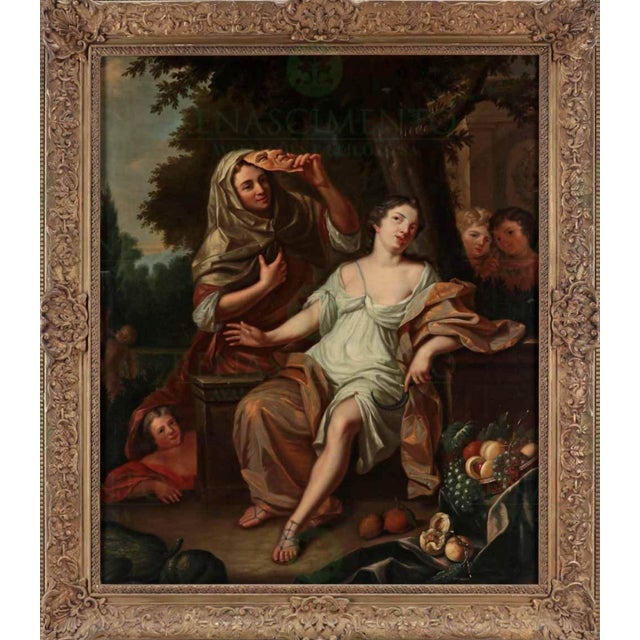
Circle of caspar netscher (1635/39-1684), allegory oil on canvas. Small antique restoration. Dimensions: 94.5x77.5 cm. Good conditions of german origin, …
Read more
Circle of caspar netscher (1635/39-1684), allegory oil on canvas. Small antique restoration. Dimensions: 94.5x77.5 cm. Good conditions of german origin, according to arnold houbraken he was born in heidelberg in 1639 although other sources indicate prague as his birthplace.1 son of johann netscher, a sculptor, after being orphaned in 1642 he was adopted by arnold tulleken, a doctor from arnhem, and there he began his painting studies in the workshop of hendrick coster, a little-known portrait painter. Around 1654 he went to deventer to continue his studies with gerard ter borch and then to bordeaux, where he arrived by ship apparently with the intention of going to rome. Instead, in 1659, still in bordeaux, he married margaretha godijn, the daughter of a mathematician, and their first child was born there. In 1662 he settled in the hague, initially devoting himself to genre painting. Influenced by ter borch and the so-called "fijnschilders", the precious painters of the leiden school, netscher gradually paid attention to the textures of fabrics and other elegant details with which he would also characterise the subjects of his portraits, usually also in small format. By 1670 he had completely abandoned genre painting and devoted himself exclusively to portraits, with which he had notable success in the aristocratic circles of the hague, even painting william iii, prince of orange, later king of england (amsterdam, rijksmuseum). In 1668 cosimo iii de médicis, travelling through the netherlands, bought four of his paintings.3 it is likely that netscher knew the painters frans van mieris the elder and gerard dou, but it is certain that he met gerrit de hooch, a painter from the hague, since his wife named gerrit's newborn daughter, margaretha, after him in 1676.4 he enjoyed the patronage of william iii and his earnings soon allowed him to apply himself to work according to his own taste, devoting himself to group portraits. It was in these that netscher's genius was fully displayed. The choice of these subjects and the habit of presenting female figures dressed in elegant satin fabrics, in imitation of ter borch, make use of easy but delicate drawing, brilliant and correct colouring and an alternation of light and shade; but his refinement often turns into weakness. The painter was gaining fame and wealth when he began to suffer from gout and was forced to stay in bed, where he continued to paint lying down. He died prematurely in 1684, in the hague. His sons, theodorus netscher (bordeaux, 1661-hulst, 1732), constantyn (the hague, 1668-1722) and anthonie (the hague, 1679-batavia, 1713), were also painters. He also had a large number of pupils among whom, in addition to his sons, one could find aleida wolfsen. This piece is attributed to the mentioned designer/maker. It has no attribution mark and no
official proof of authenticity,
however it is well documented in design history. I take full responsibility for any authenticity
issues arising from misattribution
See less
Returns & Cancellations
Return Policy - All sales are final 48 hours after delivery, unless otherwise specified in the description of the product.
Cancellation Policy - Prior to shipping or local pickup, buyers may cancel an order for up to 48 hours, unless otherwise specified.
Related Collections
- Photorealism Canvas Paintings
- Ed Ruscha Paintings
- Photorealism Paintings in New York
- Richard Serra Paintings
- Herman Miller Paintings
- BDDW Paintings
- Jo Baskerville Paintings
- Louise Nevelson Paintings
- Karen Offutt Paintings
- Nicola Simbari Paintings
- James McCray Paintings
- Leroy Neiman Paintings
- Jaanika Peerna Paintings
- Black Photorealism Paintings
- Johannes Andersen Paintings
- Pedro Friedeberg Paintings
- Peter Behrens Paintings
- Piet Hein Eek Paintings
- Raphael Paintings
- Vienna Secession Paintings
- Photorealism Paintings in Los Angeles
- Carl-Axel Acking Paintings
- Karl-Erik Ekselius Paintings
- Joseph Stella Paintings
- Hans Andersen Paintings